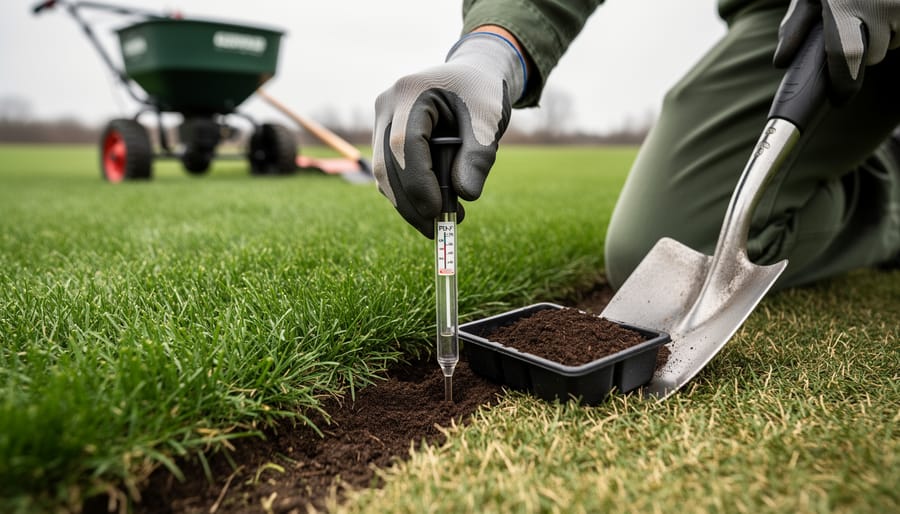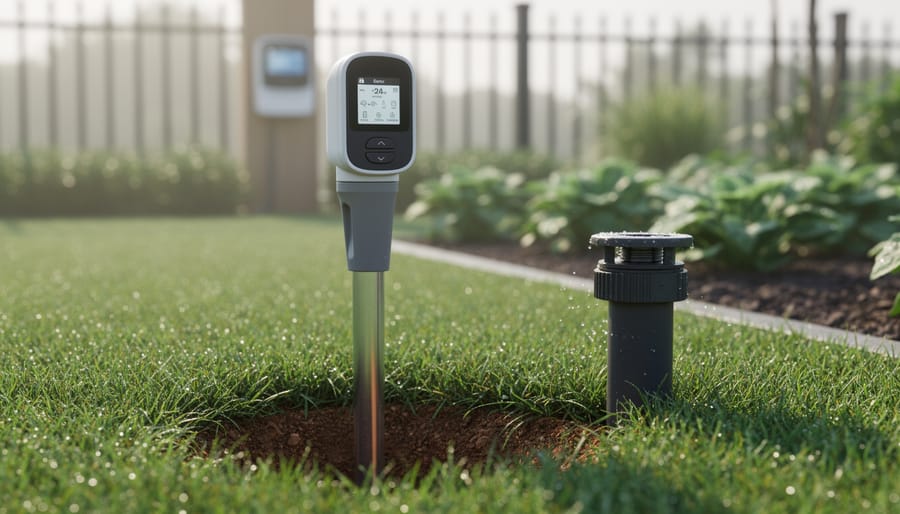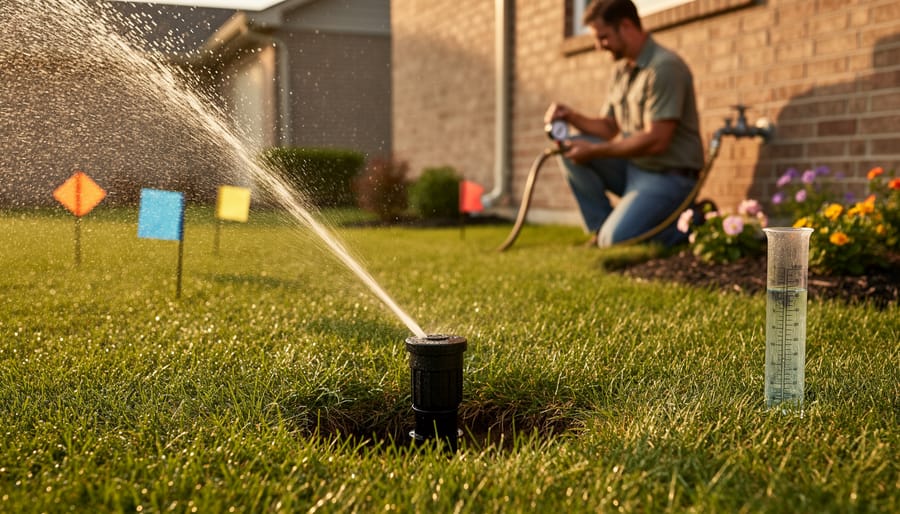
Check your irrigation system’s water pressure at different zones using a simple pressure gauge—uneven pressure often indicates leaks, clogged emitters, or failing valves that waste hundreds of gallons weekly. Run each zone for five minutes while walking the entire coverage area, marking spots with flags where water pools, mists excessively, or leaves dry patches that signal misaligned or broken sprinkler heads. Time how long it takes to fill a rain gauge or tuna can with one inch of water in various locations, revealing whether you’re overwatering some areas while underwatering others.
Most homeowners waste 30-50% of their irrigation water without realizing it. A thorough audit of your system doesn’t just slash your water bill—it transforms struggling lawns into thriving landscapes while protecting our most precious resource. Whether you’ve noticed brown patches appearing despite regular watering, watched your utility costs climb inexplicably, or simply want to align your lawn care fundamentals with sustainable practices, examining how efficiently your system delivers water is the smartest move you’ll make this season.
Think of an irrigation audit as a health checkup for your watering system. Just as small leaks in your home plumbing cost money over time, inefficiencies in outdoor irrigation multiply across thousands of square feet and dozens of watering cycles. Broken spray patterns, outdated controller settings, and soil compaction all contribute to a system that works harder while delivering worse results.
The good news? You can conduct a basic audit yourself in one afternoon with minimal tools, identifying the most common problems that plague residential systems. For complex issues or commercial properties, knowing when to call in certified irrigation professionals ensures you get expert solutions without paying for unnecessary services.
What an Irrigation System Audit Actually Means for Your Lawn
The Real Cost of an Inefficient Irrigation System
You might be surprised to learn that an inefficient irrigation system can quietly drain your wallet while harming the environment. The average homeowner with a poorly calibrated system wastes approximately 25,000 gallons of water annually. That translates to roughly $200 to $500 in unnecessary water bills each year, depending on your local rates and lawn size.
Here’s a relatable scenario: Imagine your sprinkler heads in one zone spray perfectly, while others barely cover half their intended area. You naturally run the system longer to compensate for the dry spots, but now you’re overwatering some sections while still underwatering others. This creates a domino effect of problems. Your grass develops shallow roots in overwatered areas, making it more vulnerable to disease and heat stress. Meanwhile, the dry patches turn brown, prompting you to water even more.
The environmental cost extends beyond water waste. Overwatering leaches fertilizers and pesticides into groundwater and storm drains, contributing to pollution. You’re also wasting energy since municipal water requires electricity to pump and treat. Many homeowners unknowingly run their systems at peak demand times, further straining local water resources.
Additionally, an inefficient system often leads to expensive landscape repairs. Overwatered areas may develop fungal diseases requiring treatment, while drought-stressed grass becomes more susceptible to pest damage. By implementing proper water conservation practices through a thorough system audit, you’ll protect both your investment and the environment while enjoying a healthier, more vibrant lawn.
Distribution Uniformity: The Number That Tells the Whole Story
Think of distribution uniformity as a report card for how evenly your irrigation system waters your lawn. If your sprinklers were perfectly fair, every inch of grass would get exactly the same amount of water. Distribution uniformity, or DU, measures how close you get to that ideal, expressed as a percentage.
Here’s a helpful way to picture it: imagine you’re frosting a cake. A perfect score of 100% DU means every slice gets the exact same amount of frosting. But if some slices are drowning in frosting while others are nearly bare, that’s poor distribution uniformity. Your irrigation system works the same way, and those dry patches in your lawn are telling you something important about your DU score.
So what’s a good number? Generally, a DU of 70% or higher means your system is doing a solid job. That’s the sweet spot where most of your lawn gets adequate water without excessive waste. Between 60-70% suggests room for improvement, like adjusting sprinkler heads or checking water pressure. Below 60%? That’s when you’re likely seeing obvious brown spots and wasting both water and money on areas getting drenched.
The beauty of knowing your DU is that it gives you a single, actionable number to work with. Instead of guessing why your lawn looks patchy, you’ve got concrete data. A low DU score means some areas are getting double the water they need while others are parched, which explains both your high water bill and those stubborn dry spots. Improving this number through simple adjustments can transform your lawn’s health while supporting more sustainable water use.
Signs Your Irrigation System Needs an Audit

Visual Clues in Your Lawn
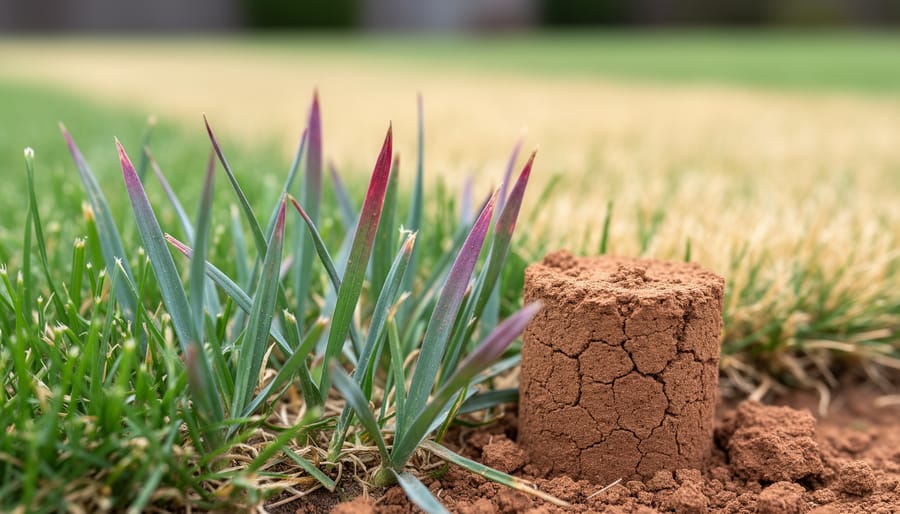
Your lawn speaks volumes about your irrigation system’s performance—you just need to know what to look for. Start by observing color variations across your grass. Deep green patches indicate adequate watering, while yellowish or brown areas suggest your sprinklers might be missing those spots entirely. I’ve walked countless lawns where these color differences created a patchwork quilt effect, revealing exactly where the coverage gaps were.
Pay attention to growth patterns too. If you’re mowing certain sections more frequently than others, that’s a red flag. Overwatered areas grow faster and often feel squishy underfoot, while underwatered zones become crunchy and sparse. Look for unusual mushroom growth or puddling, which signals excessive moisture—not only wasteful but potentially harmful to your grass roots.
Early morning is the best time for these observations when you can spot areas that dry out faster or stay soggy longer. Walk your entire lawn systematically, making mental or physical notes of problem zones. These visual clues will guide your audit, helping you pinpoint exactly which sprinkler heads need adjustment and ensuring you’re using water efficiently while maintaining that lush, healthy lawn we all want.
Your Water Bill Tells a Story
Your water bill is like a report card for your irrigation system, and learning to read it can save you hundreds of dollars. Start by comparing bills from the same month across different years—a 20-30% seasonal increase during peak summer is normal as your lawn needs more water. However, if you notice a sudden spike of 50% or more without explanation, that’s your first clue something’s amiss.
Look at your usage in gallons, not just the dollar amount, since rates fluctuate. A typical quarter-acre lawn uses about 3,000-5,000 gallons weekly during growing season. If your winter usage remains high when your system should be dormant, you likely have a leak. Keep a simple spreadsheet tracking monthly usage—patterns emerge quickly, and you’ll spot problems before they become expensive disasters. This monitoring habit is your most sustainable defense against water waste.
How to Conduct Your Own Basic Irrigation Audit
What You’ll Need (Probably Already Have)
Good news! You won’t need to make a trip to the hardware store for this project. An irrigation audit uses simple items you likely have sitting in your kitchen or garage right now. Grab several straight-sided containers like tuna cans, plastic cups, or small food storage containers – you’ll need at least six to eight for accurate results. A measuring cup or ruler helps you measure water depth, while a kitchen timer or smartphone tracks how long your system runs. Don’t forget paper and a pen to record your findings and sketch your yard layout. If you want to get a bit more detailed, a calculator makes the math easier, though your phone works just fine too. That’s really all there is to it – no fancy equipment required. This simplicity is what makes irrigation audits so accessible to every homeowner who wants to save water and money while keeping their lawn healthy. The whole setup takes just minutes, and you can reuse these household items for your regular routine afterward.

The Catch-Can Test: A Weekend Project That Pays Off
Grab some containers, set aside a couple of hours this weekend, and let’s turn your curiosity into actionable data. The catch-can test is refreshingly straightforward, and you probably already have everything you need at home.
Start by gathering at least six identical containers. Tuna cans work brilliantly because they’re shallow and wide, giving you accurate readings. Clean yogurt cups or plastic takeout containers are fine too, just make sure they’re all the same size and shape. You’ll also need a ruler or measuring tape, and a timer.
Now comes the fun part: placing your containers. Space them evenly across your irrigation zone in a grid pattern. If you’re testing a sprinkler that covers a 20-foot radius, place containers at 5-foot intervals from the sprinkler head outward, forming a cross or star pattern. Don’t forget to include spots near the edges where coverage might be weaker. The more containers you use, the more accurate your picture will be.
Before you start the test, walk around and note where each container sits. Taking a quick photo helps you remember the layout later. Now run your irrigation system for exactly 15 minutes. Yes, set a timer. Accuracy matters here because we’re establishing patterns, not just checking if water comes out.
After the 15 minutes are up, measure the water depth in each container using your ruler. Write down every measurement, even the zeros (those tell you important information about dry spots). If you’re getting wildly different readings, like one container has 2 inches while another has just a quarter inch, your system needs attention.
Here’s a pro tip for accuracy: do this test early morning when wind is minimal. Even a light breeze can skew your results by pushing water droplets around. Also, if your lawn has slopes, note which containers are uphill or downhill, as this affects water distribution too.
Calculate the average depth across all containers, and you’ve got your baseline precipitation rate. This simple weekend project reveals exactly where your water goes and where it doesn’t.
Calculating Your Distribution Uniformity
Now for the math part – don’t worry, it’s easier than balancing your checkbook! Distribution Uniformity (DU) tells you how evenly your system waters, expressed as a percentage. Higher numbers mean more uniform coverage.
Here’s the simple formula: Take the average of your lowest 25% of measurements and divide it by the overall average of all your measurements, then multiply by 100.
Let’s walk through an example. Say you collected water in 12 cans. After sorting them from lowest to highest, your bottom three cans (that’s 25% of 12) caught 0.3, 0.4, and 0.5 inches. Their average is 0.4 inches. Now, if all 12 cans average 0.6 inches total, your calculation looks like this: 0.4 ÷ 0.6 = 0.67, then multiply by 100 to get 67% DU.
So what does your number mean? A DU of 85% or higher is excellent – your system is performing beautifully! Between 70-84% is good but has room for improvement. If you’re below 70%, like our example, it’s time for action. You’re likely wasting water and creating dry spots.
For scores under 70%, start by checking for clogged sprinkler heads and adjusting water pressure. Between 70-84%? Fine-tune head placement and overlap patterns. Remember, even small improvements translate to healthier plants and lower water bills – a win for your garden and the environment.
When to Call in a Professional Irrigation Auditor
What Professional Audits Include That You Can’t Do Yourself
While a DIY audit catches many obvious problems, professional irrigation audits bring sophisticated tools and expertise that make a real difference. Professionals use precision pressure gauges at multiple points throughout your system to identify even subtle pressure inconsistencies that affect water distribution. They’ll conduct comprehensive flow rate analysis using calibrated equipment to measure exactly how much water each zone delivers, comparing it to your landscape’s actual needs.
One of the most valuable services is detailed coverage mapping, where auditors use catch cans or specialized sensors positioned throughout your lawn to create visual maps showing exactly where water is reaching and where it isn’t. This reveals gaps you might miss during casual observation. They’ll also test uniformity coefficients, giving you hard data on how evenly water distributes across each zone.
Professional auditors can spot worn valve diaphragms, calculate precipitation rates with mathematical precision, and use thermal imaging to detect underground leaks. They’ll provide a comprehensive report with specific recommendations prioritized by water savings potential and repair urgency. Think of it as getting a complete physical for your irrigation system rather than just checking your own pulse. For systems with persistent problems or high water bills despite your best efforts, this professional insight often pays for itself in the first season.
Finding a Qualified Irrigation Auditor
Finding the right irrigation auditor can feel overwhelming, but it’s worth taking time to vet your options carefully. Start by looking for professionals with credentials from the Irrigation Association, particularly the Certified Landscape Irrigation Auditor (CLIA) designation. This certification ensures they’ve completed specialized training in water efficiency and system evaluation.
Ask potential auditors about their experience with systems similar to yours. Do they work regularly with residential properties? How many audits have they completed? Request references from recent clients and actually follow up with them. A qualified professional should happily provide this information.
During your initial conversation, inquire about their audit process. They should mention measuring water pressure, checking coverage patterns, evaluating controller settings, and providing a detailed written report with specific recommendations. Be wary of anyone offering quick fixes without thorough testing.
Don’t forget to discuss pricing upfront. Most audits range from $150-$400 depending on your property size. While cost matters, the cheapest option isn’t always the best investment. A comprehensive audit pays for itself through water savings and improved lawn health. Finally, ensure they prioritize sustainable practices and can explain how their recommendations will reduce water waste while maintaining your landscape’s beauty.
Fixing Common Problems Your Audit Will Uncover
Quick Fixes You Can Do Today
Good news! You don’t have to wait for a complete system overhaul to see improvements. Start by walking your property and checking each sprinkler head for debris, grass clippings, or dirt that might be blocking the spray pattern. A quick wipe-down or rinse can instantly restore proper coverage. While you’re out there, look for heads that have shifted or sunk into the ground. Gently reposition them so they’re level and pointing in the right direction—away from sidewalks, driveways, and your house.
Next, take a fresh look at your watering schedule. Many systems run on outdated timers set during hotter months. Adjusting run times to match current weather conditions can cut water waste immediately. Consider watering in the early morning hours between 4 and 8 AM when evaporation is minimal. These simple sprinkler maintenance tasks take less than an hour but can dramatically improve water distribution across your lawn. You’ll likely notice more uniform growth and lower water bills within just a few weeks, proving that small changes really do make a big difference in sustainable lawn care.

Upgrade Decisions Worth Making
Once you’ve completed your irrigation audit, you’ll likely spot opportunities for upgrades that can genuinely transform your system’s efficiency. The good news? Many improvements offer quick payback through water savings and healthier plants.
One of the smartest investments is upgrading to matched precipitation rate (MPR) heads. If your audit revealed that some zones finish watering while others are barely getting started, MPR nozzles deliver water at the same rate regardless of spray pattern. This means your full-circle heads and quarter-circle heads work in harmony, eliminating those frustrating dry spots and soggy areas.
Pressure regulators are another game-changer, especially if you noticed misting or uneven coverage during your audit. These inexpensive devices ensure each sprinkler head operates at its optimal pressure, preventing water waste from fine mist that simply evaporates before reaching your plants.
For the biggest impact on both your water bill and the environment, consider smart irrigation controllers. These devices adjust watering schedules based on real-time weather data, soil moisture, and plant needs. Many homeowners see water reductions of 30-50 percent after installation, and they eliminate the hassle of manually adjusting your timer throughout the seasons.
Don’t forget smaller upgrades like adding check valves to prevent low-head drainage on sloped properties or switching to more efficient drip irrigation in garden beds. These targeted improvements address specific problems your audit uncovered while supporting sustainable water management practices that benefit both your landscape and your community.
Zone-by-Zone Optimization Strategies
Your lawn isn’t one-size-fits-all, and neither should your irrigation be. During your audit, map out distinct zones based on their unique characteristics. That shady corner under the oak tree needs far less water than the sunny patch by the driveway. Similarly, sandy soil drains quickly and requires more frequent watering, while clay-heavy areas hold moisture longer.
Adjust your sprinkler run times for each zone accordingly. A good rule of thumb: reduce watering by 30-50% for shaded areas and increase slightly for full-sun zones. Check soil moisture by hand before making changes—stick your finger two inches deep to feel the truth beneath the surface.
Consider installing separate valves or timers for problem areas. This might seem like extra work now, but zone-specific watering prevents both drought stress and overwatering, saving water and creating healthier turf. Your lawn will thank you with more vibrant growth where it matters most.
Maintaining Good Distribution After Your Audit

The Seasonal Irrigation Checklist
Keeping your irrigation system in top shape doesn’t have to be overwhelming when you break it down by season. Think of it as part of your ongoing seasonal lawn care routine, and you’ll catch problems before they become expensive headaches.
In spring, start with a thorough system activation. Turn on the water slowly to avoid damaging pipes, then walk through each zone to check for leaks, broken heads, or misaligned sprinklers. This is also the perfect time to adjust your controller settings for increased watering needs as plants wake up from dormancy.
Summer calls for monthly performance checks. Look for dry spots that might indicate clogged nozzles or pressure issues, and watch for overly soggy areas that waste water and harm plant roots.
Fall is your prep season. Gradually reduce watering schedules as temperatures drop and plants enter dormancy. Clean filters and flush out debris that accumulated during heavy-use months.
Winter means winterization in cold climates. Drain all water from lines, blow out remaining moisture with compressed air, and insulate above-ground components. This prevents costly freeze damage and ensures your system is ready to go when spring returns.
Think of an irrigation system audit as an investment in your lawn’s future, not just another expense on your to-do list. The benefits speak for themselves: lower water bills, a healthier and more vibrant lawn, and the satisfaction of knowing you’re being a responsible steward of our precious water resources. When you consider that a typical audit can reduce water waste by 30% or more, the return on investment becomes crystal clear within just a few months.
Beyond the financial savings, there’s something deeply rewarding about fine-tuning your irrigation system to work smarter, not harder. You’ll notice the difference in how your grass responds—more uniform growth, fewer dry patches, and that lush green color that makes neighbors stop and ask for your secret. Plus, you’re doing your part for the environment by conserving water in a time when every drop counts.
Whether you tackle the audit yourself using the steps we’ve covered or bring in a professional for expert analysis, the important thing is taking that first step. Start by walking your property this week with fresh eyes, looking for those telltale signs of inefficiency we discussed. Grab a few catch cans, set aside an hour or two, and begin measuring your system’s performance. Your lawn, your wallet, and your community’s water supply will all thank you for making this small but meaningful commitment to smarter irrigation practices.