Your sprinklers are probably wasting thousands of gallons of water each month, running on a fixed schedule that ignores yesterday’s rain, today’s humidity, or tomorrow’s forecast. Smart irrigation controllers eliminate this waste by automatically adjusting watering based on evapotranspiration (ET) – the combination of soil evaporation and plant water loss – using real-time weather data to deliver exactly what your lawn needs, when it needs it.
These WiFi-enabled devices replace your existing irrigation timer and connect to local weather stations or onsite sensors, calculating daily water requirements for your specific landscape. When temperatures drop or humidity rises, they reduce watering. After rainfall, they skip cycles entirely. The result is a lawn that stays healthier with 30-50% less water use, translating to lower utility bills and a smaller environmental footprint.
The technology sounds complicated, but setup typically takes under an hour, and the ongoing operation is completely hands-off. You’ll monitor everything from your smartphone, receiving alerts about system issues and watering schedules while making seasonal adjustments with a few taps.
Whether you’re motivated by conservation, convenience, or cost savings, ET-based smart controllers represent one of the most impactful upgrades you can make to your irrigation system. This guide will walk you through how these controllers work, which models deliver the best value for different yard sizes and budgets, and exactly how to install and configure one for optimal performance in your specific climate and landscape conditions.
What ET-Based Irrigation Actually Means (And Why It Matters for Your Lawn)

The Science Behind ET Made Simple
Think of evapotranspiration, or ET, as your lawn’s personal thirst meter. Just like you reach for more water on a hot, windy day at the beach, your grass and plants need extra moisture when certain weather conditions come into play.
Here’s what’s happening: ET combines two processes. First, there’s evaporation, where water escapes from the soil surface into the air, similar to how puddles disappear after rain. Second, there’s transpiration, where plants release moisture through tiny pores in their leaves, much like how you release moisture when you breathe on a cold day and see your breath.
Four key factors drive your plants’ water needs. Temperature acts like a thermostat. Hot days speed up evaporation, so your lawn gets thirsty faster. Humidity works as nature’s moisture gauge. On muggy days, water hangs around longer because the air is already saturated. Dry air? Water vanishes quickly.
Wind is the sneaky culprit that often catches gardeners off guard. Even on mild days, a steady breeze whisks moisture away from leaves and soil surfaces. Finally, sunshine powers the whole process. More sun means more energy driving evaporation and plant activity.
Smart controllers monitor these four factors continuously, calculating exactly how much water your landscape lost. Instead of guessing or following a rigid schedule, your irrigation system responds to actual conditions. This means your lawn gets precisely what it needs, nothing more, nothing less. It’s sustainable watering that saves both water and money while keeping your landscape healthier.
Why Your Old Timer is Probably Drowning Your Grass
Let’s be honest—most traditional irrigation timers are about as smart as a wind-up alarm clock. They water on a fixed schedule, regardless of whether it rained yesterday, whether the forecast shows storms tomorrow, or if your grass actually needs water at all. It’s the gardening equivalent of eating the same meal at the exact same time every day, whether you’re hungry or not.
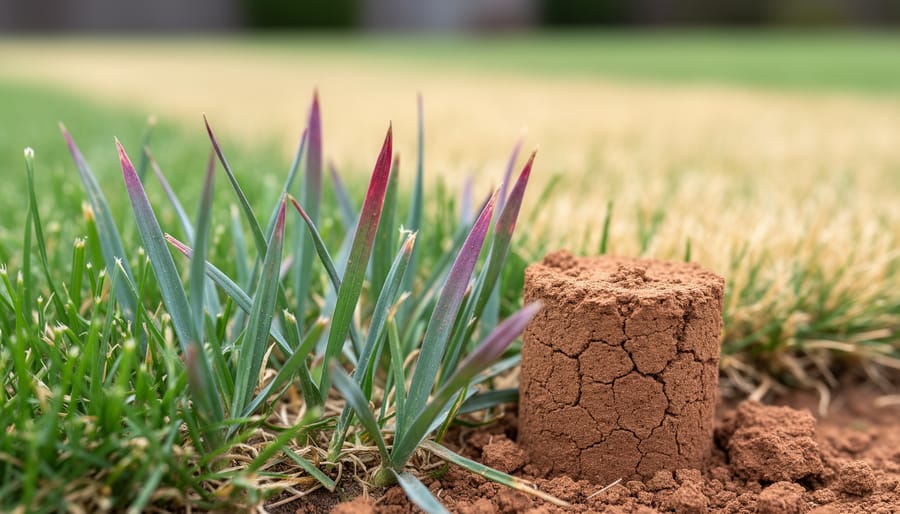
Here’s the problem: that rigid schedule means you’re probably wasting water and money while simultaneously stressing your lawn. Traditional timers often overwater during cool, humid periods, creating shallow root systems and inviting fungal diseases. The excess water doesn’t just disappear—it runs off into storm drains, carries fertilizers with it, and inflates your water bill.
Meanwhile, during hot, dry stretches, that same schedule underdelivers, leaving your grass parched and vulnerable. The solution? ET-based smart controllers adjust watering based on actual weather conditions and evapotranspiration rates—the amount of water your landscape actually loses through evaporation and plant transpiration. It’s precision watering that keeps your lawn healthy while protecting both your wallet and the environment.
How Smart Controllers Actually Work Their Magic

Weather Stations vs. Internet-Connected Models
When choosing a smart irrigation controller, you’ll encounter two main approaches to gathering weather data: systems with on-site weather stations and those that connect to internet-based weather services. Both have their strengths, and understanding the differences will help you make the right choice for your yard.
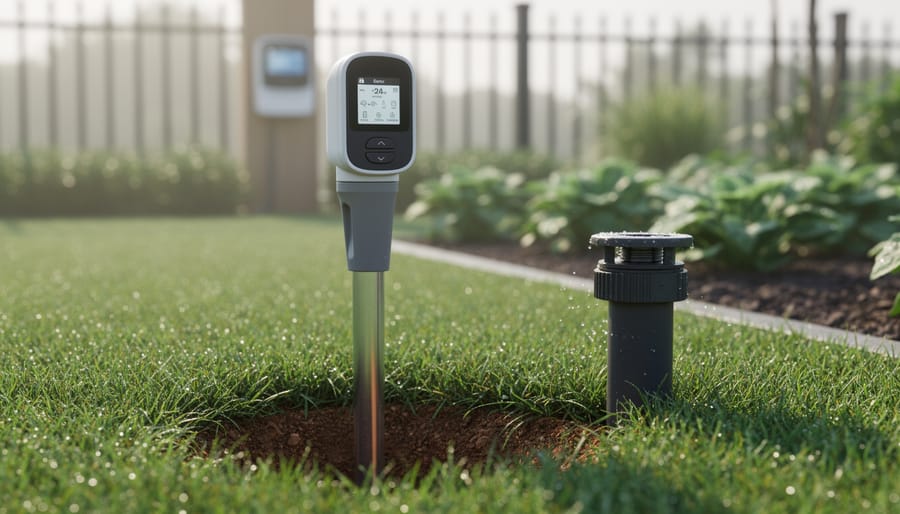
On-site weather stations measure conditions right in your garden using sensors that track temperature, humidity, rainfall, wind speed, and solar radiation. The advantage here is hyper-local accuracy. If you live in an area with microclimates or where weather varies significantly from neighborhood to neighborhood, an on-site station captures exactly what’s happening in your specific location. However, these systems require a higher upfront investment and need regular maintenance to keep sensors clean and calibrated. They’re also dependent on proper installation—placing sensors in shaded spots or near heat-reflecting surfaces can skew your data.
Internet-connected controllers pull data from nearby weather stations and meteorological services, eliminating the need for additional hardware. They’re typically more affordable and easier to install since you’re just setting up the controller itself. The trade-off is that weather data comes from stations that might be miles away, which can occasionally miss hyperlocal conditions like that unexpected afternoon shower that hit your property but not the reporting station.
For most homeowners, cloud-based systems offer excellent accuracy and tremendous convenience, especially in suburban areas where weather patterns are fairly consistent. If you have a large property, unique terrain, or live in a region with highly variable microclimates, investing in an on-site station makes more sense for precision watering and water conservation.
Real-Time Adjustments That Save Water (And Money)
Here’s where smart controllers really shine – they’re constantly monitoring conditions and making adjustments without you lifting a finger. Unlike traditional timers that run on a fixed schedule regardless of weather, these intelligent devices adapt in real-time to what’s actually happening in your yard.
Rain skip features are game-changers. When rain falls, the controller detects it (either through an onboard sensor or weather data) and automatically cancels scheduled watering sessions. No more watching your sprinklers run during a downpour while your neighbors shake their heads! This single feature can prevent the water waste common with inefficient sprinkler systems.
Freeze protection is another smart feature. When temperatures drop below freezing, the controller postpones irrigation to prevent ice damage to your plants and pipes. Your system stays protected without manual intervention.
Seasonal adjustments happen automatically too. As summer heat intensifies, the controller gradually increases watering. Come fall, it scales back as temperatures cool and plants need less moisture. These continuous micro-adjustments mean your landscape gets exactly what it needs, when it needs it – eliminating the guesswork and waste that comes from seasonal manual programming adjustments.
Setting Up Your Smart Controller for Perfect Results
Getting the Initial Setup Right
Good news: setting up a smart irrigation controller is surprisingly straightforward, and most homeowners can handle the basics themselves. Think of it as replacing a light switch – if you’re comfortable with that, you can probably tackle this too.
Start by turning off your old controller and taking a clear photo of your existing wiring before disconnecting anything. Each wire corresponds to a specific irrigation zone in your yard, and you’ll need to replicate these connections on your new smart controller. Most devices come with color-coded terminals and labels that make the process intuitive. Don’t forget to connect the common wire, which is typically white.
Power requirements are usually simple – most controllers plug into a standard outlet or connect to your existing low-voltage transformer. Check your model’s specifications to be sure.
The fun part comes next: zone programming. Walk your yard and identify what each zone waters – front lawn, backyard flower beds, vegetable garden, or shrubs. Input this information into your controller’s app, noting plant types, sun exposure, and soil conditions. This data helps the system calculate proper watering schedules using evapotranspiration principles.
Connecting to Wi-Fi typically involves selecting your network through the controller’s app and entering your password. Some models also sync with local weather stations automatically, while others let you choose specific stations for the most accurate data.
When should you call a professional? If you’re installing a completely new system, dealing with complex multi-valve setups, or uncomfortable working with electrical connections, professional installation ensures everything works correctly from day one while maintaining any warranties.

Entering Your Lawn’s Personal Information
Think of this step as creating a detailed profile for your lawn – the more accurate you are, the better your smart controller can work its magic. This is where your system transforms from a simple timer into a truly intelligent watering partner.
Start with your grass type, which matters more than you might think. Cool-season grasses like fescue and bluegrass have different water needs than warm-season varieties like Bermuda or St. Augustine. Your controller uses this information to adjust watering schedules throughout the seasons. If you’re not sure what grass you have, take a photo and compare it with online guides or ask at your local garden center – it’s worth getting right.
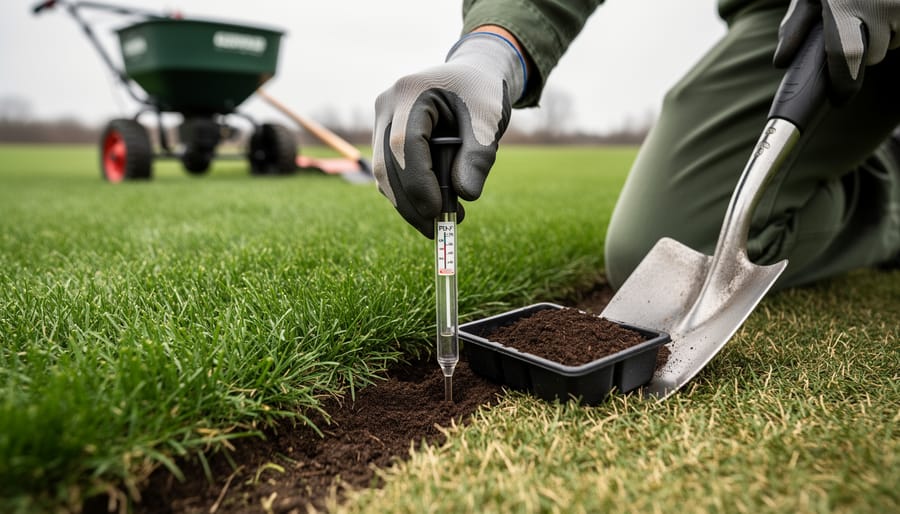
Next comes soil type. Clay soil holds water longer but drains slowly, while sandy soil drains quickly but doesn’t retain moisture well. Loam sits happily in the middle. A simple squeeze test helps: wet soil that forms a tight ball is likely clay, while soil that won’t hold together is sandy. This single detail dramatically affects how long and how often your system waters.
Don’t underestimate sun exposure and slope either. A south-facing slope in full sun needs considerably more water than a shaded, flat area. Be honest about these conditions for each zone – most smart controllers let you customize settings for different areas.
Finally, input your sprinkler head specifications, including type (spray, rotor, or drip) and precipitation rate. This ensures your controller calculates actual water delivery accurately. These details might seem tedious, but they’re the foundation of water-saving efficiency. Accuracy here means healthier grass and lower water bills.
Fine-Tuning for Your Specific Yard Conditions
Your yard isn’t uniform, and your smart controller shouldn’t treat it that way. Most controllers let you create separate zones for areas with different conditions. That shady corner under your oak tree needs far less water than your sun-baked lawn, so adjust the zone’s watering percentage downward by 30-50%. Problem zones with poor drainage? Reduce frequency and use cycle-and-soak settings to prevent runoff.
Seasonal adjustments matter too. While your controller handles daily weather changes, you might need to tweak baseline settings as plants establish or landscapes mature. If you notice brown patches or perpetually soggy spots, these are signs to identify irrigation inefficiencies in your system.
Common troubleshooting tip: If everything seems overly wet despite ET scheduling, verify your soil type setting and check for clogged or misaligned sprinkler heads. The smartest controller can’t compensate for mechanical issues in your system.
Smart Controllers Worth Your Investment
Premium Options for Tech-Savvy Gardeners
If you’ve mastered the basics of smart irrigation and you’re ready to take your water management to the next level, premium controllers offer capabilities that’ll make your gardening friends jealous. These high-end systems are designed for serious gardeners who want complete control over every aspect of their irrigation.
Premium controllers typically feature 12 to 16 zones (some even more), allowing you to manage extensive gardens, multiple lawn areas, and specialized plantings all from one device. What really sets them apart is their advanced ET calculation engines that pull from multiple weather stations, integrate soil moisture data, and adjust watering schedules with remarkable precision. I’ve seen these systems reduce water usage by 40-50% compared to traditional timers while producing healthier plants.
The customization options are where things get exciting. You can set individual watering curves for each zone, accounting for factors like sun exposure, soil composition, plant maturity, and even microclimates in your yard. Some models offer flow monitoring that can detect leaks or broken sprinkler heads, potentially saving you from costly water damage.
These controllers shine brightest for homeowners with larger properties, extensive gardens with diverse plant needs, or those managing challenging landscapes with slopes and varying sun exposure. They’re also perfect for sustainability-focused gardeners who want to squeeze every drop of efficiency from their system.
The investment is substantial, usually ranging from 300 to 600 dollars, but if you’re managing a significant landscape or simply love optimizing your garden’s performance, the precision and water savings justify the cost within a few seasons.
Budget-Friendly Smart Controllers That Still Deliver
You don’t need to spend a fortune to enjoy the water-saving benefits of ET-based irrigation scheduling. Several budget-friendly smart controllers offer the essential features that make the biggest difference in your garden without the premium price tag.
Controllers in the $100-150 range typically provide core ET scheduling capabilities by pulling weather data from local stations rather than having built-in sensors. While they might lack fancy touchscreens or voice assistant integration, they’ll still adjust your watering schedule based on real-time weather conditions, which is honestly the most important function. That’s where the real water savings happen.
When shopping on a budget, prioritize these essential features: reliable weather integration (look for controllers using reputable weather services), straightforward zone customization (so you can set different soil types and plant needs), and easy seasonal adjustments. You can skip expensive add-ons like flow monitoring or soil moisture sensors initially and add them later if needed.
The main trade-off with budget models? You might spend a bit more time on initial setup since the interfaces tend to be less intuitive. Think of it as a one-time learning curve rather than a deal-breaker. Many gardeners find that once configured, these controllers run just as reliably as their pricier counterparts.
Remember, even a basic smart controller that prevents watering during rain and adjusts for temperature changes will dramatically outperform any traditional timer. For most home gardens, these budget-friendly options deliver exactly what you need: smarter watering that saves money and supports healthier, more sustainable landscaping practices.
What to Look for When Shopping
When shopping for a smart irrigation controller, prioritize WaterSense certification from the EPA, which guarantees the device meets water efficiency standards and can save you up to 15,000 gallons annually. Look for controllers that use local weather data rather than generic forecasts, as hyperlocal information provides more accurate ET calculations for your specific conditions.
Compatibility is crucial. Verify the controller works with your existing valve setup and check how many zones it supports. Most systems handle 8-16 zones, but make sure it matches your needs. Wi-Fi connectivity should be straightforward, and the accompanying app should have solid reviews for ease of use.
Red flags include controllers without automatic weather adjustments, those requiring expensive monthly subscriptions for basic features, or devices with poor customer support ratings. Avoid systems that don’t allow manual overrides, as you’ll want control during unexpected situations.
Consider expansion capabilities too. Can you add sensors or integrate with other smart home devices? This flexibility ensures your investment grows with your needs while supporting sustainable water management practices.

The Real-World Benefits You’ll Actually Notice
Water Bill Savings That Add Up Fast
Here’s the reality that makes smart controllers such a smart investment: homeowners typically see 20-40% reductions in outdoor water use after installation. For the average household spending $70-100 monthly on irrigation during peak season, that translates to $200-400 in annual water bill savings. In drought-prone areas where water rates climb even higher, those savings can double.
Most quality smart controllers cost between $150-300, meaning you’re looking at a payback period of just 6-18 months. After that? Pure savings, year after year. Plus, many water utilities offer rebates ranging from $50-150 for installing EPA WaterSense certified controllers, shortening your payback period even further.
The beauty is you’re not just saving money by cutting back on watering. You’re watering more intelligently, which actually improves your lawn’s health. Your grass develops deeper roots when it’s not overwatered, making it more resilient during dry spells. It’s the rare win-win where your wallet and your landscape both benefit, all while you’re conserving a precious resource for your community.
A Healthier, Greener Lawn Without Extra Work
Here’s the thing about smart irrigation controllers: they don’t just save water and money, they actually create better lawns with less effort on your part. When your grass receives the precise amount of water it needs based on ET calculations, something wonderful happens beneath the surface. The roots grow deeper and stronger, searching downward for moisture rather than staying shallow where they’re vulnerable to heat stress.
This deeper root system transforms your lawn’s resilience. During hot, dry spells, while your neighbor’s grass turns brown and crispy, yours stays greener longer because those deep roots can access moisture further down in the soil. You’ll also notice fewer disease problems since you’re not creating the consistently damp conditions that fungal issues love.
From a sustainability perspective, this is the sweet spot we’re all looking for. You’re conserving a precious resource while actually improving your lawn’s health, not compromising it. The grass becomes more drought-tolerant over time, requiring even less supplemental watering as the seasons progress. Plus, you’re reducing runoff that can carry fertilizers into storm drains and local waterways.
The best part? Once your smart controller is set up, it handles all this optimization automatically. You get a healthier, more sustainable lawn without standing outside with a hose or constantly adjusting manual timers.
Common Pitfalls and How to Avoid Them
Setup Mistakes That Sabotage Your System
Even the smartest controller can’t work miracles if the initial setup sends it down the wrong path. The good news? Most setup mistakes are surprisingly easy to fix once you know what to look for.
One of the biggest culprits is incorrect zone settings. If you’ve told your controller that your shade-loving hostas are in full sun, it’ll overwater them into oblivion. Take time to accurately map each zone’s sun exposure. Walk your yard at different times of day to see where shadows actually fall, not just where you think they should be.
Another common mistake is selecting the wrong plant type in your controller’s settings. Mixing up “lawn” with “shrubs” or “perennials” drastically changes watering calculations. Your native wildflowers don’t need the same moisture as your Kentucky bluegrass. Double-check these settings for each zone.
Location data errors can throw off your entire ET calculations. If your controller thinks you’re in Phoenix when you’re actually in Portland, you’ll be watering based on completely wrong weather patterns. Verify your zip code and ensure weather station connectivity is working properly.
Before making changes, check your current system for baseline performance. Then revisit your controller’s setup wizard, correcting one zone at a time. This methodical approach prevents overwhelming yourself while building a more sustainable watering schedule.
When to Override the Smart Features
While smart controllers are incredibly efficient, there are times when your gardening expertise should take the lead. Newly seeded lawns need consistent moisture that differs from established turf, so you’ll want to override the system for more frequent, lighter watering during germination. Similarly, when establishing new plants or transplants, their immediate root zones require extra attention that your controller’s broader ET calculations might not provide adequately.
Unusual weather patterns can also warrant manual adjustments. If you’ve had an unexpected cold snap that slowed evaporation, or your area experiences microclimates the weather station doesn’t capture, trust your observations. That dry spot under the eaves or the perpetually soggy area near the downspout might need individual attention. Think of your smart controller as a highly capable assistant, not a replacement for your knowledge. The best results come from combining smart technology with your understanding of your garden’s unique needs and seasonal changes.
Making the switch to an ET-based smart irrigation controller is more than just upgrading your watering system—it’s a meaningful step toward more sustainable lawn care. By aligning your irrigation schedule with actual weather conditions and plant needs rather than arbitrary timers, you’re not just conserving water; you’re creating healthier growing conditions for your lawn and garden. Plants thrive when they receive the right amount of water at the right time, and that precision is exactly what these controllers deliver.
Yes, smart controllers represent an investment upfront, typically ranging from a couple hundred to several hundred dollars depending on features and zone capacity. But consider what you’re gaining: reduced water bills that often pay back the initial cost within a year or two, a healthier and more resilient lawn, and the satisfaction of knowing you’re doing your part for water conservation. In many regions, you might even qualify for rebates from your water utility that significantly offset the purchase price.
The beauty of ET-based technology is that it removes the guesswork from irrigation management. You’re no longer wondering if you watered too much after that unexpected rainstorm or whether your lawn is getting enough during a dry spell. The controller handles these calculations automatically, adjusting in real-time to keep your landscape looking its best while using water responsibly.
Taking control of your irrigation with smart technology means embracing a more thoughtful approach to lawn care—one that respects both your landscape’s needs and our shared environmental resources. That’s genuinely smart watering.