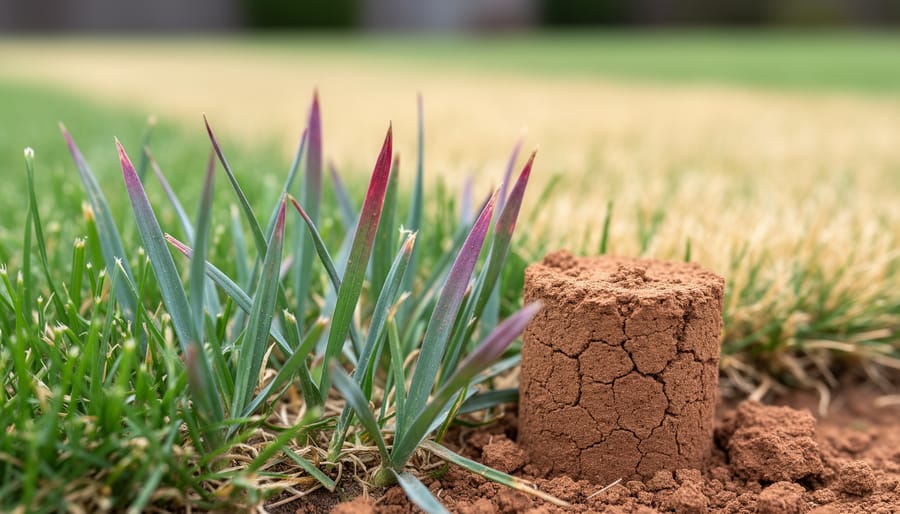
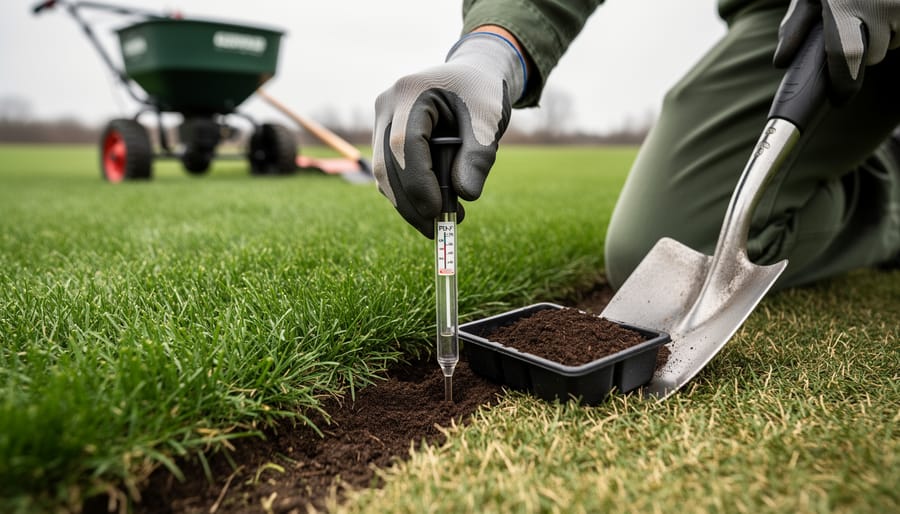
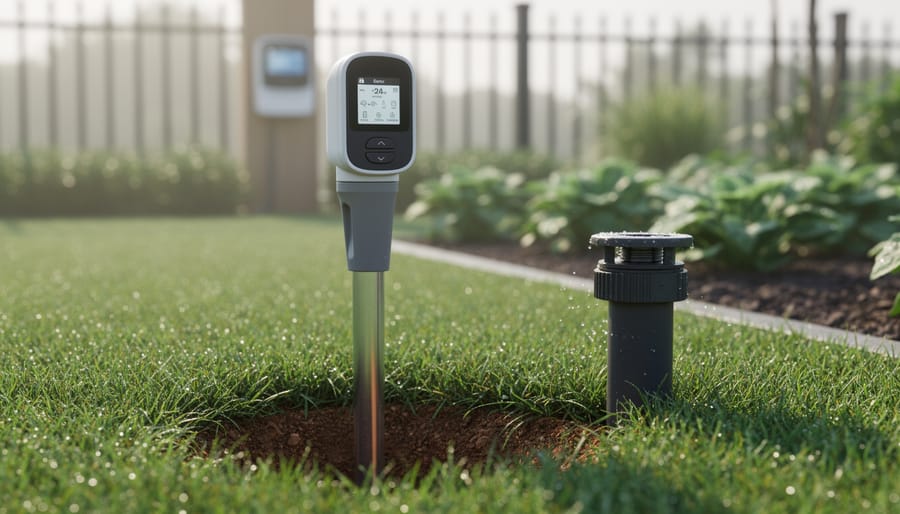
Mark your calendar for Labor Day weekend as your kickoff point for fall lawn maintenance—this single reference date helps you work backward and forward through the entire autumn schedule. September through November represents your lawn’s recovery period after summer stress, and each task must happen within specific windows to ensure spring success while staying compliant with local ordinances that increasingly restrict leaf blowing times, fertilizer applications, and water usage.
Check your municipality’s website or homeowner association rules before scheduling any maintenance, since fall regulations vary dramatically by region. Some areas ban gas-powered equipment on weekends, others restrict fertilizer applications near storm drains, and many impose seasonal watering limits that directly impact your seeding schedule. These aren’t minor technicalities—violating lawn care ordinances can result in fines ranging from $50 to $500, and repeat offenses may trigger escalating penalties.
The timing of fall tasks matters more than spring maintenance because your grass is preparing for dormancy while simultaneously storing energy for winter survival. Aerate too early and you’ll stress heat-exhausted turf; wait too long and frozen ground makes the job impossible. Apply winterizer fertilizer before the ground freezes but after active growth slows, typically when soil temperatures hover around 50°F. Overseed at least 45 days before your first expected frost to give new grass time to establish roots.
This comprehensive lawn care guide approach ensures you’re building sustainable practices while meeting regulatory requirements that protect local water quality and community standards.
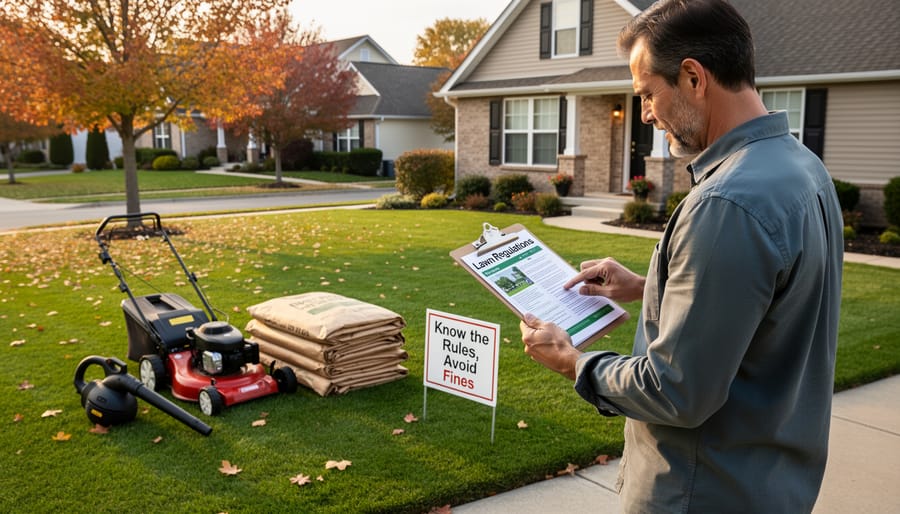
Why Local Regulations Matter for Fall Lawn Maintenance
Common Types of Fall Lawn Care Regulations
Before you dive into your fall lawn care routine, it’s worth taking a moment to understand the regulations that might affect your maintenance schedule. These rules vary by location, but knowing what applies to your area helps you stay compliant while keeping your lawn in top shape.
Leaf disposal is often the most regulated aspect of fall lawn care. Many municipalities prohibit dumping leaves in storm drains or natural areas, and some require you to bag leaves in specific biodegradable bags or place them curbside on designated collection days. The good news is that these rules often encourage composting, which is fantastic for creating nutrient-rich soil amendments for your garden.
Burning bans are another common regulation, particularly in areas prone to drought or air quality concerns. While burning leaves might seem like a quick solution, most communities have strict restrictions or outright prohibitions during fall months when fire risk increases.
Pesticide and herbicide restrictions are increasingly common as communities prioritize environmental health. Some areas limit application timing, require licensed applicators, or ban certain products altogether. This actually aligns perfectly with sustainable lawn care practices, encouraging organic alternatives that benefit pollinators and soil health.
Noise ordinances frequently affect when you can use lawn equipment. Similar to early morning mowing laws, many communities restrict loud equipment use during early mornings, evenings, and weekends. These rules help maintain neighborhood harmony while still giving you plenty of time for essential maintenance.
Water usage limitations might apply even during fall, especially in drought-prone regions. Some areas restrict irrigation schedules or require rain sensors on sprinkler systems, which actually supports healthier lawns by preventing overwatering.
Understanding these regulations isn’t about limiting your lawn care—it’s about working smarter within your community’s framework while embracing sustainable practices that benefit everyone.
Where to Find Your Local Lawn Care Rules
Understanding your legal lawn mowing requirements and local lawn care regulations doesn’t have to be overwhelming. Start with your city or county’s official website—most municipalities now have searchable code databases where you can find ordinances about grass height, leaf disposal, and composting restrictions. Look for sections on property maintenance, nuisance codes, or environmental regulations.
If you’re part of a homeowners association, your HOA guidelines often include specific lawn care standards that go beyond municipal rules. Check your community’s covenant documents or contact your HOA board directly. They can clarify everything from acceptable lawn heights to permitted autumn burning practices.
Your local code enforcement office is surprisingly helpful and genuinely wants to assist homeowners in staying compliant. A quick phone call can answer questions about leaf blowing hours, pesticide application restrictions, or whether you can let your lawn go dormant without penalty. Many offices also publish seasonal guidance specifically for fall lawn care.
County extension offices are goldmine resources that combine regulatory knowledge with horticultural expertise. Their staff can explain why certain regulations exist and how to work within them while maintaining a healthy, sustainable lawn. They often provide free fact sheets tailored to your specific region.
Don’t forget to check with your waste management provider about leaf collection schedules and composting programs. These services often align with local regulations and can save you from unintentional violations while supporting eco-friendly practices. Taking an hour to research now prevents headaches later.
September: Early Fall Preparation Within Regulations
Aeration and Overseeding (Timing and Permit Requirements)
Early fall is your golden window for aeration and overseeding—typically from late August through September in most regions. These practices work beautifully together because aerating creates perfect seed-to-soil contact while the still-warm ground encourages germination before winter arrives.
Here’s something many homeowners discover the hard way: some communities have noise ordinances that can affect when you’re allowed to run aerators and other power equipment. While you generally won’t need a permit for basic lawn renovation on your own property, it’s worth checking your local regulations, especially if you live in a planned community or condo association. Some neighborhoods restrict noisy equipment usage to specific hours—often between 8 AM and 6 PM on weekdays, with more limited weekend hours.
If you’re hiring a lawn care service, they’re usually well-versed in local restrictions, but it never hurts to verify. For DIY enthusiasts, calling your local parks and recreation department or checking your municipality’s website can save you from an awkward conversation with neighbors or, worse, a fine.
Timing-wise, aim to complete aeration and overseeding at least 45 days before your area’s first expected frost. This gives new grass enough time to establish strong roots. Water your lawn thoroughly the day before aerating—moist soil allows better core penetration. After overseeding, maintain consistent moisture for two to three weeks, which means brief, frequent watering sessions. This sustainable approach to lawn renovation creates healthier turf that requires less intervention over time.
Fertilization Following Nutrient Application Laws
Before you grab that fall fertilizer bag, let’s talk about the rules that might affect when and how you can feed your lawn. Don’t worry—understanding these regulations is simpler than you might think, and following them actually helps create a healthier lawn while protecting our local waterways.
Many regions now restrict phosphorus in lawn fertilizers unless you’re establishing new grass or a soil test proves you need it. You’ll see this reflected in fertilizer numbers—the middle number represents phosphorus. A bag labeled 20-0-10 contains no phosphorus, while 20-5-10 does. Some states have banned phosphorus entirely for established lawns, so check your local regulations before your fall application. The good news? Most mature lawns don’t actually need much phosphorus anyway, so these bans rarely impact lawn health.
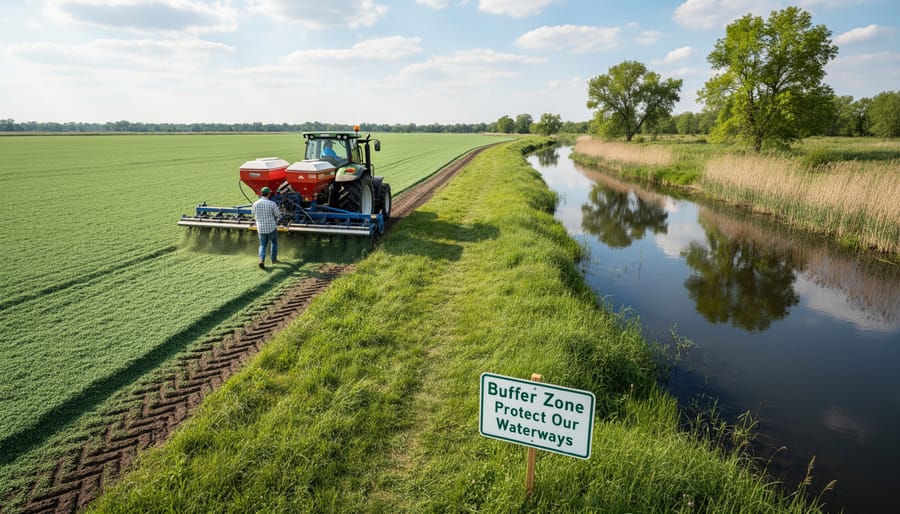
Buffer zones near water bodies are another important consideration. Typically ranging from 10 to 50 feet depending on your location, these zones prohibit fertilizer application to prevent nutrient runoff into streams, lakes, and ponds. If your property borders water, measure and mark these areas before fertilizing. This simple step protects aquatic ecosystems from harmful algae blooms caused by excess nutrients.
The organic versus synthetic fertilizer debate also has regulatory angles. While both types face similar application restrictions, organic fertilizers often release nutrients more slowly, reducing runoff risk and providing longer-lasting results—a win for sustainability and compliance. They’re also typically exempt from some seasonal application bans that affect synthetic products.
Speaking of timing, many municipalities restrict fall fertilizer applications after certain dates, often mid-November, when grass growth slows and nutrients are more likely to wash away. Your local cooperative extension office can provide specific cutoff dates for your area. These sustainable practices aren’t just about following rules—they’re about being a responsible steward of your little piece of the planet while maintaining that beautiful fall lawn.
October: Peak Fall Maintenance and Compliance
Leaf Management and Disposal Regulations
Before you start piling those gorgeous autumn leaves by the curb, let’s talk about keeping you on the right side of your local regulations. Trust me, a quick check of your municipality’s rules now can save you from an awkward conversation with code enforcement later.
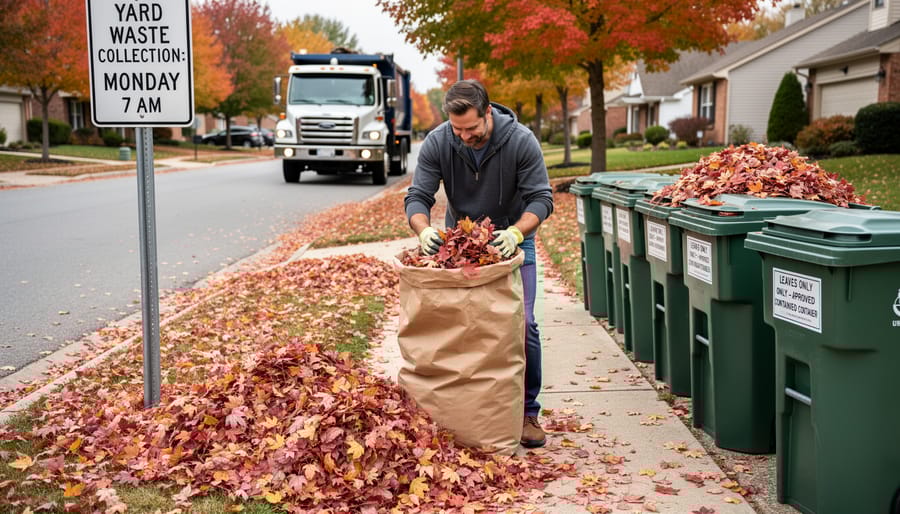
Most communities have specific leaf collection schedules that typically run from mid-October through late November or early December. Your city or township website should list designated pickup days for your neighborhood. Here’s the thing though—many areas require leaves to be placed in biodegradable paper bags or specific containers, not plastic bags. Some municipalities won’t collect leaves in any bags at all, instead requiring loose piles placed a certain distance from the street. Check your local guidelines to avoid having your leaves sit uncollected all winter.
Street dumping is a big no-no almost everywhere. Raking leaves into the street or storm drains isn’t just prohibited—it’s harmful. Those leaves can clog drainage systems and contribute to water pollution as they decompose. In many areas, you could face fines ranging from fifty to several hundred dollars for this practice.
The good news? Many communities now offer composting programs or designated drop-off sites for yard waste. Some even provide free compost back to residents in spring—talk about a win-win situation! If your area has a composting mandate, you’ll need to separate leaves from other trash.
Here’s where sustainability really shines: consider mulching leaves with your mower instead of bagging them. This practice is typically allowed everywhere and actually enriches your soil. Just run over leaves with a mulching mower when they’re dry, chopping them into small pieces that decompose quickly. Your lawn gets free nutrients, and you avoid disposal headaches entirely. You can also create designated composting areas in your yard, turning leaves into black gold for next season’s garden beds.
Mowing Height and Frequency Rules
As autumn progresses, adjusting your mowing routine becomes essential for lawn health and staying compliant with local regulations. Most municipalities have ordinances governing grass height, typically requiring lawns to stay between 3-8 inches, though these limits vary by location. Check with your city or county office to understand specific requirements in your area.
For fall mowing, gradually raise your mower blade height as temperatures cool. Throughout September and early October, maintain grass at about 2.5-3 inches for cool-season grasses and 2-2.5 inches for warm-season varieties. By late October, increase the height to 3-3.5 inches for your final mows. This slightly taller cut helps grass store more nutrients in its roots while preventing snow mold formation during winter months.
Noise ordinances often restrict mowing equipment usage during early morning and evening hours, usually before 7 AM or after 8 PM on weekdays, with stricter weekend rules. Respecting these quiet hours keeps neighbors happy and avoids potential fines.
As growth slows, reduce mowing frequency from weekly to every 10-14 days. Your final mow should occur when grass stops actively growing, typically late October through November depending on your climate zone. Understanding different mowing methods can help you choose the most sustainable approach for your yard.
Remember the one-third rule: never remove more than one-third of the grass blade in a single mowing. This practice promotes stronger root development and helps your lawn enter dormancy in optimal condition, setting the stage for vigorous spring growth.
November: Winterization Within Legal Boundaries
Irrigation System Winterization and Water Conservation Laws
Before winter’s first freeze arrives, properly shutting down your irrigation system isn’t just good practice—it’s often required by local ordinances designed to protect water quality and prevent costly damage. Most municipalities mandate winterization between late September and early November, depending on your climate zone, so check your local regulations for specific deadlines.
The centerpiece of compliance is your backflow preventer, a device that keeps lawn water from contaminating your home’s drinking supply. Many areas require annual certification by licensed professionals before winter, and failing to maintain proper documentation can result in fines ranging from $100 to $500. Mark your calendar early, as certified technicians book up quickly in fall.
Winterization itself involves three key steps: shutting off the water supply, draining all lines using compressed air or manual drain valves, and insulating above-ground components. While DIY winterization is legal in most areas, using excessive air pressure (above 50 PSI for polyethylene pipes or 80 PSI for PVC) can damage your system and violate installation codes.
This is also the perfect time to assess your system’s water efficiency. Many water districts offer rebates for upgrading to smart controllers or pressure-regulating sprinkler heads, helping you save water and money while staying compliant. Consider scheduling a professional audit to identify leaks that waste thousands of gallons annually—your lawn, wallet, and local water supply will thank you.
Equipment Storage and Off-Season Fuel Regulations
As fall winds down and your mower takes its final lap around the yard, it’s time to think about where your equipment will spend the winter months. Proper storage isn’t just about keeping things tidy—it’s about protecting your investment and following important environmental regulations that vary by location.
Before tucking away your mower and trimmer, you’ll need to address the fuel situation. Many municipalities have specific rules about storing gasoline over winter, and for good reason. Old fuel can degrade, damage your engine, and pose environmental hazards. Check with your local waste management authority about fuel disposal options—many communities offer hazardous waste collection days specifically for this purpose. The sustainable approach? Run your equipment until the tank is nearly empty, then add a fuel stabilizer to whatever remains. This prevents the formation of gum and varnish that can clog your carburetor come spring.
Don’t forget about your oil and air filters either. Some areas prohibit disposing of used oil in regular trash, so locate your nearest oil recycling center. Most auto parts stores accept used oil free of charge.
Clean all equipment thoroughly, removing grass clippings and debris that can harbor moisture and rust. Store everything in a dry, ventilated space away from living areas, following local fire safety codes. Your future self will thank you when spring arrives.
Sustainable Fall Practices That Keep You Compliant
Grasscycling and Mulching Alternatives
Here’s a win-win approach that’ll make both your lawn and your municipality happy: grasscycling and leaf mulching. Instead of bagging those grass clippings and fall leaves, leave them right where they land. Your mower can do double duty by chopping everything into smaller pieces that break down quickly.
When you grasscycle, those clippings decompose within days, returning valuable nitrogen to your soil. It’s like giving your lawn a free fertilizer treatment with every mow. Similarly, running your mower over fallen leaves a few times transforms them into nutrient-rich mulch that feeds your turf throughout winter and into spring.
This approach directly supports municipal waste reduction goals. Many communities are actively encouraging or even mandating organic waste diversion from landfills, and your lawn provides the perfect recycling system. You’ll reduce curbside waste while cutting down on trips to disposal sites.
The soil benefits are remarkable. Mulched leaves and clippings improve soil structure, increase moisture retention, and feed beneficial earthworms and microorganisms. Over time, you’ll notice your lawn requiring less water and fewer chemical inputs.
Before diving in, check your local regulations regarding leaf management. Some areas have specific guidelines about leaf thickness on lawns or timing requirements. The good news? Most municipalities actively support these practices as part of their environmental initiatives.
Native Plant Integration and Pesticide-Free Approaches
Fall is the perfect time to rethink your lawn care approach and move toward more sustainable practices. If you’re tired of battling weeds and pests with chemicals, consider integrating native plants into your landscape where local regulations allow. Many municipalities now encourage native plantings because they require less water, naturally resist local pests, and support beneficial insects and pollinators.
Before making changes, check your local ordinances regarding lawn alternatives. Some homeowner associations and city codes have specific requirements about lawn coverage and plant heights, but many are updating policies to embrace ecological landscaping. You might be surprised to find incentives or rebates for native plant installations in your area.
For pest management this fall, focus on organic approaches that comply with local pesticide ordinances. Many communities have restrictions on synthetic pesticide use, especially near water sources or during certain seasons. Start by encouraging beneficial insects like ladybugs and ground beetles that naturally control aphids and grubs. Apply neem oil or insecticidal soap for spot treatments when needed, and always follow label directions.
Maintaining healthy soil through composting and proper mowing heights prevents most pest problems naturally. When your lawn is thriving, it becomes naturally resistant to disease and insect damage. This preventative approach not only keeps you compliant with regulations but also creates a safer environment for your family, pets, and local wildlife.
What Happens If You Don’t Follow the Rules?
I’ll be honest with you—most communities aren’t sending lawn enforcement officers to patrol neighborhoods with clipboards. However, ignoring local regulations can lead to real consequences, and it’s worth understanding what might happen.
Penalties typically start with a friendly warning letter. Many municipalities give homeowners 7-14 days to remedy violations before escalating. If you’ve been letting your lawn grow too tall or raking leaves into the street during prohibited hours, this first notice is your chance to correct things without financial impact.
If warnings go unheeded, fines usually follow. Common violations I’ve seen include leaf burning without permits (often $100-300 for first offenses), excessive noise from mowers or blowers during restricted hours ($50-150), and improper disposal of yard waste ($75-200). One neighbor learned the hard way that dumping grass clippings in storm drains carries hefty fines—she paid $250 and spent a Saturday cleaning everything out.
Homeowners associations can be stricter than municipal codes. I’ve heard stories of HOAs issuing fines for brown patches visible from the street or fall fertilizer applications that temporarily discolor lawns. These situations feel frustrating, but remember that HOAs typically outline these expectations in governing documents you agreed to.
If you receive a citation you believe is unjustified, don’t panic. Most jurisdictions have appeal processes. Document your compliance with photos and timestamps. If weather prevented timely leaf removal or you misunderstood specific timing requirements, explain your situation clearly. Officials often show leniency for first-time violations or genuine misunderstandings.
The best strategy? Prevent violations by researching local codes before starting fall maintenance. A quick call to your city’s code enforcement office or HOA management can clarify requirements and save you from unnecessary headaches. Prevention beats appealing any day.
As you prepare your lawn for the cooler months ahead, remember that successful fall maintenance isn’t just about checking tasks off a list. It’s about finding that sweet spot where your lawn’s health needs meet your community’s environmental goals. Those local regulations you’ve been navigating? They’re not red tape designed to frustrate you on a Saturday morning. They’re thoughtfully crafted guidelines that protect our shared water resources, preserve air quality, and maintain the delicate ecosystem balance we all depend on.
Think of your municipal lawn care ordinances as a knowledgeable gardening partner rather than a restrictive rulebook. When your town limits fertilizer applications near storm drains or restricts leaf burning, they’re helping you become a better environmental steward while still achieving that lush, healthy lawn you’re working toward. The beauty of sustainable fall lawn care is that what’s good for the environment is almost always good for your grass too.
Before you pull out your aerator, rake, or spreader this autumn, take thirty minutes to research your local regulations. Check your city’s website, call your municipal office, or connect with your local extension service. Understanding these rules before you begin saves you from potential fines and helps protect the environment we all share. Your lawn will thank you, your neighbors will appreciate your responsible approach, and you’ll sleep better knowing you’re doing right by both your yard and your community.