Water your Utah lawn deeply but infrequently—aim for 1 to 1.5 inches per week during peak summer, adjusting down to once every 10-14 days in spring and fall. The key difference between a thriving lawn and a struggling one in our semi-arid climate comes down to timing and precision, not just turning on the sprinklers and hoping for the best.
Utah’s unique challenges demand a smarter approach. Our hot, dry summers combined with increasing water restrictions mean you need to maximize every drop while keeping your grass healthy. Morning watering between 4 and 10 a.m. reduces evaporation by up to 30% compared to midday watering, and it prevents the disease problems that come with evening moisture sitting on grass blades overnight.
Understanding your soil type changes everything. Clay-heavy soils common along the Wasatch Front absorb water slowly and need cycle-and-soak watering—run sprinklers for 10 minutes, wait 30 minutes for absorption, then repeat. Sandy soils in southern Utah require more frequent but lighter applications. Testing your sprinkler coverage with tuna cans placed around your lawn reveals exactly how much water each zone receives and where adjustments are needed.
Season-by-season adaptation matters more than following a rigid schedule. Your lawn’s water needs shift dramatically from March through October, and matching your irrigation to these natural cycles prevents waste while maintaining that healthy green appearance we all want. Let’s break down exactly what your lawn needs throughout the year.
Understanding Utah’s Lawn Watering Challenges
Climate and Soil Conditions
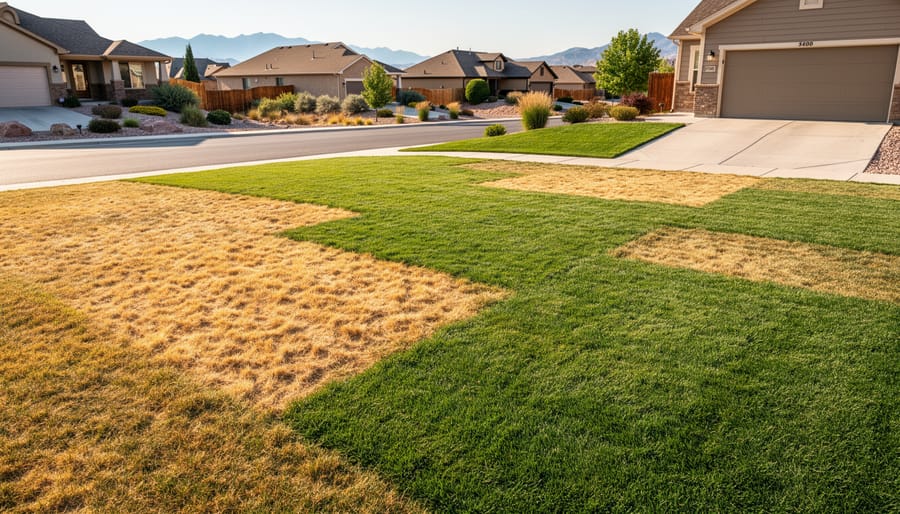
Understanding Utah’s climate is the first step toward creating a healthier, more water-efficient lawn. If you’ve ever felt like you’re watering constantly yet your grass still looks thirsty, you’re not alone—and it’s not your imagination. Utah’s arid climate presents unique challenges that make lawn care here quite different from those lush, green states you might see in gardening magazines.
With annual precipitation averaging just 12-15 inches across most of the state (compared to the national average of 38 inches), we’re working with significantly less natural moisture. Add to that our high elevation, intense summer sun, and low humidity, and you’ve got evaporation rates that can steal up to 60 inches of water from your lawn annually. That means water disappears from soil and grass surfaces much faster than nature can replenish it.
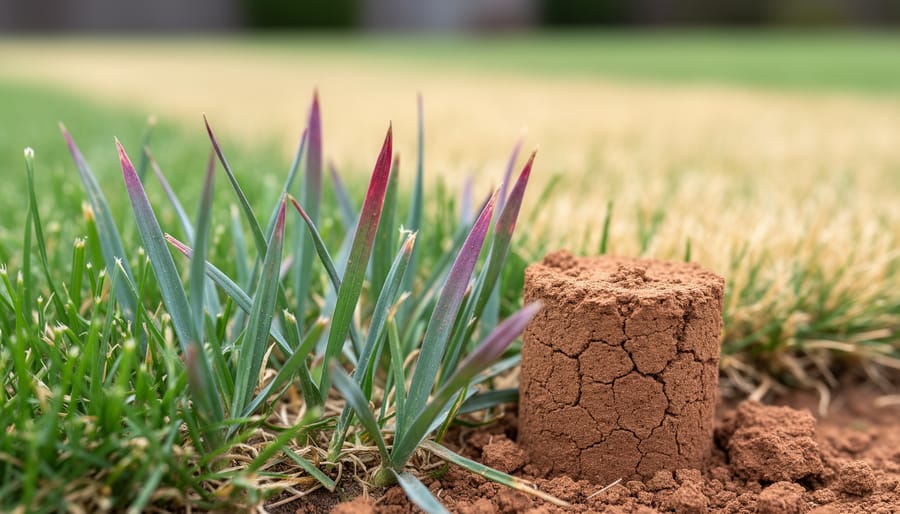
But here’s where it gets interesting: your soil composition plays an equally important role. Many Utah yards feature clay-heavy soil, which creates a bit of a paradox. Clay holds water well once saturated but forms a crusty surface that resists initial absorption, leading to frustrating runoff. Sandy soils, common in some areas, present the opposite challenge—water drains through quickly, sometimes before grass roots can absorb what they need.
The good news? Once you understand these factors, you can adjust your watering strategy accordingly. Deep, infrequent watering helps clay soils absorb moisture without runoff, while sandy soils benefit from shorter, more frequent sessions. Working with Utah’s conditions rather than against them is your path to a sustainable, thriving lawn.
Water Conservation Requirements
Living in Utah means embracing the reality of water scarcity. Our beautiful state receives an average of just 12 inches of precipitation annually, making us one of the driest regions in the country. With population growth putting additional strain on water resources, being mindful about lawn watering isn’t just good practice—it’s essential for our community’s future.
Most Utah municipalities have implemented water conservation ordinances to help manage this precious resource. Many cities restrict outdoor watering to specific days based on your address, typically allowing watering only during early morning or evening hours when evaporation is minimal. Some areas enforce seasonal restrictions that limit lawn watering to certain months of the year. Before you set up your watering schedule, check with your local water district to understand the rules that apply to your neighborhood.
The good news? Responsible watering practices actually create healthier, more resilient lawns. Deep, infrequent watering encourages stronger root systems that can better withstand Utah’s hot, dry summers. By following smart watering guidelines tailored to our climate, you’ll conserve water while cultivating a lawn that’s both beautiful and sustainable.
The Science Behind Effective Lawn Watering
How Deep Should Water Penetrate
Here’s the thing about watering your Utah lawn: it’s not just about getting the grass blades wet. You want that water to penetrate deep into the soil, ideally reaching 6 to 8 inches down. This depth is the sweet spot for encouraging your grass to develop strong, drought-resistant roots that can tap into moisture reserves during our hot, dry summers.
Why does depth matter so much? When you only water shallowly, your grass roots stay near the surface, making your lawn vulnerable to heat stress and requiring more frequent watering. Deep watering, on the other hand, trains roots to grow downward, creating a more resilient turf that can handle Utah’s challenging conditions.
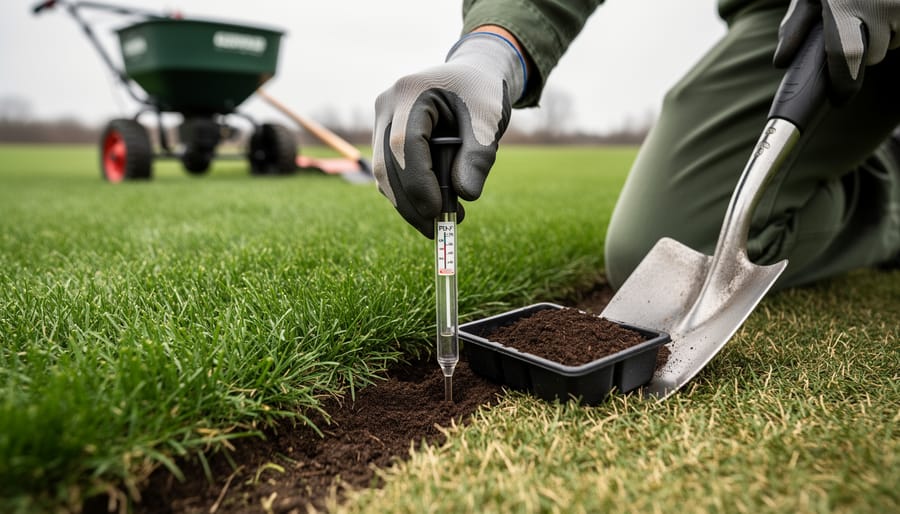
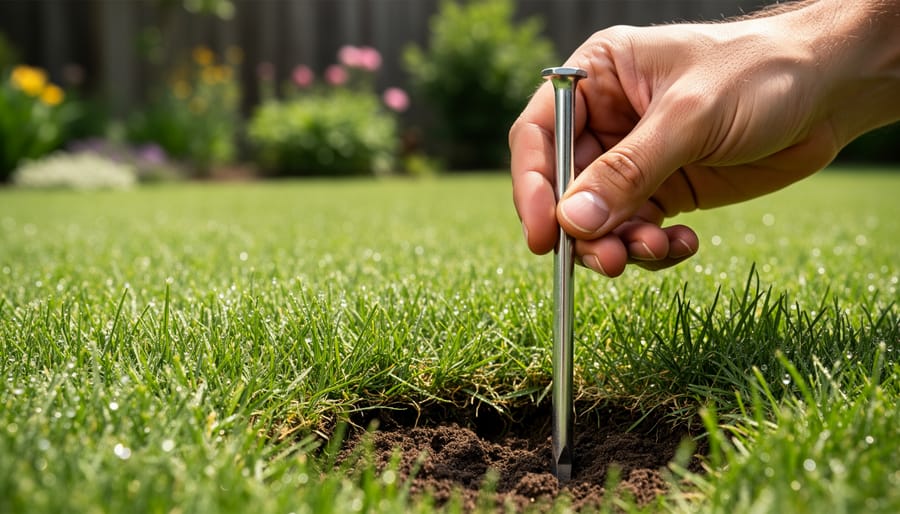
Measuring water penetration is simpler than you might think. Wait about an hour after watering, then push a long screwdriver or soil probe into your lawn. It should slide in easily to that 6 to 8-inch mark in properly moistened soil. If you hit resistance before reaching 6 inches, you need to water longer. Another method is to dig a small hole with a trowel to visually check soil moisture at various depths.
This approach aligns perfectly with sustainable lawn care practices because deep, infrequent watering uses water more efficiently than shallow, frequent sprinklings. You’ll actually use less water overall while growing a healthier, more beautiful lawn. It takes some initial experimentation to figure out how long your sprinklers need to run, but once you dial it in, you’ll see remarkable results.
Testing Your Soil Moisture
Knowing when your lawn actually needs water is a game-changer, especially in Utah where every drop counts. Let me share some simple methods that take the guesswork out of watering.
The screwdriver test is my absolute favorite because it’s free and remarkably reliable. Simply push a long screwdriver (6-8 inches works great) into your soil. If it slides in easily, your soil has adequate moisture. If you’re meeting resistance, it’s time to water. In properly hydrated soil, the screwdriver should penetrate at least 6 inches without much effort. This quick test tells you what’s happening below the surface, where your grass roots actually live.
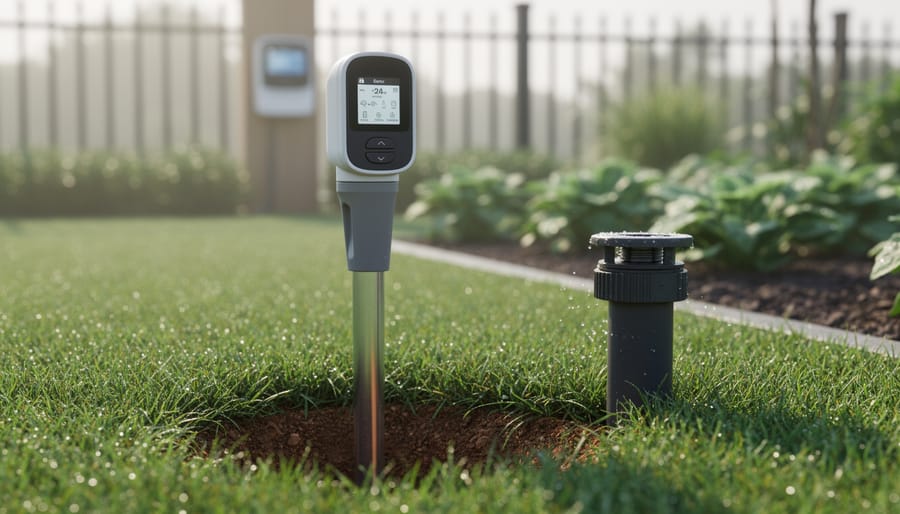
For those who prefer a more high-tech approach, soil moisture meters are wonderful tools that remove the guesswork entirely. These inexpensive devices give you instant readings at various depths. I particularly recommend them if you’re managing different lawn zones or have varying soil types across your property.
Visual cues also tell an important story. Grass that needs water will show a blue-gray tint instead of vibrant green, and footprints will remain visible on the lawn rather than bouncing back quickly. These are your lawn’s way of saying it’s thirsty.
Here’s a sustainable tip: check moisture levels in multiple spots across your lawn, especially in sunny versus shaded areas. Utah’s intense sun creates microclimates in your yard, meaning different sections may have vastly different water needs. Testing prevents overwatering in shaded spots while ensuring sunny areas get adequate hydration.
Spring Watering in Utah (March-May)
Early Spring Transition
As winter loosens its grip on Utah, your lawn is slowly waking up from dormancy, and it’s tempting to rush out with the hose. But patience is key here! Early spring is all about observation and gentle transition rather than aggressive watering.
First, let Mother Nature do some of the heavy lifting. Spring snowmelt and occasional rain showers often provide enough moisture for your lawn’s initial awakening. Check soil moisture by stepping on the grass—if your footprints spring back quickly, there’s adequate moisture. If they remain compressed, it’s time for a light watering.
Start slowly, around mid-March to early April depending on elevation. Begin with one watering session every 10-14 days, applying about half an inch of water. As temperatures climb and you notice green blades emerging, gradually increase frequency to weekly sessions by late April.
This measured approach encourages deeper root development, which is essential for summer drought tolerance. It’s also the perfect time to think about spring lawn fertilization to support that new growth.
Watch for sunny, south-facing areas that green up faster—they may need water sooner than shaded spots. Remember, overwatering during this transition period can actually delay greening and promote disease. Trust the process, and your lawn will reward your patience with strong, healthy growth.
Late Spring Adjustments
As April rolls into May and temperatures begin their steady climb, your lawn will start sending you signals that it’s ready for more frequent drinks. This is where adjusting watering schedules becomes essential. You’ll want to gradually increase from your early spring routine to watering 2-3 times per week, depending on how quickly things warm up in your particular area.
Pay close attention to those surprise heat waves that can pop up in late May. Utah weather loves to keep us guessing, and a sudden spike into the 80s or 90s can stress your grass before you’ve had time to adjust. During these early hot spells, don’t be afraid to add an extra watering session to prevent your lawn from going into shock.
The key here is flexibility. Rather than strictly following a calendar, watch your grass. If it takes longer to spring back after you walk on it, or if the color starts looking a bit dull, that’s your lawn politely asking for more water. This transitional period is all about finding that sweet spot between conservation and keeping your turf healthy as summer approaches.
Summer Watering Strategies (June-August)
Optimal Summer Schedule
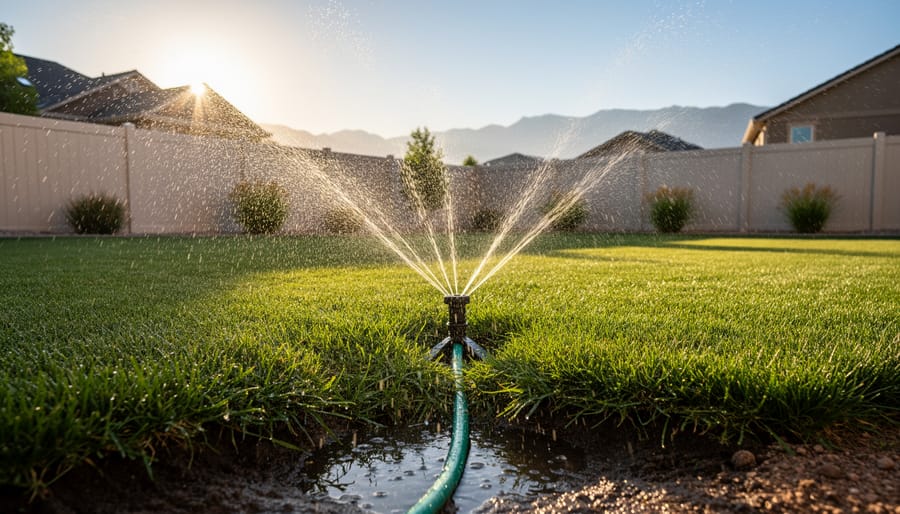
Utah’s summer heat demands a strategic approach to keep your lawn thriving while respecting water conservation. During the peak growing season from June through August, aim to water your lawn 3-4 times per week rather than daily. This deeper, less frequent watering encourages roots to grow deeper into the soil, creating a more drought-resistant lawn that can better handle our arid climate.
Timing is everything when it comes to efficient watering. The best times to water are in the early morning hours, ideally between 4 AM and 9 AM. This window allows water to penetrate the soil before the day’s heat causes excessive evaporation, and it gives grass blades time to dry before nightfall, reducing the risk of fungal diseases. If morning watering isn’t possible, early evening works as a second choice, but avoid watering in the heat of midday when you’ll lose significant water to evaporation.
Your Utah lawn needs approximately 1.5 to 2 inches of total water per week during summer, including any rainfall. To measure this, place empty tuna cans around your lawn while watering and see how long it takes to accumulate the right amount. This practical approach helps you dial in your watering schedule and avoid both overwatering and underwatering, striking that perfect balance between a lush lawn and responsible water use.
Dealing with Extreme Heat
Utah’s scorching summer days can push even the toughest grass to its limits. Watch for telltale signs of heat stress: grass blades folding or rolling inward, a blue-gray tint replacing vibrant green, or footprints that remain visible long after you’ve walked across the lawn. These signals mean your turf needs help, fast.
During extreme heat waves, you may need to add a quick, light watering session during the hottest part of the day—just 5-10 minutes to cool the grass canopy. This is one exception to the early-morning rule. However, your deep, thorough waterings should still happen at dawn to encourage strong roots.
When drought restrictions hit, prioritize strategically. Focus water on high-visibility areas near your home and let peripheral zones go dormant. Dormant grass looks brown but isn’t dead—it’s simply sleeping and will bounce back with cooler temperatures and rain. Raise your mower height to 3-4 inches to shade roots and reduce water loss.
Remember, a slightly brown lawn during August is often the most sustainable choice. Check out our comprehensive summer heat strategies for additional water-saving techniques that keep your lawn resilient without excessive resource use.
Water-Saving Summer Techniques
Utah’s intense summer sun can stress your lawn, but a few smart adjustments will help you conserve water while keeping grass healthy. Start by raising your mower blade to 3-4 inches—taller grass develops deeper roots that access moisture more efficiently and shades soil to reduce evaporation. Leave those clippings on the lawn too; they act as natural mulch, returning moisture and nutrients to the soil.
Consider upgrading to a smart irrigation controller that adjusts watering schedules based on real-time weather data and evapotranspiration rates. These devices can reduce water use by 20-50% compared to traditional timers. If a full upgrade isn’t in your budget right now, simply adjust your existing controller monthly to match seasonal needs rather than setting it once and forgetting it.
Water deeply but infrequently—aim for 1-1.5 inches per week, including rainfall. This encourages those deep roots we mentioned earlier. Early morning watering between 4-9 AM minimizes evaporation loss and gives grass time to dry before nightfall, reducing disease risk.
Fall Watering Transition (September-November)
Tapering Your Watering Schedule
As fall progresses in Utah, think of tapering like gradually weaning yourself off your morning coffee—you don’t want to go cold turkey! Start reducing your watering frequency around mid-September, cutting back by about 25% each week. If you’ve been watering three times weekly, drop to twice, then once, then every ten days as temperatures cool.
Keep a close eye on Utah’s famously unpredictable weather patterns. We’ve all experienced those surprise warm spells in October that make your lawn think it’s still August! During these unexpected heat waves, bump up your watering slightly, but resist the urge to return to summer habits. Your grass is naturally slowing down its growth, preparing for dormancy.
Similarly, early snowfall can arrive anywhere from late October through November. Once snow blankets your lawn, you’re essentially done watering for the season—nature’s taking over! However, if we experience a dry fall with temperatures consistently above 50 degrees and no precipitation, continue light watering every two weeks until the ground freezes.
Monitor soil moisture by sticking a screwdriver into the ground. If it penetrates easily six inches down, you’re good. This gradual reduction helps your lawn harden off properly for winter while conserving precious water resources—a win-win for both your landscape and Utah’s water supply.
Final Watering Before Winter
As Utah’s growing season winds down, typically in late October or early November, you’ll want to perform one final deep watering before completely shutting down your irrigation system. This crucial step helps your lawn build moisture reserves for winter survival, especially important in Utah’s dry climate where winter precipitation may not be enough. Apply about one inch of water when daytime temperatures consistently drop below 50°F but before the ground freezes solid. This deep soaking protects grass roots from desiccation during dormancy and helps prevent winter damage.
Once you’ve completed this final watering and your lawn is preparing for winter dormancy, it’s time to winterize your irrigation system. Blow out all water lines using compressed air to prevent freeze damage, drain backflow preventers, and shut off outdoor water supplies. Most Utah municipalities require winterization by mid-November, and skipping this step can lead to costly repairs come spring.
Winter Considerations (December-February)
Good news for Utah gardeners – winter is your lawn’s official break time, and yours too! During December through February, your lawn enters dormancy, turning that golden-brown color you’ll see across neighborhoods. This is completely natural and actually healthy for cool-season grasses like Kentucky bluegrass and tall fescue that dominate Utah landscapes.
Here’s the beautiful part: dormant lawns need virtually no water. Your grass is essentially hibernating, conserving energy until spring arrives. In most winters, natural precipitation provides enough moisture to keep root systems hydrated. However, Utah’s winters can surprise us with extended dry spells and those oddly warm stretches that make you question if it’s really February.
If you experience two to three weeks without snow or rain, and daytime temperatures climb above 40 degrees Fahrenheit, consider giving your lawn a light drink – maybe a quarter inch of water on a warmer afternoon. This prevents roots from drying out completely, which can stress your grass come spring.
The real winter priority is protecting your irrigation system. Before the first hard freeze, make sure you’ve properly winterized your sprinkler system by blowing out all water from the lines. Trapped water expands when frozen and can crack pipes, damage valves, and create expensive spring repairs. If you haven’t done this yet, call a professional – it’s worth the investment.
Think of winter as your planning season. Use this downtime to research sustainable watering practices and prepare your irrigation strategy for the growing season ahead.
Choosing the Right Watering Method for Utah Lawns
Traditional Sprinkler Systems
If you’re still using traditional sprinkler systems in Utah, you’re certainly not alone—they remain the most common watering method for lawns across the state. The key is understanding how to use them efficiently in our dry climate.
Pop-up spray heads are great for smaller areas and flower beds, typically covering 4-15 feet with a fixed spray pattern. They deliver water quickly but can be prone to runoff if your soil doesn’t absorb moisture fast enough. Rotor heads, on the other hand, are better suited for larger lawn spaces, rotating to distribute water over 15-50 feet. They apply water more slowly, giving Utah’s clay-heavy soils time to soak it in without waste.
Impact sprinklers, those classic “tick-tick-tick” models, are workhorses for irregular-shaped yards and can handle our hard water without clogging as easily as newer systems.
Here’s the sustainability reality check: traditional sprinklers typically operate at about 60-75% efficiency, meaning a quarter of your water can be lost to evaporation and overspray—especially problematic during Utah’s hot, windy summer afternoons. To improve efficiency, water during early morning hours between 4-8 AM when temperatures are cooler and winds are calmer. Also, regularly check for broken heads, misaligned spray patterns, and leaks. These simple maintenance steps can significantly reduce water waste while keeping your lawn healthy and green.
Smart Irrigation Technology
Let me tell you about one of the most exciting developments in lawn care—smart irrigation technology that takes the guesswork out of watering while saving you money and precious water resources. If you’ve ever stood outside wondering whether your lawn needs water or worried about overwatering during Utah’s unpredictable weather patterns, this technology is a game-changer.
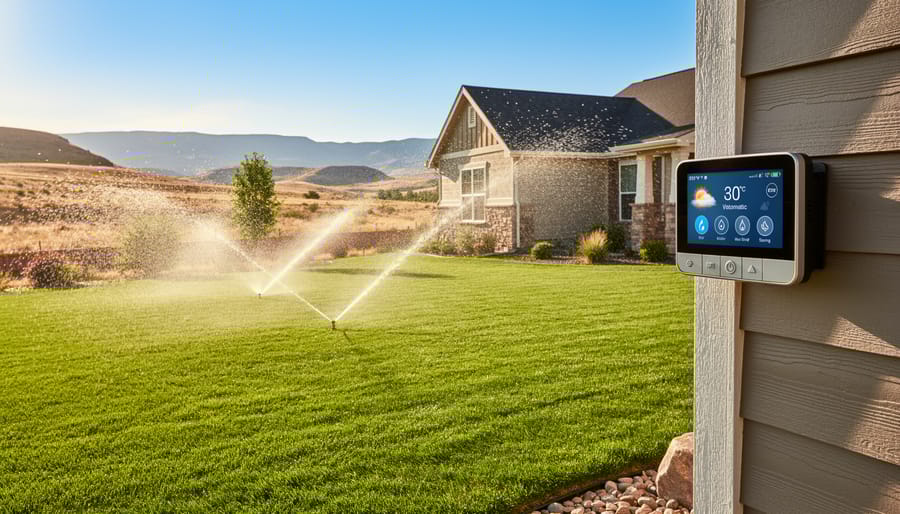
Weather-based controllers, also called smart controllers, automatically adjust your watering schedule based on real-time weather data. They monitor temperature, humidity, wind, and rainfall, then calculate exactly how much water your lawn needs. During Utah’s hot July afternoons, they’ll increase watering appropriately. When those surprise thunderstorms roll in, they’ll skip scheduled waterings entirely. It’s like having a lawn care expert making decisions for you 24/7.
Soil moisture sensors take things a step further by measuring actual moisture levels in your root zone. These clever devices prevent your sprinklers from running when the soil already has adequate moisture—something that’s particularly valuable in Utah’s clay-heavy soils that retain water longer than you might expect. You’ll avoid the common mistake of watering on a schedule regardless of actual need.
The sustainability benefits are impressive. Most homeowners using smart irrigation technology reduce their outdoor water use by 20-50 percent while maintaining healthier, greener lawns. In Utah’s semi-arid climate where water conservation matters tremendously, that’s significant. Plus, many local water districts offer rebates on smart controllers, making them an economical choice that pays for itself through lower water bills. Your lawn gets exactly what it needs, nothing more, nothing less.
Common Utah Lawn Watering Mistakes
Even experienced gardeners can fall into common watering traps that waste water and harm lawn health. Let’s walk through the most frequent mistakes I see in Utah yards and how to fix them.
Overwatering tops the list. It’s tempting to think more water equals a healthier lawn, but Utah’s clay-heavy soils hold moisture longer than you’d expect. When you overwater, you’re not just wasting a precious resource—you’re creating shallow root systems, encouraging fungal diseases, and literally drowning your grass. If your lawn feels squishy underfoot or you notice mushrooms popping up, you’re overdoing it. The solution? Water deeply but less frequently, allowing the top few inches of soil to dry between sessions. This encourages roots to grow deeper, making your lawn more drought-resistant.
Watering at the wrong time is another wallet-drainer. Midday watering in Utah’s intense sun means up to 50 percent of your water evaporates before reaching the roots. Evening watering sounds logical, but it leaves grass blades wet overnight—a welcome mat for fungal diseases in our temperature-fluctuating climate. Early morning watering, ideally between 4 and 9 AM, gives grass time to dry while minimizing evaporation.
Ignoring your yard’s microclimates wastes both water and effort. That shady north-facing slope needs far less water than the sunny patch near your driveway. Take time to observe which areas dry out faster and adjust your zones accordingly. Your sprinkler system should reflect these differences.
Finally, set-it-and-forget-it watering schedules don’t work in Utah’s variable climate. After a rainstorm or during cooler weeks, your lawn needs less supplemental water. Smart controllers can adjust automatically, but even a simple manual check saves water. Step on your grass—if it springs back quickly, skip that watering session. Sustainability starts with paying attention to what your lawn actually needs, not what the timer says.
Caring for your Utah lawn doesn’t have to mean sky-high water bills or wasted resources. By adjusting your watering schedule throughout the year and staying mindful of our unique climate challenges, you’re making a real difference for both your yard and our environment. Remember, there’s no one-size-fits-all approach here. Your lawn will communicate its needs through color changes, soil moisture levels, and growth patterns, so pay attention and adjust accordingly.
The strategies we’ve covered aren’t just about conservation for conservation’s sake. When you water deeply but less frequently, when you adjust for seasonal temperature shifts, and when you choose the right time of day to irrigate, you’re actually creating a healthier, more resilient lawn with deeper roots and better drought resistance. Plus, you’ll notice the savings on your water bill pretty quickly.
Start implementing these practices this week. Check your sprinkler system, set up a seasonal schedule, and commit to monitoring your lawn’s actual needs rather than relying on habit. Your lawn will reward you with lush, vibrant growth, and you’ll have the satisfaction of knowing you’re being a responsible steward of Utah’s precious water resources.