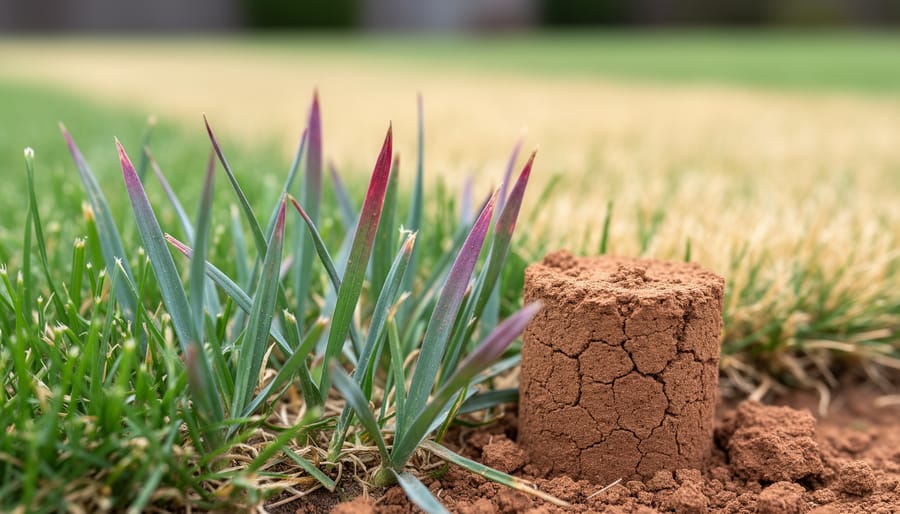
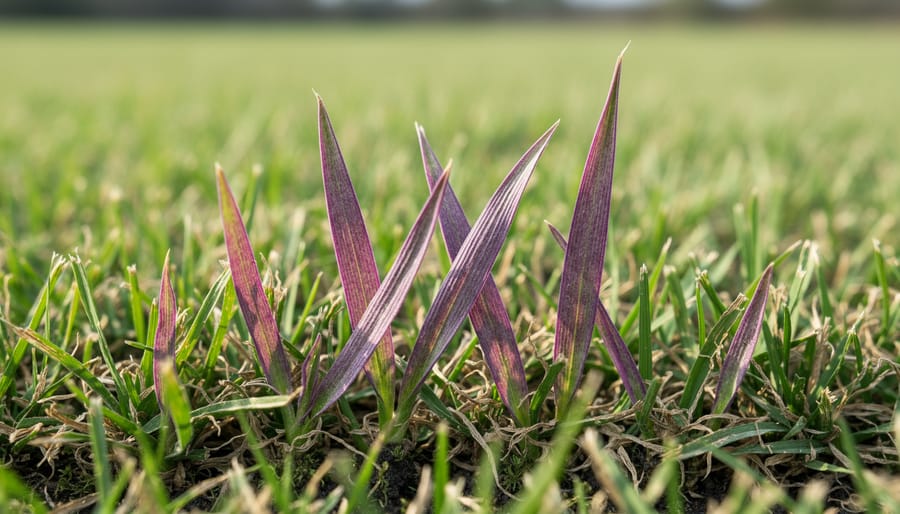
Look closely at your lawn’s older blades—if they’re showing a dull, blue-green color with purple or reddish tints, especially along the leaf tips, you’re likely witnessing phosphorus deficiency in action. This nutrient shortage stunts root development, leaving your grass vulnerable to drought, disease, and winter damage, even when nitrogen levels seem adequate.
Phosphorus deficiency isn’t always about lacking phosphorus in your soil—it’s often a matter of availability. Cold soil temperatures below 50°F lock up phosphorus, making it inaccessible to grass roots even when soil tests show sufficient levels. Similarly, compacted soil, poor drainage, and pH levels outside the 6.0-7.0 range create chemical conditions that bind phosphorus into forms your grass simply cannot absorb.
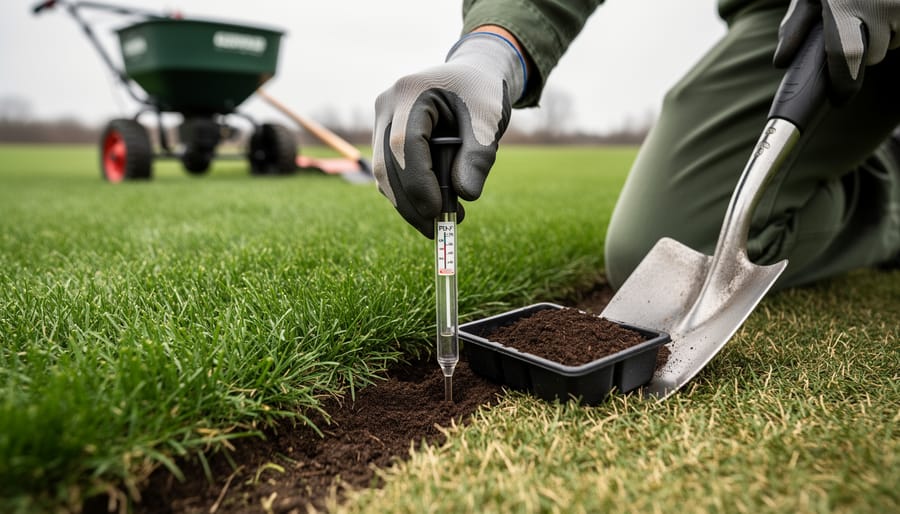
Before reaching for any fertilizer, get a professional soil test. This single step prevents the most common mistake homeowners make: adding phosphorus when their soil already contains plenty but environmental conditions prevent uptake. Many regions now restrict phosphorus fertilizers due to water pollution concerns, making unnecessary applications both illegal and environmentally harmful.
The good news? Fixing phosphorus deficiency sustainably means addressing root causes rather than just symptoms. Aerating compacted soil, improving drainage, adjusting pH, and timing applications when soil temperatures rise all enhance phosphorus availability naturally. When supplementation is genuinely needed, targeted applications guided by soil test results deliver results without excess runoff that damages our waterways.
Understanding phosphorus dynamics transforms you from someone applying products blindly into a steward who works with soil chemistry to build genuinely healthy, resilient turf.
What Phosphorus Actually Does for Your Lawn
Think of phosphorus as your lawn’s personal trainer and energy coach rolled into one. While nitrogen gets all the glory for those lush green blades, phosphorus is quietly working behind the scenes to build a foundation for long-term lawn health.
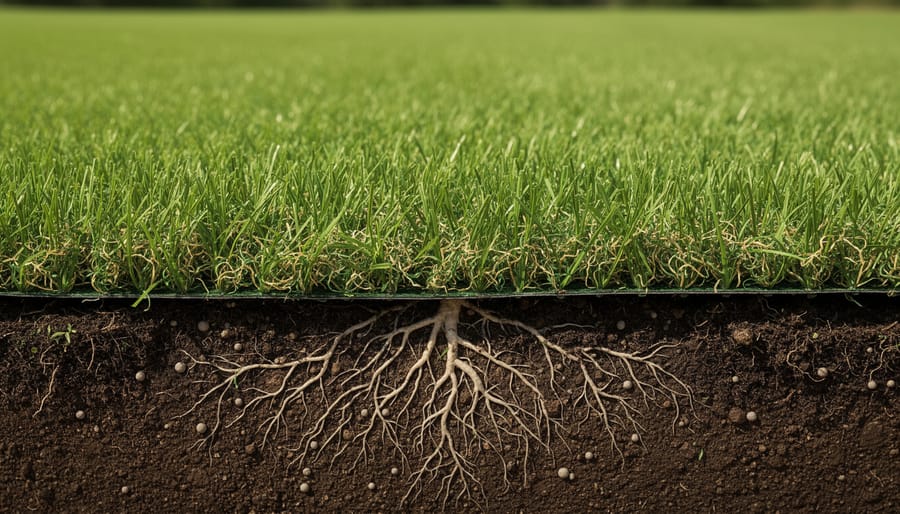
The most critical job phosphorus handles is root development. Just like a building needs a strong foundation, your grass needs robust roots to thrive. Phosphorus stimulates root growth, helping your lawn establish deep, extensive root systems that can reach water and nutrients even during dry spells. This is especially important for new lawns or recently overseeded areas, where young grass plants are literally putting down roots for the first time.
But phosphorus doesn’t stop there. It’s also the nutrient responsible for energy transfer within the plant itself. Imagine phosphorus as the electrical wiring in your home, carrying power to where it’s needed most. In grass, phosphorus helps move energy from the leaves (where photosynthesis happens) to the roots, stems, and new growth areas. Without adequate phosphorus, this energy transfer system breaks down, leaving your grass weak and struggling.
Additionally, phosphorus plays a vital role in cell division and reproduction. When your grass produces new shoots, flowers, or seeds, phosphorus is there orchestrating the process. It’s particularly important during periods of active growth in spring and fall.
For those of us interested in sustainable lawn care, understanding phosphorus helps us make smarter fertilization choices. Many established lawns actually need very little phosphorus since it doesn’t leach away like nitrogen does. Testing your soil before adding phosphorus prevents waste, saves money, and protects local waterways from nutrient runoff. That’s a win for your lawn and the environment.
How to Spot Phosphorus Deficiency in Your Grass
The Tell-Tale Signs You Can’t Miss
Spotting phosphorus deficiency in your lawn is like reading your grass’s health report—once you know what to look for, the signs become unmistakable. The good news? Your turf will tell you exactly what it needs if you pay attention to these telltale symptoms.
In the early stages, you might notice your grass taking on an unusually dark green to bluish-green appearance. While deep green sounds healthy, this particular shade has an almost unnatural quality that stands out from the vibrant green of well-nourished turf. Think of it as your lawn trying too hard to compensate for what it’s missing.
As the deficiency progresses, the real showstopper appears: a distinctive purplish or reddish discoloration. This purple tinting typically starts at the leaf tips and edges, gradually spreading across older blades. You’ll notice it most prominently on mature grass rather than new growth, since plants prioritize sending limited phosphorus to younger tissues.
Stunted growth becomes increasingly obvious as well. Your grass simply won’t grow at its normal pace, even during peak growing season. The blades may appear thin and sparse, and your lawn might develop a lackluster, tired appearance that no amount of watering seems to fix. Some grasses also develop a narrow, spindly look rather than the robust blades you’d expect.
One practical tip: these symptoms often appear more pronounced during cool weather, when phosphorus uptake naturally slows down. If you’re seeing these signs in early spring or fall, phosphorus availability might be your culprit. The key is catching these visual cues early, before your lawn’s health significantly declines.
Why It’s Easy to Confuse with Other Problems
Here’s the thing about phosphorus deficiency: it’s a master of disguise. I’ve seen countless gardeners scratching their heads because their lawn looks sickly, but they can’t quite put their finger on what’s wrong. That’s because phosphorus deficiency shares symptoms with several other common lawn problems, making it tricky to diagnose without proper testing.
The most common mix-up is with nitrogen deficiency. Both create that disappointing stunted growth and discolored grass. However, there’s a key difference: nitrogen deficiency turns your grass pale yellow-green starting from the tips, while phosphorus deficiency brings on those distinctive purplish or reddish tints, especially on older leaf blades. Think of it as nitrogen making your lawn look faded, while phosphorus makes it look bruised.
Drought stress can also fool you since both cause slow growth and poor root development. The telltale sign? Drought-stressed grass bounces back relatively quickly after watering, but phosphorus-deficient turf stays stubborn and weak even with adequate moisture.
Certain fungal diseases produce purple or red discoloration too, but they typically show irregular patches rather than the uniform appearance of phosphorus deficiency. Disease spots also often have distinct borders or visible fungal growth.
The bottom line? Don’t guess. A simple soil test removes all uncertainty and saves you from throwing solutions at the wrong problem. It’s the most sustainable approach because you’ll only apply what your lawn actually needs.
Why Phosphorus Goes Missing from Turf Soils
The pH Problem That Locks Up Nutrients
Here’s a scenario you might find familiar: you’ve added fertilizer, you’re watering properly, but your grass still looks pale and stunted. The culprit might not be a lack of phosphorus in your soil—it could be that the phosphorus is there, but locked away where your grass roots can’t reach it.
This is where soil pH affects nutrient availability in dramatic ways. Think of pH as the key that either unlocks or locks up nutrients. When your soil pH drops below 6.0 (acidic conditions), phosphorus binds tightly to iron and aluminum compounds, forming insoluble complexes that grass roots simply can’t absorb. On the flip side, when pH climbs above 7.0 (alkaline conditions), phosphorus buddies up with calcium and magnesium, again becoming unavailable.
The sweet spot? A pH range between 6.0 and 7.0, where phosphorus remains in its most accessible form. Within this range, your grass can efficiently take up the phosphorus it needs for strong root development and energy transfer.
This pH problem explains why simply adding more phosphorus fertilizer often doesn’t solve deficiency symptoms. You might be pouring nutrients onto your lawn that immediately get chemically bound and rendered useless. Before reaching for more fertilizer, test your soil pH first. Adjusting it to the ideal range can unlock existing phosphorus reserves, saving you money and preventing unnecessary fertilizer runoff that impacts local waterways.
When Your Soil Chemistry Works Against You
Sometimes the phosphorus you need is actually in your soil, but it’s locked up like money in a frozen bank account. This frustrating phenomenon, called phosphorus fixation, happens when certain soil minerals chemically bind with phosphorus, making it unavailable to your grass roots.
In acidic soils with pH below 6.0, iron and aluminum are the culprits. These metals grab onto phosphorus molecules and hold them tight, creating compounds your grass simply can’t access. Think of it like having groceries in your pantry but locked behind a door you can’t open.
On the flip side, alkaline soils above pH 7.5 present the opposite problem. Here, calcium binds with phosphorus to form calcium phosphate, which is equally unavailable to your lawn. This is particularly common in areas with high limestone content or where excessive lime applications have raised pH too high.
The good news? Maintaining your soil pH between 6.0 and 7.0 dramatically reduces fixation and keeps phosphorus accessible. Regular soil testing helps you catch these imbalances before they become problems. If you discover fixation is occurring, adjusting your pH is the most sustainable long-term solution, though it takes time and patience to see results.
How Phosphorus Escapes Your Lawn
Understanding where your lawn’s phosphorus goes helps you prevent deficiency before it starts. Unlike nitrogen that floats away into the air, phosphorus takes a more direct route off your property through runoff and erosion.
When rain hits your lawn, it doesn’t all soak straight down. On sloped areas especially, water flows across the surface, picking up soil particles and nutrients along the way. Phosphorus binds tightly to soil particles, so when those particles wash away during heavy downpours, your valuable phosphorus goes with them. This is particularly problematic in spring when bare patches exist or right after aeration when soil is more vulnerable.
Erosion works similarly but more gradually. Wind, foot traffic, and repeated mowing on wet grass can all dislodge soil particles over time. Each particle that leaves carries a bit of phosphorus with it. Compacted soils are actually more susceptible because water can’t infiltrate properly, leading to more surface runoff.
Here’s why this matters beyond your lawn: that phosphorus-laden runoff eventually reaches storm drains, streams, and lakes. While your grass desperately needs phosphorus, excess amounts in waterways fuel algae blooms that harm aquatic ecosystems. This is precisely why preventing phosphorus loss serves both your lawn’s health and environmental responsibility. Simple practices like maintaining healthy grass coverage, aerating compacted areas, and avoiding overfertilization keep phosphorus where it belongs.
Getting Your Soil Tested (The Right Way)
Before you rush out to buy phosphorus fertilizer, let me share the single most important step that’ll save you time, money, and potentially protect your local waterways: getting a proper soil test. I know it might seem like an extra hassle, but trust me, this simple step is the foundation of responsible lawn care and the key to actually solving your grass problems rather than just guessing.
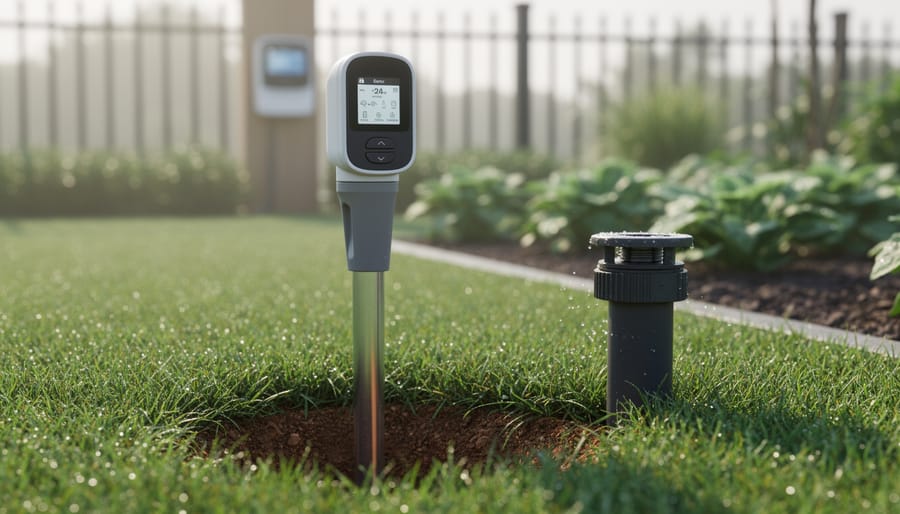
The best time to test your soil is either early spring or fall, when you’re not in the middle of a fertilization program. This gives you the most accurate baseline reading of what’s actually available to your grass roots. Avoid testing immediately after fertilizing, as you’ll get skewed results that don’t reflect your soil’s true nutrient-holding capacity.
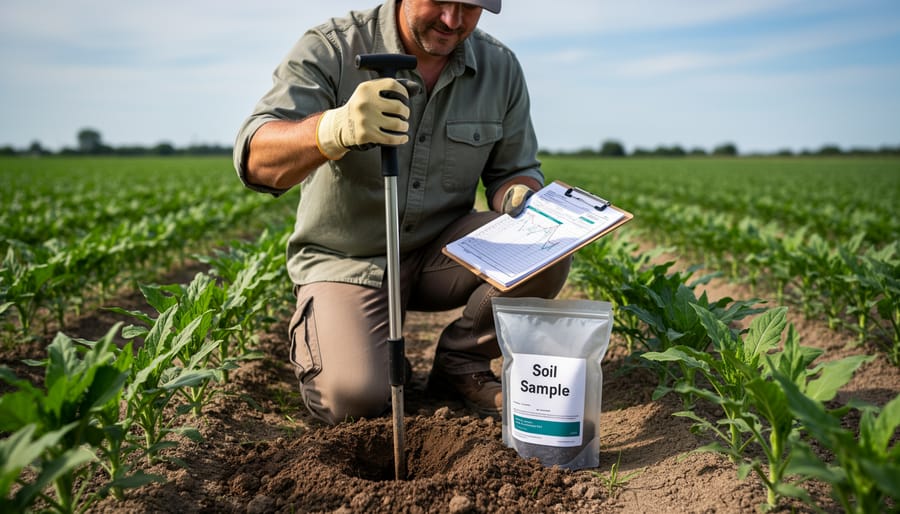
Collecting samples properly makes all the difference. Here’s the straightforward approach: using a clean trowel or soil probe, collect 10-15 samples from different spots across your lawn, each about 4-6 inches deep. Mix these together in a clean bucket to create one composite sample. This method accounts for variations across your yard and gives you a reliable average. Remove any grass, thatch, or debris from your samples, and let the soil air-dry if it’s wet before sending it off.
When choosing a testing service, contact your local cooperative extension office first. They typically offer affordable, comprehensive testing that includes phosphorus levels and pH measurements. Many provide results within two weeks along with specific fertilization recommendations for your region.
Now, interpreting those results is where things get practical. Most soil tests measure phosphorus in parts per million or use categories like low, medium, or high. Here’s the crucial part: unless your test shows genuinely low phosphorus levels, your grass probably doesn’t need more. Many established lawns have adequate or even excess phosphorus from years of fertilization. In fact, over-application is far more common than deficiency, which is why this testing step protects both your lawn and the environment from unnecessary nutrient runoff.
Smart Ways to Prevent Phosphorus Loss
Maintain the Right Soil pH
Getting your soil pH right is one of the most effective ways to unlock phosphorus that’s already in your soil. Phosphorus becomes less available when pH drops below 6.0 or rises above 7.5, essentially trapping nutrients your grass desperately needs. The good news? adjusting soil pH is straightforward once you know where you stand.
Start with a proper soil test from your local extension office or a quality home kit. This tells you not just your current pH, but also how much amendment you’ll need. For acidic soils below 6.0, apply lime according to test recommendations, typically in fall for best results. Pelletized lime is easier to spread and acts faster than traditional ground limestone.
If your soil is too alkaline, elemental sulfur or iron sulfate can gradually lower pH. Work it into the top few inches of soil and be patient, as changes take several months. Remember, aim for that sweet spot between 6.0 and 7.0 where phosphorus availability peaks. Retest every two to three years to maintain optimal conditions and keep your grass thriving sustainably.
Build Better Soil Structure
Healthy soil structure is your secret weapon against phosphorus deficiency. When soil particles clump together properly, they create tiny spaces that hold both air and nutrients, making phosphorus more accessible to grass roots. Think of it like organizing a pantry – everything’s easier to reach when there’s good structure.
Start by adding organic matter regularly. Compost, aged manure, or quality leaf mold work wonders for improving soil health and creating those beneficial spaces. Spread a quarter-inch layer across your lawn each spring and fall, and let nature do the mixing. These organic additions also feed soil microbes that help release locked-up phosphorus.
Aeration is equally important, especially for compacted lawns. Core aeration creates channels for roots to explore deeper soil layers where phosphorus tends to accumulate. Aim to aerate once yearly in fall or spring when grass is actively growing.
Don’t forget about earthworms – they’re natural aerators and soil builders. Avoid harsh chemicals that harm these helpful allies. As soil structure improves, you’ll notice grass roots growing deeper and accessing nutrients more efficiently, reducing your reliance on fertilizers while creating a naturally resilient lawn.
Keep Phosphorus Where It Belongs
Once you’ve worked hard to build up phosphorus levels in your soil, the last thing you want is for it to wash away! The good news is that keeping phosphorus where it belongs—in your soil, not in nearby waterways—is entirely manageable with some smart practices.
Start by looking at your lawn’s grading. If you notice water rushing across your yard during rainstorms, you might have erosion issues that are carrying precious phosphorus away. Gentle slopes and proper drainage can make a huge difference. Consider creating subtle berms or swales to slow water movement and give it time to soak into the soil rather than running off.
Buffer zones are your lawn’s best friend when it comes to phosphorus retention. If your property borders a stream, pond, or storm drain, establish a thick strip of diverse vegetation—native grasses, groundcovers, or even a rain garden—between your turf and the water. These buffer zones act like natural filters, catching any nutrients before they can escape.
Here’s the beautiful irony: the best way to prevent phosphorus loss is by maintaining the very thing you’re trying to improve—a healthy, dense grass cover. Thick turf acts as a living blanket, holding soil in place and absorbing rainfall before it becomes runoff. Regular overseeding of thin spots and proper mowing practices create this protective barrier while keeping your phosphorus investment right where you need it.
Fixing Phosphorus Deficiency Without Overdoing It
Choosing the Right Phosphorus Source
Once you’ve confirmed your lawn needs phosphorus, it’s time to choose the right product. The good news? You have several excellent options, each with its own strengths depending on your situation and gardening philosophy.
Synthetic phosphorus fertilizers, typically containing highly soluble forms like monoammonium phosphate or triple superphosphate, work quickly—often showing results within weeks. They’re precise, affordable, and convenient for covering large areas. The downside? They can wash away more easily during heavy rain, potentially contributing to water pollution if overused. If you choose synthetic options, apply them according to your soil test recommendations and consider timing applications before periods of moderate rainfall, not downpours.
For those leaning toward organic solutions, bone meal is a popular choice among sustainable gardeners. It releases phosphorus slowly as soil microbes break it down, reducing leaching risk while improving soil health over time. The trade-off is patience—you might wait several months to see full results. Rock phosphate offers another slow-release option, though it works best in acidic soils where phosphorus becomes more available.
Composted manure deserves mention too, providing moderate phosphorus levels along with beneficial organic matter that improves overall soil structure. It’s particularly valuable if you’re addressing multiple soil deficiencies simultaneously.
My recommendation? If you need quick correction of severe deficiency, start with a targeted synthetic application, then transition to organic sources for long-term maintenance. This balanced approach addresses immediate problems while building sustainable soil health for the future. Always remember that more isn’t better—apply only what your soil test indicates you need.
Application Timing and Techniques That Actually Work
Timing matters tremendously when it comes to phosphorus application. The best window is during early spring or fall when your grass is actively growing and root development is at its peak. That’s when your lawn can actually grab and use the phosphorus you’re offering, rather than letting it sit there vulnerable to runoff.
Here’s something I learned the hard way: never apply phosphorus fertilizer right before heavy rain. I once fertilized my lawn on a Friday, ignored the weekend forecast, and watched a downpour wash my efforts straight into the storm drain. Wait for a period when you’ll get light moisture within a few days, but nothing torrential. This gives the phosphorus time to bind with soil particles where roots can access it.
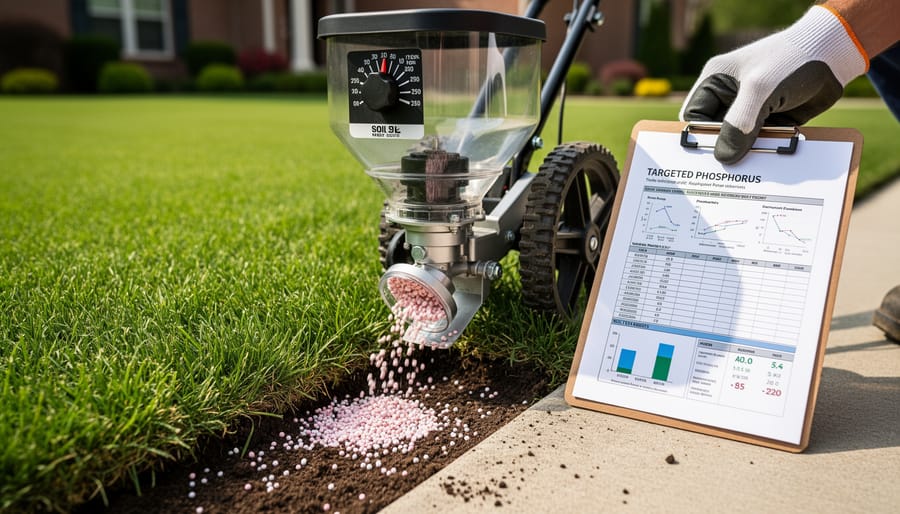
Application technique is equally important. Use a spreader for even distribution and always follow package instructions to the letter. More is definitely not better with phosphorus. Over-application won’t make your grass greener faster, but it will increase the risk of environmental pollution through runoff into nearby waterways.
Consider incorporating phosphorus into the soil rather than just broadcasting it on top. This is especially effective during lawn renovation or when overseeding. Working it into the root zone puts nutrients exactly where growing roots need them.
One sustainable approach gaining traction is banding phosphorus near seed rows during establishment, which uses less product while delivering better results. For established lawns, liquid phosphorus applications can provide quicker uptake during critical growth periods, though granular remains the most practical choice for most homeowners.
Why More Isn’t Better
Here’s the thing about phosphorus: more definitely isn’t better. While fixing a deficiency is important, over-application creates serious problems that extend far beyond your lawn. When you add more phosphorus than your grass needs, the excess doesn’t just disappear. It binds to soil particles and accumulates, or worse, washes off during rain and irrigation into storm drains, streams, and lakes. This runoff fuels algae blooms that deplete oxygen in water bodies, harming fish and aquatic ecosystems. It’s a real environmental concern that affects our communities. That’s why soil testing before adding phosphorus is so crucial. It protects waterways while saving you money on unnecessary products. By applying only what your lawn actually needs, you’re practicing responsible stewardship that keeps your grass healthy and your local environment thriving. Sustainable lawn care means working smarter, not harder, and respecting the delicate balance between your yard and the broader ecosystem.
Long-Term Strategies for Phosphorus-Healthy Lawns
Maintaining adequate phosphorus levels doesn’t have to mean constantly reaching for fertilizer. Think of it as creating a self-sustaining ecosystem right in your backyard. The most effective long-term strategy is one that works with nature rather than against it.
Start with grasscycling, which is simply leaving grass clippings on your lawn after mowing. Those clippings are nutrient goldmines, returning about 25% of your lawn’s nitrogen needs and valuable phosphorus back to the soil. As they decompose, they release nutrients slowly and steadily. Just make sure you’re mowing frequently enough that clippings are short and break down quickly.
Proper mowing height makes a bigger difference than most people realize. When you maintain grass at the higher end of its recommended range, you’re encouraging deeper root growth. Those deeper roots access phosphorus that shallow-rooted grass simply can’t reach. For cool-season grasses like fescue or bluegrass, aim for 3 to 4 inches. Warm-season varieties like bermudagrass do well at 1.5 to 2.5 inches. This simple adjustment helps your lawn naturally access existing soil phosphorus more effectively.
Choosing the right grass variety for your soil conditions sets you up for long-term success. Some grasses are naturally more efficient at extracting phosphorus from less-than-ideal soil. Fine fescues, for example, tolerate low-phosphorus conditions better than Kentucky bluegrass. If you’re establishing a new lawn or overseeding, consider varieties bred for nutrient efficiency.
Finally, resist the urge to over-fertilize. A healthy lawn doesn’t mean dumping nutrients constantly. Regular soil testing every 2-3 years helps you apply only what’s needed, when it’s needed. This approach protects your wallet, reduces environmental runoff, and creates a truly resilient lawn that thrives through sustainable practices. Remember, patience and consistency beat quick fixes every time.
Understanding phosphorus availability in your lawn isn’t just about fixing a problem—it’s about creating a foundation for lasting health and beauty. If you take away one thing from this guide, let it be this: soil testing is your starting point. Before you add any amendments or reach for fertilizers, know what your soil actually needs. A simple test removes the guesswork and prevents you from contributing to environmental problems like phosphorus runoff, which affects our waterways and communities.
The good news is that managing phosphorus doesn’t require complicated chemistry or expensive interventions. Most of the time, it’s about working with your soil’s natural processes rather than fighting against them. Adjusting pH, building organic matter, avoiding compaction, and choosing the right grass varieties for your conditions—these strategies align with how nature intended lawns to thrive. When you approach lawn care this way, you’re not just treating symptoms; you’re building resilient turf that requires less intervention over time.
Remember, a beautiful lawn doesn’t have to come at the expense of the environment. By understanding what phosphorus does, how it moves through your soil, and when it’s genuinely needed, you’re practicing responsible stewardship. You have the power to create that lush, green space you’ve envisioned while protecting the natural resources around you. That’s not just good lawn care—it’s gardening with purpose.