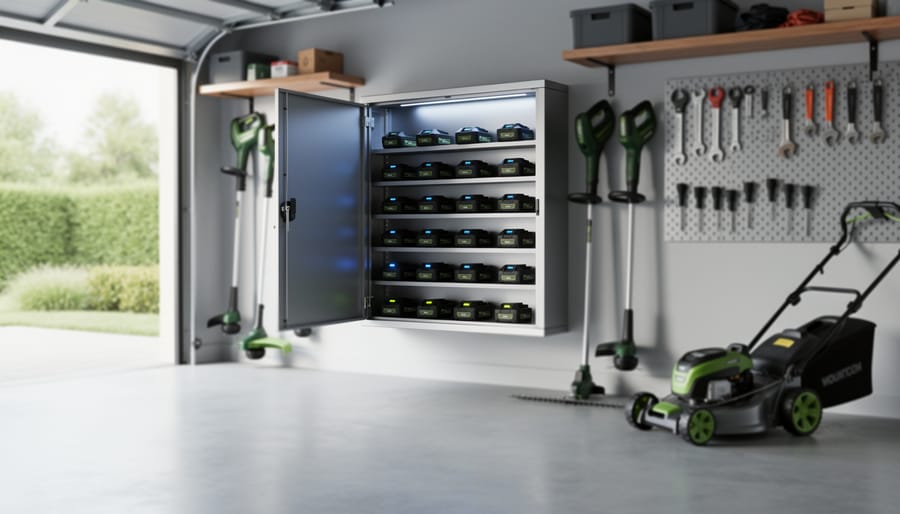
Invest in a dedicated charging station designed specifically for battery systems if you own multiple cordless lawn equipment pieces—these cabinets prevent the chaos of tangled cords, misplaced batteries, and the frustrating morning scramble to find a charged power source before tackling your yard work.
Store batteries at room temperature in a ventilated space rather than leaving them scattered in hot sheds or damp garages, where extreme conditions silently drain capacity and shorten lifespan by up to 40 percent.
Rotate your battery collection systematically through charging cycles instead of repeatedly using the same one or two batteries, which causes uneven wear and leaves you with a drawer full of underperforming units when you need them most.
Label each battery with its purchase date and track performance over time, creating a simple replacement schedule that prevents mid-season failures during peak growing months.
Battery charging cabinets solve these common pain points by centralizing your power management system into one organized hub. Think of it as a command center for your sustainable lawn care routine—a dedicated space where batteries charge safely, store properly, and remain ready for action. Whether you’re maintaining a small suburban yard or managing larger property, the right charging cabinet transforms battery management from a frustrating afterthought into an effortless part of your gardening workflow. These solutions range from simple wall-mounted racks to sophisticated climate-controlled units, and understanding which features matter most for your specific needs ensures you protect your investment while keeping your equipment running at peak performance throughout the season.
The Real Cost of Poor Battery Storage
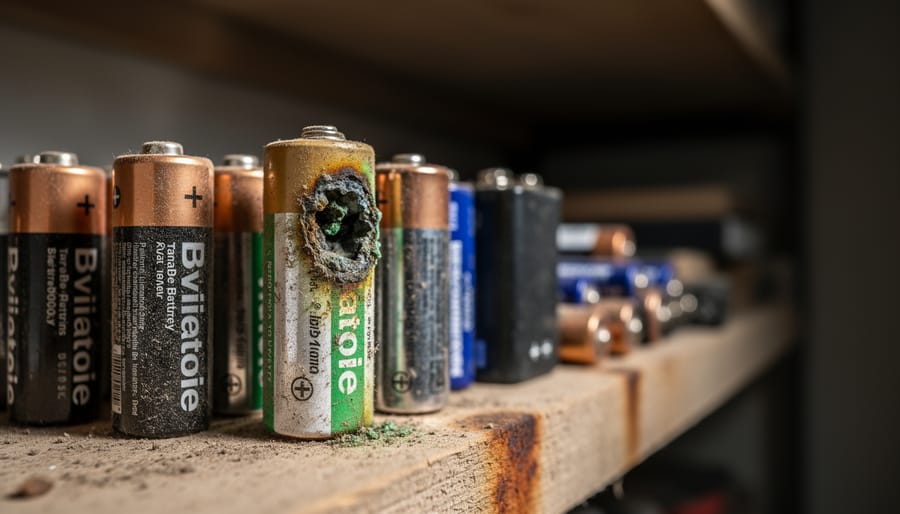
Why Batteries Degrade Faster Than They Should
If you’re like most gardeners with cordless tools, you probably store your batteries wherever there’s space—maybe in the garage, garden shed, or workshop. Here’s the thing: those spaces are actually working against your battery investments, and you might not even realize it.
Temperature extremes are battery enemy number one. When summer heat pushes your garage or shed above 85°F, the chemical reactions inside lithium-ion batteries accelerate, causing permanent capacity loss. Winter cold below 32°F slows these reactions to a crawl, reducing performance and potentially causing internal damage. That battery that seemed fine last season? It’s been quietly degrading through months of temperature stress.
Humidity creates another layer of problems. Moisture can corrode battery terminals and seep into charging ports, creating resistance that affects charging efficiency. I’ve seen perfectly good batteries rendered useless after just one humid summer in an unventilated shed.
Then there’s dust and debris. Garden sheds are notorious for accumulated dirt, and when that gets into battery contacts or cooling vents, it interferes with proper charging and heat dissipation. Your lawn care equipment deserves better.
Here’s where sustainability comes in: a battery that degrades prematurely doesn’t just cost you money—it adds to landfill waste. Lithium-ion batteries contain valuable materials that require energy-intensive mining and manufacturing. By protecting your batteries from environmental damage, you’re extending their useful life from perhaps 2-3 years to their full potential of 5-7 years. That means fewer batteries purchased, less manufacturing waste, and a smaller environmental footprint for your gardening activities.
The Safety Issues You’re Probably Ignoring
If you’re like most of us with a shed full of cordless tools, you might be casually tossing those batteries on a shelf without much thought. Let’s talk about why that’s riskier than you might realize.
Lithium-ion batteries, which power most modern lawn equipment, can become fire hazards when damaged or improperly stored. A punctured battery or one exposed to extreme temperatures can experience thermal runaway—essentially overheating that can lead to fire. It’s not common, but it happens, especially when batteries are stored in cramped spaces where they can get knocked around.
Moisture is another silent battery killer. Garden sheds and garages aren’t exactly climate-controlled environments. When batteries get damp, corrosion can develop on the contacts, reducing performance and potentially creating short-circuit risks. That condensation you see after a cold night? Your batteries are experiencing it too.
Physical damage is equally problematic. Batteries that get dropped, crushed under equipment, or stored where they can roll off shelves risk internal damage that compromises both safety and longevity. A proper charging cabinet addresses all three concerns by providing a dedicated, organized space with ventilation, physical protection, and often climate considerations—helping you protect both your investment and your workspace.
What Exactly Is a Battery Charging Cabinet?
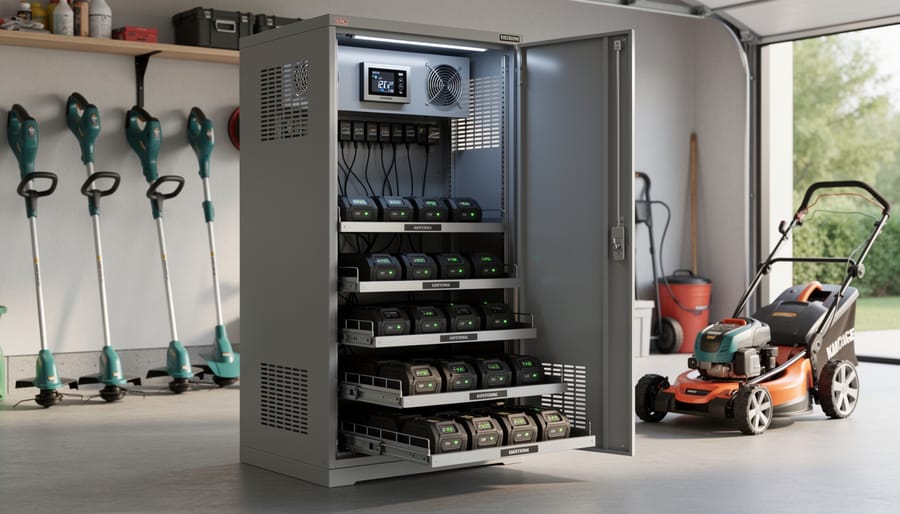
Key Features That Actually Matter
Let me tell you about the features that really make a difference when you’re protecting your lawn care investment. After all, you didn’t spend money on quality cordless equipment just to watch the batteries deteriorate in your garage.
Start with ventilation—this one’s non-negotiable. Lithium-ion batteries release heat and occasional gases during charging, especially after a long mowing session. A proper charging cabinet needs dedicated ventilation ports or built-in fans to keep air circulating. Without it, you’re essentially creating a hotbox that shortens battery life and creates potential safety issues. Look for cabinets with both intake and exhaust vents positioned to create natural airflow.
Temperature control goes hand-in-hand with ventilation. Your batteries perform best when stored and charged between 50-77°F. Some advanced cabinets include temperature monitoring systems that alert you if conditions get too hot or cold. For most of us, though, a well-ventilated cabinet in a climate-controlled space does the trick.
Organization capacity matters more than you might think. Count your current batteries, then plan for future additions—trust me, that collection grows. Compartmentalized storage keeps batteries separated during charging, prevents accidental shorts from terminals touching, and helps you track which batteries are ready to go.
Fire-resistant materials provide peace of mind. Steel cabinets with powder-coating offer the best protection, though heavy-duty plastic alternatives exist for lighter-duty needs. This feature is about sustainable practice too—protecting your batteries from damage means fewer replacements and less electronic waste.
Finally, smart charging integration is becoming increasingly accessible. Some cabinets accommodate multiple charger types with built-in power strips and cord management. This prevents the tangled mess we’ve all dealt with and protects charging cables from damage, extending their useful life.
How Charging Cabinets Extend Your Battery Life

The Temperature Sweet Spot Your Batteries Need
Think of your cordless tool batteries like Goldilocks – they need conditions that are just right. Most lithium-ion batteries perform best when charged between 50°F and 86°F. Too cold, and they charge sluggishly or not at all. Too hot, and you risk damaging the cells, shortening their lifespan considerably.
This is where a quality battery charging cabinet really shines, especially for those of us who store equipment in garages or sheds that experience temperature swings. During winter months when your lawn mower takes a break, or in summer when your garage feels like a sauna, these cabinets maintain that sweet spot through ventilation systems and sometimes climate control features.
I learned this lesson the hard way after leaving batteries charging in my unheated garage one January – they barely held a charge come spring! A charging cabinet creates a stable microclimate that protects your investment year-round. This controlled environment means your batteries stay healthier longer, reducing waste and saving you money on replacements. For the sustainability-minded gardener, it’s a simple step that prevents perfectly good batteries from ending up in landfills prematurely.
Smart Charging vs. Just Plugging Things In
You know how we’ve all been guilty of just plugging our battery-powered mower or trimmer into any available outlet and calling it a day? I certainly have. But here’s the thing: not all charging is created equal, and this is where dedicated battery charging cabinets really shine.
Think of it like the difference between tossing your tomato seedlings anywhere in the yard versus giving them proper spacing, drainage, and sunlight. Modern charging cabinets from brands like EGO and Milwaukee actually manage the charging process intelligently. They monitor battery temperature, adjust charging speeds to prevent overheating, and can even stagger when multiple batteries charge to avoid power surges. This gentle approach significantly extends battery lifespan compared to rapid, uncontrolled charging.
For example, many cabinets feature cooling systems that prevent batteries from charging when they’re too hot from recent use. This simple pause can add months or even years to your battery’s life. Some models also switch to trickle charging once batteries reach full capacity, preventing the overcharging that degrades cells over time. It’s a more sustainable approach that protects your investment while reducing electronic waste from prematurely failed batteries.
Choosing the Right Cabinet for Your Lawn Care Setup
Size and Capacity Considerations
Choosing the right cabinet size starts with taking inventory of your lawn care equipment collection. Count how many batteries you currently own and consider any future purchases. Most homeowners with a typical cordless setup—a mower, string trimmer, and blower—have between 4 to 8 batteries.
Cabinet capacities typically range from small units holding 4-6 batteries to larger models accommodating 12 or more. If you’re just starting with cordless equipment, a compact cabinet offers room to grow without overwhelming your garage or shed space. More established gardeners with extensive battery collections benefit from larger units with adjustable shelving.
Don’t forget about physical dimensions. Measure your available space before purchasing, accounting for door clearance and ventilation requirements. Wall-mounted options work brilliantly for tight spaces, while freestanding cabinets offer flexibility if you reorganize frequently.
A good rule of thumb: choose a cabinet that holds 25-30 percent more batteries than you currently own. This forward-thinking approach accommodates seasonal additions and ensures proper spacing between charging batteries, which promotes both safety and optimal charging conditions for extending battery lifespan.
Budget-Friendly Options vs. Premium Solutions
When shopping for a battery charging cabinet, you’ll find options ranging from basic shelving units starting around $50 to sophisticated systems costing several hundred dollars. Understanding what drives these price differences helps you invest wisely without overspending on features you won’t use.
Budget-friendly options typically offer straightforward storage with ventilated shelving and basic organization. These work perfectly well if you have just a few batteries and tools, need simple charging station organization, and don’t mind managing cables yourself. They’re honest, practical solutions that get the job done, especially for gardeners just starting to build their cordless tool collection.
Mid-range cabinets usually add integrated power strips, better ventilation systems, and sturdier construction. These features matter if you’re storing multiple high-value batteries or live in humid climates where proper airflow prevents moisture damage. For most lawn care enthusiasts with a decent collection of cordless equipment, this sweet spot offers excellent value.
Premium solutions justify their higher costs with features like built-in battery health monitoring, separate charging compartments that reduce fire risk, lockable security, and modular designs that grow with your needs. If you’ve invested heavily in cordless lawn equipment or run a small landscaping operation, these additions protect your investment and improve safety.
The key is matching features to your actual needs. A basic cabinet protects batteries better than leaving them scattered in your garage, while premium options make sense when you’re managing substantial equipment investments or prioritizing enhanced safety features.
DIY Alternatives That Actually Work
Look, I get it—commercial battery charging cabinets can cost anywhere from a few hundred to several thousand dollars, which isn’t exactly pocket change for most of us. But here’s the good news: you can create a surprisingly effective DIY charging station that addresses many of the same organizational and safety concerns without breaking the bank.
Start with a metal shelving unit (not wood, for fire safety reasons) in a well-ventilated area of your garage or shed. Keep it away from direct sunlight and moisture, as temperature extremes are your batteries’ worst enemy. Use plastic bins or metal trays to contain each battery and its charger—this prevents the domino effect if something goes wrong. A simple power strip with surge protection mounted to the side gives you organized charging access, and you can even add labels to track which battery belongs to which tool.
Here’s what this setup does well: it keeps everything organized, reduces clutter, and provides basic fire safety through containment and smart placement. What it can’t do is regulate temperature precisely or provide advanced fire suppression systems. You’ll need to manually monitor charging cycles and check batteries regularly for swelling or damage.
For around fifty to one hundred dollars, you can create a functional charging station that protects your battery investment and keeps your workspace tidy. Just remember to inspect it weekly—think of it as weeding your garden, but for your power equipment setup. This DIY approach works beautifully for most home gardeners with a modest collection of cordless tools.
Best Practices for Maintaining Your Charging Cabinet
Taking care of your battery charging cabinet is easier than you might think, and it really pays off in the long run. Just like you’d maintain your mower or trimmer, a little attention to your charging station keeps everything running smoothly and extends the life of your batteries.
Start with a simple monthly cleaning routine. Dust and debris love to accumulate around electronics, so give your cabinet a gentle wipe-down with a dry microfiber cloth. Check the ventilation slots carefully—these are crucial for preventing heat buildup. If you notice any blockages, use a soft brush or compressed air to clear them out. Think of it like keeping your compost bin properly aerated; good airflow is essential.
Speaking of ventilation, make this a regular check. Place your hand near the vents while batteries are charging—you should feel warm (not hot) air flowing freely. If things seem too warm or the airflow feels restricted, it’s time to investigate. Move any stored items away from the cabinet that might be blocking circulation.
Seasonal considerations matter too. During hot summer months, avoid placing your cabinet in direct sunlight or unventilated garages where temperatures soar. In winter, extremely cold spaces can affect charging efficiency, so a moderate-temperature location works best year-round.
Monitor your battery health through the charging process. Most cabinets have indicator lights—get to know what they mean. If a battery consistently takes longer to charge or the indicators show problems, it might be time to retire that particular battery rather than continuing to cycle it through.
Finally, keep a simple log of which batteries you’re using and when. This sustainable approach helps you rotate your battery stock evenly, preventing some from overuse while others sit idle. It’s just good stewardship of your gardening investment.
The Sustainability Angle: Fewer Batteries in Landfills
Here’s something we don’t talk about enough: those dead batteries piling up in your garage aren’t just a storage problem—they’re an environmental concern. Every battery that fails prematurely eventually ends up in a landfill, and that’s where battery charging cabinets become part of your environmental solution, not just an organizational tool.
Think about it this way. When you properly charge and store your cordless equipment batteries, you’re dramatically extending their lifespan. A lithium-ion battery that might have given you two seasons of service with haphazard charging could easily deliver four or five years when treated right. That’s fewer batteries manufactured, shipped, and ultimately discarded. The environmental footprint of battery production is significant—from mining rare earth materials to manufacturing processes—so making your existing batteries last longer is genuinely impactful.
Battery charging cabinets help reduce waste in several concrete ways. By preventing overcharging, they stop the degradation that kills batteries early. By maintaining optimal storage temperatures, they preserve battery chemistry during off-seasons. By keeping batteries organized, they prevent the “lost and forgotten” syndrome where perfectly good batteries sit unused until they’re too degraded to recover.
This aligns beautifully with sustainable lawn care practices that many of us are embracing. If you’ve already made the switch to battery-powered equipment to reduce emissions and noise pollution, doesn’t it make sense to maximize the lifespan of those batteries? It’s the natural next step in responsible lawn care.
The long-term impact adds up quickly. If just one charging cabinet helps you avoid replacing four batteries over a decade, you’ve kept significant toxic materials out of landfills while saving money and supporting a more circular economy.
Taking care of your cordless lawn equipment batteries doesn’t have to be complicated, but it does require some thoughtful planning. Battery charging cabinets offer a straightforward solution that addresses multiple challenges at once—organization, safety, climate control, and equipment longevity. Whether you opt for a dedicated charging cabinet or simply improve your current storage setup, the investment in proper battery care pays dividends through extended battery life and better performance when you need it most.
Now’s the perfect time to take a honest look at your current battery care routine. Are your batteries scattered across the garage? Do you charge them in extreme temperatures? Are you maximizing their lifespan with proper storage practices? Even small improvements can make a meaningful difference in how long your batteries last and how well they perform season after season.
Remember, sustainable lawn care isn’t just about the products you use on your grass—it’s also about making equipment choices that reduce waste and extend the life of what you already own. By treating your batteries with the care they deserve, you’re making an environmentally conscious decision that also protects your wallet. Start with one improvement today, whether that’s designating a climate-controlled charging area or investing in a proper storage solution. Your batteries, your equipment, and your lawn will thank you for it.