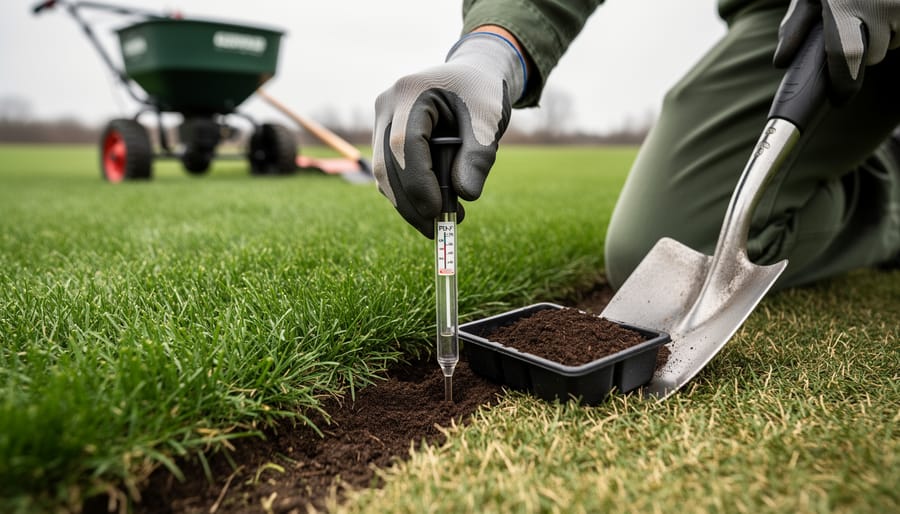
Test your soil before adding anything by collecting samples from multiple spots six inches deep, then sending them to your local extension office for a complete contamination and nutrient analysis—urban soils frequently contain lead, petroleum residues, and construction debris that composting alone won’t fix. If test results show contamination above safe levels, build raised beds with at least twelve inches of purchased topsoil mixed with compost rather than attempting to remediate what’s below.
Transform compacted city soil by spreading a two-inch layer of finished compost across the surface each spring and fall, letting earthworms and microorganisms naturally incorporate it downward without tilling, which protects the soil structure you’re trying to rebuild. This approach works whether you’re dealing with a backyard garden or neglected apartment building landscaping.
Start composting in limited space using a tumbler bin on your balcony or patio, layering kitchen scraps with shredded cardboard in a 1:2 ratio to eliminate odors and produce finished compost in eight to twelve weeks. For truly tiny spaces, vermicomposting with red wiggler worms in a discrete under-sink bin processes two to three pounds of food waste weekly while creating nutrient-rich castings perfect for container gardens.
Urban soil presents unique challenges that suburban and rural gardeners never face, but understanding these problems puts you ahead of most city gardeners who wonder why their plants struggle. The contamination, compaction, and biological lifelessness common in city environments require different strategies than traditional gardening advice offers—and compost serves as your most powerful tool for transformation.
The Hidden Crisis in Your City Garden: Understanding Urban Soil
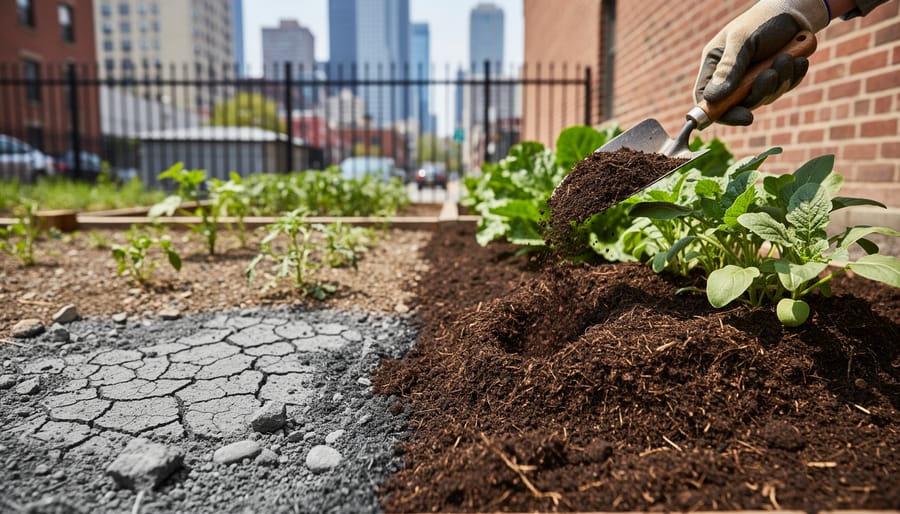
What Construction and Traffic Do to Soil Structure
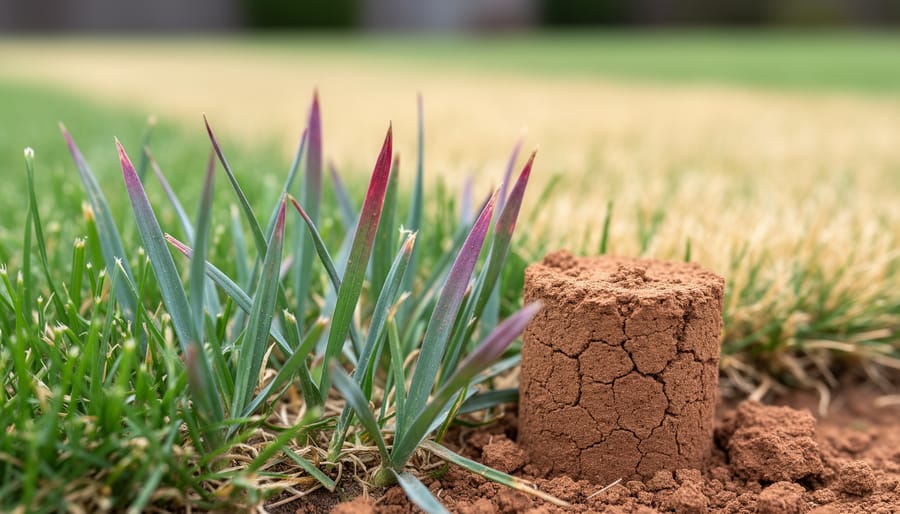
If you’ve ever watched construction crews work near your property, you’ve witnessed the unfortunate transformation of healthy soil into something resembling concrete. Heavy machinery, foot traffic, and the constant movement of materials compress soil particles together, squeezing out the precious air pockets that make soil alive and functional.
Think of soil structure like a sponge. In its natural state, it has spaces for air, water, and roots to move freely. But when construction equipment rolls over it repeatedly, or when countless people walk the same paths, those spaces collapse. What remains is dense, lifeless material that water can’t penetrate and roots can’t navigate.
This compaction is particularly severe in urban areas where the soil endures decades of disturbance. Construction sites, driveways, sidewalks, and even regular foot traffic from previous residents all contribute to the problem. The soil particles become so tightly packed that oxygen struggles to reach beneficial microorganisms, and drainage becomes nearly nonexistent.
Without intervention, you’re essentially trying to grow plants in hardpan. The good news? This isn’t permanent damage. Understanding this compaction is the first step toward reversing it, and that’s exactly where compost becomes your most powerful ally in urban gardening.
Contamination Concerns You Can’t Ignore
Urban soil often harbors unwelcome guests that make gardeners nervous, and rightfully so. Lead from old paint, petroleum products from decades of vehicle traffic, and heavy metals from industrial activities can lurk in city soil, especially in neighborhoods built before the 1970s. If you’re gardening near old buildings or busy streets, these contaminants deserve your attention.
Here’s where compost becomes your soil’s bodyguard. When you consistently add organic matter to contaminated soil, you’re not just improving texture, you’re actually creating a protective barrier between plant roots and harmful substances. The compost physically dilutes existing toxins, spreading them across a larger volume of soil and reducing their concentration. Over several growing seasons, this biological buffering effect becomes increasingly effective.
Think of it like this: every layer of compost you add is another shield protecting your plants. The organic material binds with heavy metals, making them less available for plant uptake. Meanwhile, beneficial microorganisms in healthy compost work to break down petroleum-based compounds over time. While compost won’t eliminate severe contamination, it’s a sustainable, practical solution that improves safety margins for ornamental gardens and creates healthier growing conditions overall.
The Missing Life: Why Urban Soil Feels Dead
If you’ve tried planting in urban soil, you’ve probably noticed something’s off. That dirt just doesn’t behave like the rich, crumbly garden soil you see in magazines. Here’s what’s actually missing: the living community that makes soil work.
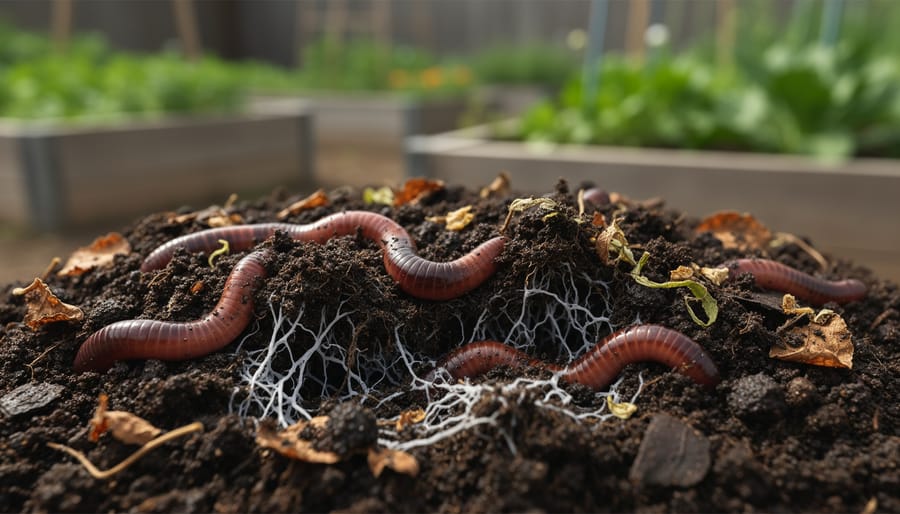
Healthy soil is teeming with life. Beneficial bacteria, fungi, and microorganisms break down organic matter and make nutrients available to plants. Earthworms act as nature’s tillers, creating channels for air and water while leaving behind nutrient-rich castings. In city environments, these essential organisms are often absent or severely depleted. Construction activities, chemical contamination, and the lack of organic matter have left urban soil biologically dead.
This matters more than you might think. Without these microscopic workers, plants struggle to access nutrients even when they’re present in the soil. Water doesn’t penetrate properly, roots can’t breathe, and your garden essentially starves in a biological desert. The good news? Transforming dead soil into a thriving ecosystem is absolutely possible with the right approach to composting and organic amendments.
How Compost Becomes Your Urban Garden’s Best Friend
Breaking Through Compaction With Organic Matter
If you’ve ever tried digging into urban soil only to find it’s like chiseling through concrete, you’re not alone. Compacted soil is one of the biggest headaches city gardeners face, but here’s the good news: compost is your secret weapon for breaking through that brick-like barrier.
When you work compost into compacted clay soil, something almost magical happens. The organic matter amendments physically separate densely packed soil particles, creating tiny channels and pore spaces that allow water to drain and air to circulate. Think of it like adding sponge pieces to wet sand—suddenly, there’s room to breathe.
The organisms living in compost also play a starring role. Earthworms, beneficial bacteria, and fungi create natural tunnels as they move through the soil, essentially tilling it for you from the inside out. Over time, these biological activities transform stubborn clay from an impenetrable mass into a crumbly, workable medium.
For best results, apply a two to three-inch layer of compost and work it into the top six inches of soil. You’ll notice the difference within a single growing season, but the improvements compound year after year as you continue adding compost.
Building a Living Soil Ecosystem From Scratch
Here’s the exciting part: when you add compost to lifeless urban dirt, you’re not just improving texture or adding nutrients. You’re actually introducing an entire universe of beneficial life that transforms your soil into a living ecosystem.
Think of compost as a starter culture, like what you’d use to make yogurt or sourdough. Each handful contains millions of beneficial bacteria, fungi, protozoa, and other microorganisms that immediately get to work. These tiny heroes break down organic matter, making nutrients available to your plants in forms they can actually use. The fungi create threadlike networks that help plants communicate and share resources, while bacteria convert atmospheric nitrogen into plant-friendly forms.
As these organisms multiply and interact, they create what soil scientists call the “soil food web.” Beneficial fungi keep harmful pathogens in check. Earthworms and other decomposers move in, aerating the soil as they feast on organic matter. The result? Previously compacted, sterile dirt becomes rich, crumbly soil that holds moisture without waterlogging and releases nutrients steadily throughout the growing season.
The best part? This process is remarkably forgiving for beginners. Simply mixing quality compost into your existing soil kick-starts the transformation, with visible improvements within weeks.
Water Management in Concrete Jungles
Here’s the thing about urban gardens—they often face a frustrating double challenge. During summer heat waves, your soil dries out faster than you can water it, yet when those sudden downpours hit, puddles form everywhere because compacted city soil just won’t drain. It’s enough to make any gardener throw up their hands!
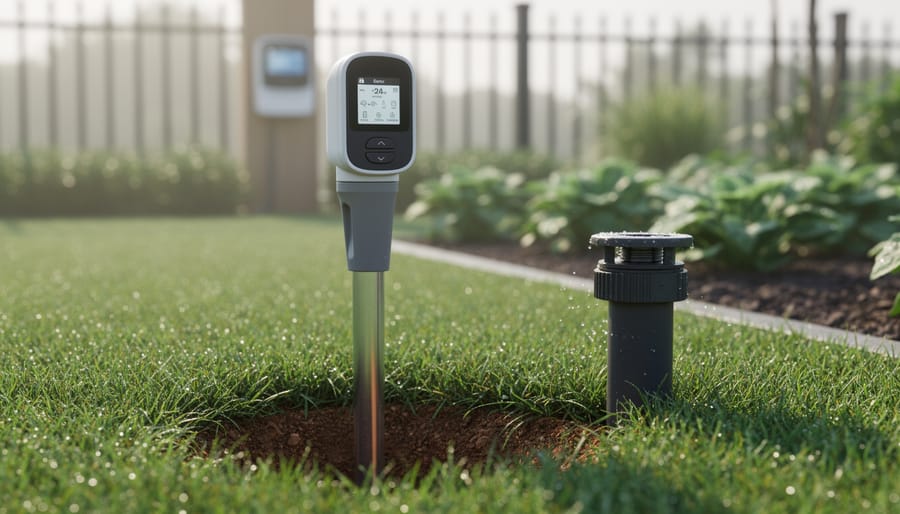
This is where compost becomes your best friend. When you work compost into urban soil, you’re essentially creating a natural sponge that’s smart about water management. The organic matter holds moisture during dry spells, keeping your plants hydrated longer between waterings—perfect for busy city dwellers. These water retention strategies can reduce your watering needs by up to 50 percent.
But here’s the clever part: that same compost also improves soil structure, creating air pockets that allow excess water to drain away during heavy rains. This dual action means your container gardens and small beds won’t suffer from either extreme, giving your plants the consistent moisture they need to thrive in challenging urban conditions.
Turning Waste Into Garden Gold
Every day, urban households toss out food scraps and yard trimmings that could become nutrient-rich soil instead of methane-producing landfill waste. When organic materials decompose in landfills without oxygen, they release greenhouse gases that contribute to climate change. Composting at home flips this script entirely. Your coffee grounds, veggie peelings, and grass clippings transform into dark, crumbly compost that feeds your soil and reduces your carbon footprint simultaneously. The compost benefits extend beyond your garden too. You’ll reduce weekly trash volume, potentially saving on waste disposal costs while creating free fertilizer. For eco-conscious urbanites, composting represents one of the most impactful sustainability practices you can adopt right at home, turning what was once considered garbage into genuine garden gold.
Composting Solutions That Actually Work in the City
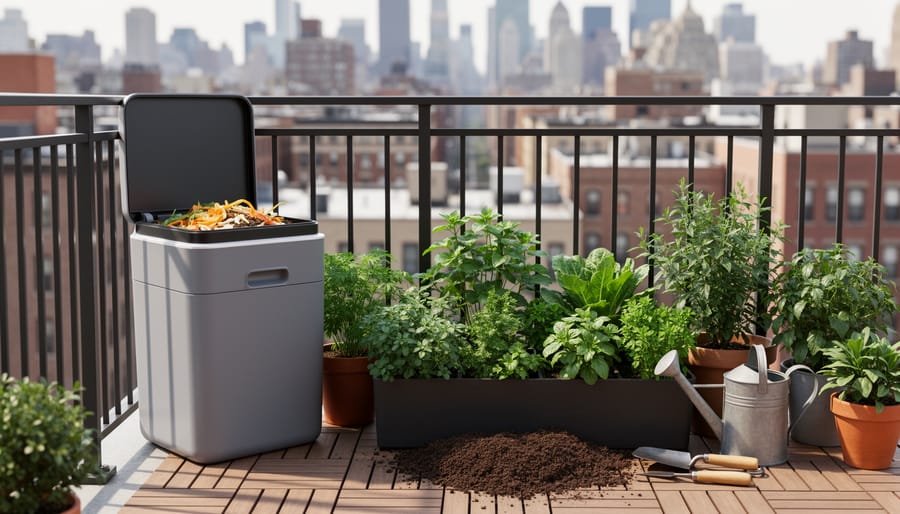
Small-Space Composting: Bins, Tumblers, and Bokashi
Limited space doesn’t mean you can’t create nutrient-rich compost for your urban garden. Let’s explore three excellent options that fit beautifully into city living.
Compact bins are the workhorses of small-space composting. A 10-15 gallon bin tucked against a fence or on a balcony can handle kitchen scraps and some yard waste. Look for models with good ventilation and easy access doors. Realistically, expect to fill one bin in 2-3 months with regular household waste, producing finished compost in 3-6 months depending on maintenance. The key is layering greens and browns properly and turning occasionally with a hand tool.
Tumblers offer convenience that’s hard to beat. These drum-style composters rotate on a frame, making turning effortless. They’re perfect for patios and produce finished compost faster than bins, often in 4-8 weeks. The trade-off? Smaller capacity, usually 35-50 gallons, and a higher price point. But if you have mobility concerns or simply want tidier composting, tumblers deliver.
Bokashi systems revolutionize apartment composting. This Japanese fermentation method handles all food waste, including meat and dairy, in a sealed bucket that fits under your sink. Using special bran with beneficial microbes, bokashi produces pre-compost in just two weeks. You’ll need to bury the fermented material in soil or add it to a traditional compost pile to complete the process, but it’s incredibly space-efficient.
Choose based on your available space, physical ability to turn compost, and the volume of waste you generate weekly.
Vermicomposting for Apartment Gardeners
If you’re living in an apartment but still want to embrace composting, vermicomposting is your ticket to turning kitchen scraps into black gold without leaving your home. Worm composting truly is odor-free when done correctly, making it perfect for compact urban spaces.
Getting started is surprisingly simple. You’ll need a plastic or wooden bin with drainage holes, bedding material like shredded newspaper or coconut coir, and red wiggler worms, which you can order online or find at garden centers. Set up your bin in a cool spot away from direct sunlight, like under the kitchen sink or in a closet. Feed your worms fruit and vegetable scraps, coffee grounds, and eggshells, but avoid meat, dairy, and oily foods.
The most common issue new vermicomposters face is fruit flies, which usually means you’re overfeeding. Simply bury food scraps deeper in the bedding and reduce portions. If your bin smells, it’s likely too wet. Add dry bedding materials to absorb excess moisture. Within three to six months, you’ll harvest nutrient-rich worm castings that urban gardeners swear by for revitalizing depleted city soil. It’s sustainable living at its finest, proving you don’t need a yard to make a real environmental impact.
Municipal Compost and Community Resources
Not everyone has the space or time to produce enough compost at home, and that’s completely okay. Your city likely offers several excellent alternatives that can supply you with quality compost for your urban garden.
Start by checking with your municipal waste management department about their compost programs. Many cities now collect yard waste and food scraps, then process them into finished compost that residents can pick up for free or purchase at minimal cost. These programs are goldmines for urban gardeners because municipalities process compost on a large scale with proper equipment, often resulting in excellent quality. Some cities even deliver bulk loads right to your home.
Community gardens and neighborhood composting sites offer another fantastic resource. These collaborative spaces welcome contributions of kitchen scraps and yard waste, and participants can typically take finished compost for their own gardens. It’s a wonderful way to connect with fellow gardening enthusiasts while reducing waste. Look for community composting programs through local garden clubs, environmental organizations, or your city’s parks department.
For larger projects, consider purchasing bulk compost from landscape supply companies. While this involves an upfront cost, buying in bulk is remarkably economical compared to bagged products. Most suppliers will deliver a cubic yard or more, which goes surprisingly far in urban settings. Ask about their compost sources and whether it’s been tested for contaminants, especially important in city environments.
What to Look for When Buying Compost
Quality compost should crumble easily in your hands and smell earthy, never sour or ammonia-like. Check that ingredients come from trustworthy sources—look for labels mentioning OMRI certification or adherence to compost quality standards. Avoid compost with visible trash, large woody chunks, or mysterious odors. The best products list their ingredients clearly and test for contaminants, especially important for urban gardens where soil safety matters most.
Your Step-by-Step Plan for Transforming Urban Soil
Testing First: Know What You’re Working With
Before you start hauling in compost or amending anything, let’s talk about getting a soil test. I know it sounds like an extra step, but trust me, this saves headaches down the road. Urban soils can harbor some unwelcome surprises like lead from old paint or heavy metals from decades of industrial activity. A basic test costs around $15-30 through your local cooperative extension office, and many will screen for common contaminants alongside pH and nutrient levels.
Here’s what matters most for city gardeners: lead levels (especially if you’re growing edibles), pH balance, and organic matter content. If contamination shows up, don’t panic. Raised beds with fresh soil or growing in containers are perfectly viable solutions. Testing also tells you exactly what your soil needs, so you’re not just guessing when you add compost. Many gardeners skip this step and wonder why their plants struggle despite their best efforts. Knowing your baseline makes every amendment afterward actually count.
Building New Garden Beds on Problem Soil
When your urban soil is contaminated or hopelessly compacted, sometimes the best solution is to build right over it. Two excellent approaches let you create thriving garden beds without extensive soil remediation.
The lasagna method, also called sheet mulching, is wonderfully forgiving and perfect for beginners. Simply lay down cardboard or several layers of newspaper directly over your problem soil to suppress weeds and create a barrier. Then alternate layers of “brown” materials like shredded leaves or straw with “green” materials like compost, grass clippings, or kitchen scraps. Aim for layers 2-3 inches thick, ending with compost on top. This lasagna gradually breaks down into rich growing medium while the cardboard prevents contact with contaminated soil below.
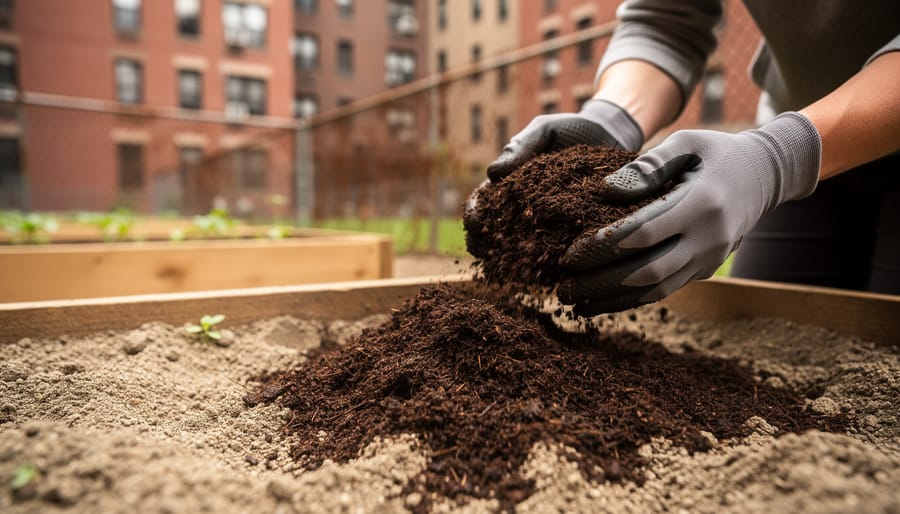
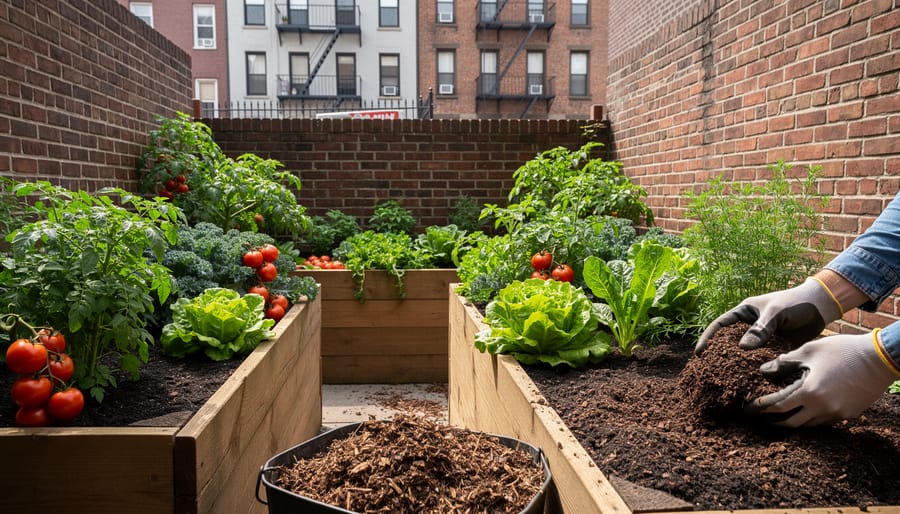
Raised beds offer more immediate results. Build frames 12-18 inches high using untreated wood, stone, or composite materials, then fill with a mix of quality compost and topsoil. The elevation provides natural drainage while creating a clean slate for planting. For areas with serious contamination concerns, line the bottom with landscape fabric first.
Both methods transform impossible spaces into productive gardens while keeping your plants safe and healthy.
Reviving Existing Lawns and Gardens
Good news! You don’t need to start from scratch to improve your existing lawn or garden. If you’re dealing with tired grass or underperforming beds, compost can work wonders without requiring a complete overhaul.
Topdressing is your simplest strategy. Spread a quarter to half-inch layer of finished compost across your lawn in spring or fall, using a rake to work it gently into the grass. This gradually feeds the soil, improves water retention, and encourages beneficial microbial activity. Your lawn absorbs these improvements season by season.
For more dramatic results, combine core aeration with compost application. Rent an aerator or hire a service to pull small plugs from your lawn, then immediately spread compost over the area. The compost settles into those holes, delivering nutrients directly to root zones and breaking up compaction from below. This technique is especially effective for heavily trafficked urban yards where soil gets compressed over time.
In garden beds, work compost into the top few inches each season without disturbing plant roots. Think of it as a gentle renovation rather than demolition. Mix two to three inches of compost into empty spaces, around perennials during dormancy, or into vegetable beds between plantings. Patience pays off as your soil structure transforms year after year into the rich, living foundation your plants deserve.
Seasonal Compost Application Schedule
Timing your compost applications makes all the difference in helping urban soil reach its full potential. Think of it as feeding your soil when it’s hungriest and ready to work with you.
For most urban gardens, spring marks your primary application window. As soon as the ground thaws, spread a 2-3 inch layer of finished compost over your beds and work it into the top few inches of soil. This jump-starts microbial activity just as plants begin their growing season.
Come fall, apply another 1-2 inch layer after your final harvest or when perennials go dormant. This autumn feeding protects soil structure through winter and gives beneficial organisms time to break down organic matter before spring.
For established lawns, top-dress with a quarter-inch layer of finely screened compost in early fall or late spring. Container gardens benefit from monthly applications of compost tea during the growing season.
Remember, urban soils often need more frequent applications initially to overcome compaction and contamination issues, so don’t hesitate to add compost whenever you’re planting or refreshing beds.
Common Urban Composting Mistakes (And How to Avoid Them)
Using Too Much or Too Little Compost
Here’s the truth that surprises many gardeners: when it comes to compost, you really can have too much of a good thing. I’ve seen enthusiastic urban gardeners smother their beds with six-inch layers of pure compost, wondering why their plants look stressed rather than thriving.
For most situations, aim for a 25-30% compost ratio when amending urban soil. That typically means mixing two to three inches of compost into the top six to eight inches of existing soil. This sweet spot provides nutrients without overwhelming plant roots or creating drainage issues.
Starting a new garden bed in contaminated urban soil? You can go heavier, using a 50-50 mix of compost and quality topsoil to create a raised planting area that minimizes contact with problem soil below.
For established lawns, think lighter. A quarter-inch layer of screened compost as an annual topdressing works wonders without smothering grass.
Too little compost won’t transform your urban soil effectively, but too much can actually lock up nutrients, retain excessive moisture, and create imbalanced growing conditions. When building sustainable urban gardens, consistency over multiple seasons beats overdoing it in one go.
Attracting Pests in Dense Neighborhoods
Let’s be honest—composting in the city can feel like you’re ringing the dinner bell for every critter in the neighborhood. But don’t let the fear of attracting pests discourage you from this sustainable practice. With the right approach, you can compost successfully without turning your yard into a raccoon cafeteria.
The key starts with bin selection. Enclosed bins with secure, locking lids are essential for urban environments. Look for models with rodent-proof wire mesh or solid plastic construction that sits flush with the ground, eliminating entry points underneath. Tumbler-style composters work particularly well since they’re elevated and completely sealed.
What you put in your compost matters enormously. Stick to plant-based materials and avoid meat, dairy, oils, and cooked foods—these are pest magnets. Even fruit and vegetable scraps should be buried deep within your pile rather than left exposed on top.
Strategic placement makes a difference too. Position your bin away from fences that provide climbing routes, and consider a concrete or paved base to deter burrowing animals. If rodents persist despite these precautions, try sprinkling cayenne pepper around the bin’s perimeter or switching to a completely indoor vermicomposting system for your kitchen scraps.
Overlooking Ongoing Maintenance
Here’s the honest truth that catches many urban gardeners off guard: transforming lifeless city soil into thriving garden gold isn’t a weekend project. I’ve watched enthusiastic neighbors dump compost onto their plots in spring, then scratch their heads wondering why their tomatoes still struggle come July. Building healthy urban soil is more like nurturing a friendship than flipping a light switch.
Think of your first compost application as laying the foundation, not completing the building. Most urban soils need regular compost additions for at least two to three growing seasons before you’ll see dramatic improvements. Plan on working in a one to two-inch layer of quality compost each spring, and don’t skip the fall application either. Between seasons, keep adding organic mulch around your plants as it breaks down and feeds the soil life below.
The good news? Each season gets easier as your soil develops structure and beneficial microorganisms multiply. Set realistic expectations, celebrate small victories like earthworms appearing or better water absorption, and remember that patience pays dividends in urban gardening.
Here’s the truth about urban soil challenges: while there are many amendments you could add, nothing matches compost’s ability to simultaneously address contamination, compaction, nutrient depletion, and biological lifelessness. Chemical fertilizers feed plants but ignore soil health. Sand improves drainage but adds nothing else. Compost does it all, rebuilding urban soil from the ground up while working within the constraints of city living.
The beauty of composting is you don’t need a suburban backyard to make a difference. Start with a single bin on your balcony or a small tumbler beside your patio. Even a five-gallon bucket can produce enough finished compost to revitalize a few container plants or enrich a small raised bed. What matters isn’t the scale of your operation but the consistency of your practice.
Consider this: if every urban household composted just their fruit and vegetable scraps, we’d divert millions of tons from landfills while creating a renewable soil resource exactly where it’s needed most. Your kitchen waste becomes your garden’s greatest asset, closing the loop right in your own neighborhood.
So grab that banana peel headed for the trash and redirect it toward something better. Transform those coffee grounds into soil magic. Start small, learn as you go, and watch your urban garden respond. The city doesn’t have to mean compromised soil. With compost, you’re not just growing plants; you’re rebuilding the earth beneath them, one garden at a time. Your city space is waiting.