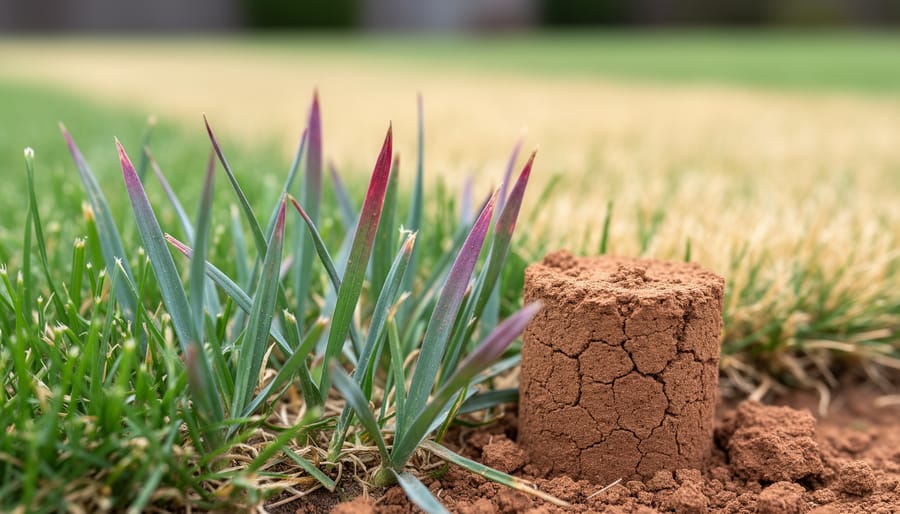
As autumn arrives and temperatures drop, many homeowners make the critical mistake of shutting off their sprinklers entirely, assuming their lawn no longer needs water. The truth is, fall watering remains essential for lawn health, but it requires a completely different approach than your summer routine. Your grass is actively building its root system during these cooler months, storing energy reserves that will determine how quickly and vigorously your lawn greens up next spring. Without adequate moisture during this crucial preparation period, you’re setting yourself up for a weak, patchy lawn come April.
The challenge is finding the right balance. Too much water encourages shallow roots and invites fungal diseases that thrive in cool, damp conditions. Too little water stresses your grass when it needs to focus on root development rather than survival. Most lawns need about one inch of water per week during fall, including rainfall, but this varies based on your grass type, soil conditions, and local climate patterns.
Understanding when to water, how deeply to water, and when to finally winterize your system can mean the difference between a lawn that emerges vibrant and thick in spring versus one that struggles with brown patches and requires expensive overseeding. This guide will walk you through the science behind fall watering and provide you with a practical, sustainable approach that works with nature’s rhythms rather than against them.
What Happens to Your Lawn When Fall Arrives
The Underground Story: Root Growth in Cooler Weather
Here’s something most homeowners don’t realize: when autumn arrives and your grass stops growing those lush green blades, it hasn’t gone dormant or lazy. Instead, your lawn is working smarter, not harder, by redirecting its energy underground. Think of it as your grass getting ready for a marathon rather than sprinting.
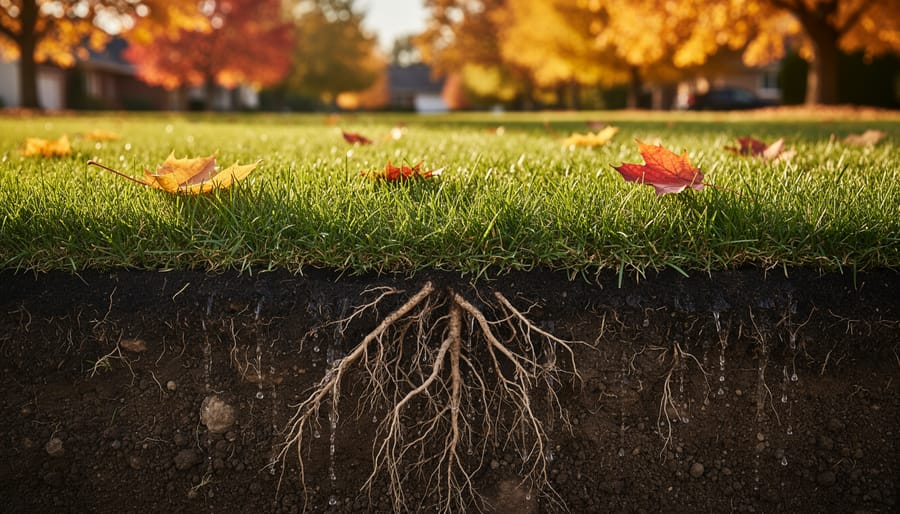
As temperatures drop below 50°F, cool-season grasses naturally shift their focus from vertical growth to developing a robust root system. This underground expansion is like building a stronger foundation for your home. Those roots are spreading deeper and wider, storing essential nutrients and carbohydrates that will fuel next spring’s vigorous growth.
Here’s where watering becomes crucial: roots can’t grow through dry soil. Even though you’re not seeing much action above ground, those developing roots need consistent moisture to penetrate deeper into the soil. Without adequate water, the soil becomes compacted and impenetrable, forcing roots to stay shallow and weak. A shallow root system means your lawn will struggle with drought stress come summer and be more vulnerable to disease and weeds.
This is why fall watering isn’t just maintenance; it’s an investment in your lawn’s future health and resilience.
Temperature Drops Don’t Mean Water Needs Disappear
I know it’s tempting to think your lawn can coast on rainfall alone once temperatures drop, but here’s the truth: your grass still needs water in fall, just not as much. While cooler temperatures do slow evaporation rates significantly compared to those scorching summer days, your lawn continues to drink up moisture for essential processes happening beneath the surface.
Think of it this way: fall is when your grass focuses energy on root development rather than blade growth. Those roots need consistent hydration to strengthen and prepare for winter dormancy. Even though you might see morning dew more frequently and feel that crisp autumn air, evaporation still occurs, especially on sunny fall days when soil can dry out faster than you’d expect.
The key difference is that your lawn needs roughly half the water it required during summer. Instead of daily or every-other-day watering, most lawns thrive with one deep watering per week in fall, assuming rainfall doesn’t cover it. Monitor your soil moisture by checking a few inches down. If it feels dry, it’s time to water. This sustainable approach ensures your grass stays healthy without waste, setting you up for that gorgeous spring lawn everyone envies.
How Much Water Your Lawn Actually Needs in Fall
The One-Inch Rule (And When to Break It)
You’ve probably heard the “one inch per week” rule, and it’s actually a solid starting point for fall lawn watering. This guideline means your lawn should receive about one inch of water weekly, including rainfall. But here’s the thing: fall isn’t summer, and that’s where many homeowners get tripped up.
To measure your inch, try the tuna can trick. Place an empty tuna can (or any straight-sided container) on your lawn while your sprinkler runs. When it fills to one inch, you’ll know how long to run your system. Simple, right? I keep a few cans scattered around my yard since water distribution is rarely perfectly even.
Now, when should you break this rule? Fall brings cooler temperatures and often more rainfall, which means your lawn needs significantly less supplemental watering. If you’re getting regular autumn showers, you might not need to water at all some weeks. Check that tuna can or monitor rainfall with a rain gauge before turning on your sprinklers.
As temperatures drop below 50 degrees Fahrenheit consistently, grass growth slows dramatically. You might find your lawn only needs a half-inch every ten days, or even less. Sandy soils drain faster and may need the full inch, while clay soils hold moisture longer and require less frequent watering.
The key is flexibility. Monitor your soil moisture by walking on your lawn. If footprints spring back quickly, you’re good. If they stay compressed, it’s time to water.
Reading Your Lawn’s Thirst Signals
Your lawn is actually quite chatty if you know how to listen! While summer watering strategies focus on visible heat stress, fall signals are more subtle but equally important to recognize.
The footprint test is your best friend during autumn. Simply walk across your lawn and look back. If your footprints remain visible for more than a few seconds, with grass blades staying compressed, your lawn is thirsty and needs water. Well-hydrated grass springs back quickly, erasing your tracks almost immediately.
Visual cues tell the rest of the story. Grass that’s turning a dull, grayish-blue color instead of its vibrant green is calling out for water. You might also notice blades starting to fold or curl inward, a water-conservation mechanism that signals stress. These signs are less dramatic in cooler fall weather but still indicate your lawn needs attention.
Overwatering has its own signature. Spongy, squishy soil that stays wet long after watering suggests you’re being too generous. Watch for increased weed growth, particularly crabgrass and other moisture-loving invaders. Mushrooms popping up across your lawn are nature’s way of saying “too much water here!” Additionally, if your grass develops a yellowish tint accompanied by soft, easily-pulled patches, you may be drowning the roots rather than nourishing them.
Check these signals weekly throughout fall to adjust your watering schedule sustainably, giving your lawn exactly what it needs without waste.
Timing Your Fall Watering for Maximum Impact
Morning Watering: Why It’s Even More Important in Fall
You’ve probably heard that morning is the ideal time to water your lawn, but this advice becomes absolutely critical during fall. Here’s why: as temperatures drop and nights grow longer, your grass stays wet for extended periods. When you water in the evening during fall, you’re essentially creating a perfect breeding ground for fungal diseases like brown patch and dollar spot.
Think of it this way—your lawn is like a damp towel left in a cool, dark room overnight. That moisture just sits there, inviting problems. Fall’s cooler temperatures mean evaporation happens much more slowly than in summer, and the shorter days mean less sunlight to dry things out. Morning watering gives your grass the entire day to dry before those chilly nights set in.
The best times to water are between 4 AM and 10 AM, with the sweet spot being around 6-8 AM. This schedule allows moisture to penetrate the soil where roots need it while giving blade surfaces time to dry completely. It’s a simple adjustment that can save you from dealing with costly disease treatments and unsightly brown patches come spring. Trust me, your lawn will thank you for this small scheduling change.
Adjusting Your Schedule as Frost Approaches
As nighttime temperatures consistently dip into the 40s and weather forecasts hint at frost, it’s time to start tapering your watering routine. Think of this transition period as gradually preparing your lawn for dormancy, much like you’d ease into a new exercise routine rather than jumping in full force.
Begin by reducing your watering frequency by about half. If you’ve been watering twice weekly, drop to once per week. Your grass is naturally slowing its growth at this point, so it simply doesn’t need as much moisture. Pay attention to rainfall too—those autumn showers can do much of the work for you, and there’s no sense wasting water when nature provides.
When frost is predicted within the next week or two, give your lawn one final deep watering if the soil is dry. This ensures roots have adequate moisture reserves as they continue developing underground through early winter. This strategic timing supports winter lawn preparation and helps your grass emerge healthier come spring.
After the first hard frost, you can generally stop watering altogether. Your lawn will enter dormancy, turning its energy inward. However, if you experience an unusually dry fall with little precipitation even after frost, occasional light watering during warm spells can prevent desiccation damage.
Regional Differences: Fall Watering Across Climate Zones
Northern Lawns: Preparing for Early Dormancy
If you’re caring for a lawn in zones 3-5, your fall watering window is considerably shorter than your southern counterparts, so you’ll need to be strategic. Your grass is gearing up for a long winter nap, and the right watering routine now makes all the difference come spring.
As temperatures dip below 50°F consistently, your cool-season grasses slow their growth but their roots remain active until the ground freezes. Continue watering deeply once per week through September and early October, providing about an inch of water per session. This helps roots store energy and moisture reserves they’ll desperately need during those harsh winter months.
Here’s the key: stop watering about two to three weeks before your first hard freeze. Check your local frost dates as a guide. Watering too close to freeze-up can create ice layers that suffocate your grass and promote snow mold diseases. Nobody wants that mess in spring.
Pay attention to natural rainfall during this period. Northern regions often receive generous autumn rains, which means you might not need to water at all in late fall. Let Mother Nature do the work when she offers. Monitor soil moisture by checking that top inch with your finger or a screwdriver test. If conditions are soggy, skip the sprinklers entirely and focus on winterizing your lawn care equipment instead.
Southern and Transition Zones: Extended Growing Season Care
If you’re lucky enough to live in the southern or transition zones, your lawn care doesn’t quite follow the same fall script as those chillier northern regions. Your grass is likely still actively growing through October and even into November, which means it’s going to need consistent watering attention.
In these warmer climates, your cool-season grasses like tall fescue are actually hitting their stride in fall, while warm-season varieties like bermudagrass and St. Augustine are slowing down but not completely dormant yet. Keep up with regular watering—about one inch per week—but stay flexible. Those surprise warm spells can quickly dry out your soil, so monitor conditions closely rather than sticking to a rigid schedule.
Here’s the good news: fall in southern zones often brings afternoon thunderstorms that do some of the work for you. Take advantage of this natural watering by adjusting your irrigation accordingly. A simple rain gauge is your best friend for tracking how much supplemental water you actually need.
As you move into late fall, gradually reduce watering frequency for warm-season grasses as they begin their dormancy period. Cool-season lawns, however, will appreciate consistent moisture through your extended growing season. This approach supports healthy root development without waste, keeping your lawn lush and your water bills reasonable.
Sustainable Fall Watering Practices That Save Money
Leveraging Fall Rainfall and Natural Moisture
Mother Nature often does much of the heavy lifting in fall, and learning to work with her rather than against her is one of the smartest moves you can make. Before you turn on those sprinklers, let’s talk about how to take advantage of the free water falling from the sky.
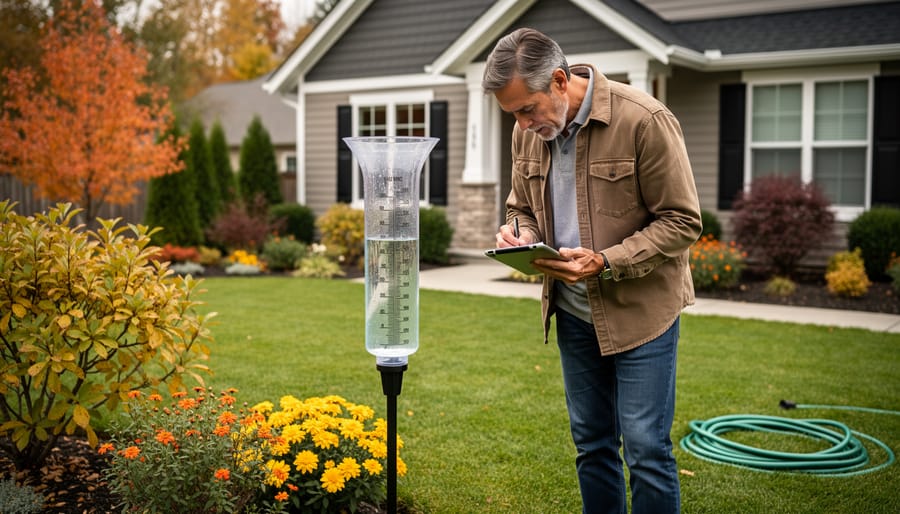
Start by becoming a rainfall detective. A simple rain gauge, which costs just a few dollars at any garden center, is your best friend here. Place it in an open area of your lawn, away from tree cover or building overhangs, and check it regularly. Your goal is to ensure your lawn receives that crucial inch of water per week we talked about earlier, but if nature provides half an inch, you only need to supplement with another half inch.
I keep a little notebook by my back door where I jot down rainfall amounts each week during fall. It takes ten seconds, but it has saved me from over-watering countless times. Plus, you’ll start noticing patterns in your local weather that help you plan better each year.
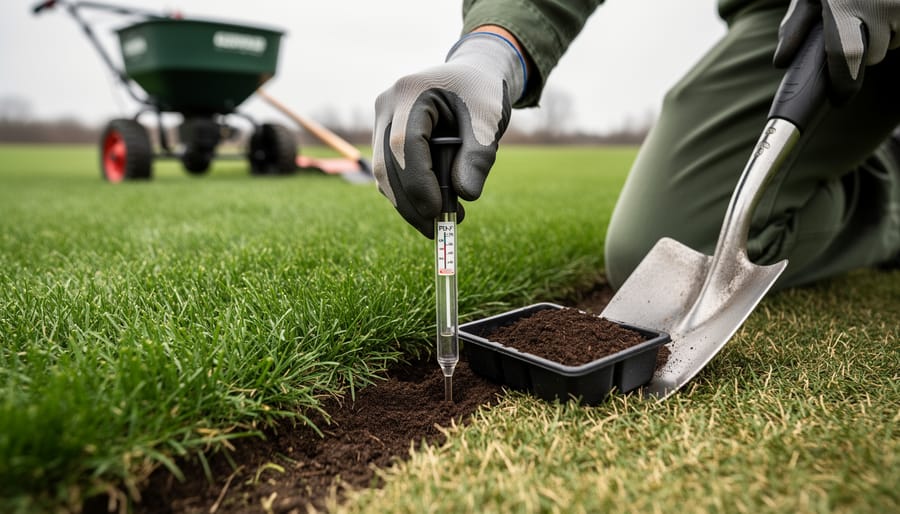
The beauty of fall rainfall is that cooler temperatures mean less evaporation, so that natural moisture sticks around longer than summer rain. When you do need to supplement, wait a day or two after rainfall to assess whether your lawn actually needs more water. Check soil moisture by pushing a screwdriver into the ground; if it slides in easily to about six inches, you’re golden.
Smart Irrigation Tools Worth the Investment
If you’re serious about conserving water and taking the guesswork out of fall lawn care, investing in smart irrigation technology is one of the best decisions you can make. I’ll be honest—I resisted these gadgets for years, thinking my finger-in-the-soil method was good enough. But after one too many overwatered spots and a surprisingly high water bill, I finally took the plunge.
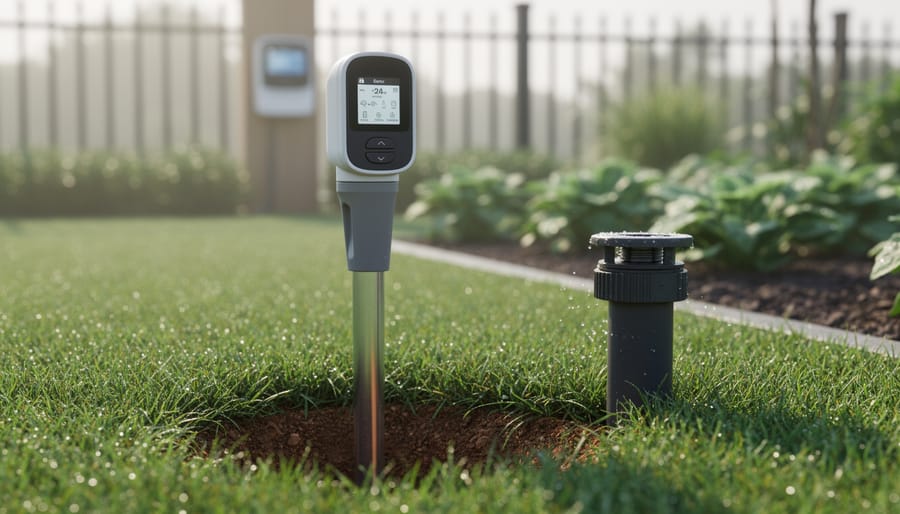
Soil moisture sensors are absolute game-changers for fall watering. These affordable devices measure actual moisture levels in your root zone and only allow watering when your lawn genuinely needs it. Models like the Rain Bird SST600IN connect directly to your existing irrigation system and can prevent unnecessary watering cycles when fall rains have already done the job.
Smart irrigation timers take things even further by adjusting watering schedules based on local weather data, temperature, and seasonal changes. Controllers like the Rachio 3 or Orbit B-hyve sync with weather forecasts, automatically skipping watering days when rain is expected. During fall, when your lawn needs just one inch per week instead of summer’s heavier requirements, these timers gradually reduce output without you lifting a finger.
The initial investment typically pays for itself within one to two seasons through reduced water bills, and you’ll enjoy the peace of mind knowing you’re not wasting this precious resource.

Common Fall Watering Mistakes That Damage Your Lawn
Stopping Too Early (The Expensive Spring Surprise)
I’ve seen it happen countless times: homeowners notice their grass slowing down in early fall and think, “Great, I can stop watering now!” But here’s the catch—your lawn isn’t actually dormant yet, it’s just cooling down. Cutting off water too early is like turning off your car’s engine on the highway because you’re approaching your exit. The grass still needs moisture to prepare those roots for winter’s harsh conditions.
When you stop watering prematurely, you’re essentially sending your lawn into winter dehydrated. This winter desiccation is particularly brutal because frozen soil prevents roots from accessing any moisture, even if it’s there. Come spring, you’ll discover brown patches, thin turf, and a lawn that struggles to green up. The real kicker? Fixing these problems requires significantly more water, fertilizer, and effort than simply maintaining consistent fall watering would have. Poor spring lawn recovery often traces back to inadequate fall preparation, making this mistake both frustrating and expensive. Keep watering until your grass truly enters dormancy—you’ll thank yourself when April arrives.
Overwatering in Cool Weather: The Disease Invitation
Here’s the thing about fall watering: too much of a good thing becomes a problem when temperatures drop. While your lawn still needs moisture, overwatering during cooler weather creates the perfect environment for fungal diseases to take hold. Think of it like leaving damp towels in a cool, dark bathroom—nothing good comes from it.
When soil stays consistently wet in fall and temperatures hover between 40-60°F, you’re essentially rolling out the welcome mat for diseases like snow mold, brown patch, and fusarium blight. These fungi thrive in cool, moist conditions and will quietly establish themselves throughout fall and winter, only to surprise you with unsightly patches and dead spots come spring.
The root system suffers too. Waterlogged soil lacks oxygen, causing roots to suffocate and become vulnerable to rot. Weakened roots can’t support healthy grass growth when spring arrives, leaving you with a lawn that struggles to green up no matter how much you fertilize.
The sustainable solution? Water less frequently but more deeply. This encourages roots to grow downward seeking moisture rather than staying shallow in constantly damp topsoil. Your lawn will thank you with disease-free growth when warmer weather returns.
As you adjust your watering routine this fall, remember that every drop you provide now is an investment in a healthier, more vibrant lawn come spring. The roots growing beneath the surface during these cooler months are quietly building the foundation for next season’s lush green carpet. It’s one of those gardening tasks that might not show immediate results, but your lawn will thank you when it bounces back quickly after winter dormancy.
Let’s recap the essentials: water deeply but less frequently as temperatures drop, aim for about one inch per week including rainfall, adjust based on your grass type and local conditions, and don’t forget to winterize your irrigation system before the first freeze. Monitor soil moisture regularly, and trust your lawn to tell you what it needs through visual cues like color changes or footprint persistence.
Here’s my challenge to you: take a walk around your lawn this week and honestly assess your current fall watering approach. Are you still watering on your summer schedule? Have you checked soil moisture lately? Are you accounting for autumn rainfall? Making small adjustments now can mean the difference between a struggling lawn and a thriving one next spring.
Fall lawn care doesn’t have to be complicated. With these straightforward strategies and a bit of attention, you’re setting yourself up for success. Your future self, standing on a beautiful spring lawn, will be glad you put in the effort today.