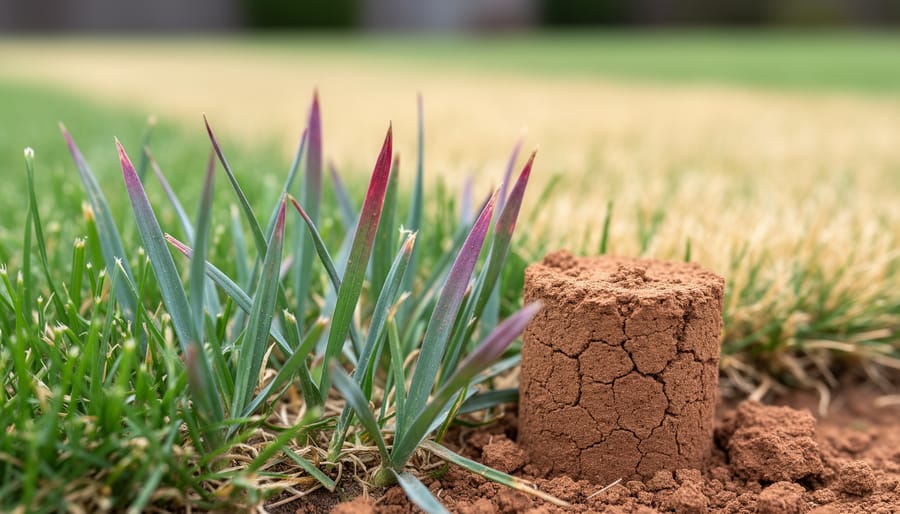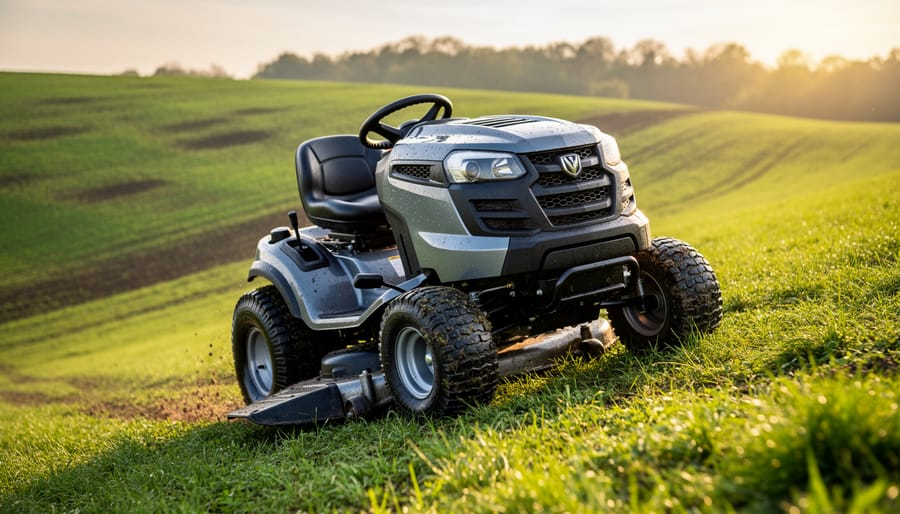
Assess your property’s terrain honestly before investing in a 4×4 riding mower—if you’re wrestling with slopes steeper than 15 degrees, dealing with consistently wet or muddy patches, or navigating loose soil that causes wheel spin, the all-wheel-drive system will transform your mowing experience from frustrating to effortless. These machines distribute power to all four wheels simultaneously, providing the traction and stability that standard two-wheel-drive mowers simply cannot match on challenging ground.
Recognize that 4×4 technology isn’t just about conquering hills. The enhanced grip prevents turf damage by eliminating wheel spin that tears up grass, particularly during spring when soil moisture is high or after rainfall. You’ll maintain better control on side slopes where conventional mowers slide or lose traction, reducing the physical strain of constantly correcting your path and significantly improving safety on your property.
Consider the long-term value proposition carefully. While 4×4 riding mowers carry a higher upfront cost—typically $500 to $1,500 more than comparable two-wheel-drive models—they deliver measurable benefits for properties with elevation changes or drainage challenges. The added traction means faster mowing times on difficult terrain, less soil compaction from repeated passes, and reduced wear on your lawn from slippage.
Understand that this feature works best when paired with proper tire selection and regular maintenance. Aggressive tread patterns maximize the 4×4 system’s capabilities, while keeping the drivetrain properly lubricated ensures reliable performance season after season.
What Makes a 4×4 Riding Mower Different from Standard Models
If you’ve ever driven a 4×4 truck through muddy terrain or up a snowy hill, you already understand the basic principle behind 4×4 riding mowers. Just like those trucks, 4WD lawn tractors send power to all four wheels instead of just two, giving you significantly better traction and control when conditions get challenging.
Here’s how it works in simple terms: standard riding mowers typically operate with rear-wheel drive. The engine powers only the back two wheels, while the front wheels simply roll along for the ride. This works fine on flat, dry lawns, but things get tricky when you encounter slopes, wet grass, or uneven ground. It’s a bit like trying to push a shopping cart uphill—you’re only getting traction from one end.
A 4×4 system changes the game entirely. Power flows from the engine through a transfer case or differential system that distributes force to all four wheels simultaneously. This means every tire is actively gripping the ground and pulling the mower forward, rather than half of them just tagging along. The result? You get roughly double the contact points working to keep you moving steadily.
Think of it this way: when you’re mowing across a damp hillside, a two-wheel-drive mower might spin its rear tires searching for grip, potentially leaving ruts in your lawn and creating erosion issues that aren’t exactly sustainable. A 4×4 model, however, distributes that workload across all four tires, maintaining consistent forward momentum without tearing up your turf.
This technology is particularly practical for properties with varied terrain. The extra traction doesn’t just prevent getting stuck—it actually makes mowing safer on slopes and more efficient in challenging conditions, reducing the time you spend wrestling with your equipment and helping you maintain a healthier lawn with less damage.
The Real-World Benefits You’ll Actually Notice
Conquering Slopes and Hills Safely
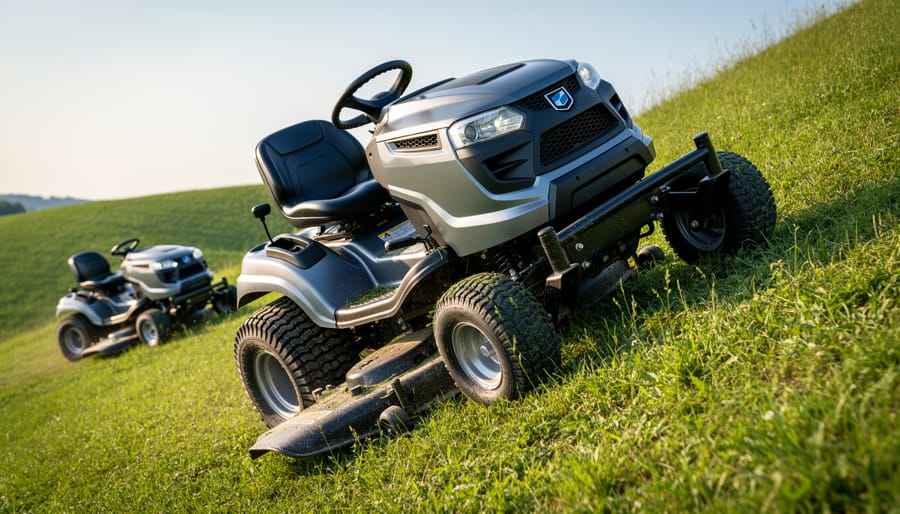
If you’ve ever felt that heart-stopping moment when your mower starts sliding sideways on a hill, you’ll appreciate what 4×4 traction brings to the table. Think of it as the difference between climbing a wet hiking trail in sneakers versus proper boots – that’s the confidence upgrade we’re talking about here.
The magic of 4×4 systems lies in their ability to distribute power to all four wheels simultaneously, preventing those scary slips and slides that can happen with standard two-wheel drive mowers. Most quality 4×4 riding mowers can safely handle slopes between 15 to 20 degrees, though always check your specific model’s guidelines. For perspective, a 15-degree slope rises about 3 feet over a 10-foot distance – steeper than many realize.
Here are some practical safety tips for tackling hills: Always mow up and down slopes rather than side to side, which dramatically reduces rollover risk. Keep your speed steady and slow – rushing creates momentum that works against you. Avoid sudden turns or stops on inclines, and never mow wet grass on slopes, even with 4×4 traction.
For the steepest sections of your property, consider making multiple passes at slightly different angles rather than one straight shot. This sustainable approach also promotes healthier grass growth patterns. Remember, even the best 4×4 system has limits – if you feel uncomfortable, that’s your signal to explore alternative solutions like terracing or ground covers for extreme slopes.
Handling Wet and Slippery Conditions
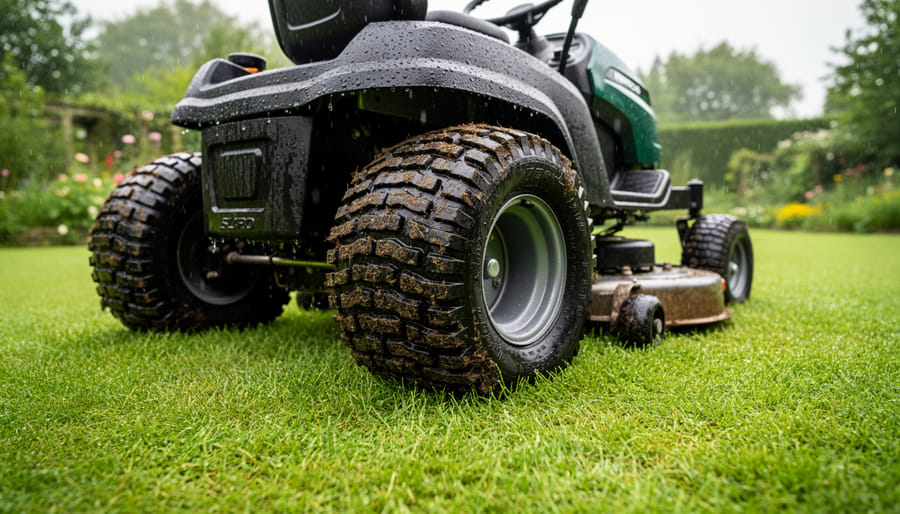
We’ve all been there – you wake up to find your grass desperately needs mowing, but everything’s still wet from morning dew or last night’s rain. Here’s where a 4×4 riding mower really shines. The four-wheel drive system provides significantly better traction on slippery grass compared to standard two-wheel drive models, meaning you won’t be spinning your wheels or leaving unsightly ruts across your lawn.
This capability isn’t just about convenience – it actually supports more sustainable lawn care practices. Instead of waiting several days for perfect conditions (during which your grass grows even taller and harder to cut), you can mow when needed. Those shaded areas along fence lines or under trees that seem perpetually damp? No problem. The enhanced grip allows you to maintain a consistent mowing schedule, which keeps your grass healthier and reduces stress on both the mower and your lawn.
That said, I always recommend exercising good judgment. If your lawn is truly waterlogged with standing water, it’s best to wait regardless of your mower’s capabilities. But for typical morning dampness or slightly wet conditions after a light rain, a 4×4 system gives you the flexibility to maintain your lawn on your terms rather than waiting for everything to completely dry out.
Navigating Rough and Uneven Terrain
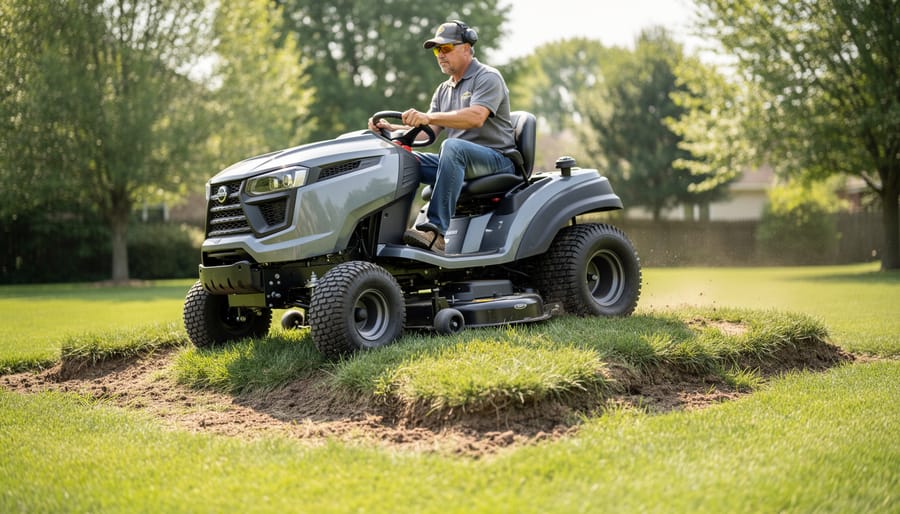
One of the most impressive features of 4×4 riding mowers is their ability to handle the real-world challenges your yard throws at them. Unlike standard mowers that might struggle or leave uneven cuts on bumpy ground, 4×4 systems excel where your lawn isn’t picture-perfect.
When you’re navigating around mature trees with exposed roots or dealing with those inevitable dips and mounds that develop over time, the independent power to all four wheels makes a noticeable difference. The mower maintains consistent traction, so you’re not bouncing around or getting stuck in low spots. This means cleaner cuts even on uneven surfaces, which is better for your grass health in the long run.
Garden beds and landscape features present another common challenge. Those transitional areas where your manicured lawn meets mulched beds or hardscaping often have slight elevation changes or softer soil. A 4×4 mower handles these transitions smoothly without wheel spin that could damage your lawn or leave unsightly tracks. You’ll find maneuvering around flower beds and decorative rocks much easier, reducing the need for string trimming afterward.
If you’re dealing with particularly challenging yard conditions, exploring options among the best riding mowers for challenging terrain can help you find the right match for your specific needs.
The environmental benefit here is significant too. Better traction means fewer passes over the same area, reducing fuel consumption and minimizing soil compaction. You’ll complete your mowing more efficiently while being gentler on your lawn’s ecosystem.
Who Actually Needs a 4×4 Riding Mower
Let me be straight with you: not everyone needs a 4×4 riding mower, and that’s perfectly okay. Understanding whether you’re one of the folks who truly benefits from this feature will save you money and help you choose the right tool for your specific situation.
If your lawn is relatively flat and stays reasonably dry throughout the mowing season, a standard 2WD mower will serve you beautifully. Many homeowners with properties up to two acres on gentle terrain find that regular riding mowers handle their needs without breaking a sweat. There’s no sense in paying extra for capabilities you’ll rarely use, especially when that money could go toward other sustainable lawn care investments.
However, 4×4 becomes essential rather than optional in certain scenarios. If your property includes slopes steeper than 10-15 degrees, you’ll appreciate the extra traction that prevents slipping and provides confident control. I’ve heard from countless gardeners who struggled with their 2WD mowers on hillsides, only to discover that upgrading to 4×4 transformed their mowing experience from stressful to straightforward.
Climate plays a bigger role than many realize. If you live where spring rains create soggy conditions or morning dew leaves grass slick well into summer, 4×4 traction helps you maintain your mowing schedule without getting stuck or tearing up your turf. This matters for lawn health since consistent mowing practices support better growth patterns.
Properties larger than three acres with varied terrain typically justify the 4×4 investment. When you’re covering that much ground across different conditions, the ability to navigate confidently through all sections makes the work more efficient and less physically demanding. Before deciding between features like lawn tractor vs zero turn, honestly assess your terrain challenges first.
Budget considerations matter too. If a 4×4 system stretches your budget uncomfortably, consider whether strategic landscaping modifications might reduce slope issues or improve drainage instead. Sometimes addressing the underlying terrain challenges offers a more sustainable long-term solution than purchasing equipment beyond your comfortable price range.
The key question is simple: does your current mower struggle with traction in conditions you regularly face? If yes, 4×4 makes sense. If no, stick with what works and invest those savings elsewhere in your garden.
Key Features to Look for When Shopping
Engine Power and Performance
When you’re tackling challenging terrain, engine power becomes your best friend. Most effective 4×4 riding mowers start around 18-24 horsepower, though some heavy-duty models like the Cub Cadet XT2 push beyond that for serious performance. Think of it this way: adequate horsepower ensures your mower maintains consistent speed and cutting quality even when climbing slopes or pushing through damp grass.
For properties under two acres with moderate slopes, an 18-20 horsepower engine typically provides sufficient muscle. Once you’re managing 2-5 acres with steeper inclines or rougher conditions, consider stepping up to 22-25 horsepower. Larger properties naturally demand more power to work efficiently without straining the engine.
Here’s a practical tip: underpowered mowers work harder, consume more fuel, and wear out faster. It’s tempting to save money with a smaller engine, but matching power to your actual needs is the more sustainable choice long-term. You’ll spend less time mowing, reduce fuel consumption through efficient operation, and extend your equipment’s lifespan. Consider factors like typical ground moisture, grass thickness, and terrain variations when evaluating your power requirements. A well-matched engine makes every mowing session smoother and more enjoyable.
Transmission and Drive System Quality
When choosing a 4×4 riding mower, understanding your transmission options will help ensure you get a machine that handles your terrain reliably for years to come. Most quality 4×4 mowers feature either hydrostatic or automatic transmissions, and knowing the difference matters for your long-term satisfaction.
Hydrostatic transmissions use fluid pressure to transfer power, offering smooth speed control without gears or clutches. They’re incredibly user-friendly and require less frequent maintenance, making them ideal if you’re tackling varied terrain where you need to adjust speed constantly. Automatic transmissions, while less common in 4×4 models, work similarly to your car and can be more familiar if you prefer that driving experience.
Durability should be your top priority, especially if you’re managing slopes or wet conditions regularly. When talking with dealers, ask specific questions about the transmission warranty coverage and whether they stock replacement parts locally. Find out how many hours the transmission is rated for and whether the drive system components are metal or plastic. Request maintenance schedules upfront so you understand the commitment involved.
A quality transmission paired with a genuine 4×4 system means fewer breakdowns during critical mowing seasons and better performance when your lawn needs attention most. This investment in reliability supports sustainable lawn care by reducing equipment replacement frequency.
Deck Size, Tire Tread, and Build Quality
Choosing the right deck size depends on your property’s layout and terrain challenges. For smaller lots with slopes or obstacles, a 42-46 inch deck offers excellent maneuverability around trees and tight corners. Larger properties benefit from 48-54 inch decks that cover more ground efficiently, though remember that weight impacts mowing performance on softer terrain. When paired with 4×4 systems, wider decks actually become more practical since the enhanced traction stabilizes the mower on hillsides.
Tire tread patterns are crucial for maximizing your 4×4 investment. Look for aggressive, deep-lugged treads that bite into soft soil, wet grass, and loose terrain. These patterns channel mud away from the tire surface, maintaining consistent grip. Shallow treads simply can’t capitalize on the power your 4×4 system delivers.
Build quality separates weekend warriors from long-term investments. Examine the frame construction for heavy-gauge steel, particularly around stress points. Check for reinforced deck hangers and robust axle housings. Quality manufacturers use sealed bearings, corrosion-resistant components, and proper drainage systems. These details ensure your 4×4 mower handles demanding conditions year after year while minimizing maintenance headaches and supporting sustainable ownership through durability.
Maintaining Your 4×4 System for Long-Term Performance
Your 4×4 riding mower is a significant investment, and with proper care, it’ll serve you faithfully for years to come. Let me share some practical maintenance tips that’ll keep your all-wheel-drive system running smoothly while embracing sustainable practices.
Start with the basics: tire pressure. This might sound simple, but it’s crucial for 4×4 performance. Check all four tires monthly, ensuring they’re inflated to the manufacturer’s recommended PSI. Uneven pressure causes unnecessary strain on your drivetrain and reduces traction on those challenging slopes you bought the mower to tackle. Keep tires properly inflated, and you’ll also improve fuel efficiency, which is better for both your wallet and the environment.
The differential and transmission are the heart of your 4×4 system. Change the differential fluid according to your manual’s schedule, typically every 100-200 hours of operation. I know it’s tempting to skip this, but fresh fluid prevents wear and extends component life, ultimately reducing waste by avoiding premature replacements. Similarly, check your hydrostatic transmission fluid regularly and top it off as needed with the correct specification.
Seasonal preparation makes a world of difference. Before winter storage, clean your mower thoroughly to prevent rust, stabilize the fuel to reduce emissions from degraded gasoline, and store it in a dry location. Come spring, inspect all drive components for wear before that first mow.
Grease all fittings every 25 hours of use. This simple habit prevents friction damage and keeps your 4×4 system operating efficiently. Think of it as giving your mower the care it needs to avoid costly repairs down the road. By maintaining rather than replacing, you’re practicing true sustainability while ensuring peak performance on your property’s toughest terrain.
So, are 4×4 riding lawn mowers worth the investment? The honest answer is: it depends entirely on your property’s specific challenges. If you’re wrestling with steep inclines, dealing with consistently damp soil, or finding yourself stuck mid-mow more than once a season, a 4×4 system isn’t an extravagant upgrade—it’s a practical problem-solver that’ll transform your mowing experience. On the other hand, if you’ve got relatively flat, well-drained terrain, you’ll likely do just fine with a standard two-wheel-drive model and save yourself some money in the process.
Take a moment to walk your property with fresh eyes. Consider where you struggle most, where the grass grows unevenly because you can’t safely reach certain spots, and how much time you’re spending working around obstacles rather than through them. This honest assessment will guide you toward the right decision.
Remember, effective lawn care isn’t about having the fanciest equipment—it’s about having the right tools for your unique situation. When you match your mower to your terrain’s demands, you’ll spend less time fighting your equipment and more time enjoying a beautifully maintained landscape. That’s sustainable lawn care that works smarter, not harder.