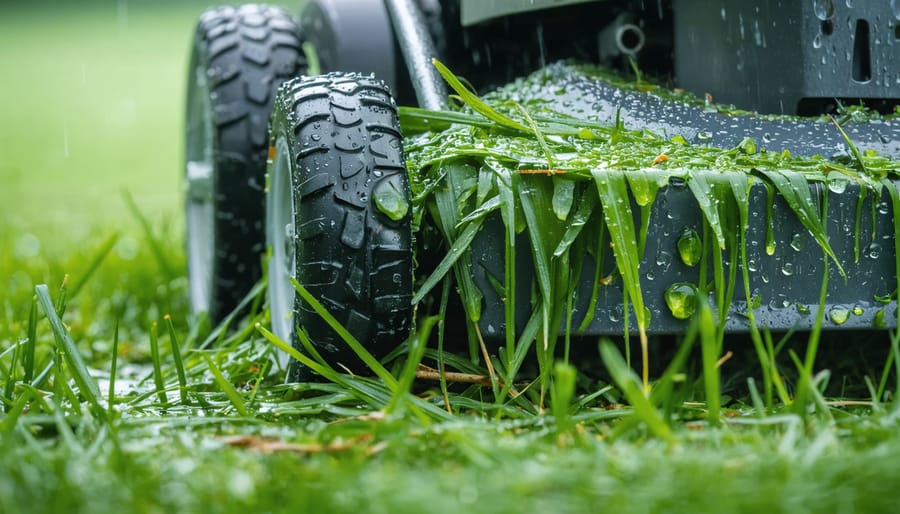
Yes, wet grass does dull mower blades faster than dry grass—but that’s only the beginning of why you should think twice before firing up your mower after a rainstorm. When you cut damp grass, the moisture causes clippings to clump together and stick to your blade’s cutting edge, creating a paste-like residue that forces the blade to work harder with each pass. This extra friction accelerates wear on the blade’s edge, requiring more frequent sharpening and reducing the overall lifespan of your equipment.
Beyond blade dullness, mowing wet grass creates a cascade of lawn care challenges that affect both your equipment and your turf’s health. Wet clippings clog your mower deck, strain your engine, and leave unsightly clumps across your yard that can smother grass beneath them. The weight of moisture-laden grass also bends blades down during cutting, resulting in uneven, ragged cuts that leave your lawn vulnerable to disease and brown patches.
Understanding the real impact of wet mowing goes beyond simple blade maintenance. The decision affects your lawn’s appearance, your equipment’s longevity, and even your safety on slippery terrain. While sometimes circumstances force us to mow damp grass, knowing the risks and proper techniques can help you minimize damage and maintain a healthier, more sustainable lawn care routine. Let’s explore exactly what happens to your mower blades in wet conditions and discover practical solutions for those times when waiting simply isn’t an option.
The Truth About Wet Grass and Blade Sharpness
Does Moisture Actually Dull Metal?
Here’s a reassuring truth: moisture itself doesn’t actually dull your mower blade. Water is much softer than metal, so the simple contact between your blade and wet grass won’t wear down the cutting edge. Think of it this way—you can wash your kitchen knives repeatedly without them losing their sharpness from water exposure alone.
However, the story doesn’t end there. While water won’t directly dull your blade, wet grass creates conditions that can indirectly damage it. When grass is saturated, it becomes heavier and more fibrous, requiring your blade to work harder with each pass. This increased resistance can cause the blade to tear rather than cleanly cut through the grass, which puts extra stress on the cutting edge over time.
The real culprit behind blade dulling when mowing wet grass is often the clumping effect. Wet grass clippings stick together and accumulate on your deck and blade, creating uneven cutting resistance that can chip or bend the blade edge. Additionally, if you’re mowing on wet, muddy soil, you’re more likely to strike dirt particles or small rocks hidden in the dampness—and that’s what truly damages proper blade sharpness.
The Real Culprit: Resistance and Clumping
While wet grass doesn’t technically dull your blades through direct contact, it creates a cascade of problems that can indirectly shorten their lifespan. Think of it like this: mowing wet grass is like asking your mower to work overtime in less-than-ideal conditions.
When grass is saturated with moisture, it becomes heavier and more pliable, creating significantly more resistance against your mower blades. Instead of clean, crisp cuts, the blades have to work harder to slice through each soggy blade of grass. This extra strain puts pressure on your entire cutting system, from the blades themselves to the engine and drive components.
The real troublemaker is clumping. Wet grass doesn’t disperse neatly like dry grass—it sticks together in heavy clumps that accumulate under your mower deck. These clumps force your blades to push through increasingly thick masses of vegetation, creating friction and stress. Over time, this constant strain can lead to bent blades, loose mounting bolts, and uneven wear patterns.
The environmental impact matters too. All that extra engine strain means increased fuel consumption and emissions—not exactly the sustainable approach we’re aiming for in our gardens. Your mower is essentially working twice as hard to achieve half the results, accelerating wear on all components while delivering a subpar cut.
What Wet Grass Actually Does to Your Mower Blades
Corrosion and Rust Formation
Beyond the immediate dulling effect, mowing wet grass poses another long-term threat to your blade’s health: corrosion and rust formation. When you cut damp grass, those moisture-laden clippings don’t just make a mess—they create the perfect environment for rust to take hold on your mower blade.
Here’s what happens: wet grass clippings cling stubbornly to the underside of your mower deck and blade. If you don’t clean them off promptly, that trapped moisture sits against the metal, initiating the oxidation process. Even high-quality steel blades aren’t immune to this problem, though they may resist it longer than budget options.
The real trouble begins when you repeatedly mow wet grass without thorough cleaning between sessions. Each mowing adds another layer of moisture and organic material, creating a corrosive environment that weakens the blade’s structural integrity. Rust doesn’t just look unsightly—it compromises the blade’s edge retention and can lead to premature replacement.
The good news? Prevention is straightforward and sustainable. After mowing in less-than-ideal conditions, take a few minutes to scrape off clippings and dry the blade thoroughly. This simple habit significantly extends blade life, reducing waste and saving you money on replacements. Consider it part of your regular mower maintenance routine, not an optional task.

Grass Buildup and Deck Clogging
Here’s one of those frustrating challenges you’ve probably experienced firsthand: that stubborn layer of grass clippings plastered across your mower deck. When you mow wet grass, moisture acts like glue, causing clippings to stick to everything—the blades, the underside of the deck, and the discharge chute. This isn’t just messy; it seriously impacts your mowing performance.
As wet clippings accumulate, they create several problems. First, the buildup reduces airflow under the deck, which means your mower can’t create the suction needed to lift grass blades for an even cut. You’ll notice the quality of your cut deteriorating as you go. Second, clumps of matted grass can throw off your mower’s balance, causing vibration and strain on the engine and other components. This uneven weight distribution forces your mower to work harder, burning more fuel and potentially shortening its lifespan.
From a practical standpoint, you’ll need to stop frequently to scrape out accumulated clippings—hardly the efficient mowing session you planned. This buildup also creates a perfect environment for rust and corrosion if left uncleaned. The best solution? Wait for drier conditions when possible, and always clean your mower deck thoroughly after each use to maintain optimal performance and extend your equipment’s life.
Increased Engine and Blade Stress
When you’re pushing through wet, heavy grass, your mower is working significantly harder than it would on a dry lawn. Think of it like running through shallow water versus running on pavement—everything just requires more effort. The engine has to generate extra power to maintain blade speed through the moisture-laden clippings, which can lead to overheating and increased fuel consumption. This additional strain isn’t just a one-time inconvenience; it accelerates wear on engine components over time.
The blade itself faces a similar challenge. As it battles through wet grass that clings together and resists cutting, the blade encounters more friction and drag. This means each pass requires more force, putting stress on the blade’s mounting hardware, the drive shaft, and the blade itself. Over time, this repeated strain can lead to bent blades, loose mounting bolts, or even damaged spindles—repairs that are both inconvenient and costly.
From a sustainability perspective, this premature wear means you’ll need to replace parts more frequently, creating unnecessary waste and expense. By waiting for drier conditions, you’re not just protecting your equipment—you’re making a more environmentally conscious choice that extends the life of your mower and reduces the need for replacement parts.
The Hidden Costs of Mowing When It’s Wet
Lawn Damage You Can’t See Right Away
Beyond the immediate concern of blade dulling, mowing wet grass creates problems you might not notice until days later. When your mower struggles through moisture-laden turf, it tears grass blades rather than slicing them cleanly. Think of it like cutting fabric with dull scissors—you get ragged edges instead of smooth cuts.
These torn tips turn brown within 24 to 48 hours, giving your entire lawn a grayish or tan cast that makes it look unhealthy. More concerning, those jagged wounds become entry points for diseases like fungal infections. Just as a clean surgical cut heals better than a ragged tear, grass recovers better from clean cuts made during dry conditions.
The uneven appearance extends beyond browning. Wet grass clumps mean some areas get scalped while others remain too long, creating a patchy, unprofessional look that persists until your next mowing. You’ll also notice the grass grows back unevenly because stressed, torn blades recover at different rates.
Adopting better lawn care practices means timing your mowing when grass is dry, which protects your lawn’s health and appearance. Your patience pays off with greener, more resilient turf that resists disease and maintains consistent growth patterns throughout the season.

Safety Hazards Worth Considering
Beyond blade concerns, mowing wet grass presents real safety risks that are worth taking seriously. Wet grass creates slippery conditions underfoot, making it surprisingly easy to lose your footing—especially on slopes or uneven terrain where traction becomes even more compromised. This is particularly important if you’re working on hills or around landscape features like retaining walls or garden beds.
If you’re using an electric mower, wet conditions introduce electrical hazards you simply can’t ignore. Moisture and electricity don’t mix well, and even with modern safety features, there’s an increased risk when operating electrical equipment in damp conditions. Battery-powered mowers are somewhat safer than corded versions, but caution remains essential.
The reduced traction on wet grass also affects your mower’s stability and your ability to control it effectively, especially on inclines. Your mower can slide unexpectedly, and stopping quickly becomes more difficult. From a practical safety standpoint, waiting for dry conditions isn’t just better for your equipment—it’s genuinely safer for you too.
The Maintenance Time You’ll Pay Later
Beyond blade sharpness, wet grass mowing creates a maintenance burden that adds up quickly. You’ll spend significantly more time scraping dried clumps from your mower deck after each session—those sticky accumulations don’t just disappear on their own. The moisture accelerates corrosion on metal components, meaning you’ll likely face rust issues sooner than you’d expect. Your blades will need sharpening more frequently because dull edges compound the tearing problem, creating a cycle of declining performance. Budget extra time for thorough post-mow cleaning, which becomes essential rather than optional. If you make wet mowing a regular habit, you’re essentially choosing to invest more hours in equipment upkeep rather than actually enjoying your garden. The time you save by mowing in less-than-ideal conditions gets eaten up by the extra maintenance work waiting for you later.
When You Absolutely Must Mow Wet Grass
Pre-Mowing Preparations That Make a Difference
If you absolutely must mow wet grass, a little preparation goes a long way in protecting your equipment and achieving the best results possible. Think of it as setting yourself up for success rather than fighting an uphill battle.
Start by sharpening your mower blades beforehand. Sharp blades cut cleanly even in challenging conditions, while dull blades will tear and shred wet grass fibers, causing additional stress on your mower and leaving your lawn looking ragged. This single step makes the biggest difference in blade longevity when cutting damp grass.
Next, clean your mower deck thoroughly. Wet grass clippings stick to everything, and any existing buildup will only compound the problem. A clean deck allows for better airflow and reduces the load on your engine. Consider spraying the underside with cooking spray or silicone lubricant to create a non-stick barrier that helps clippings slide off more easily.
Raise your cutting height by at least half an inch to one inch higher than usual. This reduces resistance, prevents your mower from bogging down, and minimizes the stress on blades working through moisture-heavy grass. You’re already dealing with extra weight and friction, so give yourself some breathing room. These simple adjustments transform a difficult task into a manageable one while protecting your investment.
Mowing Techniques for Wet Conditions
If you absolutely must mow wet grass, adapting your technique can minimize blade dulling and strain on your mower. The key is working with the conditions rather than fighting against them.
First, slow down your mowing speed significantly. Rushing through wet grass forces your blades to work harder, increasing friction and heat that accelerate dulling. A leisurely pace gives the blades time to cut cleanly rather than tearing through moisture-laden grass.
Consider raising your mower deck higher than usual and making multiple passes over several days instead of cutting down to your target height all at once. This lighter approach reduces the workload on your blades with each pass. Think of it like trimming hair—several small cuts are gentler than one dramatic chop.
Reduce your overlap between passes too. While you normally might overlap by a third for precision, wet grass clippings clump more, so less overlap prevents your mower from re-cutting already processed grass, which unnecessarily taxes your blades.
Finally, pause periodically to scrape accumulated grass from under your deck. These wet clumps create additional resistance that dulls blades faster and can strain your engine. A putty knife or stick works perfectly for this quick maintenance step that protects your equipment investment.
Immediate Post-Mowing Care
Once you’ve finished mowing wet grass, don’t just park your mower and walk away. Wet clippings create the perfect environment for rust and corrosion, so immediate action matters. Start by removing the spark plug or battery for safety, then thoroughly scrape off all grass buildup from the underside of the deck and around the blade assembly. A putty knife or deck scraper works wonderfully here. Hosing down the deck helps, but make sure to dry it completely afterward with old towels or let it air-dry in the sun. This is also the perfect time for cleaning your mower more thoroughly, including vents and wheels. Apply a light coating of oil or silicone spray to metal surfaces to prevent moisture damage. These simple steps, taking just 10-15 minutes, can extend your equipment’s lifespan significantly and keep those blades sharp longer.

Protecting Your Blades for the Long Haul
The Right Sharpening Schedule
A good rule of thumb is to sharpen your mower blades every 20-25 hours of mowing time, which typically translates to two to three times per growing season for most homeowners. However, if you frequently mow wet grass or tackle thick, overgrown lawns, you’ll want to sharpen more often—perhaps every 15-20 hours.
Watch for these telltale signs that sharpening time has arrived: ragged, brown-tipped grass blades instead of clean cuts, uneven mowing patterns, or the need to make multiple passes over the same area. If your lawn looks dull or develops a grayish-brown cast a day or two after mowing, those torn grass tips are practically begging for sharper blades.
For the most sustainable lawn care approach, keep a backup blade on hand. This way, you can quickly swap out dull blades and sharpen them at your convenience, minimizing downtime and maintaining consistently healthy grass throughout the season.
Rust Prevention Without Harsh Chemicals
Protecting your mower blades from rust doesn’t require harsh chemicals that harm the environment. After each use, especially following wet grass mowing, simply wipe your blades clean with a dry cloth to remove moisture and debris. This basic step prevents rust before it starts.
For natural protection, consider applying a thin coat of vegetable oil or mineral oil to clean, dry blades. These food-safe options create a protective barrier against moisture without introducing toxic substances into your lawn ecosystem. Apply with a cloth after cleaning, ensuring even coverage across the blade surface.
Store your mower in a dry, covered location—a garage or shed works perfectly. If you must store it outdoors, invest in a quality waterproof cover to shield it from rain and morning dew.
Make blade inspection part of your regular maintenance routine. Check for early signs of rust or pitting every few weeks during mowing season. Catching corrosion early means you can address it with simple cleaning rather than costly blade replacement. This proactive approach keeps your equipment running efficiently while supporting your commitment to sustainable lawn care practices.
When to Replace Instead of Sharpen
Even with regular sharpening, blades eventually reach retirement age. If your blade shows deep nicks, cracks, or has been sharpened so many times that metal thickness is compromised, it’s time for a replacement. A blade that’s been ground down excessively becomes unbalanced and poses safety risks. Similarly, bent blades can’t be reliably straightened and should be replaced immediately. From a sustainability perspective, replacing a worn blade actually makes sense—a new, sharp blade cuts cleanly with less engine strain, reducing fuel consumption and emissions. Most mower blades are recyclable steel, so dispose of old ones responsibly at your local metal recycling facility rather than tossing them in the trash.
So, does mowing wet grass dull your blades? The short answer is no—not directly. However, that doesn’t mean you should fire up your mower after a rainstorm without a second thought. While wet grass won’t necessarily wear down your blade’s edge faster, it creates a cascade of other problems that can seriously impact both your equipment and lawn health. The moisture causes clumping, uneven cuts, potential rust issues, and increased strain on your mower’s engine. When you factor in the risk of soil compaction and disease spread across your lawn, the case for waiting becomes even stronger.
The best practice? Give your grass time to dry whenever possible. Your mower will thank you with better performance and longevity, and your lawn will reward you with healthier, more even growth. If you absolutely must mow damp grass, take precautions like raising your cutting height and cleaning your equipment immediately afterward. Remember, mindful mowing decisions today mean a more sustainable, thriving lawn tomorrow.