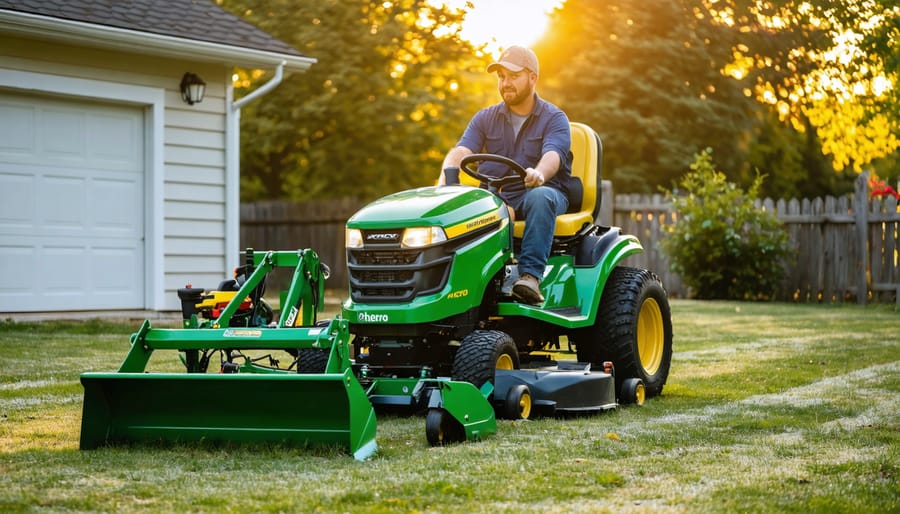
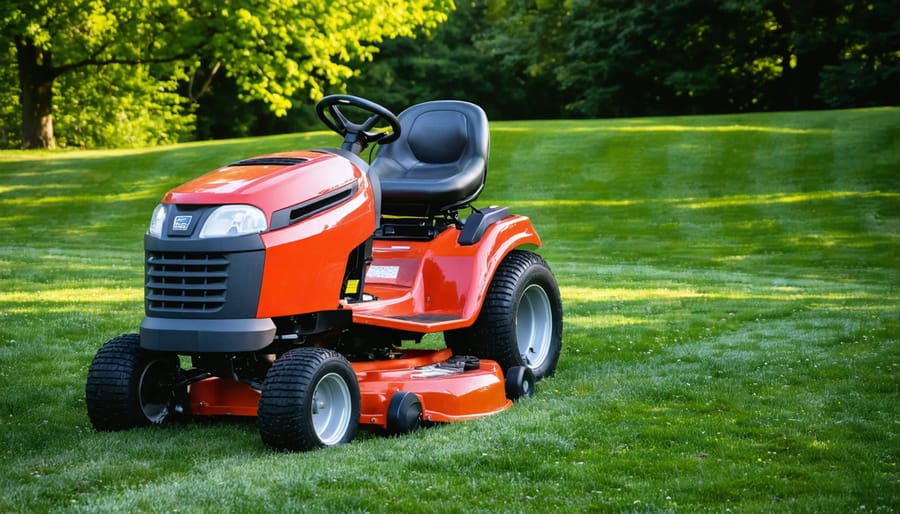
Your riding lawn tractor represents a significant investment, and the right accessories transform it from a single-purpose mower into a year-round workhorse that tackles everything from precise edging to snow removal. Just as choosing the right mower requires understanding your specific needs, selecting accessories demands careful consideration of your property size, terrain challenges, and seasonal requirements.
Most tractor owners significantly underutilize their equipment’s potential. A standard riding mower with a basic cutting deck can handle weekly grass trimming, but strategic accessories extend its capabilities to aerating compacted soil, spreading organic fertilizer, hauling compost and mulch, collecting leaves without plastic bags, and clearing snow without fossil-fuel-powered blowers. This versatility not only maximizes your initial investment but reduces the need for multiple gas-powered tools cluttering your garage.
The accessory market offers hundreds of options across wildly different price points and quality levels. Understanding which attachments deliver genuine value versus those that gather dust requires examining your actual lawn care routine, identifying repetitive manual tasks that drain your time and energy, and prioritizing accessories that support sustainable practices like mulching, composting, and chemical-free lawn maintenance.
This guide categorizes essential accessories by function, explains how each attachment works in real-world conditions, and provides practical selection criteria so you invest wisely in tools that genuinely enhance both your lawn’s health and your enjoyment of maintaining it.
Why Accessories Matter More Than You Think
When you first bought your riding lawn tractor, you probably thought of it as a mowing machine, and that’s perfectly natural. But here’s something many homeowners discover after a season or two: the real magic happens when you start exploring accessories. Think of your tractor as the foundation of a complete lawn care system rather than a single-purpose tool.
Investing in accessories isn’t just about adding bells and whistles. It’s about maximizing what you already own and avoiding the trap of buying separate machines for every yard task. Instead of purchasing a standalone aerator, a separate cart, and a dedicated snow blower, quality 3-point hitch attachments and other accessories transform your tractor into a year-round workhorse. This approach is both economical and environmentally conscious, reducing the number of gas-powered machines you need to store, maintain, and eventually replace.
The sustainability angle matters here more than people realize. Every additional machine means more manufacturing resources, more fuel consumption, and eventually more waste when it reaches the end of its life. By expanding your tractor’s capabilities through accessories, you’re making a choice that aligns with greener practices while actually improving your results.
Quality accessories also protect your investment by keeping your tractor in regular use throughout the seasons. Engines benefit from consistent operation rather than sitting idle for months. Plus, many accessories actually reduce wear on your lawn. A proper aerator attachment, for instance, promotes healthier grass that requires less intervention over time. A mulching kit returns nutrients to your soil, reducing fertilizer needs.
The financial payoff comes quicker than you might expect. That bagger attachment saves countless hours of raking and creates compost for your garden beds. A dethatching blade eliminates the need for rental equipment each spring. When you calculate the time saved, rental fees avoided, and professional services you no longer need, many accessories pay for themselves within a single season while extending your tractor’s useful life by years.
Essential Mowing Enhancement Accessories
Mulching Kits and Bagging Systems
Choosing between mulching and bagging really depends on what your lawn needs at any given moment, and having both options available makes your riding tractor incredibly versatile. Let me walk you through when each system shines.
Mulching kits are my go-to recommendation for regular mowing. These systems use specially designed blades that cut grass clippings into tiny pieces and redistribute them back onto your lawn. The benefit? Those clippings decompose quickly, returning valuable nitrogen and nutrients to the soil. You’re essentially creating free, slow-release fertilizer every time you mow. This sustainable approach reduces the need for synthetic fertilizers and keeps organic matter out of landfills. Most manufacturers offer mulching kits as add-ons that include mulching blades and a discharge blocker plate. For best results, mow when grass is dry and never remove more than one-third of the blade height at once.
Bagging systems become essential during certain situations. When leaves carpet your lawn in fall, collecting them prevents matting that can suffocate grass. If you’ve let the grass grow too tall, bagging prevents clumps that smother healthy growth underneath. Baggers are also ideal when trimming near flower beds where you don’t want clippings scattered everywhere. Most systems attach easily to your tractor’s rear and hold several bushels before needing emptying.
The practical sweet spot? Use mulching as your default method throughout the growing season, switching to bagging only when conditions demand it. This balanced approach keeps your lawn healthy while giving you flexibility when circumstances change.
Striping Kits and Lawn Rollers
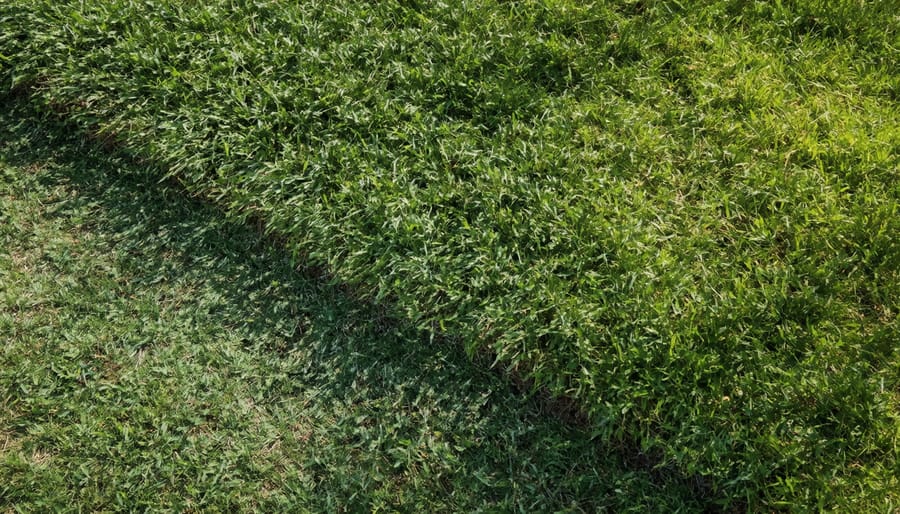
If you’ve ever admired those gorgeous, professional ballpark stripes on a pristine lawn and wondered how to achieve that look at home, striping kits are your answer. These simple yet effective accessories attach to the rear of your tractor and bend grass blades in alternating directions as you mow. The different angles reflect light differently, creating those eye-catching patterns that make your neighbors think you’ve hired a professional crew.
Striping kits typically consist of a weighted roller or mat that gently presses grass as you pass over it. They’re surprisingly affordable and require no special mowing technique—just overlap your passes slightly and maintain consistent straight lines. The effect works best on cool-season grasses like fescue and bluegrass, though warm-season varieties will show some striping too.
Lawn rollers serve a different but equally valuable purpose. These water- or sand-filled drums help level minor surface irregularities, press down frost heaves in spring, and improve seed-to-soil contact after overseeding. They’re particularly useful for establishing new lawns or repairing winter damage. Just remember the golden rule: only roll when soil is slightly moist, never soaking wet, to avoid compaction issues that can harm your lawn’s long-term health and sustainability.
Headlights and Safety Accessories
If you’re planning to extend your mowing sessions into early morning or evening hours, LED headlights are game-changers for visibility and safety. Modern LED options are energy-efficient and draw minimal power from your battery while providing excellent illumination across your lawn. I’ve found that good lighting not only helps you see obstacles but also makes you more visible to others, especially important if you’re working near roadways or driveways.
Mirrors are another often-overlooked safety addition that significantly improve your situational awareness. They’re particularly helpful when towing attachments or operating in tight spaces where backing up is necessary. You’ll appreciate being able to check behind you without constantly twisting around.
For those working near roads or in areas with foot traffic, safety flags mounted on tall, flexible poles increase your visibility dramatically. These bright orange or yellow flags help pedestrians, cyclists, and drivers spot you from a distance, preventing accidents before they happen. Think of these accessories as practical investments in protecting yourself, your family, and your neighbors while maintaining your lawn responsibly.
Yard Work Accessories That Save Your Back
Tow-Behind Carts and Dump Trailers
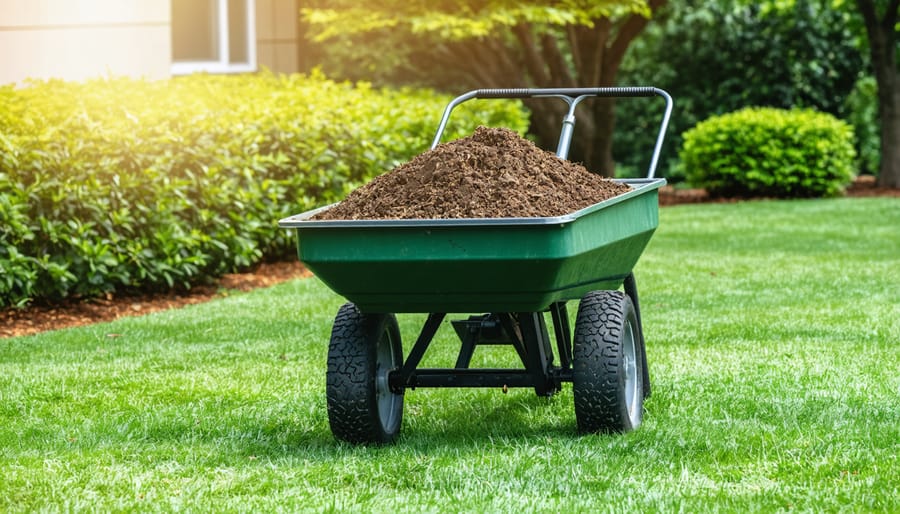
If you’re serious about tackling yard projects, a good tow-behind cart transforms your riding tractor into a genuine workhorse. I learned this lesson the hard way after making countless trips hauling bags of mulch one wheelbarrow load at a time—what a game-changer when I finally invested in a proper cart!
Standard poly carts typically hold between 10 and 20 cubic feet and work beautifully for transporting tools, potted plants, or bagged materials. They’re affordable and lightweight, making them ideal for general gardening tasks. However, if you’re moving heavier loads like soil, gravel, or yard waste, dump carts are worth every penny. The tilting dump feature lets you unload with a simple pull of a lever rather than shoveling everything out manually—your back will thank you.
When selecting capacity, honestly assess your typical projects. A 650-pound capacity suits most residential gardens, while larger properties benefit from 1,000-pound models. Remember that bigger isn’t always better if it encourages overloading, which stresses your tractor’s transmission and creates safety hazards.
Weight distribution matters tremendously for safe operation. Load heavier items toward the front of the cart, closer to the hitch point, and avoid piling materials higher than the sidewalls. This prevents tipping on slopes and maintains steering control. Always start and stop gradually with loaded carts, and take turns wider than you think necessary.
For sustainability-minded gardeners, these carts excel at transporting compost, collecting lawn clippings for mulching beds, and hauling materials for DIY projects that reduce waste. Choose models with pneumatic tires for better weight distribution and less soil compaction in your garden areas.
Lawn Sweepers and Debris Collection
If you’ve ever spent hours bent over with a rake gathering leaves, grass clippings, or those seemingly endless pine needles, a tow-behind sweeper might just become your new best friend. These clever attachments feature rotating brushes that sweep debris into a large collection hopper as you drive your tractor across the lawn. Think of it as a vacuum cleaner for your yard, but one that lets you sit comfortably while working.
The time savings are genuinely impressive. What might take an entire afternoon with a rake can be accomplished in 30-45 minutes with a sweeper, and you’ll avoid the backache that usually comes with manual raking. The brushes adjust to different heights, making them effective on various surfaces from smooth lawns to slightly uneven terrain.
Here’s where sustainability comes into play: instead of bagging debris for curbside pickup, you’re collecting valuable organic material perfect for composting. Grass clippings and leaves break down into nutrient-rich compost that feeds your garden naturally. Some gardeners even use collected pine needles as acidic mulch around blueberries and azaleas. You’re not just saving time and energy; you’re creating a closed-loop system that reduces waste and improves your soil health simultaneously.
Spreaders and Sprayers
Getting an even spread of fertilizer or seed across your lawn makes all the difference between patchy results and that magazine-worthy green carpet we’re all chasing. Broadcast spreaders that attach to your riding tractor transform this sometimes tedious task into something surprisingly satisfying. These tow-behind spreaders hold significantly more product than hand-held versions, meaning fewer refill trips and more consistent coverage across larger areas.
What I love about tractor-mounted spreaders is the precision they offer. Many models feature adjustable flow rates, letting you dial in exactly how much product you’re applying. This matters tremendously for both your wallet and the environment, because over-application wastes money and can lead to nutrient runoff into local waterways. When you’re spreading organic fertilizers or native wildflower seeds, getting the rate right ensures your sustainable practices actually deliver results.
Sprayers are equally valuable, particularly for applying organic pest controls, liquid fertilizers, or targeted weed treatments. Look for models with boom attachments for uniform coverage and tanks large enough to handle your property size without constant refilling. The key here is calibration. Take time to test your application rate over a measured area before treating your entire lawn.
Seasonal and Multi-Purpose Attachments
Snow Removal Equipment
Your trusty riding tractor doesn’t have to hibernate once winter arrives. With the right snow removal equipment, it becomes a year-round workhorse that tackles everything from light dustings to serious snowfall.
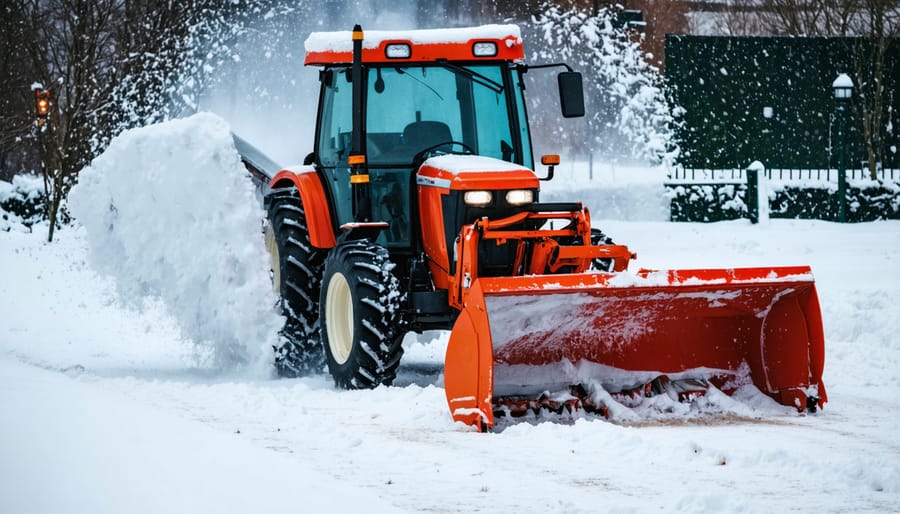
Snow blades mount to your tractor’s front and work like oversized plows, pushing snow to the sides as you drive. They’re ideal for driveways and paths with 6 inches or less of accumulation. These straightforward attachments are budget-friendly and easy to install, making them perfect for regions with occasional snowfall. However, they do require multiple passes for heavy snow and can struggle with wet, heavy conditions.
Snow blowers attach to your tractor and actively throw snow away from cleared areas, handling deeper accumulations much more effectively. They’re the better choice if you regularly see 8 inches or more, or if you need to throw snow well beyond your driveway edges. While pricier than blades, they’re significantly more powerful and efficient for serious winter weather.
Don’t overlook tire chains, especially if you’re working on slopes or icy conditions. They provide essential traction that keeps you safe and effective, much like 4WD riding mowers do on challenging terrain. Look for chains specifically designed for your tire size.
Storage matters for longevity. Clean all equipment thoroughly before storing, apply protective oil to metal surfaces, and keep attachments in a dry location. Consider covering them to prevent dust accumulation. This simple maintenance ensures your snow removal gear stays ready for action season after season, maximizing your tractor investment while keeping your property accessible all winter long.
Dethatchers and Aerators
Maintaining a thick, healthy lawn goes beyond regular mowing. If your grass looks tired despite consistent watering and mowing, dethatching and aerating attachments might be exactly what you need. These accessories transform your riding tractor into a lawn health powerhouse, addressing issues that even the best fertilizer can’t fix alone.
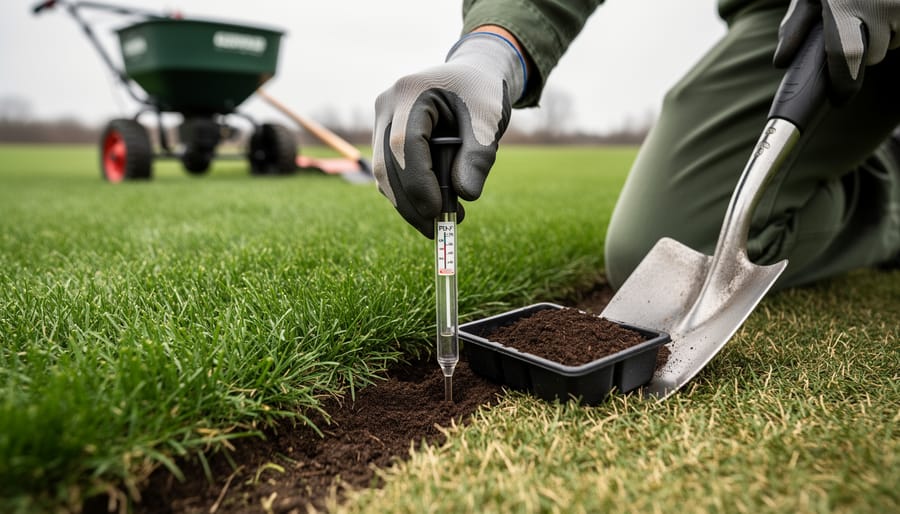
Thatch, that dense layer of dead grass and roots between your soil and green blades, becomes problematic when it exceeds half an inch thick. It blocks water, nutrients, and oxygen from reaching grass roots. A dethatcher attachment uses spring-loaded tines to pull up this layer, typically best used in early spring or fall when grass actively grows. You’ll know it’s time when your lawn feels spongy underfoot or water puddles rather than absorbs.
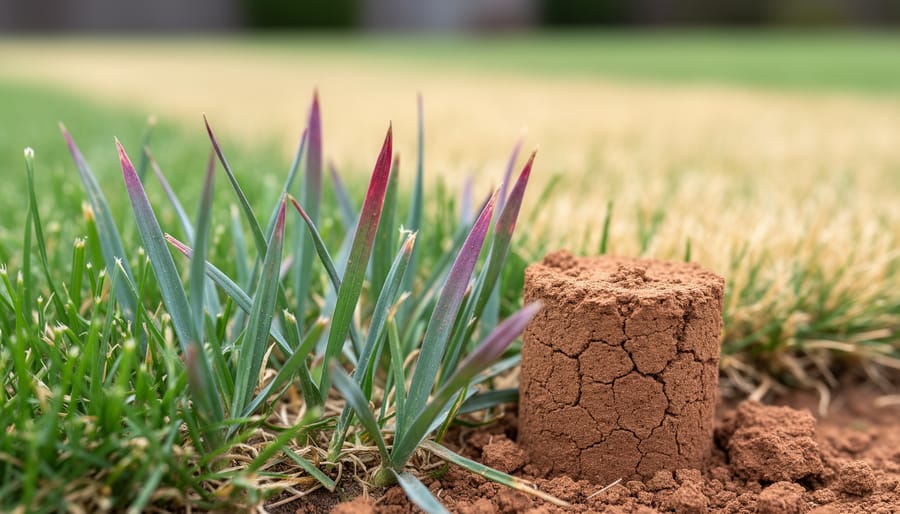
Aerators work differently but equally important. They punch small holes or remove soil plugs, allowing air, water, and nutrients to penetrate compacted soil. This is especially valuable in high-traffic areas or clay-heavy yards. Core aerators, which remove soil plugs, are most effective and promote long-term soil health.
Using both accessories seasonally creates sustainable lawn resilience, reducing your need for excessive watering and chemical treatments while encouraging naturally vigorous turf that crowds out weeds.
Grading Blades and Landscape Rakes
Beyond keeping your lawn looking sharp, your riding tractor can become a surprisingly effective tool for broader property maintenance with the right attachments. Grading blades and landscape rakes transform your machine into a serious workhorse for tasks you’d otherwise tackle by hand or hire out.
A grading blade attachment mounts to your tractor and works wonders for maintaining gravel driveways, smoothing out ruts after heavy rain, or redistributing soil across garden beds. I’ve found these particularly helpful in spring when winter frost heaving leaves driveways looking worse for wear. They’re adjustable, so you can set the angle to push material where you need it.
Landscape rakes take things further by breaking up compacted soil, removing rocks and debris, and creating smooth seedbeds for new lawns or garden areas. They’re excellent for spreading compost evenly or preparing areas for sustainable groundcover plantings. The tined design allows you to level without simply pushing everything aside.
These attachments save considerable back-breaking work while reducing the need for additional equipment. For property owners managing larger lots or rural acreage, they’re practical investments that extend your tractor’s usefulness well beyond the growing season.
Comfort and Convenience Upgrades
Seat Covers, Armrests, and Canopies
Let me tell you, after a few hours on your riding tractor, those extended mowing sessions can really take their toll on your body. That’s where comfort accessories become absolute game-changers for maintaining your lawn care routine without the aches and pains.
Seat covers are often overlooked, but they’re fantastic for transforming a basic tractor seat into something you can actually enjoy sitting on for hours. Look for options with memory foam padding or gel inserts that distribute pressure more evenly. Waterproof covers also protect your original seat from weather damage and are easy to wipe clean after dusty mowing sessions.
Padded armrests might seem like a luxury, but they significantly reduce shoulder and upper back strain during long sessions. Many models attach easily to existing tractors and are adjustable to fit your specific comfort needs.
Canopies deserve special mention for sun protection, particularly if you’re mowing during peak daylight hours. A good canopy shields you from harmful UV rays and reduces heat exhaustion, letting you work more efficiently while protecting your health. Foldable options work great if you have low-clearance storage or occasionally mow under tree branches.
These comfort upgrades aren’t just about feeling good. They’re practical investments that help you maintain consistent lawn care habits without dreading the physical demands, keeping both you and your lawn healthier in the long run.
Storage Solutions and Tool Holders
Keeping your tractor organized isn’t just convenient—it’s essential for protecting your investment and making yard work genuinely enjoyable. Rear cargo racks are game-changers, letting you haul bags of mulch, gardening tools, or collected debris without endless trips back to the shed. Look for powder-coated steel construction that resists rust and handles at least 50 pounds safely.
Front bumpers with integrated tool holders transform your tractor into a mobile workstation. I’ve found these particularly useful for keeping pruners, water bottles, and hand tools within easy reach during long garden sessions. Choose models with multiple mounting points and drainage holes to prevent water accumulation.
For storing attachments when not in use, wall-mounted brackets keep your garage organized and protect expensive accessories from weather damage. This simple step extends equipment life significantly while freeing up floor space. Consider adding weatherproof covers for items that must stay outdoors. Proper storage means your accessories stay ready when you need them, reducing maintenance headaches and replacement costs down the road.
Making Smart Accessory Choices for Your Needs
Assessing Compatibility and Quality
Before you invest in any accessory, take time to verify compatibility with your specific tractor model. Check your owner’s manual for attachment specifications, including hitch size, power take-off (PTO) requirements, and weight limits. While universal attachments offer flexibility and often cost less, brand-specific accessories typically provide better fit and integration with quality tractor brands. Consider this an investment in longevity rather than just an expense.
When evaluating build quality, look for heavy-gauge steel construction, reinforced connection points, and quality fasteners. Cheaper accessories might save money initially, but they often require frequent replacement, creating waste and ultimately costing more. Read user reviews carefully, paying attention to how products perform after a season or two of use. A well-made attachment should last years with proper maintenance.
Remember, buying once and buying right aligns with sustainable practices by reducing resource consumption and landfill waste. Quality accessories also tend to perform more efficiently, potentially reducing fuel consumption and time spent on tasks. If you’re choosing between similar products, prioritize durability and repairability over the lowest price tag.
Prioritizing Based on Property and Goals
Before you start adding accessories to your cart, take a moment to evaluate your property needs and lawn care priorities. This thoughtful approach will help you invest wisely and avoid accumulating equipment that sits unused in your garage.
Start by mapping out your property’s characteristics. Do you have steep slopes that make mowing challenging? A mulching kit might be safer than a bagger that adds weight. Lots of trees and landscaping beds? A lawn sweeper will save countless hours of raking. Large open areas? A spreader attachment becomes essential for efficient fertilizing.
Next, identify your most time-consuming or physically demanding tasks. If you dread spring cleanup, a dethatcher or aerator attachment could transform that chore from exhausting to enjoyable. Spending weekends filling low spots? A small utility cart pays for itself quickly in reduced trips.
For beginners, start with one accessory that addresses your biggest pain point rather than buying multiple items at once. Master that tool, understand how it integrates with your tractor, and see how it changes your workflow. This measured approach also spreads out the investment and helps you determine what truly adds value to your property.
Consider sustainability too. Mulching kits reduce waste while nourishing your lawn naturally. Precision spreaders prevent over-application of fertilizers. These choices benefit both your property and the environment while often saving money long-term.
Selecting the right accessories for your riding lawn tractor doesn’t have to be overwhelming. Think of it as a gradual journey toward creating your ideal lawn care setup, one thoughtful addition at a time. Rather than rushing to buy every available attachment, start by identifying the one or two challenges that consume most of your time or energy. If bagging grass clippings leaves you exhausted, a quality bagger system might be your starting point. If uneven terrain makes mowing difficult, a grading blade or dethatcher could transform your experience.
The beauty of accessory investments is that they compound over time. Each addition not only expands what your tractor can do but also reduces your reliance on separate equipment, saving storage space, maintenance costs, and ultimately fuel. This approach aligns perfectly with sustainable lawn care practices, consolidating multiple tasks under one efficient machine while reducing your overall environmental footprint.
Remember that even experienced gardeners started somewhere, and there’s no shame in beginning with basics. A simple mulching kit or wheel weights might seem modest, but these foundational accessories often deliver the most noticeable improvements in daily operation. As you become familiar with what works for your specific property and goals, you’ll develop an intuitive sense for which additions make the most sense.
Your riding lawn tractor is already a significant investment. By equipping it with accessories that address your unique needs, you’re not just buying tools, you’re reclaiming weekends, achieving professional-quality results, and creating a lawn care system that works smarter, not harder. Start small, choose wisely, and enjoy watching your efficiency and satisfaction grow.