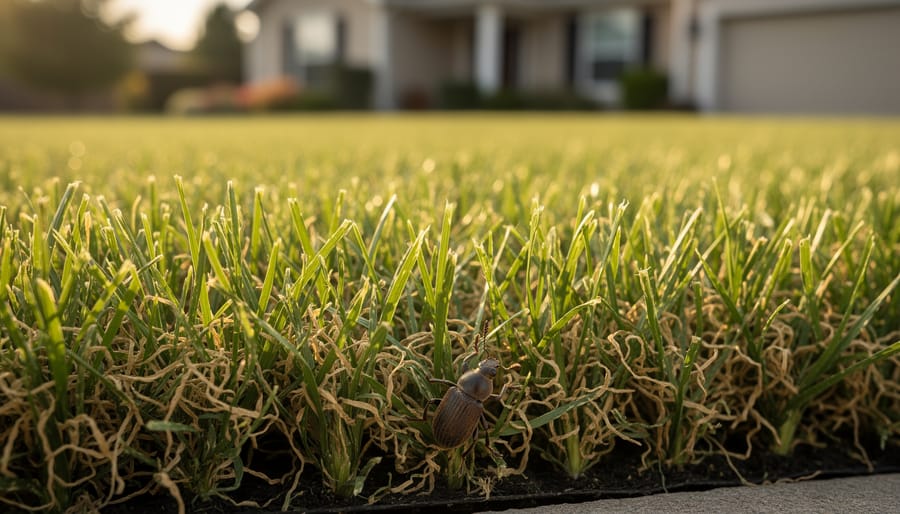
Walk your lawn slowly in early morning when dew makes weeds more visible, looking for rosette-shaped growth patterns hugging the ground—these are your primary spring culprits like dandelions, chickweed, and henbit emerging before your grass fully wakes up. Photograph any unfamiliar weeds from multiple angles, capturing leaf shape, growth pattern, and flower details if present, then use these images with plant identification apps or extension service websites for accurate naming before taking action.
Spring weeds exploit the same conditions that stress your lawn: compacted soil, bare patches from winter damage, and cooler temperatures that favor their growth over warm-season grasses. Understanding this timing advantage is essential because identifying weeds now—before they flower and spread thousands of seeds—gives you maximum control with minimum effort. A well-planned seasonal IPM calendar helps you anticipate these annual invaders and prepare preventive strategies rather than constantly reacting to established problems.
The most common early spring weeds fall into predictable categories: cool-season annuals that germinated last fall and overwintered as small plants, perennials emerging from deep taproots or spreading roots, and opportunistic biennials in their second year of growth. Each category requires different management approaches, making correct identification your most powerful tool. Once you know what you’re facing, you can choose targeted solutions that work with your lawn’s natural rhythms rather than against them, building long-term resistance while addressing immediate concerns through strategic spot-treatment and cultural improvements that strengthen grass density.
Why Early Spring Is Weed Season (And Your Lawn Isn’t Ready)
While your lawn grasses are still sound asleep, weeds are already throwing a party on your turf. Here’s the frustrating truth: many common lawn weeds are biologically programmed to take advantage of early spring conditions that leave your desirable grasses completely unprepared to compete.
The secret to their success lies in soil temperature. Most cool-season weeds germinate when soil temperatures hover between 50-65°F, which typically happens in late winter to early spring depending on your region. At these temperatures, grass seeds and established turf remain dormant, giving weeds an uncontested head start. It’s like showing up to a race where your competitors get to begin running while you’re still stretching.
This timing advantage isn’t accidental. Weeds like chickweed, henbit, and annual bluegrass have evolved over millennia to exploit this dormancy window. They germinate, establish root systems, and even begin producing seeds before your lawn truly wakes up for the season. By the time your grass starts actively growing in mid to late spring, these invaders have already claimed valuable soil space, moisture, and nutrients.
This is where understanding pest lifecycles becomes your most powerful tool. Integrated Pest Management (IPM) principles teach us that knowing when and how weeds grow is far more effective than simply reacting with chemicals after they appear. When you understand that certain weeds germinate at predictable soil temperatures, you can implement preventive strategies at exactly the right moment.
The sustainable approach focuses on timing rather than quantity. A pre-emergent herbicide applied when soil temperatures reach 55°F for several consecutive days, combined with proper lawn thickness from good fall care, can prevent most early spring weeds without repeated chemical applications. Prevention truly beats cure, both for your wallet and the environment. The goal isn’t to create a sterile environment, but to give your grass the competitive edge it naturally lacks during these critical early weeks.

The Early Spring Weed Lineup: Know Your Enemy
Winter Annual Broadleaves: The Overachievers
If you’ve ever wondered why certain weeds seem to magically appear in your lawn before the grass even thinks about greening up, winter annual broadleaves are the culprits you’re dealing with. These overachievers are already thriving while your lawn is still dormant because they germinated last fall and spent the winter quietly establishing robust root systems. By early spring, they’re just showing off.
Let’s start with chickweed, which comes in two varieties you’ll likely encounter. Common chickweed forms dense, sprawling mats of bright green foliage with tiny white star-shaped flowers. Look for its distinctive feature: a single line of fine hairs running down one side of the stem. Mouse-ear chickweed is the tougher cousin, with fuzzy, gray-green leaves and a more upright growth habit. Both love cool, moist conditions and will carpet bare spots in your lawn if given the chance.
Henbit and purple deadnettle are often confused because they’re both members of the mint family and sport similar purple-pink flowers. Here’s how to tell them apart: henbit has rounded, scalloped leaves that attach directly to square stems, while purple deadnettle features triangular leaves on short stalks with distinctive purple coloring on the upper foliage. Both create low-growing patches that stand out against dormant grass.
Shepherd’s purse might seem unassuming with its small rosette of lobed leaves, but it’s a survivor. The telltale identification feature appears when it flowers: heart-shaped seed pods that resemble tiny purses, hence the name. This one can produce thousands of seeds per plant, so catching it early matters.
Why are these weeds so established by spring? They germinated during the cool temperatures of fall when your grass was slowing down. Throughout winter, they grew slowly but steadily, developing deep roots while staying low to avoid frost damage. When spring arrives and you notice them, they’ve already been growing for months and are preparing to set seed before summer heat arrives.
The sustainable approach here focuses on prevention through maintaining thick, healthy turf that crowds out these opportunistic seeders. Understanding their lifecycle helps you time interventions effectively, whether that’s manual removal, improving soil conditions, or strategically overseeding bare patches before these overachievers claim the territory.

Perennial Broadleaves: The Survivors
If you’ve been gardening for even a season or two, you’ve likely met these tenacious characters. Perennial broadleaf weeds are the marathon runners of the weed world—they’re in it for the long haul, and early spring is when they really show their determination.
Dandelions are probably the most recognizable lawn weed out there. In early spring, you’ll notice their rosettes of jagged leaves hugging the ground before those cheerful yellow flowers appear. While some folks appreciate their sunny blooms, their deep taproots—which can extend 10 inches or more—make them formidable opponents. That taproot is exactly why early identification matters so much. Young dandelions are easier to manage before their roots establish deeply, and catching them before they flower prevents those fluffy seed heads from spreading hundreds of new plants across your lawn. For comprehensive approaches to managing these persistent plants, check out our dandelion control strategies.
Ground ivy, affectionately (or not so affectionately) called Creeping Charlie, takes a different approach. This low-growing perennial spreads through creeping stems that root at every node, creating dense mats across your lawn. In early spring, look for its scalloped, rounded leaves and small purple flowers. Unlike dandelions with their single taproot, ground ivy creates an interconnected network that’s incredibly resilient. It thrives in shady, moist areas where grass struggles, which is your first clue about long-term management—improving growing conditions for your grass is crucial.
The key takeaway? Both of these perennials are establishing their foundation right now. Every day you wait, their root systems grow stronger and more extensive. Spotting them early, when they’re actively growing but still manageable, gives you the best chance for effective, sustainable control without resorting to heavy-handed chemical approaches.

Annual Grassy Weeds: The Imposters
Among the most deceptive lawn invaders are annual grassy weeds that masquerade as your desirable turf. They blend in so convincingly that many homeowners don’t realize they have a problem until these imposters have already set seed and spread. Let’s unmask these pretenders and catch them before they take over.
Annual bluegrass, or Poa annua, is the ultimate lawn imposter. This light green, fine-textured grass appears in early spring and often looks acceptable at first glance. The giveaway? Its distinctly lighter, almost yellowish-green color compared to your established lawn, and its tendency to grow in patches that seem to shoot up overnight. Look closely at the blade tips for a boat-shaped appearance, which is your smoking gun for identification. By mid-spring, you’ll notice white seed heads that give affected areas a whitish cast, confirming your suspicions.
Here’s the frustrating part: annual bluegrass germinates in fall and lives through winter as tiny plants, then explodes with growth when early spring temperatures rise. Those seemingly innocent light-green patches you see in March are already well-established plants preparing to drop thousands of seeds.
Crabgrass presents a different challenge in early spring because you won’t actually see it yet. This warm-season annual doesn’t germinate until soil temperatures consistently reach 55-60 degrees Fahrenheit, typically when forsythia blooms in your area. However, early spring is your critical prevention window. Once crabgrass emerges in late spring, control becomes much more difficult and resource-intensive.
The sustainable approach to both weeds starts now, before they become visible problems. For annual bluegrass already present, hand-pulling small patches while soil is moist prevents seed production. For crabgrass prevention, focus on maintaining a dense, healthy lawn through proper mowing height (3-4 inches) and strategic overseeding of thin areas. A thick turf canopy blocks sunlight that crabgrass seeds need to germinate, creating a natural barrier. If you choose pre-emergent products, apply them when soil temperatures reach 50-55 degrees, targeting your timing rather than carpeting your entire lawn unnecessarily.
The Sneaky Ones: Easy-to-Miss Early Emergers
Some of the most troublesome early spring weeds aren’t the big, obvious offenders. Instead, they’re the tiny troublemakers that sneak under your radar until suddenly they’ve carpeted your entire lawn. Let me introduce you to three masters of disguise that deserve your immediate attention.
Hairy bittercress is probably sprouting in your lawn right now, and you might not even realize it. This little member of the mustard family hugs the ground in a small rosette, rarely exceeding four inches tall. Look closely at the leaves and you’ll spot tiny hairs along the stems. The real giveaway? Those distinctive white flowers with four petals that appear incredibly early, sometimes even in late winter. Here’s the sneaky part: those innocent-looking seed pods explode when touched, launching seeds several feet away. One plant can produce thousands of seeds, which explains why it spreads so rapidly.
Field pennycress shares a similar growth habit but has rounder, clasping leaves that seem to hug the stem. The leaves have a distinctive bluish-green color, and the plant produces flat, coin-shaped seed pods that give it away. Like hairy bittercress, it completes its entire life cycle quickly, often before you’ve even started your regular mowing schedule.
Corn speedwell forms dense mats of tiny heart-shaped leaves with pale blue flowers so small you might mistake them for decorative ground cover. It thrives in compacted soil and spreads by creeping stems that root at every node.
The key with these sneaky spreaders is catching them early. Their small size makes hand-pulling surprisingly easy when the soil is moist, and removing them before they flower prevents thousands of future problems. A healthy, dense lawn is your best defense, as these opportunists struggle to compete with robust grass coverage.
Your Early Spring IPM Action Plan
Cultural and Mechanical Controls First
Before reaching for any products, let’s talk about the most sustainable and often most effective approach to managing early spring weeds: giving your grass the tools to outcompete them naturally. Think of it this way—a thick, healthy lawn is like a tightly woven fabric that doesn’t leave room for intruders.
Start with hand-pulling when weeds are still young and the soil is moist from spring rains. Early spring is actually the perfect time for this because many weeds haven’t yet developed deep root systems. Grab them at the base and pull gently but firmly, making sure to extract the entire root. A handheld weeder tool makes quick work of dandelions and other tap-rooted invaders.
Your mowing height matters more than you might think. Set your mower blade to 3-3.5 inches for most cool-season grasses. This taller height shades the soil, preventing weed seeds from germinating while allowing your grass to develop deeper, more drought-resistant roots. Never remove more than one-third of the grass blade length in a single mowing.
The foundation of weed prevention lies in robust lawn health practices. Proper fertilization in early spring feeds your grass so it grows thick enough to crowd out weeds. Address compacted soil with aeration, and overseed thin areas promptly—bare spots are just invitations for opportunistic weeds. Water deeply but infrequently to encourage strong root development. When your grass is thriving, weeds struggle to gain a foothold.

When and How to Intervene with Treatments
Timing is everything when it comes to managing early spring weeds effectively. Rather than reaching for a spreader and blanketing your entire lawn with chemicals, think strategically about where and when intervention makes the most sense.
For annual weeds like chickweed and henbit, spot treatments work wonderfully and reduce your environmental footprint. Grab a spray bottle or hand weeder and target individual problem areas instead of treating the whole lawn. This approach is not only better for beneficial insects and soil health, but it’s also easier on your wallet. If you notice a small cluster of weeds near the mailbox or along the driveway, those are perfect candidates for spot treatment.
Organic options have come a long way in recent years. Corn gluten meal serves as an effective pre-emergent for annual weeds when applied 4-6 weeks before germination typically occurs. For post-emergent control, products containing fatty acids or acetic acid can handle many broadleaf weeds when they’re young and actively growing. The key is catching them early, before they set seed.
Pre-emergent timing deserves special attention. These products create a barrier that prevents weed seeds from germinating, but they must be applied before soil temperatures consistently reach 55 degrees Fahrenheit. For most regions, this means late February through early March. Miss this window, and your pre-emergent won’t help with this season’s weeds.
Consider adopting targeted application strategies that focus on persistent problem areas rather than preventive treatment everywhere. This integrated approach respects the principle that a few weeds don’t require a scorched-earth response. Your lawn can coexist with some diversity while still looking healthy and attractive.
Tools That Make Weed Identification Easier
Getting a positive identification doesn’t have to mean endless scrolling through plant databases. Several smartphone apps have transformed weed identification into a quick point-and-click process. Apps like PictureThis and PlantNet use image recognition to identify weeds in seconds, though I always recommend confirming their suggestions with a secondary source. For more traditional learners, field guides specifically focused on regional lawn weeds remain invaluable—they work without wifi and often include seasonal information that apps miss.
A simple hand lens or magnifying glass makes a surprising difference when you’re trying to distinguish between similar species. Those tiny hairs on stems or the arrangement of leaf veins become clear identification clues when magnified. I keep one attached to my garden journal for quick reference.
Don’t overlook your local cooperative extension service—it’s possibly the most underutilized free resource available to gardeners. Extension agents can identify weeds from photos you email and provide region-specific management advice that considers your local climate and soil conditions. Many also offer free workshops during early spring specifically about lawn weed management. These local experts understand the sustainable approaches that work best in your area, making them invaluable allies in maintaining a healthy lawn.
Now that you’ve learned to identify the most common early spring invaders, you’re well-equipped to get ahead of the game. Remember, catching these weeds while they’re young and vulnerable makes all the difference in your seasonal lawn care strategy. The next few weeks are your window of opportunity—addressing weeds now means less work and fewer problems throughout the growing season.
Take a walk across your lawn this week with fresh eyes. Bring this guide along, snap a few photos, and start scouting. You’ll be surprised what you notice once you know what to look for. Early identification isn’t just about control; it’s about understanding your lawn’s unique challenges and working with nature’s rhythms rather than against them.
As we move deeper into spring, your focus will shift from identification to action, and eventually to prevention strategies for next year. You’re building knowledge that compounds season after season, making lawn care easier and more sustainable each time around.