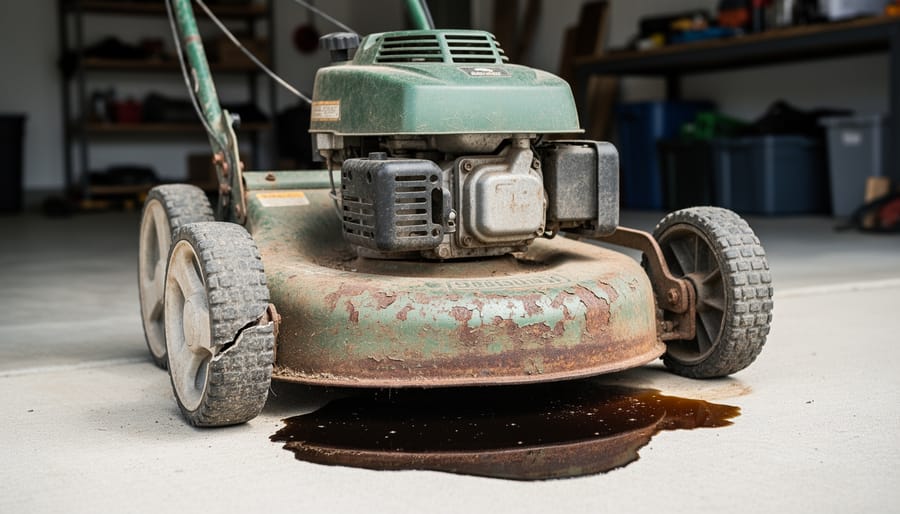
Skip brands with consistent reports of engine failure within the first two seasons—particularly those using substandard components that corrode quickly or seize up after minimal use. Check independent consumer reviews, not just manufacturer websites, focusing on patterns of transmission problems, deck rust, and customer service failures that leave owners stranded with expensive repairs and no support.
Recognize that the cheapest option often becomes the most expensive mistake. Budget brands frequently cut corners on crucial elements like deck thickness, wheel durability, and bearing quality, leading to machines that literally fall apart mid-season. You’ll spend more time fixing or replacing these mowers than actually cutting grass, which defeats the purpose of owning equipment in the first place.
Research brands known for proprietary parts that make repairs impossible without paying premium prices or waiting weeks for special orders. Some manufacturers deliberately design mowers that can’t be serviced by local repair shops, trapping you in expensive dealer-only maintenance cycles that quickly exceed the mower’s original cost.
Consider environmental impact alongside reliability. Certain brands produce notoriously inefficient engines that guzzle fuel, leak oil, and emit excessive pollutants while delivering poor cutting performance. These machines harm your wallet and the environment simultaneously, contradicting sustainable lawn care principles that save money and protect local ecosystems.
The good news? Understanding which brands consistently disappoint helps you invest wisely in reliable equipment that lasts years, performs efficiently, and supports rather than sabotages your lawn care goals. Making an informed choice now prevents frustration, wasted money, and unnecessary environmental impact down the road.
Why Some Lawn Mower Brands Don’t Make the Cut
Choosing the right lawn mower is a significant investment, and unfortunately, not all brands deliver on their promises. When I started evaluating lawn mower brands for this guide, I knew I needed clear, consistent criteria that would genuinely help you avoid costly mistakes and buyer’s remorse.
The first red flag I look for is reliability issues. A mower that constantly breaks down or requires repairs within the first few seasons simply isn’t worth your hard-earned money. I’ve examined customer reviews, warranty claim patterns, and repair frequency data to identify brands with consistent mechanical problems. From engines that won’t start reliably to cutting decks that warp prematurely, these issues can turn weekend lawn care into a frustrating ordeal.
Customer service quality matters more than most people realize until they need it. Brands that make it difficult to reach support, deny legitimate warranty claims, or leave customers waiting weeks for answers have earned their spot on the avoid list. Your time and peace of mind are valuable, and a responsive company makes all the difference when problems arise.
Parts availability is another crucial factor. Some brands discontinue models quickly or source parts from limited suppliers, leaving you stranded when something breaks. A mower is only as good as your ability to maintain and repair it, especially if you’re committed to extending the life of your equipment rather than contributing to landfill waste.
Environmental considerations also play a role in my recommendations. Brands that resist improving fuel efficiency, produce excessive emissions, or use materials that can’t be recycled responsibly don’t align with sustainable lawn care practices. We can maintain beautiful lawns without compromising our environmental values.
Finally, I evaluate long-term value by comparing initial cost against expected lifespan, maintenance requirements, and resale value. A seemingly affordable mower that fails after three seasons costs you more than a quality machine that runs reliably for fifteen years.
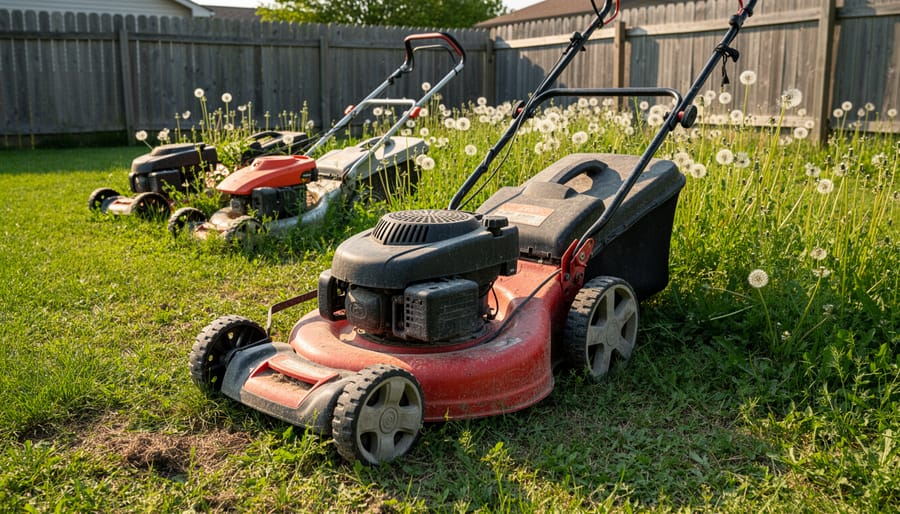
The Big Box Store Brands That Disappoint
Why These Budget Brands Aren’t Worth the Savings
I need to be honest with you about something many first-time mower buyers discover the hard way: those rock-bottom prices on certain budget brands often lead to a cycle of frustration and additional expenses that completely negate any initial savings.
Let’s talk about some specific offenders. Brands like Murray, Yard Machines, and certain Hyper Tough models frequently appear in repair shop conversations for all the wrong reasons. These manufacturers cut costs by using lightweight plastic components in areas that really need durability. I’ve seen deck housings crack after a single season, plastic wheels that literally disintegrate from UV exposure, and handles that snap during normal use.
The engine quality on these ultra-budget mowers presents another challenge. Many use underpowered engines that struggle with anything beyond perfectly manicured grass. When you’re trying to tackle slightly overgrown areas or damp morning conditions, these engines bog down or stall completely. The carburetor assemblies are particularly notorious for failing within the first year or two.
Here’s the real kicker about the false economy: a budget mower priced at $150 might seem like a steal compared to a $400 mid-range option. But when you factor in replacement parts, multiple repair visits, or needing to replace the entire unit after two seasons, you’ve actually spent more money while dealing with constant headaches. One of my gardening friends calculated she spent nearly $600 over three years trying to keep a budget mower running, when she could have invested in a quality machine once.
From a sustainability perspective, these disposable mowers create unnecessary waste. They’re difficult to repair, parts become unavailable quickly, and they end up in landfills far sooner than better-built alternatives. Choosing reliability over the lowest price tag ultimately serves both your wallet and the environment.
The Hidden Environmental Cost
When you choose a poorly-made lawn mower, the environmental impact extends far beyond your backyard. These subpar machines often end up in landfills within just a few years, contributing to the growing mountain of metal and plastic waste that takes decades to decompose. Each premature replacement means more manufacturing resources consumed and more emissions generated from production and shipping.
Inefficient fuel consumption is another hidden cost of cheap mowers. Low-quality engines burn through gasoline at alarming rates while producing excessive emissions that harm air quality. Some budget models can use up to 40% more fuel than their well-engineered counterparts, hitting both your wallet and the environment hard. This becomes especially problematic when you consider that Americans collectively mow more than 40 million acres of lawn each year.
The cycle of replacement also matters tremendously. A quality mower might serve you faithfully for 10-15 years, while inferior brands often need replacing every 2-3 seasons. This throwaway pattern creates unnecessary environmental strain through repeated manufacturing cycles and transportation emissions. By investing in reliable equipment or exploring eco-conscious mower options, you’re making a choice that benefits both your lawn care routine and our planet’s future.
Legacy Brands That Lost Their Way
When Corporate Buyouts Changed Everything
The lawn mower industry has seen significant consolidation over the past few decades, and unfortunately for consumers, not all ownership changes have been positive. Understanding these corporate shifts can help you avoid brands that may look familiar but no longer deliver the quality they once did.
Murray is perhaps the most notable example. Once a respected American manufacturer, Murray was acquired by Briggs & Stratton in 2005, and production shifted overseas. Long-time users report a dramatic decline in build quality, with thinner metal components and more plastic parts prone to cracking. Customer service became increasingly difficult to navigate, and replacement parts grew scarcer.
Similarly, Poulan has experienced multiple ownership changes, eventually landing under the Husqvarna umbrella. While Husqvarna’s premium lines maintain quality standards, the Poulan brand became positioned as a budget offering with corresponding compromises in durability. Many riding lawn mower brands have followed this same trajectory after acquisition.
Yard Machines, another victim of corporate reshuffling under MTD Products, shifted manufacturing to reduce costs. What was once a dependable mid-range option now features components that struggle to last beyond basic warranty periods.
The pattern is clear: when profit margins become the primary focus post-acquisition, quality often suffers. These brands aren’t necessarily terrible, but they’re no longer the reliable choices they once were, making them worth avoiding if you’re seeking long-term value and sustainable lawn care solutions.
The Parts and Service Problem
Here’s something that doesn’t get talked about enough: the mower runs great until something breaks. Then you’re stuck searching for a discontinued part or calling service centers that don’t work on your brand anymore. I learned this the hard way with a budget brand that seemed like a steal until year three, when I needed a new carburetor that simply didn’t exist anymore.
Some brands, particularly smaller or obscure manufacturers, operate with minimal service networks. When parts become unavailable or warranties go unenforced, your mower essentially becomes disposable. This is the opposite of sustainable lawn care. You’re forced to either jerry-rig repairs with incompatible parts or send a perfectly salvageable machine to the landfill.
Before buying, research the brand’s service infrastructure. Check if authorized repair shops exist within reasonable distance. Read warranty terms carefully—some brands offer impressive coverage on paper but make claims nearly impossible to process. Look for brands with established parts distribution and customer service reputations. Online reviews often reveal patterns of frustrated owners unable to get support. A slightly higher upfront investment in a well-supported brand saves money, reduces waste, and keeps your mower running for years instead of seasons.
Red Flags When Shopping for Your Next Mower
Before you hand over your hard-earned money for a new mower, it pays to know what warning signs separate quality brands from those likely to leave you frustrated. Let me walk you through some practical red flags that can save you from costly mistakes.
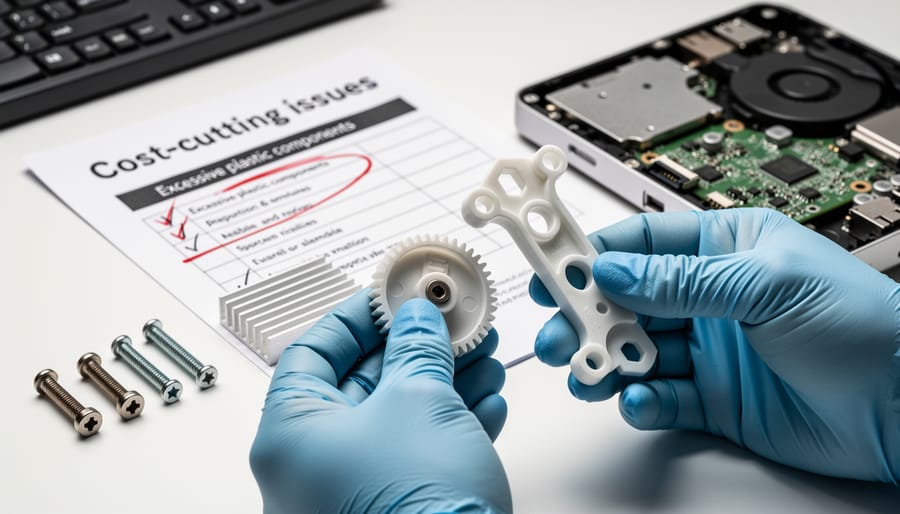
First up, take a close look at the construction materials. If you’re examining a mower and it feels lightweight with lots of hollow-sounding plastic components, especially on the deck or critical parts, that’s your first warning. Quality mowers incorporate metal decks and sturdy frames that can handle years of regular use. While some plastic isn’t necessarily bad, excessive use in structural areas often indicates a manufacturer cutting corners. Give it a gentle shake and listen for rattling or loose-feeling parts.
Next, dig into those warranty terms before you buy. Vague language like “limited warranty” without clear specifics should raise eyebrows. Reputable manufacturers spell out exactly what’s covered, for how long, and what situations void coverage. If the warranty period is unusually short (less than two years for residential mowers), or if it only covers specific parts while excluding the engine or deck, the company may not have confidence in their product’s longevity.
The dealer and service network situation tells you volumes about long-term support. Can you easily find authorized service centers within reasonable driving distance? If parts need ordering, does the company have reliable supply chains? Brands without established dealer networks often leave customers stranded when repairs are needed. This consideration becomes even more important when choosing the right mower for your specific lawn care needs.
Speaking of support, investigate online reviews carefully. I’m not talking about a few negative comments, which every brand gets, but patterns of similar complaints. Watch for suspiciously perfect five-star reviews with generic language, or brands that respond defensively to criticism rather than offering solutions. Check multiple platforms beyond just the manufacturer’s website.
Finally, be cautious of brands that emphasize flashy features over fundamental quality. Gimmicky attachments and marketing buzzwords can’t compensate for poor engine performance or unreliable transmissions. The best mowers focus on doing the basics exceptionally well while supporting sustainable lawn care practices through fuel efficiency and durability that reduces waste.

Better Alternatives That Won’t Let You Down
For Budget-Conscious Buyers
If you’re working with a tight budget, you don’t have to settle for questionable quality. Several brands consistently deliver reliable performance without breaking the bank. Greenworks offers excellent electric mowers like the 25-inch corded model, which typically costs under $200 and provides enough power for average-sized lawns while being incredibly low-maintenance. For those preferring gas power, Craftsman has rebuilt its reputation with solid mid-range options that include decent warranties and readily available parts.
Sun Joe makes surprisingly capable electric mowers in the $150-$250 range that are perfect for smaller yards, and their customer service has improved significantly in recent years. The key here is matching your lawn’s actual needs to the mower’s capabilities rather than overbuying features you won’t use.
I’ve found that budget-conscious buyers get the best value by focusing on simplicity. A basic push mower from these brands, maintained properly, will outlast a feature-packed model from a questionable manufacturer. Look for models with at least a two-year warranty and check that replacement parts are easy to source. Remember, the cheapest option upfront often costs more long-term, but these recommended brands strike that sweet spot between affordability and genuine reliability.
Mid-Range Champions
Now let’s talk about the sweet spot for most homeowners – those mid-range brands that deliver solid performance without emptying your wallet. These are the workhorses that’ll handle your average-sized yard weekend after weekend, year after year.
Brands like Honda, Toro, and Husqvarna sit comfortably in this category, offering reliable engines, decent build quality, and parts availability that won’t have you waiting weeks for repairs. You’re looking at mowers in the $300-$800 range for walk-behinds, which might seem steep compared to budget options, but the longevity makes them genuine investments.
What makes these brands shine is their balance of features and durability. You’ll get mulching capabilities, adjustable cutting heights, and self-propelled options that make mowing less of a chore. Honda engines, in particular, have earned their reputation for starting reliably season after season – something you’ll appreciate on a humid summer morning.
For larger properties, brands like Cub Cadet and Craftsman (modern versions) offer riding mowers and zero-turn mowers worth considering if you’re managing an acre or more. These mid-range options also tend to have better fuel efficiency and quieter operation, which your neighbors will appreciate during those early Saturday mowing sessions.
Premium Picks for Long-Term Investment
While we’ve covered brands to steer clear of, let’s talk about where your money is genuinely well-spent. Premium doesn’t always mean better, but certain higher-end brands consistently deliver value that extends far beyond the initial price tag.
Honda stands out as a gold standard in lawn mower reliability. Yes, you’ll pay more upfront, but these machines routinely operate for 15-20 years with basic maintenance. Their engines are legendary for dependability, and you’ll find replacement parts readily available even decades later. From a sustainability perspective, buying one quality mower that lasts two decades beats replacing cheaper models every few years.
Husqvarna’s premium line offers excellent durability combined with innovative features that reduce environmental impact. Their robotic mowers, while pricey, eliminate emissions entirely and use minimal energy compared to traditional gas models.
For those considering battery-powered alternatives, brands like Ego and Milwaukee offer professional-grade performance without compromising power. Their lithium-ion technology has matured significantly, providing runtime that rivals gas mowers while requiring virtually no maintenance.
The key principle: calculate cost-per-year of ownership rather than just the purchase price. A quality mower costing twice as much but lasting three times longer represents genuine savings, plus the environmental benefit of reduced waste and resource consumption.
What to Do If You Already Own a Problem Mower
If you’ve discovered that your mower falls into one of the less reliable categories, don’t panic. There are several practical steps you can take to maximize its remaining lifespan and get the most value from your investment.
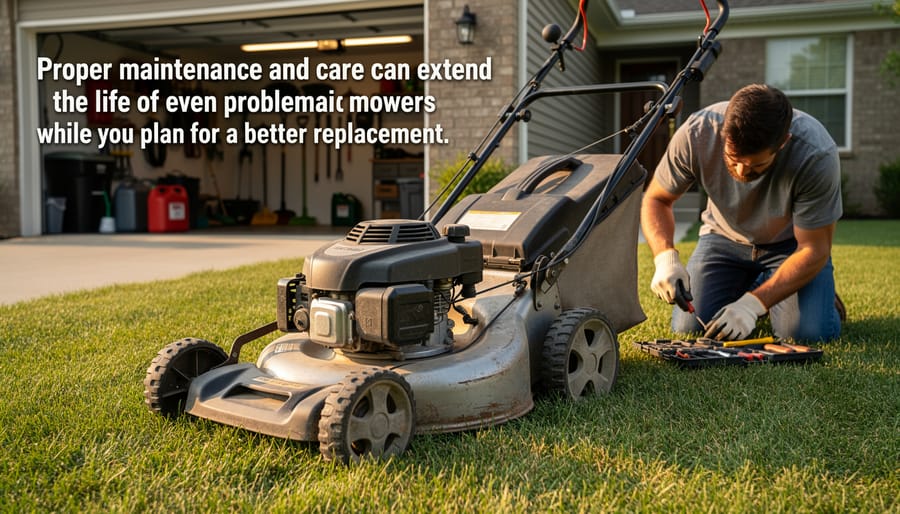
First, commit to a rigorous maintenance schedule. Even problematic mowers can perform reasonably well when properly maintained. Change the oil regularly (typically every 25 hours of use), keep the air filter clean, and sharpen or replace blades at least once per season. Clean the undercarriage after each use to prevent grass buildup, which can stress the engine and deck. For electric models, ensure battery contacts stay clean and store batteries in temperature-controlled environments. These simple practices can add years to a mower’s life, regardless of brand reputation.
When deciding between repair and replacement, apply the 50 percent rule: if repair costs exceed half the price of a comparable new mower, replacement makes more financial sense. However, also consider the environmental impact. Repairing extends the product’s life and keeps materials out of landfills, aligning with sustainable gardening practices. For minor issues like belt replacements or carburetor cleaning, repairs are usually worthwhile. Major engine problems or cracked decks typically signal it’s time to move on.
When your mower finally reaches the end of its service life, dispose of it responsibly. Many municipalities offer recycling programs specifically for small engines and lawn equipment. Local repair shops may accept non-working mowers for parts. Some retailers provide trade-in programs, giving you credit toward a more reliable replacement. Always drain fluids properly before disposal, preventing soil and water contamination.
Remember, owning a problematic mower isn’t a permanent setback. With proper care and realistic expectations, you can nurse it along until you’re ready to invest in a better-quality replacement that will serve your lawn care needs for years to come.
Armed with this knowledge, you’re now ready to make a confident, informed decision about your next lawn mower purchase. Remember, avoiding problematic brands isn’t about fear—it’s about investing wisely in equipment that will serve both your lawn and the planet for years to come. The right mower should be reliable, repairable, and respectful of environmental considerations. Don’t rush your decision. Take time to read reviews, compare warranty terms, and consider how a brand’s values align with your own commitment to sustainable lawn care. Your choice matters not just for your immediate satisfaction, but for reducing waste and supporting companies that prioritize quality over quick profits. Every dollar you spend is a vote for the kind of products you want to see in the marketplace. We’re here to help you every step of the way, so explore our other resources to continue building your lawn care expertise and creating the healthy, beautiful outdoor space you deserve.