Mark your calendar each season to scout for emerging weeds before they flower and set seed—catching chickweed in early spring or crabgrass in late spring can prevent thousands of seeds from contaminating your lawn for years to come. Understanding weed timing transforms your approach from reactive firefighting to proactive prevention, making your gardening efforts significantly more effective with less effort overall.
Weeds operate on nature’s clock, not ours. Cool-season invaders like henbit and hairy bittercress germinate when soil temperatures drop in fall and explode with growth in spring, while warm-season troublemakers such as purslane and spurge wait patiently until summer heat arrives. This predictable pattern means you can anticipate problems before they start, applying mulch before weed seeds germinate or hand-pulling seedlings when they’re most vulnerable.
Integrated Pest Management offers a sustainable framework for seasonal weed control that works with nature rather than against it. Instead of relying solely on chemical interventions, you’ll combine cultural practices like proper mowing height, strategic fertilization timing, and targeted hand-weeding to create conditions where desirable plants thrive and weeds struggle. This approach protects beneficial insects, reduces environmental impact, and often proves more effective long-term than conventional methods.
The following seasonal guide breaks down exactly which weeds to expect throughout the year and when to implement specific IPM strategies. Whether you’re planning your entire year or addressing an immediate problem, you’ll find practical solutions matched to each season’s unique challenges.
Why Weeds Follow the Calendar (And Your Lawn Care Should Too)
Here’s a secret that might change your entire approach to lawn care: weeds aren’t just randomly popping up in your yard. They’re actually following a remarkably predictable biological schedule, and once you understand it, managing them becomes so much easier.
Think of weeds as nature’s opportunists with internal alarm clocks. Each weed species has evolved over thousands of years to germinate at the exact moment when conditions give it the best chance of survival. Temperature thresholds and day length act as triggers, telling dormant seeds when it’s time to wake up. Crabgrass, for instance, waits patiently until soil temperatures consistently reach 55-60°F for several days. That’s not coincidence—it’s sophisticated biological programming.
This is precisely why timing matters infinitely more than product strength alone. You could apply the most powerful herbicide available, but if you’re targeting weeds before they’ve germinated or after they’ve already set seed, you’re essentially wasting your effort and money. Even worse, misapplied treatments can contribute to treatment resistance issues down the line.
This seasonal predictability is actually the foundation of Integrated Pest Management, or IPM. Rather than reacting to weeds after they appear, IPM encourages us to work with nature’s calendar. It’s about being proactive—applying pre-emergent barriers before weeds germinate, encouraging dense turf growth during peak growing seasons, and addressing vulnerable spots before they become weed nurseries.
The beauty of this approach is its sustainability. When you align your lawn care efforts with the natural rhythms that weeds follow, you need fewer applications, less product overall, and you achieve better results. You’re not fighting against nature’s timeline; you’re anticipating it. Understanding what’s coming next on the weed calendar transforms you from someone constantly playing catch-up into someone who’s always one step ahead.
Spring’s Sneaky Invaders: Cool-Season Annual Weeds
The Classic Spring Troublemakers
As temperatures start to warm and winter loosens its grip, a familiar cast of characters begins appearing in lawns and garden beds. These cool-season opportunists are spring’s classic troublemakers, and learning to recognize them early gives you a significant advantage in keeping them under control.
Chickweed is often the first to make its appearance, forming dense mats of small, oval leaves connected by delicate stems. Look closely and you’ll spot tiny white flowers that resemble stars. This weed absolutely loves cool, moist conditions and can spread surprisingly fast across bare patches in your lawn. The good news? Its shallow root system makes it relatively easy to remove by hand when you catch it early.
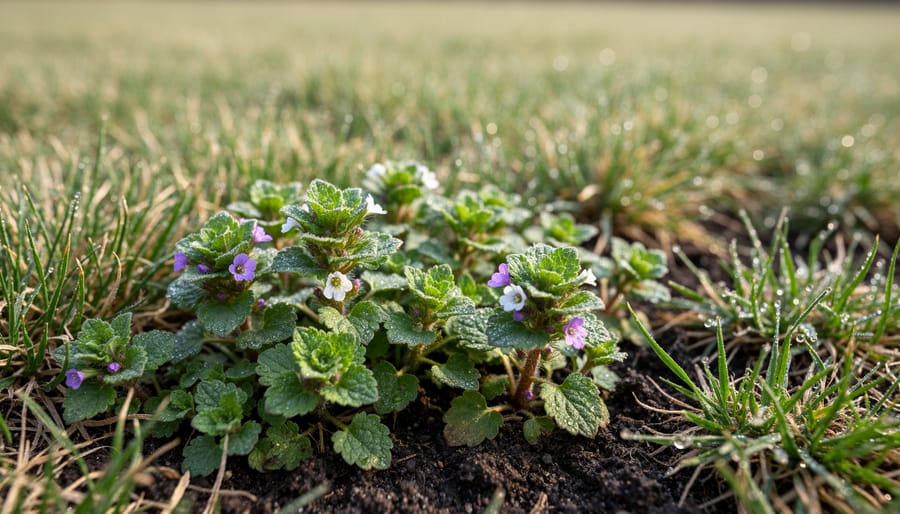
Henbit stands out with its purple-pink flowers and scalloped leaves that grow in pairs up square stems. You’ll often find it clustered in areas where your grass is thin or stressed from winter. Like chickweed, it thrives when temperatures hover between 45-65°F, which is why it’s so prolific in early spring before your warm-season grass gets going.
Annual bluegrass (often called Poa annua) is trickier because it actually looks like grass. Watch for its lighter green color and the seed heads that appear earlier than your lawn grass. It germinates in fall but really takes off in spring’s cool weather.
Hairy bittercress is the weed that seems to appear overnight, with its distinctive rosette of leaves and tall seed stalks that literally explode seeds everywhere when disturbed. Catching this one before it sets seed is crucial for preventing next year’s invasion.
Spring IPM Strategy: Prevention Over Panic
Spring is when your lawn awakens from winter dormancy, and it’s also when opportunistic weeds are racing to claim their territory. The good news? A little strategic prevention now saves you hours of frustration later. Think of spring IPM as setting up a welcoming party for grass while keeping uninvited guests at bay.
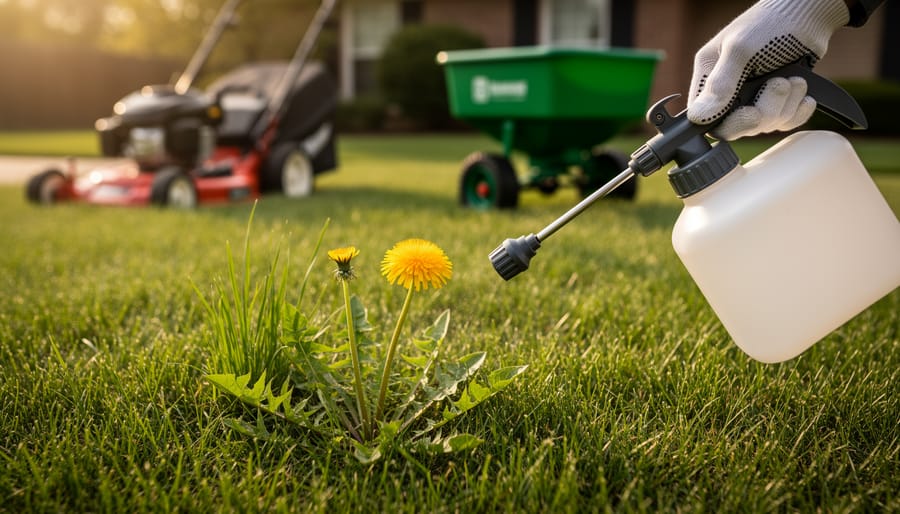
The cornerstone of spring weed prevention is timing your pre-emergent application correctly. These barriers work by preventing weed seeds from germinating, but they need to be in place before soil temperatures consistently reach 50-55 degrees Fahrenheit. In most regions, this coincides with when forsythia blooms or when you notice dandelions starting to flower. Miss this window, and you’re fighting an uphill battle against crabgrass and other summer annuals.
Organic mulching is your second line of defense, particularly in garden beds where weeds love to exploit bare soil. Apply a 2-3 inch layer of organic mulch around plants, keeping it slightly away from stems to prevent moisture issues. This not only suppresses weed germination by blocking light but also improves soil health as it decomposes. Shredded leaves, wood chips, or compost all work beautifully.
Now, let’s talk about mowing height, because this simple adjustment is surprisingly powerful. Raise your mower blade to 3-4 inches in spring. Taller grass shades the soil, making it harder for weed seeds to germinate while encouraging deeper root growth in your desirable turf. It’s a win-win that costs nothing but delivers impressive results.
Finally, resist the urge to overfertilize early in spring. Heavy nitrogen applications can actually favor fast-growing weeds over slower-starting cool-season grasses. Instead, focus on sustainable practices like leaving grass clippings to naturally return nutrients to the soil. Prevention really is easier than cure.
Summer’s Heat-Loving Aggressors: Warm-Season Weeds
Weeds That Thrive When Your Grass Suffers
Summer weeds are opportunistic survivors that seem to appear out of nowhere right when your lawn is struggling most. Let’s talk about the usual suspects and why they love hot, stressful conditions.
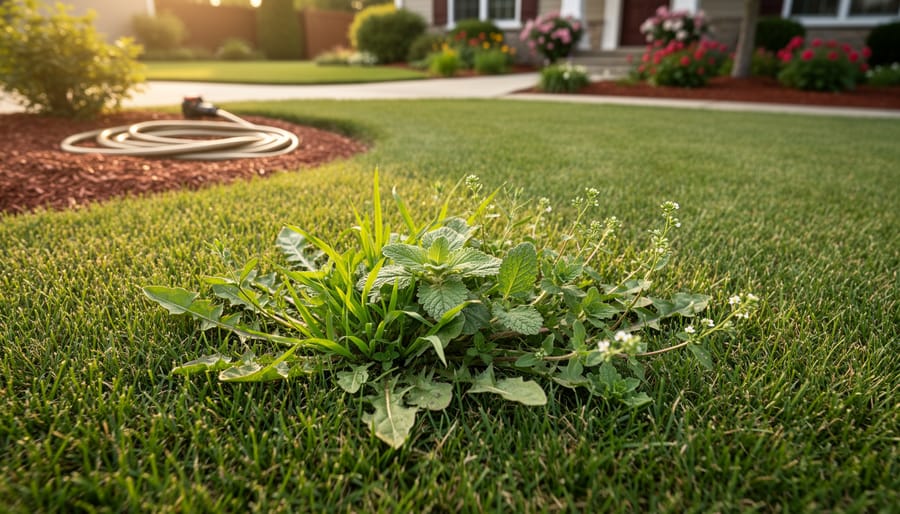
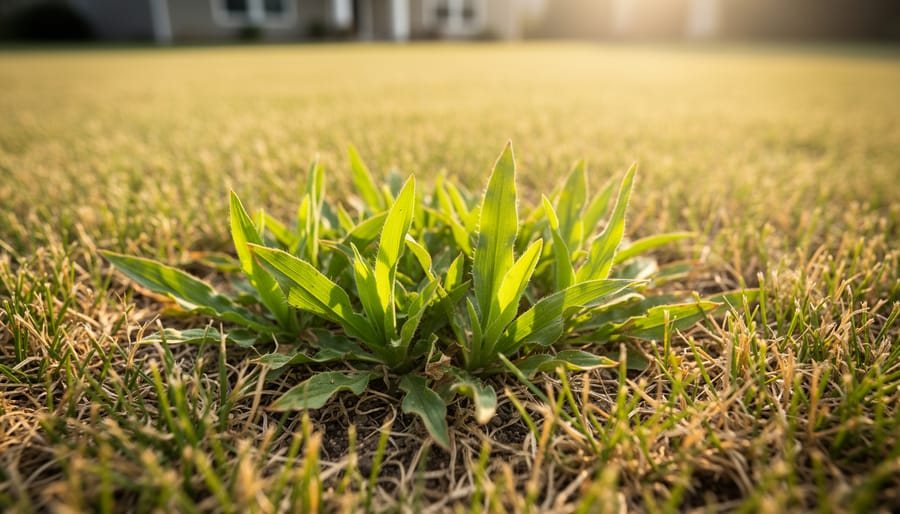
Crabgrass is probably the most notorious summer invader. This annual grass thrives in the heat that makes cool-season lawns go dormant, spreading its flat, wide blades across bare patches faster than you’d think possible. It’s perfectly designed to exploit weak spots in your turf.
Spurge, with its tiny leaves and milky sap, loves creeping into stressed lawns where grass has thinned from heat or drought. You’ll often find it in walkways and hot, dry areas where desirable grass just can’t compete. Similarly, purslane spreads its succulent, paddle-shaped leaves across struggling turf, storing water in its thick stems while your grass withers.
Then there’s nutsedge, which technically isn’t even a grass despite looking like one. Those distinctive triangular stems shoot up faster than your lawn mower can handle, and it absolutely loves moisture, popping up wherever irrigation keeps soil damp.
Here’s the reality: these weeds aren’t just heat-loving plants, they’re stress detectors. When your grass weakens from summer heat, drought, or poor maintenance, it creates open soil and reduced competition. Summer weeds have evolved specifically to exploit these conditions, germinating in warm soil and growing rapidly while your turf struggles.
The good news? Understanding this pattern helps you focus on prevention. A healthy, properly maintained lawn is your best defense against summer weed invasion.
Summer IPM: Working With Nature, Not Against It
Summer’s heat changes everything about weed management, and the key to success is working with your lawn’s natural rhythms rather than fighting against them. When temperatures soar, your grass is already stressed, making cultural controls more important than ever.
Start with your watering schedule. Deep, infrequent watering in the early morning encourages your lawn to develop deeper roots while making conditions less favorable for shallow-rooted summer weeds like spurge and crabgrass. Aim for about an inch of water per week, delivered in one or two sessions rather than daily sprinklings. This approach strengthens your turf while keeping those opportunistic weeds at bay.
Mowing strategy becomes critical during heat stress. Raise your mower blade to leave grass at least three to four inches tall. Taller grass shades the soil, reducing surface temperatures and making it harder for heat-loving weeds to germinate. It also helps your lawn retain moisture during drought conditions. Never remove more than one-third of the grass blade at once, as scalping weakens your turf and opens the door for weeds to establish.
When weeds do appear, spot treatment is your most sustainable option. Hand-pulling works beautifully for isolated weeds, especially after watering when soil is soft. For slightly larger patches, targeted organic herbicides or even boiling water can handle the job without treating your entire lawn. Save yourself time and money while protecting beneficial insects and soil organisms.
Remember that a healthy lawn is your primary defense against summer weeds. If you notice unusual symptoms like discoloration or thinning patches, conduct a lawn health diagnosis before problems compound. Sometimes what looks like a weed invasion is actually your grass crying out for better nutrition or addressing compacted soil.
During drought conditions, accept that your lawn might go dormant. That’s perfectly natural and sustainable. A dormant lawn uses fewer resources and actually becomes more resilient. Focus your limited water on keeping established grass alive rather than fighting every weed that appears.
Fall’s Deceptive Window: Planning for Next Year
Fall Weeds and Winter Annuals Starting Early
Fall might seem like a time to relax after summer’s lawn care demands, but it’s actually when many troublesome weeds are just getting started. Understanding what’s happening below the surface now can save you considerable frustration come spring.
Annual bluegrass is often the first to return, germinating when soil temperatures drop below 70°F. Those tiny, light green patches you notice in early autumn? They’re establishing root systems that will explode into growth the moment spring arrives. Winter annuals like henbit, chickweed, and hairy bittercress are doing the same thing, quietly building strength through the cooler months.
Here’s what makes fall particularly important: perennial weeds like dandelions and clover are shifting gears too. Instead of focusing energy on flowers and seeds, they’re now directing nutrients down into their root systems, storing reserves for winter survival and spring regrowth. This makes fall an ideal window for control measures, since anything applied now travels directly to those roots.
The key takeaway? Spring weed problems actually begin in fall. By identifying and addressing weeds during their germination or energy-storage phase, you’re working smarter, not harder. A little attention now means significantly fewer headaches when gardening season returns.
Fall IPM: Your Most Powerful Season
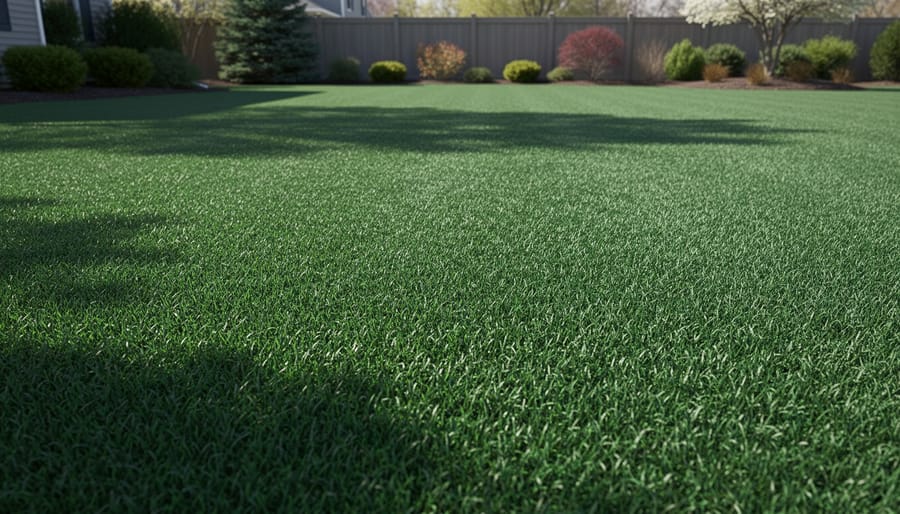
If you could choose just one season to transform your lawn’s future, fall would be it. This is when your most strategic weed-fighting moves pay dividends for months to come, combining prevention, renovation, and soil health into one powerful package.
Fall pre-emergent applications deserve your attention, but with a twist. Instead of simply blanketing your lawn with synthetic herbicides, consider corn gluten meal applied in early fall. This natural alternative prevents winter annual weeds like henbit and chickweed from germinating while adding nitrogen to your soil. Time this application for late August through September, before soil temperatures drop below 70°F. You’re not just blocking weeds; you’re feeding next spring’s grass.
Overseeding might be fall’s secret weapon. Dense turf simply doesn’t leave room for weeds to establish. Choose grass varieties suited to your region and spread seed at proper rates, typically 4-6 pounds per 1,000 square feet for cool-season grasses. The combination of warm soil and cooler air creates ideal germination conditions, giving your grass a competitive advantage before winter weeds even think about sprouting.
Fall soil amendments set the stage for everything else. Test your soil now and adjust pH, add organic matter, and address compaction through core aeration. These sustainable practices create conditions where grass thrives and weeds struggle. Think of it as tilting the playing field in your favor.
The beauty of fall renovation is patience. You’re investing in spring results without the pressure of immediate perfection. Your lawn enters winter denser, healthier, and ready to outcompete whatever weed seeds lie waiting. That’s the kind of prevention that actually prevents.
Winter Weeds: The Forgotten Season
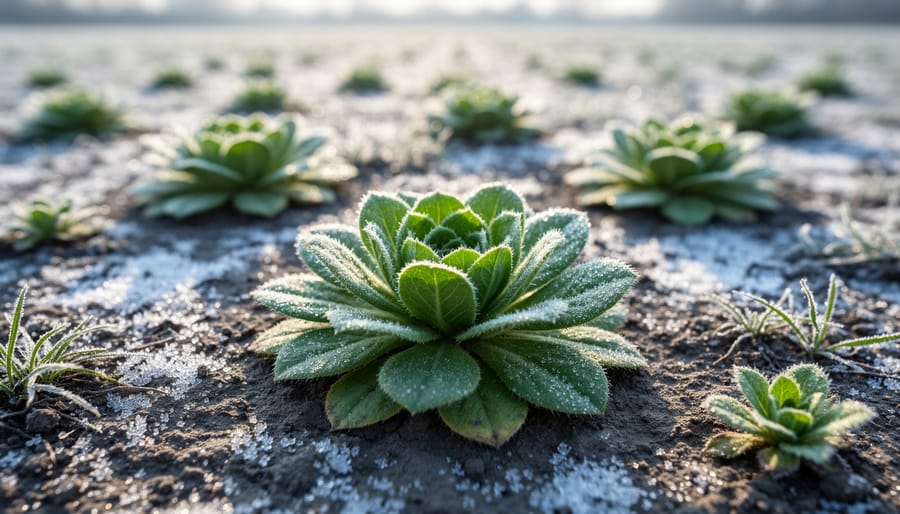
Winter often gets overlooked in the lawn care calendar, but it’s actually a critical time for managing certain troublesome weeds. While your grass is taking its winter nap, a group of opportunistic plants called winter annuals are just getting started. These clever weeds germinate in fall, establish themselves during winter’s milder days, and then explode with growth come early spring—often before your lawn wakes up.
Common winter annual culprits include henbit, chickweed, deadnettle, and annual bluegrass. You’ll spot them as small green patches during winter months, looking almost innocent against your dormant lawn. The key is recognizing them early, because once spring arrives, they’ll have a significant head start over your grass.
The good news? Winter dormancy gives you a strategic advantage. Hand-pulling these weeds is surprisingly effective during winter, especially after a rain when soil is moist. Since they’re still young and your lawn isn’t actively growing, you can remove them without disturbing grass roots. For larger infestations, spot-treating with organic herbicides on days above 50 degrees Fahrenheit works well, as the weeds are still actively growing and absorbing treatments.
Prevention remains your best strategy. A healthy, thick lawn in fall leaves little room for winter weeds to establish. Core aeration in autumn, proper fall fertilization, and overseeding bare spots create the dense turf that crowds out these winter invaders naturally.
Remember, winter isn’t a time to completely ignore your lawn. A quick walk-through every few weeks lets you catch winter weeds while they’re manageable, setting you up for a cleaner, healthier lawn when spring finally arrives.
Building Your Personal Seasonal IPM Calendar
Creating your own seasonal IPM calendar might sound daunting, but I promise it’s easier than you think—and incredibly rewarding once you see the results. Think of it as your personalized roadmap for staying one step ahead of weeds all year long.
Start by identifying your USDA hardiness zone, which determines your growing season length and frost dates. This simple step tells you when your soil warms up in spring (prime germination time for summer annuals like crabgrass) and when fall cooldown begins (hello, winter weeds). You can find your zone through a quick online search, and it’s the foundation for everything else.
Next, take an honest inventory of your current weed situation. Walk your lawn with a notebook and jot down which weeds you’re seeing right now and where they’re concentrated. Are you battling clover patches in shady areas? Dandelions dominating the sunny spots? Maybe crabgrass takes over every summer? Knowing your specific weed pressures helps you focus your efforts where they’ll matter most.
Consider your lawn type too. Cool-season grasses like fescue and bluegrass have different peak growing periods than warm-season varieties like Bermuda or St. Augustine. Your IPM calendar should align weed prevention with your grass’s strongest growth phases, when it can naturally outcompete invaders.
Now comes the fun part: building your calendar. Grab a simple planner or use your phone’s calendar app. Mark critical dates like your last spring frost and first fall frost. Then work backward and forward, scheduling activities about two to four weeks before you expect weed germination. For spring annuals, that means planning pre-emergent strategies in late winter. For perennial weeds, schedule spot-treatment windows during their active growth periods.
Remember, this calendar evolves with experience. After each season, make notes about what worked and what didn’t. Maybe you missed the crabgrass window by a week, or perhaps hand-pulling dandelions in early spring proved more effective than you expected. These observations make next year’s calendar even better.
Here’s the truth that might surprise you: successful seasonal weed management isn’t about declaring war on your lawn. It’s about learning to dance with nature’s rhythms instead of fighting against them.
Think of it this way. Weeds appear in predictable patterns because they’re responding to the same environmental cues your grass is. When you start paying attention to these cycles, something shifts. You’ll notice that crabgrass seedlings always emerge when the soil hits that magic temperature. You’ll see dandelions preparing for their spring show while snow still lingers. These observations become your roadmap.
The most effective weed managers I know aren’t the ones spending every weekend locked in combat with their lawns. They’re the ones who make small, consistent efforts aligned with what’s actually happening in their soil. A well-timed pre-emergent application beats frantic spot-treating every weekend. Mowing at the right height consistently prevents more weeds than any product you can buy.
Remember this: your healthiest defense against seasonal weeds is a thriving lawn. Dense turf, proper watering, and adequate nutrition create conditions where desirable grass simply outcompetes most weeds naturally. That’s sustainable lawn care at its finest.
Ready to get started? Look outside right now and identify what season you’re in. Then choose one preventive action for the weeds coming next. Just one. That’s how you begin working with your lawn’s natural cycles instead of against them.