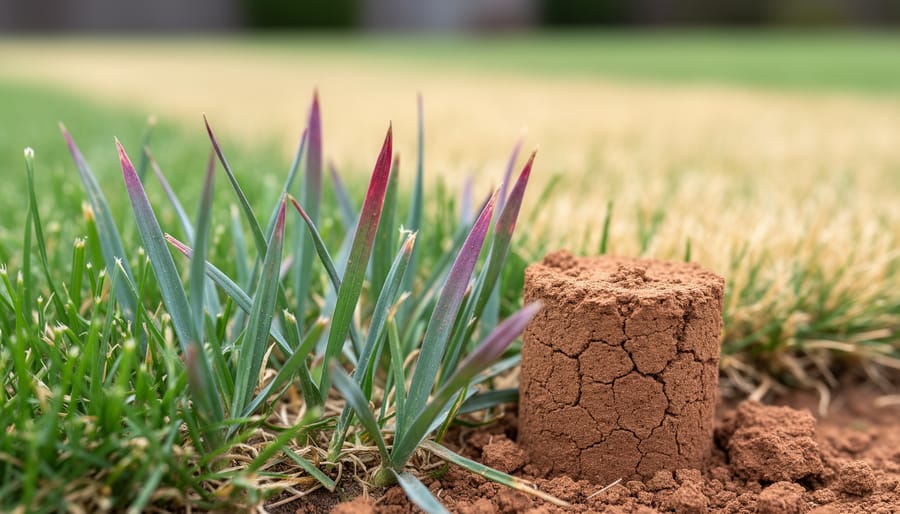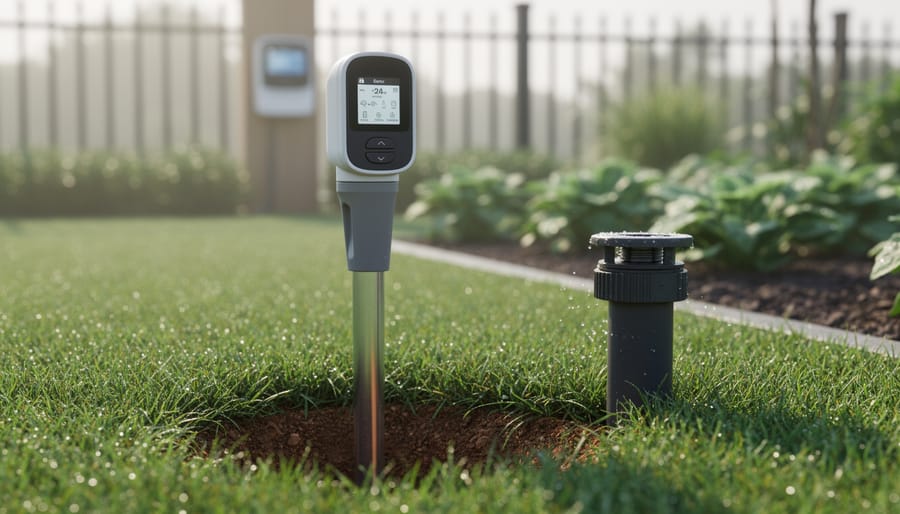
Identify the specific pest damaging your lawn before reaching for any chemical—grassy weeds require different herbicides than broadleaf invaders, while grub damage needs insecticides applied at precise times in their life cycle. Chemical control works best as part of an integrated approach, not a standalone solution, stepping in when cultural practices like proper mowing height and watering schedules haven’t resolved the problem.
Understand that not all lawn chemicals work the same way. Pre-emergent herbicides create a barrier preventing weed seeds from germinating, applied weeks before problems appear, while post-emergent products tackle existing weeds you can already see. Selective herbicides target specific plant types without harming your grass, whereas non-selective options kill everything they touch—making application technique critical for protecting desirable plants.
Chemical pest control raises legitimate concerns about family safety, pet health, and environmental impact. Modern formulations have improved significantly, with many products breaking down quickly in soil and offering reduced-risk options for conscious homeowners. Reading labels completely, following application rates exactly, and timing treatments appropriately minimizes risks while maximizing effectiveness.
The goal isn’t creating chemical dependency in your lawn care routine. Strategic chemical intervention addresses immediate problems while you simultaneously build lawn resilience through soil health improvements, proper fertilization, and stress reduction. A thick, vigorous lawn naturally resists pest invasion, gradually reducing your need for chemical solutions over time.
This balanced approach acknowledges that sometimes chemicals provide the fastest, most effective solution for severe pest problems, while keeping your focus on long-term lawn health. Understanding when, why, and how to use chemical controls responsibly transforms them from environmental villains into occasional tools supporting your sustainable lawn care journey.
When Chemical Control Actually Makes Sense for Your Lawn
Signs You’ve Reached the Chemical Control Threshold
Knowing when to move from monitoring to action can make the difference between a minor issue and a lawn disaster. Think of chemical control thresholds as your lawn’s tipping point—the moment when pests or weeds have reached critical mass and natural methods alone won’t cut it.
For insect pests, you’ll want to reach for chemical solutions when you’re consistently finding more than 10-15 grubs per square foot of lawn, or when chinch bugs appear in patches exceeding 6 inches in diameter. If you’re seeing significant damage spreading despite your integrated pest management efforts, that’s your cue. Watch for brown patches that expand daily or grass blades showing active feeding damage across more than 20 percent of your lawn area.
Disease indicators are equally telling. When fungal diseases like brown patch or dollar spot cover more than 30 percent of your lawn and continue spreading despite cultural controls like adjusted watering, chemical fungicides become necessary. Look for disease patches that double in size within a week—that’s aggressive growth requiring immediate intervention.
For weeds, the magic number is typically 30 percent coverage. If you’re spending more than an hour hand-pulling weeds from a 1,000-square-foot area weekly, or if weeds are producing seed heads faster than you can remove them, selective herbicides may be warranted. Perennial weeds like creeping Charlie that have established extensive root systems throughout your lawn also signal it’s time for targeted chemical help.
Remember, reaching the threshold doesn’t mean you’ve failed—it means you’re making an informed decision to protect your lawn investment while preventing treatment resistance through strategic, timely application.

The IPM Approach: Chemicals as One Tool, Not the Only Tool
Here’s the truth that might surprise you: chemical pest controls work best when you don’t rely on them alone. That’s the heart of Integrated Pest Management, or IPM—a smart, balanced approach that treats chemicals as just one tool in your lawn care toolbox, not your only option.
Think of IPM as building a healthy defense system for your lawn. It starts with prevention: choosing pest-resistant grass varieties, maintaining proper mowing heights, and ensuring good soil drainage. Next comes monitoring—actually walking your lawn regularly to catch problems early when they’re easiest to manage. Cultural controls like adjusting watering schedules can discourage many pests naturally.
When you do need chemical intervention, IPM helps you use it strategically and minimally. You’ll target specific problem areas instead of blanket-spraying your entire yard. You’ll choose the least toxic option that still gets the job done. And you’ll time applications for maximum effectiveness, which often means you’ll use less product overall.
This approach isn’t just better for the environment—it’s better for your wallet and creates a more resilient lawn over time. Pests are less likely to develop resistance, and you’re building natural defenses that keep working long after the chemicals break down.
Understanding Chemical Controls: Types and How They Work
Herbicides: Pre-Emergent vs. Post-Emergent
Understanding the difference between pre-emergent and post-emergent herbicides is like knowing whether to lock your door before a break-in or chase the burglar out afterward. Both have their place in an effective weed control strategy, but timing is everything.
Pre-emergent herbicides work by creating an invisible barrier in your soil that prevents weed seeds from germinating. Think of them as preventative medicine for your lawn. They’re most effective when applied before you see any weeds, typically in early spring before soil temperatures reach 55 degrees Fahrenheit, and again in early fall. Common active ingredients include prodiamine, dithiopyr, and pendimethalin. The catch? Pre-emergents won’t touch weeds that have already sprouted, and they can also prevent desirable grass seed from germinating, so plan your seeding accordingly.
Post-emergent herbicides, on the other hand, target weeds that are already growing. These products work by disrupting the plant’s biological processes, causing it to wither and die. You’ll find two main categories: selective herbicides that target specific weed types without harming your grass (like 2,4-D for broadleaf weeds), and non-selective options like glyphosate that kill everything they touch. For best results, apply post-emergents when weeds are actively growing and temperatures are moderate.
The sustainable approach? Use pre-emergents strategically to reduce overall weed pressure, minimizing your need for post-emergent applications later. This proactive strategy means fewer chemicals over time while maintaining a healthier, more resilient lawn.
Insecticides: Contact, Systemic, and Natural Alternatives
Understanding how insecticides work helps you choose the right tool for your lawn pest problem. Contact insecticides kill pests on contact, making them perfect for quick knockdown of active infestations like chinch bugs or sod webworms. Think of these as the immediate responders—they work fast but don’t provide long-lasting protection since they only affect insects they directly touch.
Systemic insecticides, on the other hand, are absorbed by plants and move through their tissues. When pests feed on treated grass, they ingest the chemical. This approach offers longer protection, typically several weeks, and works well for sap-feeding insects like aphids. However, timing matters—you’ll need to apply before damage becomes severe.
For environmentally conscious gardeners, natural alternatives like neem oil, insecticidal soaps, and botanical pyrethrins offer effective pest control with lower environmental impact. These break down quickly in sunlight and pose minimal risk to beneficial insects when used properly.
If you’re considering neonicotinoids, be aware that many gardeners are now seeking alternatives due to pollinator concerns. Newer active ingredients like spinosad and products containing Bacillus thuringiensis provide targeted control with better environmental profiles, letting you protect your lawn while supporting a healthier ecosystem.
Fungicides: Preventive vs. Curative Treatments
Understanding the difference between preventive and curative fungicides helps you make smarter treatment decisions. Preventive fungicides create a protective barrier on grass blades before disease strikes, making them ideal for high-risk periods like humid summer months. Think of them as your lawn’s raincoat. Curative fungicides, on the other hand, work systemically to treat active infections like brown patch, dollar spot, or powdery mildew that have already taken hold.
For sustainable lawn care, I recommend leaning toward preventive applications during vulnerable times rather than waiting for problems to develop. This approach uses fewer chemicals overall and prevents the frustration of watching disease spread. However, if you spot circular brown patches or discolored areas, curative treatments become necessary. Many modern fungicides offer both preventive and curative properties, giving you flexibility. Always identify the specific disease before treating, as different fungi respond to different active ingredients.
Selecting the Right Chemical Control for Your Specific Problem
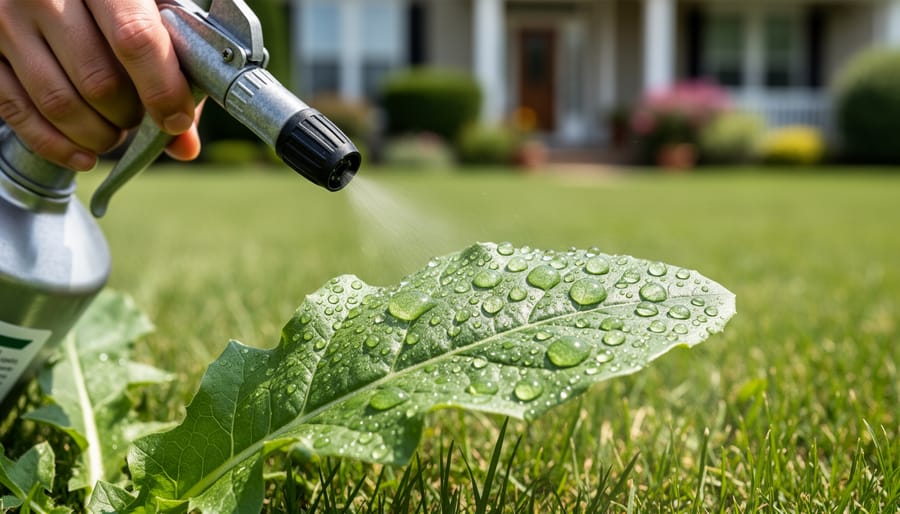
Common Lawn Weeds and Their Chemical Nemeses
Successfully identifying common lawn weeds is the first step toward choosing the right chemical control. Let’s look at the most common culprits and their chemical adversaries.
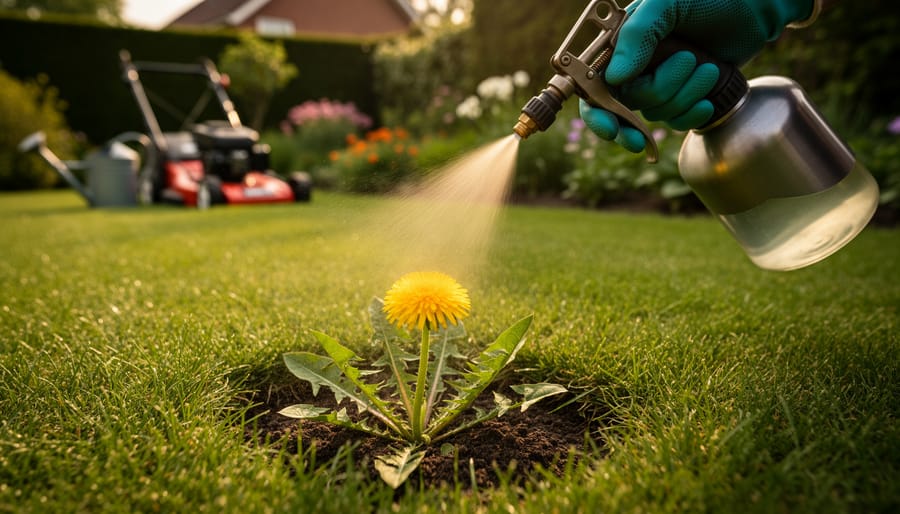
Dandelions, those cheerful yellow invaders, respond well to broadleaf herbicides containing 2,4-D, dicamba, or MCPP. These selective herbicides target broadleaf weeds while leaving your grass unharmed. Spring applications work best, catching dandelions before they produce those fluffy seed heads that spread everywhere.
Crabgrass requires a different approach. This grassy weed needs pre-emergent herbicides like dithiopyr or prodiamine applied in early spring before soil temperatures reach 55 degrees. Once crabgrass is actively growing, post-emergent options containing quinclorac become necessary, though prevention is always easier than cure.
White clover thrives in nitrogen-poor lawns and proves surprisingly stubborn. Products combining triclopyr with other broadleaf herbicides offer the best control. Some homeowners actually appreciate clover for its nitrogen-fixing properties, so consider whether it’s truly a problem before treating.
Understanding selective versus non-selective herbicides is crucial. Selective herbicides target specific weed types without harming desirable grass, making them ideal for spot treatments in established lawns. Non-selective herbicides like glyphosate kill everything they contact, best reserved for completely restarting problem areas or treating along hardscapes where nothing should grow.
Always read labels carefully and apply herbicides during appropriate weather conditions. Wind, rain, and extreme temperatures can reduce effectiveness and increase environmental impact.
Troublesome Lawn Pests and Targeted Treatments
Let’s tackle the troublemakers that can turn your beautiful lawn into a patchy disaster. Successfully identifying lawn pests is your first step toward choosing the right treatment.
Grubs, those C-shaped beetle larvae munching on grass roots, respond well to products containing imidacloprid or clothianidin applied in late summer. Think of these as preventive strikes before damage becomes visible. For existing infestations, carbaryl or trichlorfon work faster but require careful timing.
Chinch bugs, tiny vampires sucking life from grass blades in hot weather, need pyrethroid-based treatments like bifenthrin or lambda-cyhalothrin. Apply when temperatures consistently reach 70 degrees and you notice yellowing patches in sunny areas.
Armyworms march through lawns overnight, leaving stripped grass in their wake. Spinosad offers an effective, lower-impact option, while synthetic pyrethroids provide quick knockdown for severe infestations.
Here’s the sustainable angle: these targeted treatments work best when combined with proper lawn care. Healthy, well-watered grass naturally resists pest damage, meaning you’ll need fewer applications over time. Always spot-treat problem areas first rather than blanket-spraying your entire yard. This approach protects beneficial insects while addressing the real culprits effectively.
Lawn Diseases That Respond to Chemical Intervention
Fungal diseases can turn a beautiful lawn into a patchy disappointment faster than you’d think, but the good news is that targeted chemical intervention can work wonders when applied correctly. Brown patch, which creates circular brown areas especially in hot, humid weather, responds well to fungicides containing azoxystrobin or propiconazole. Dollar spot, recognizable by its silver-dollar-sized tan spots, can be effectively managed with the same active ingredients.
If you notice orange or rust-colored powder on grass blades, you’re dealing with rust disease. While improving air circulation and reducing nitrogen helps, a fungicide application can speed recovery during severe outbreaks. The key is catching these issues early by learning to identify lawn disease warning signs before they spread.
When selecting fungicides, look for products specifically labeled for your disease and grass type. Systemic fungicides work from within the plant, offering longer protection, while contact fungicides create a protective barrier on the surface. Always rotate fungicide classes to prevent resistance, and remember that chemical treatment works best alongside cultural practices like proper watering and mowing height. Think of fungicides as part of your toolkit, not the only tool.
How to Apply Chemical Controls Safely and Effectively
Reading Labels Like a Pro: What All Those Numbers and Letters Mean
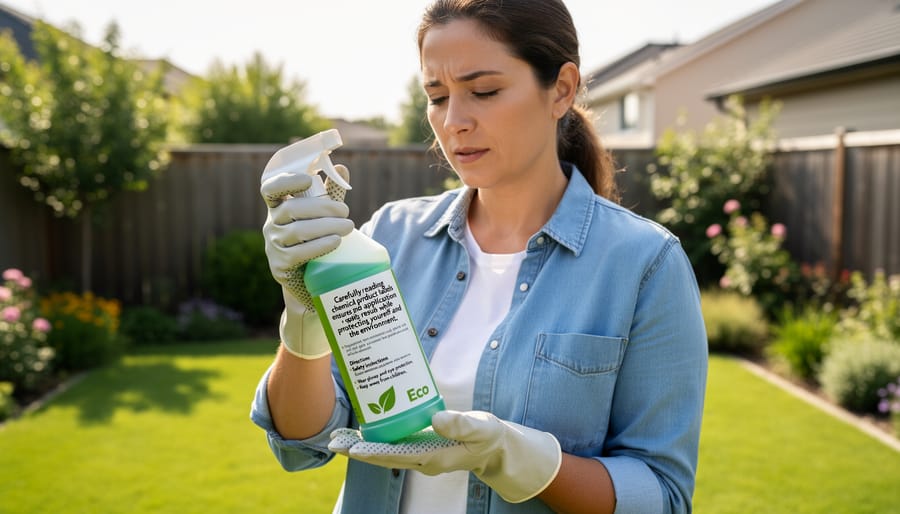
Think of a pesticide label as your product’s instruction manual and safety guide rolled into one. At the top, you’ll find the active ingredient, which is the chemical doing the actual pest-fighting work. Below that, look for the concentration percentage—something like “2.87% bifenthrin” tells you how much active ingredient you’re getting versus inert ingredients.
The middle section covers application rates, usually expressed as ounces per gallon or per thousand square feet. This matters tremendously because using too little wastes your time and money, while using too much can harm your lawn and the environment. You’ll also see a signal word like “Caution,” “Warning,” or “Danger” that indicates toxicity level—”Caution” being the mildest.
Pay close attention to the PPE (personal protective equipment) requirements. Even products marked “Caution” might require long sleeves, gloves, or eye protection. These aren’t suggestions—they’re your safety net.
Finally, check the REI (re-entry interval), which tells you how long people and pets should stay off treated areas. This might be as short as a few hours or as long as several days, depending on the product’s toxicity.
Application Timing: When to Spray for Maximum Impact
Timing truly makes all the difference when applying chemical pest controls. Think of it like watering your lawn—doing it at noon on a scorching day wastes water and stresses plants. The same principle applies here.
Early morning or late evening applications work best, when temperatures are cooler and winds are calm. This prevents chemicals from evaporating too quickly or drifting to unintended areas. Avoid spraying before rain, which can wash treatments away, or during droughts when stressed plants absorb chemicals differently.
Seasonal timing matters tremendously. Most lawn pests are vulnerable during specific life stages. Grub controls, for example, work best in late summer when larvae are small and actively feeding near the surface. Surface insects like chinch bugs are most active in hot weather. Understanding these cycles—part of effective season-by-season lawn care—helps you target pests when they’re most vulnerable.
Temperature also affects chemical performance. Most products list ideal application ranges on their labels, typically between 60-85°F. Reading and following these guidelines ensures you’re not wasting product or harming beneficial organisms unnecessarily. Patience pays off—applying treatments at the right moment means using less chemical overall while achieving better results.
Equipment and Techniques That Prevent Waste and Drift
The right equipment makes all the difference between precise application and wasteful overspray that harms beneficial plants or ends up in storm drains. Let’s talk about tools that help you apply pest control chemicals exactly where they’re needed.
For liquid applications, look for sprayers with adjustable nozzles that let you control droplet size and spray pattern. Coarser droplets are less likely to drift on windy days, while fan-spray nozzles give you better coverage than single-stream options. A quality pump sprayer with a pressure gauge helps maintain consistent application rates, preventing both under and over-application. I always recommend sprayers with anti-drip features, which stop the chemical flow immediately when you release the trigger.
Granular spreaders deserve equal attention. Drop spreaders, which release product directly beneath the hopper, offer pinpoint accuracy along edges and near flower beds. Broadcast spreaders cover large areas faster but require more skill to avoid overlap. Many newer models include edge guards that prevent granules from flying onto driveways or gardens where they could wash into waterways.
Timing matters as much as equipment. Apply chemicals during calm conditions when wind speeds stay below 10 mph, and avoid applications before predicted rainfall. Using drift reduction additives in liquid formulations can further minimize off-target movement. Some gardeners even add marking dyes to their spray tanks, which helps track coverage and prevents double-application that wastes product and increases environmental impact.
Shield barriers, simple cardboard or plastic sheets, protect nearby plants during spot treatments, giving you confidence to treat problem areas without collateral damage.
Minimizing Environmental Impact While Using Chemical Controls
Spot Treating vs. Blanket Applications: Less Is Often More
Here’s something I’ve learned after years of helping people with pest problems: you don’t need to treat your entire lawn when only a small area has issues. Spot treating means applying chemicals exactly where you see the problem, whether that’s a patch of grubs near your mailbox or chinch bugs concentrated in a sunny corner. This approach can reduce your chemical use by 70-90% compared to blanket applications across your whole yard.
Think of it like painting a room. You wouldn’t repaint every wall just because one spot got scuffed, right? The same logic applies here. Use a handheld sprayer or granular spreader to target affected areas, treating a radius about two feet beyond visible damage to catch pests that haven’t shown symptoms yet.
The benefits go beyond just using fewer chemicals. You’ll save money, protect beneficial insects in unaffected areas, and reduce environmental impact. Plus, you can often achieve better control because you’re applying higher concentrations exactly where needed rather than diluting your efforts across unnecessary square footage. Keep a garden journal noting where problems occur seasonally, and you’ll get even better at precision application over time.
Protecting Pollinators and Beneficial Insects
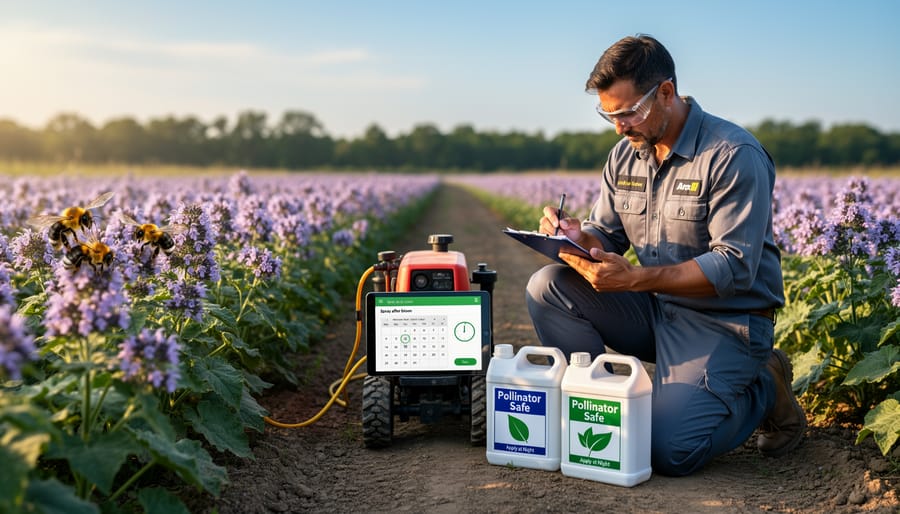
Protecting our helpful garden allies doesn’t mean abandoning pest control—it just means being smarter about timing and product choices. The good news? A few simple strategies can make a huge difference in keeping bees, ladybugs, and ground beetles safe while still managing lawn pests effectively.
Timing is everything. Apply pesticides in early morning or late evening when pollinators are least active. Bees typically forage during the warmest parts of the day, so working outside those windows dramatically reduces exposure. I’ve found that treating in the early evening also allows products to dry before beneficial insects return the next day.
Product selection matters tremendously. Look for selective insecticides that target specific pests rather than broad-spectrum products that kill indiscriminately. For example, products containing Bacillus thuringiensis (Bt) target caterpillars but won’t harm bees or beetles. Similarly, choosing granular formulations over sprays can minimize drift onto flowering plants where pollinators feed.
Avoid treating flowering weeds like clover before application—mow first if necessary. Better yet, spot-treat problem areas rather than broadcasting chemicals across your entire lawn. This targeted approach protects the beneficial insects working hard in untreated zones while still addressing your pest issues. Remember, those ladybugs and ground beetles are your free, 24/7 pest control team—treat them well!
Preventing Runoff and Water Contamination
Protecting our waterways starts with smart application practices. Always establish buffer zones of at least 10 feet between treated areas and streams, ponds, or storm drains—this gives chemicals time to break down before reaching water sources. Check your local weather forecast before applying any pesticide; rain within 24 hours can wash treatments directly into waterways, wasting your effort and causing environmental harm. Wind is equally important—spray only when conditions are calm (under 5 mph) to prevent drift onto unintended areas. Consider using granular formulations instead of sprays near water features, as they’re less likely to move off-target. Apply chemicals in the early morning when dew helps them adhere to plants, and never apply more than label recommendations suggest. If you’re treating a sloped lawn, start at the bottom and work upward to avoid runoff concentration. These simple precautions keep your pest control effective while protecting the aquatic ecosystems we all depend on.
Product Recommendations: Effective Chemical Controls Worth Considering
Best Herbicides for Common Lawn Weeds
For broadleaf weeds like dandelions and clover, look for products containing 2,4-D, dicamba, or MCPP. Ortho Weed B Gon MAX is a reliable choice that combines these ingredients effectively. It works well on established weeds without harming most grass types, though you’ll want to avoid application during hot weather above 85°F. The main advantage is its selectivity, meaning it targets broadleaf invaders while leaving your grass untouched. However, it does require careful handling around desirable garden plants.
For grassy weeds like crabgrass, I’ve found products with quinclorac or fenoxaprop particularly effective. Bayer Advanced Crabgrass Killer specifically targets problem grasses without damaging your lawn. Apply it early in the season when crabgrass is young for best results. The downside is timing matters tremendously, so you’ll need to watch your lawn closely.
For those preferring gentler options, iron-based herbicides like Fiesta offer a more environmentally conscious solution. They work slower but provide peace of mind around kids and pets. Whatever you choose, always spot-treat when possible rather than broadcasting across your entire lawn. This targeted approach reduces chemical use while still solving your weed problems effectively.
Recommended Insecticides for Lawn Pests
When choosing insecticides for lawn pests, it’s helpful to match the product to your specific problem. For grub control, products containing imidacloprid or chlorantranilifenicol work exceptionally well as preventive treatments applied in late spring or early summer. Merit and Acelepryn are two standout options, with Acelepryn earning high marks for its reduced environmental impact and longer-lasting protection.
For surface-feeding insects like chinch bugs, sod webworms, and armyworms, bifenthrin-based products deliver fast knockdown and residual control. Talstar is a reliable choice that many lawn care professionals trust. However, if you’re concerned about pollinators and beneficial insects, consider newer reduced-risk options like products containing spinosad or azadirachtin (derived from neem). These biological insecticides are gentler on the environment while still providing effective control.
My recommendation? Start with the least toxic option that addresses your pest problem. Spot-treat affected areas rather than broadcasting across your entire lawn, and always water in grub control products as directed. Remember, these tools work best when combined with proper lawn maintenance practices that naturally discourage pest infestations.
Fungicides That Actually Work on Lawn Diseases
When dealing with lawn fungus, choosing the right fungicide can make all the difference between a patchy, struggling lawn and one that bounces back beautifully. Let’s talk about what actually works in real-world conditions.
For brown patch and dollar spot, products containing azoxystrobin or propiconazole are your best bet. I’ve seen homeowners have excellent success with Scotts DiseaseEx, which provides both preventive and curative action. Apply every two to three weeks during humid summer months when these diseases are most active. One application typically won’t cut it—think of it as a treatment plan rather than a one-and-done solution.
If you’re battling powdery mildew or rust, look for myclobutanil-based fungicides. These work systemically, meaning they’re absorbed into the grass blade itself. Application timing matters tremendously here—early morning when dew is present helps with absorption, but you’ll want the grass to dry quickly afterward.
For stubborn pythium blight, which can devastate a lawn overnight in hot, wet conditions, mefenoxam products offer rapid knockdown. Apply at the first sign of symptoms and repeat in 10-14 days.
Remember, fungicides work best as part of an integrated approach. Improving drainage, adjusting watering schedules, and maintaining proper mowing height will reduce your need for chemical intervention over time, supporting both your lawn’s health and environmental sustainability.
Building a Less Chemical-Dependent Lawn Over Time
Cultural Practices That Prevent Problems Before They Start
Before reaching for any chemical solution, the best defense against lawn problems is building a healthy, resilient turf through smart cultural practices. Think of it this way: a stressed lawn is like someone with a weakened immune system—far more vulnerable to attack.
Start with proper mowing height, which is one of the most overlooked aspects of lawn care. Cutting grass too short weakens plants and creates perfect conditions for weeds to establish. Most cool-season grasses thrive at 3-4 inches, while warm-season varieties do best at 2-3 inches. Taller grass develops deeper roots, shades out weed seeds, and better withstands pest pressure and disease.
Watering correctly makes an enormous difference too. Deep, infrequent watering—about 1-1.5 inches per week—encourages roots to grow down rather than staying shallow. Water early in the morning to minimize disease-promoting moisture on grass blades throughout the day.
Don’t underestimate the power of aeration, especially if your soil is compacted. Annual core aeration allows oxygen, water, and nutrients to reach grass roots more effectively, creating conditions where your lawn outcompetes weeds naturally.
Overseeding thin or bare patches eliminates the empty real estate that weeds love to colonize. A thick, dense lawn leaves no room for opportunistic invaders.
These preventive lawn care practices work together synergistically, creating a robust lawn that requires minimal chemical intervention. When your grass is genuinely healthy, it becomes your most powerful ally in pest and weed management—often reducing or eliminating the need for chemicals altogether.
Building Soil Health to Reduce Chemical Dependency
Here’s the truth: the healthiest lawns naturally fend off pests and diseases, which means you’ll reach for chemical controls far less often. Think of it like building your immune system—when your body’s strong, you don’t get sick as easily. The same principle applies to your lawn.
Start by enriching your soil with organic matter like compost or aged manure. This feeds beneficial microbes that create a living ecosystem beneath your grass. These microscopic helpers break down nutrients, improve soil structure, and even suppress harmful pathogens. I’ve seen lawns transform from disease-prone problem areas to thriving green carpets simply by adding a half-inch layer of compost annually.
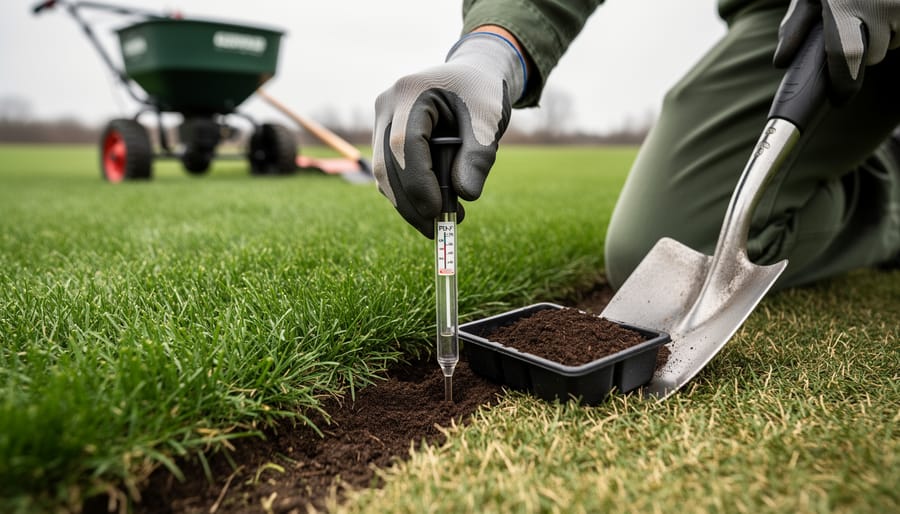
Soil pH matters more than most people realize. Grass thrives in slightly acidic soil (6.0-7.0 pH), while many lawn diseases prefer more extreme conditions. A simple soil test from your local extension office tells you exactly what adjustments you need.
When your soil biology is humming along and pH is balanced, grass roots grow deeper and stronger. Deep-rooted grass naturally outcompetes weeds, resists drought stress, and shrugs off pest damage that would devastate weaker lawns. You’re essentially creating conditions where problems can’t gain a foothold, making chemical interventions the exception rather than the rule.
Here’s the truth: chemical pest controls aren’t villains, and they’re not miracle workers either. They’re simply tools in your lawn care toolkit—powerful ones that deserve respect and understanding rather than fear or blind faith.
Think of it this way. You wouldn’t use a hammer for every home repair project, right? The same logic applies to your lawn. Chemical controls shine when you’re facing a serious pest outbreak that threatens your lawn’s health, when other methods haven’t worked, or when timing is critical. But they work best as part of a bigger picture that includes proper mowing, watering, fertilization, and encouraging beneficial insects.
The key is making informed decisions that fit your specific situation. Consider your lawn’s unique challenges, your family’s needs, and your environmental values. Read those product labels thoroughly, follow application instructions precisely, and always start with the least toxic option that will effectively solve your problem. Remember that spot-treating problem areas often makes more sense than blanket applications across your entire yard.
As you move forward with your lawn care journey, stay curious and keep learning. Monitor what works in your specific conditions, adjust your approach as needed, and don’t hesitate to consult with local extension offices or lawn care professionals when you’re unsure. Your lawn is a living ecosystem, and the more you understand it, the better equipped you’ll be to keep it healthy with minimal intervention—chemical or otherwise.