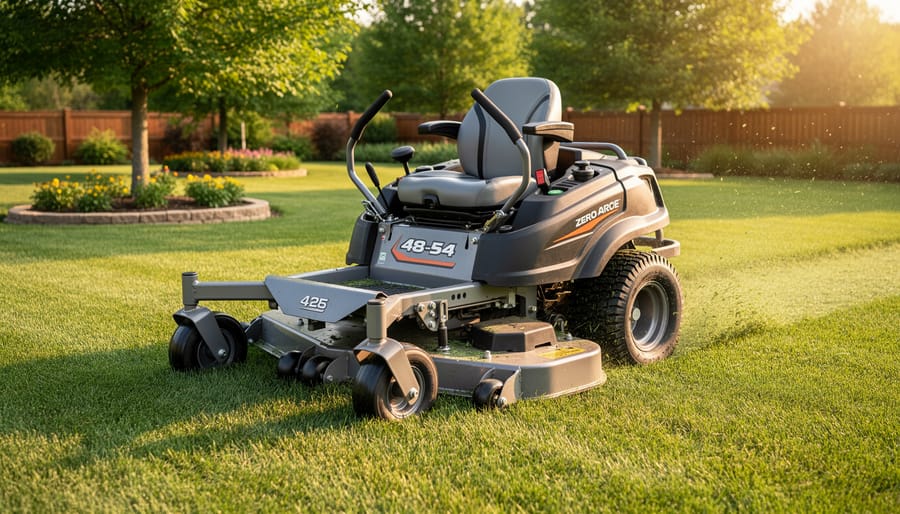
Choose a 48 to 54-inch deck size for most 2-acre properties—this sweet spot delivers efficient cutting speed without sacrificing maneuverability around landscaping features. A 48-inch deck will mow your 2 acres in roughly 60-75 minutes, while a 54-inch model shaves that down to 50-65 minutes, making either choice significantly faster than push mowing or smaller riders.
Measure your narrowest passages first, including gate widths and spacing between trees or garden beds. If you’re working with openings under 48 inches, consider a 42-inch deck instead, or accept occasional hand-trimming in tight spots. Most homeowners find that a 48-inch zero-turn navigates comfortably through standard 4-foot gates while still covering ground efficiently.
Match your deck size to your property’s terrain and obstacles rather than acreage alone. Properties with numerous flower beds, trees, or slopes benefit from the enhanced agility of 48-inch models, while open, relatively flat 2-acre lawns justify the productivity boost of 54-inch decks. If you’re still weighing zero-turn versus lawn tractor options, remember that zero-turns excel at trimming time through superior maneuverability, not just raw cutting width.
Consider engine power alongside deck size—pair 48-inch decks with at least 20-22 horsepower and 54-inch decks with 23-25 horsepower for optimal performance. Undersized engines struggle in thick grass or on inclines, negating the time savings that drew you to zero-turns initially.
Why Deck Size Matters More Than You Think for 2 Acres
The Mowing Time Equation
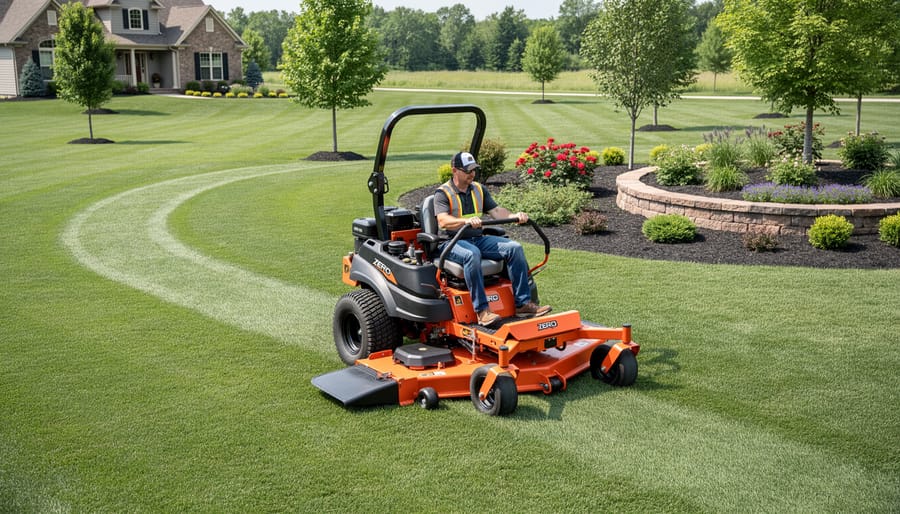
Let’s talk real numbers here, because understanding how deck size affects your mowing time makes all the difference when you’re deciding which zero-turn to buy.
A 42-inch deck will typically cover your 2 acres in about 1.5 to 2 hours, assuming you’re moving at a steady 5-6 mph pace. That’s not terrible, but it does mean a significant chunk of your Saturday morning. Step up to a 48-inch deck, and you’re looking at roughly 1.25 to 1.5 hours for the same property. This sweet spot size shaves off enough time to feel worthwhile without being excessive for most 2-acre layouts.
Now here’s where it gets interesting: a 54-inch deck can cut your mowing time down to about an hour to 1.25 hours. That’s potentially saving you 30-45 minutes compared to the smaller deck, which adds up to hours saved over a season. For larger properties with open areas, a 60-inch deck might get you done in under an hour, though you’ll sacrifice some maneuverability.
Remember, these times assume relatively straightforward terrain. If you’ve got lots of landscaping beds, trees, or obstacles to navigate around, expect to add 15-30 minutes regardless of deck size. The key is finding that balance between efficiency and practicality for your specific layout.
Balancing Maneuverability and Coverage
Finding the sweet spot between deck size and maneuverability is crucial for a 2-acre property. While a wider 54-inch deck will certainly speed up your mowing time compared to a 42-inch model, it’s not always the best choice if your landscape includes trees, garden beds, flower islands, or narrow gate passages.
Think about your property’s layout honestly. If you’ve got a relatively open lawn with minimal obstacles, a 54-inch deck makes excellent sense and will handle those two acres efficiently. However, if you’re weaving around established landscaping, a 48-inch deck offers a better compromise. You’ll sacrifice only about 10-15 minutes of mowing time while gaining significant nimbleness around tight spots.
Many folks find that investing in a mid-range 48-50 inch deck actually reduces their overall maintenance time because they’re not constantly backing up and making multiple passes around obstacles. Check out zero-turn performance comparisons to see how different deck sizes handle real-world conditions. Remember, a slightly smaller deck that lets you mow confidently in one pass beats a wider deck that forces you into awkward positioning and potential turf damage from repeated tight turns.
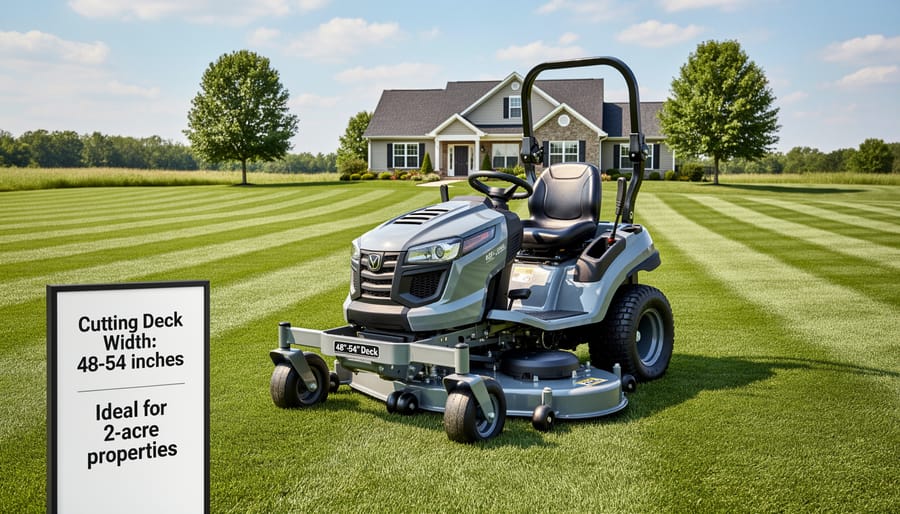
The Sweet Spot: 48 to 54-Inch Decks for Most 2-Acre Lawns
When a 48-Inch Deck Makes Perfect Sense
A 48-inch deck hits the sweet spot when your 2 acres feature more complexity than wide-open space. If your property includes established gardens, ornamental trees, or thoughtfully designed flower beds, the smaller deck size gives you the maneuverability to navigate around these features without constant three-point turns or backtracking.
Properties with meandering pathways, multiple garden zones, or strategically placed specimen trees benefit tremendously from the tighter turning radius a 48-inch mower provides. You’ll spend less time repositioning and more time actually mowing, which translates to better efficiency despite the narrower cutting width.
Consider the 48-inch option if you’re managing fruit tree groves, raised bed gardens, or landscape designs with curved borders and island plantings. The smaller footprint also reduces the risk of accidental damage to plants and hardscaping elements like decorative stones or garden edging.
From a sustainability perspective, the 48-inch deck often means a lighter overall machine weight, which can help minimize soil compaction in areas where you’re maintaining healthy grass ecosystems around sensitive plantings. This size also typically consumes less fuel, aligning with environmentally conscious lawn care practices while still providing the zero-turn advantages that make maintaining 2 acres manageable and enjoyable.
Why 54-Inch Decks Are the Efficiency Champion
If you’ve got a 2-acre property with wide-open spaces and minimal obstacles, a 54-inch deck is your best friend for getting the job done efficiently. Think of it this way: you’re covering nearly an extra foot of grass with every pass compared to a 48-inch deck. That adds up quickly when you’re mowing two acres!
The time savings are real and noticeable. Most homeowners report shaving 15-20 minutes off their mowing time with a 54-inch deck versus smaller options. Over a mowing season, that’s hours back in your weekend to spend on other garden projects or simply relaxing in the beautiful lawn you’ve just maintained.
Beyond speed, larger decks often deliver superior cut quality on open terrain. The wider cutting chamber provides better airflow, which means cleaner cuts and more efficient grass discharge. Your lawn looks professionally manicured with fewer passes, reducing soil compaction and stress on your turf—a win for sustainable lawn care.
The sweet spot for 54-inch decks is properties with long straightaways and gentle curves. If your 2 acres feature mostly open lawn with perhaps a few large trees to navigate around, this size lets you work smarter, not harder, while maintaining that pristine appearance you’re after.
Beyond Deck Size: Other Zero-Turn Features That Impact Your 2-Acre Experience
Engine Power: Matching Horses to Your Deck
Here’s a reality I’ve learned from maintaining larger properties: your mower’s engine needs to match your deck size, or you’ll be fighting frustration every time you tackle tall grass. For those 48-54 inch decks perfect for 2 acres, you’re looking at engines in the 20-25 horsepower range as your sweet spot.
Think of it like pairing a strong enough motor to a wider blade span. When you’re cutting a 4-foot swath through spring grass, especially if you’ve let it grow a bit between mowings (we’ve all been there after a rainy week), that engine needs reserve power to maintain blade speed. An underpowered engine struggling with a large deck creates several headaches: uneven cuts where the blades bog down, potential engine damage from constant strain, and you’ll burn more fuel as the motor works harder than it should.
I’ve seen friends purchase mowers with impressive deck sizes paired with wimpy 15-16 HP engines, thinking they’d save money. Within a season, they’re dealing with scalped patches, clumping clippings, and frustratingly slow progress. A properly matched 22-24 HP engine keeps those blades spinning consistently, delivers cleaner cuts that promote healthier grass growth, and actually proves more efficient long-term. It’s an investment in both performance and your lawn’s wellbeing, making sustainable maintenance practices much easier to maintain week after week.
Fuel Tank Capacity and Runtime
For a 2-acre property, you’ll want a fuel tank capacity of at least 3 to 5 gallons to complete the job in one go. Nothing kills your mowing momentum quite like running out of fuel halfway through, especially when you’ve found your rhythm and the lawn is looking great.
Here’s the practical reality: mowing 2 acres with a 48-54 inch deck typically takes 45 minutes to an hour and a half, depending on your terrain and obstacles. Most quality zero-turn mowers in this range consume about 1 to 1.5 gallons per hour, meaning a 3-gallon tank gives you around 2 hours of runtime with a comfortable buffer.
I always recommend choosing a model with at least a 4-gallon capacity if you have rolling terrain or thicker grass that requires more engine power. This extra capacity also comes in handy during peak growing season when you might need to make multiple passes or tackle overgrown areas.
From a sustainability perspective, having adequate tank capacity means fewer trips to refuel, reducing spillage risk and keeping your workflow efficient. Plus, you’ll finish the job while the morning is still cool, which is better for both you and your lawn’s health.
Cutting Height Adjustability
A quality zero-turn mower should make height adjustments simple and intuitive, because your lawn’s needs change throughout the growing season. Look for models with easy-to-reach levers or dials that let you adjust cutting height without tools or complicated procedures. Most residential zero-turns offer cutting heights between 1.5 to 4.5 inches, which covers everything from a crisp summer cut to a higher fall setting that protects grass roots.
For your 2-acre property, quick adjustability becomes particularly valuable. You might want to raise the deck during drought stress to help your grass retain moisture, or lower it for that manicured look before a gathering. Spring growth often requires more frequent height changes as you gradually reduce cutting height after winter dormancy. The best mowing practice for lawn health is never removing more than one-third of the grass blade at once, so having flexible height options helps you follow this sustainable guideline.
Consider deck-lift systems that provide multiple preset positions rather than infinite adjustment, as these tend to maintain consistent height across all wheels and deliver more uniform results across your entire lawn.
When to Go Bigger or Smaller: Reading Your Property’s Unique Needs
Terrain and Slope Considerations
Your property’s terrain plays a crucial role in determining the right zero-turn size for your 2 acres. If you’re working with hills or slopes exceeding 15 degrees, a smaller 42-48 inch deck offers better control and stability than a wider model. The compact size keeps your center of gravity lower and makes handling inclines safer and more manageable.
For properties with gentle rolling terrain, a 48-54 inch deck still works well, but prioritize models with enhanced stability features like a lower center of gravity, wider wheelbases, and robust traction systems. These features prevent tipping and ensure confident handling across varied landscapes. If your property has significant dips, swales, or challenging elevation changes, consider exploring mowers for challenging terrain that offer specialized suspension and anti-scalping capabilities.
Remember, no zero-turn mower should tackle steep slopes exceeding manufacturer recommendations, typically around 15-20 degrees. Safety always trumps speed, so choose a size that gives you confidence navigating your property’s unique contours while maintaining efficient coverage.
Obstacle Density Assessment
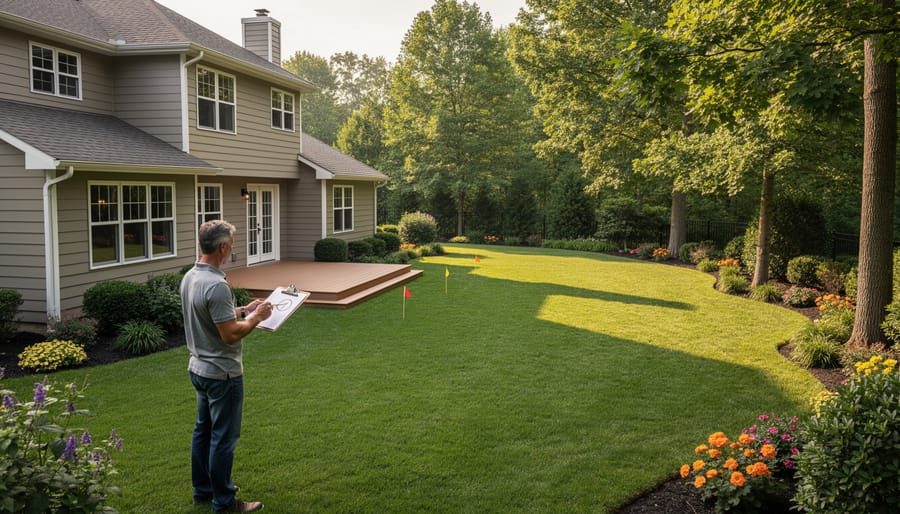
Take a walk around your property with a simple tally counter or notepad to assess what I call your obstacle density. Count the number of trees, garden beds, structures, and other fixed features you’ll need to navigate around while mowing. As a general rule, if you’re counting fewer than 10 significant obstacles across your 2 acres, a larger 54-inch deck will save you considerable time and fuel. However, if you’re tallying 15 or more obstacles, especially if they’re clustered together, consider dropping down to a 48-inch deck for better maneuverability.
Think about the spaces between these obstacles too. Measure a few of your tightest passages. If most gaps are wider than 6 feet, you’re golden with a larger deck. Narrower spaces mean you’ll appreciate the agility of a more compact mower. This isn’t just about finishing faster—it’s about reducing the stress on both you and your machine. Fewer tight turns mean less turf damage and a more sustainable approach to lawn care that protects your grass and soil structure over the long term.
Future-Proofing Your Investment
When choosing a zero-turn mower, think beyond your current 2 acres. Life changes, and your property might too. Perhaps you’re eyeing that adjacent lot, or you’ve got plans for expanding garden beds that’ll add complexity to your mowing patterns. A 48 to 54-inch deck handles growth beautifully without becoming unwieldy for your current needs.
Consider versatility as well. Your zero-turn shouldn’t just mow grass efficiently. Look for models that accommodate attachments like baggers for fall cleanup or mulching kits that return nutrients to your soil, supporting healthier lawns naturally. If you have varied terrain with both open spaces and tighter spots around trees or flower beds, a mid-range deck size gives you flexibility without sacrificing maneuverability.
Think about durability too. A quality machine with solid construction and a reliable engine will serve you for years, adapting as your landscaping evolves. Investing in a slightly more capable mower now means you won’t outgrow it quickly, making it both an economical and environmentally conscious choice by reducing the need for premature replacement.
Sustainable Mowing Practices with Your Right-Sized Zero-Turn
Efficiency Equals Less Environmental Impact
Choosing the right-sized zero-turn mower isn’t just about convenience—it’s a meaningful step toward reducing your lawn care’s environmental footprint. When your mower is properly sized for your 2-acre property, you’ll naturally use less fuel because you’re completing the job in fewer passes without the engine running longer than necessary. A 48-54 inch deck strikes that sweet spot where you’re efficient without being excessive.
Oversized mowers consume more fuel even when the extra width isn’t needed, while undersized models force you to make additional passes that compact soil and stress grass through repeated traffic patterns. Each unnecessary pass also means more emissions released into your garden environment. The right-sized mower helps you work with your landscape rather than against it, completing mowing sessions quickly while minimizing wear on your turf. Think of it as treating your lawn to a single, clean haircut instead of multiple stressful trims—your grass, soil structure, and the environment all benefit from this thoughtful approach to equipment selection.
Mulching Features Worth Considering
Most zero-turn mowers in the 48-54 inch range offer excellent mulching capabilities that can transform your lawn care routine. Look for models with dedicated mulching blades and mulching kits that finely chop grass clippings and redistribute them back into your lawn. This process returns valuable nutrients to the soil, reducing your fertilizer needs by up to 25 percent while promoting healthier, more drought-resistant turf.
Three-in-one deck systems are particularly worthwhile, letting you switch between mulching, bagging, and side discharge depending on seasonal conditions. During spring’s rapid growth periods, you might prefer bagging, while summer maintenance benefits from mulching’s moisture-retaining properties. The best mulching decks feature deep designs that keep clippings suspended longer for more thorough cutting. This creates that fine, barely-visible result that decomposes quickly without clumping or smothering your grass. For environmentally-conscious homeowners, quality mulching features eliminate the need to dispose of yard waste while naturally building soil health over time.
Real-World Examples: Zero-Turn Models That Excel on 2 Acres
Let me share some proven zero-turn models that work beautifully on 2-acre properties. These aren’t just specs on paper—they’re mowers that real homeowners rely on week after week.
The Husqvarna Z254 has earned its reputation as a 2-acre champion. With its 54-inch cutting deck, it strikes that perfect balance between coverage and maneuverability. What I appreciate most is its tight 16-inch turning radius, which makes navigating around trees and garden beds genuinely effortless. The commercial-grade Kawasaki engine delivers reliable power without guzzling fuel, and the hydrostatic transmission responds smoothly to your commands. You’ll finish your 2 acres in roughly 90 minutes, leaving plenty of weekend time for other projects.
For those wanting professional-grade performance, the Ariens IKON XD 52 delivers exceptional value. This 52-inch model features a welded steel deck that handles uneven terrain beautifully—something many 2-acre properties contend with. The wider rear tires provide stability on slopes, and the high-back seat makes longer mowing sessions comfortable. I’ve heard from gardeners who’ve used this mower for years without major repairs, which speaks volumes about build quality.
Both models support sustainable practices through efficient fuel consumption and mulching capabilities. When you mulch rather than bag, you’re returning valuable nutrients to your soil while reducing yard waste. These mowers also handle varied grass heights well, so you can practice less frequent mowing during drought periods to conserve water and support beneficial insects.
Remember, the best mower for your 2 acres depends on your specific landscape challenges. Consider test-driving models at local dealers to feel how they handle before making your investment.
Choosing the right zero-turn mower for your 2-acre property doesn’t have to feel overwhelming. As we’ve explored, a 48-54 inch deck size hits that sweet spot for most homeowners managing this acreage, delivering efficiency without sacrificing maneuverability. That said, your unique property features matter just as much as the numbers. Take a moment to walk your lawn and note those narrow gates, tight corners around flower beds, or clusters of trees that might influence your decision. A property with wide-open spaces can fully leverage a 54-inch deck’s speed, while a landscape with more obstacles might benefit from the nimbler handling of a 48-inch model.
Remember, investing in the right size isn’t just about getting the job done. It’s about working smarter, not harder. The appropriate deck width saves you precious weekend hours, reduces fuel consumption for a lighter environmental footprint, and promotes healthier grass through proper cutting practices. You’ll enjoy more time relaxing in your beautiful yard rather than endlessly circling it.
Take confidence in your research and trust your observations about your property’s specific needs. You’re now equipped to make an informed decision that will serve you well for years to come, transforming lawn care from a dreaded chore into an efficient, even enjoyable part of maintaining your outdoor sanctuary.