**Match your tool quality to your lawn’s actual needs—not marketing hype.** A perfectly manicured quarter-acre requires different equipment than a sprawling two-acre property, and understanding this distinction will save you hundreds of dollars while delivering better results.
**Prioritize multipurpose tools that reduce storage clutter and environmental impact.** A quality string trimmer with edging capabilities eliminates the need for separate equipment, while a mulching mower returns nutrients to your soil naturally, reducing fertilizer dependence by up to 30%.
**Invest in ergonomic design features that prevent long-term physical strain.** Adjustable handles, anti-vibration technology, and balanced weight distribution aren’t luxury features—they’re essential for sustainable lawn care practices that you’ll maintain consistently over years, not abandon after a painful season.
**Consider battery-powered electric tools as your first option, not your last resort.** Modern lithium-ion technology now matches gas-powered performance for most residential applications while eliminating emissions, reducing noise pollution, and requiring virtually zero maintenance beyond blade sharpening.
The right lawn maintenance tools transform yard work from exhausting obligation into satisfying accomplishment. But with countless options across manual, electric, and gas-powered categories—each claiming superiority—making informed choices feels overwhelming. This guide cuts through marketing noise to compare actual performance, durability indicators, and real-world value across every major tool category, helping you build a practical arsenal that matches your lawn’s specific requirements and your commitment to sustainable gardening practices.
What Makes a Lawn Tool Worth Your Money
Durability vs. Initial Cost
When you’re standing in the garden center debating between a $15 hand pruner and a $45 one, it’s tempting to grab the cheaper option. I’ve been there! But here’s what I’ve learned through years of lawn care: that budget pruner will likely need replacing within a season or two, while a quality tool can serve you for decades.
Let’s talk real numbers. A cheap plastic rake might save you $20 upfront, but after replacing it three times in five years, you’ve actually spent more than investing in a durable metal alternative from the start. I replaced my bargain-bin hedge shears twice before finally purchasing professional-grade ones—they’re still going strong eight years later.
Quality tools also perform better, making your work easier and more sustainable. A well-made spade with a solid ash handle cuts through soil efficiently, reducing physical strain and the need for replacement resources. Sharp, properly-tempered blades mean cleaner cuts that promote plant health.
The sweet spot? Look for tools with replaceable parts and manufacturer warranties—these indicate genuine durability. Wooden handles, forged steel heads, and comfortable grips signal longevity. Your initial investment pays dividends in reliability, performance, and ultimately, less waste in landfills.
Environmental Considerations
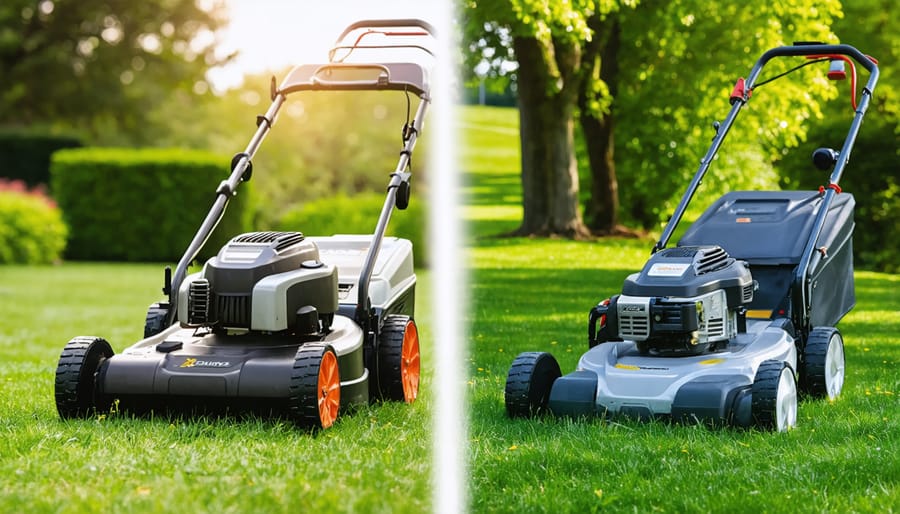
Making environmentally conscious choices in lawn maintenance tools isn’t just good for the planet—it can also save you money and create a healthier yard. When comparing options, electric tools have come a long way and now rival gas-powered equipment in performance while producing zero emissions during use. Battery-powered mowers and trimmers are particularly appealing, offering the convenience of cordless operation without the fumes and noise pollution of traditional gas models.
If you’re choosing between gas and electric, consider your lawn size and power needs. Electric models work beautifully for most residential yards, while gas equipment might still make sense for large properties. However, newer battery technology means you’re rarely sacrificing power for sustainability anymore.
Beyond the power source, look for tools made with recycled materials and those built to last rather than disposable options. Quality metal components beat plastic every time—they’re more durable and ultimately create less waste. Manual tools like reel mowers and hand-powered edgers deserve consideration too; they’re emission-free, quiet, and provide a surprisingly satisfying workout. For smaller lawns, they’re genuinely practical alternatives that reduce your carbon footprint to zero while keeping you connected to the rhythms of your garden.
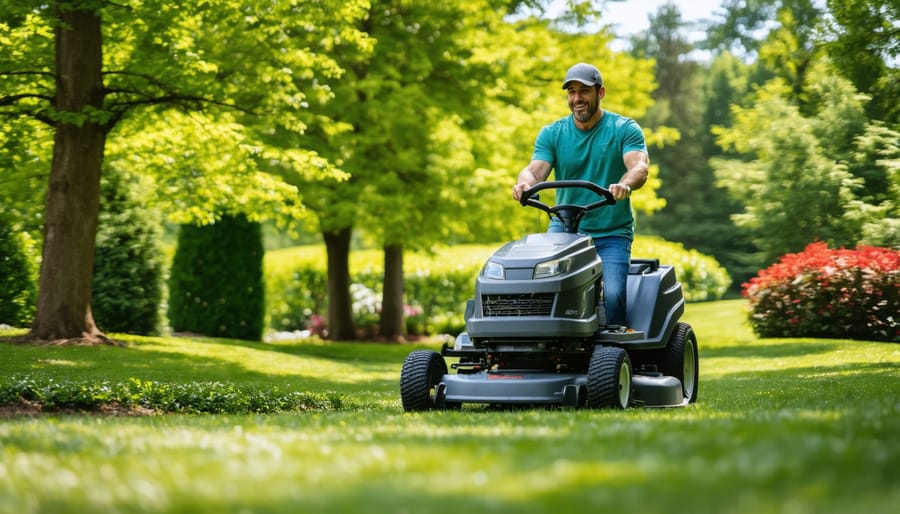
Mowers: Push, Self-Propelled, and Riding Options Compared
Manual Push Mowers
Manual push mowers offer an eco-friendly, quiet alternative to gas-powered equipment, making them perfect for environmentally conscious homeowners. If you’re exploring different mowing methods, understanding these classic tools is essential.
**Reel mowers** use a scissor-like cutting action with rotating blades that snip grass cleanly against a fixed bed knife. They’re ideal for small to medium lawns (up to 5,000 square feet) with relatively flat terrain and fine-textured grass. The precision cut promotes healthier grass, and the zero-emission operation means no fuel costs or maintenance headaches.
**Rotary push mowers** feature a horizontal spinning blade and handle slightly larger areas or uneven ground better than reel models. They’re more forgiving with taller grass and require less frequent mowing.
Both types provide excellent exercise, eliminate noise pollution, and cost significantly less than powered alternatives. However, they demand more physical effort and struggle with very tall or wet grass. For eco-conscious homeowners with manageable lawn sizes, manual mowers deliver sustainable results while keeping your carbon footprint minimal and your wallet happy.
Self-Propelled Mowers
Self-propelled mowers take the heavy lifting out of lawn care—literally! These machines use either gas or electric power to drive the wheels forward, making them ideal for larger yards or sloped terrain where pushing can become exhausting.
**Gas-powered models** deliver robust cutting power and longer run times, perfect for expansive lawns. They handle thick, overgrown grass with ease and don’t require recharging breaks. However, they demand regular maintenance like oil changes and spark plug replacements, plus they’re noisier and emit fumes that aren’t exactly eco-friendly.
**Electric self-propelled mowers** (both corded and battery-powered) offer quieter operation and zero emissions during use, aligning beautifully with sustainable practices. Battery models have improved dramatically—many now rival gas power for cutting performance. They require minimal maintenance, though you’ll need to factor in battery replacement costs every few years.
When weighing self-propelled vs push mowers, consider your yard size and physical comfort. The self-propelled feature typically adds weight but reduces strain significantly. Most models offer adjustable speed settings, letting you match the pace to your walking comfort. For environmental impact and ease of maintenance, electric options win hands-down, though gas still reigns for raw power and uninterrupted mowing sessions on very large properties.
Riding Mowers and Zero-Turn Options
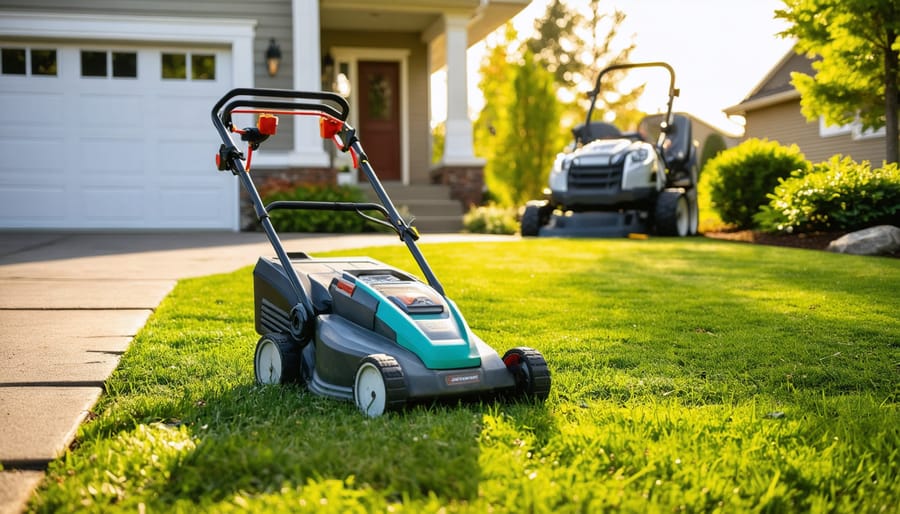
Once your lawn exceeds half an acre, it’s time to consider upgrading from a walk-behind mower to something more efficient. Traditional riding mowers offer a comfortable seated experience and work wonderfully for properties up to three acres with relatively straightforward layouts. They’re reliable workhorses that handle hills reasonably well and typically cost less upfront.
Zero-turn mowers, however, are game-changers for larger or more complex properties. Their ability to pivot 180 degrees means you’ll slash mowing time by up to 40% compared to traditional riders—a significant benefit when you’re covering two acres or more. They excel around flowerbeds, trees, and obstacles, though they do require practice on slopes where traditional riders feel more stable.
Consider your property’s terrain and layout when deciding. If you have a flat, open lawn with minimal obstacles, a traditional rider offers excellent value. For properties with landscaping features or irregular shapes, zero-turns justify their higher price tag through time savings and precision.
Budget-wise, knowing the best time to buy can save you hundreds. Both options represent long-term investments in sustainable lawn care—fewer passes means less fuel consumption and reduced emissions compared to multiple trips with smaller mowers.
String Trimmers and Edgers: Finding Your Perfect Match
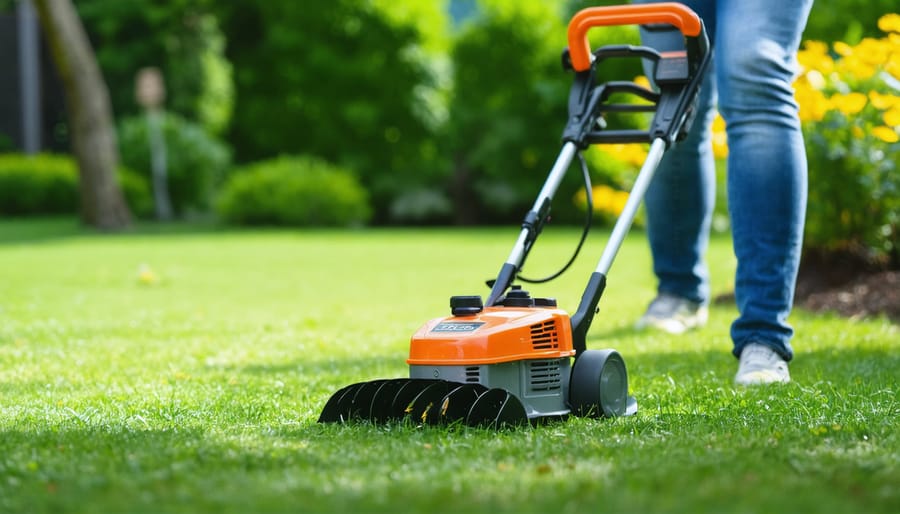
Gas vs. Electric vs. Battery-Powered
Choosing the right power source for your trimmer can feel overwhelming, but let’s break it down together. Gas-powered trimmers pack serious punch—they’re ideal for large properties and thick, overgrown areas where sustained power matters most. However, they’re heavier, noisier, and require regular maintenance like oil changes and fuel mixing. Plus, they’re not exactly friends with the environment due to emissions.
Electric corded trimmers offer a quieter, lighter alternative perfect for small to medium yards. They start instantly and need minimal maintenance, making them beginner-friendly. The catch? You’re tethered to an outlet, which limits your range and means working around that extension cord—trust me, you’ll develop a love-hate relationship with it!
Battery-powered trimmers are the sweet spot for many gardeners seeking sustainability without sacrificing convenience. Modern lithium-ion batteries deliver impressive runtime and power, rivaling gas models for most residential needs. They’re whisper-quiet, emission-free, and incredibly easy to use. The downside is battery life on larger properties and the initial cost, though prices continue dropping.
For environmentally conscious gardeners, battery-powered tools represent the future of lawn care—combining clean operation with genuine performance. Just ensure you have a backup battery charged if you’re tackling bigger jobs, and you’ll wonder why you didn’t switch sooner.
Straight Shaft vs. Curved Shaft Designs
When choosing a string trimmer or edger, the shaft design matters more than you might think—it affects everything from your comfort to the tool’s performance on different terrains.
Straight shaft trimmers feature a direct drive system, making them more powerful and efficient. They’re ideal for taller users (typically 5’10” and above) since the extended reach means less bending. If you’re tackling thick weeds, slopes, or hard-to-reach areas under bushes and fences, straight shafts excel. The design also allows you to flip them over for edging tasks more easily. They’re my go-to recommendation for anyone with varied terrain or extensive trimming needs.
Curved shaft models position the cutting head closer to your body, which many shorter gardeners find more comfortable and balanced. They’re generally lighter and less expensive, making them perfect for basic lawn edging and light trimming around flower beds. However, the curved design can feel awkward when reaching under obstacles.
For sustainable lawn care, either design works well—what matters most is choosing the right tool for your body and yard. A comfortable tool means you’ll maintain your lawn more consistently, reducing the temptation to use harsh chemical treatments for overgrown areas. Consider trying both styles at your local garden center before purchasing.
Leaf Blowers vs. Rakes: The Modern Debate
Handheld, Backpack, and Walk-Behind Blowers
Choosing the right blower style can make fall cleanup a breeze rather than a burden. Handheld blowers are your lightweight champions—perfect for small yards under a quarter-acre and quick deck cleanups. They’re budget-friendly (starting around $50 for electric models) and easy to store, though your arm might protest after 20 minutes of continuous use.
If you’ve got a larger property or prefer better weight distribution, backpack blowers are game-changers. They transfer the load to your hips and shoulders, letting you work comfortably for hours. Most pack impressive airflow (400+ CFM), making them ideal for half-acre properties or more. Yes, they’re pricier ($150-$400), but the ergonomic benefits pay dividends if you’re managing substantial leaf coverage.
Walk-behind blowers suit those with mobility concerns or expansive properties over an acre. They’re the workhorses that clear massive debris piles without physical strain, though they require storage space and higher investment ($300+).
For sustainability-minded gardeners, consider electric or battery-powered options in any style—they’re quieter, emission-free, and increasingly powerful. Match your choice to both your property size and your body’s comfort; the best blower is the one you’ll actually enjoy using season after season.
When Old-School Raking Still Wins
Despite all the high-tech options available, your trusty rake deserves a permanent spot in your tool shed. There are situations where going old-school is genuinely the smarter choice.
For delicate spring cleanup around emerging perennials and bulbs, rakes let you work with surgical precision that blowers simply can’t match. You won’t accidentally blast away mulch or damage tender new growth. When you’re dealing with wet leaves—every gardener’s challenge—rakes power through them efficiently while blowers just push soggy clumps around uselessly.
Consider your neighbors, too. Early morning or evening yard work with a rake means peaceful silence instead of engine roar. It’s also surprisingly therapeutic; the rhythmic motion offers legitimate exercise and stress relief that many gardeners genuinely cherish.
From a sustainability perspective, rakes have zero carbon footprint, require no fuel or electricity, and last for decades with minimal maintenance. For smaller yards or targeted cleanup tasks, they’re often faster than hauling out power equipment. Plus, there’s something deeply satisfying about the direct connection between your effort and visible results—no batteries required, no noise complaints, just effective, earth-friendly lawn care.
Lawn Aerators and Dethatchers: Specialty Tools That Make a Difference
Core Aerators vs. Spike Aerators
When you’re choosing an aerator, understanding the difference between core and spike models can save you money and help your lawn thrive. Spike aerators simply poke holes into your soil using solid tines or spikes, which can actually compact the soil around each puncture—not exactly what we’re aiming for! Core aerators, on the other hand, physically remove plugs of soil, creating genuine breathing room for your lawn’s roots.
Think of it this way: spike aeration is like jabbing a pencil into dense clay, while core aeration is like removing actual chunks to allow air, water, and nutrients to penetrate deeply. Those little soil plugs you’ll see scattered across your lawn after core aeration might not look pretty initially, but they’re gold for soil health. They break down naturally, returning nutrients to your turf while the holes encourage robust root development.
For most homeowners dealing with compacted soil or heavy clay, core aeration is the clear winner and a more sustainable choice—you’re working with your soil’s natural processes rather than fighting against them. While core aerators typically cost more upfront, the long-term benefits for your lawn’s health make them worth the investment.
Power Rake vs. Vertical Mower Dethatchers
When your lawn needs serious thatch removal, you’ll want to understand the difference between power rakes and vertical mowers—they’re not interchangeable, despite what some retailers might suggest!
Power rakes use flexible spring tines that bounce along the soil surface, gently pulling up thatch and debris. They’re perfect for lawns with light to moderate thatch buildup (under ½ inch) and provide a less aggressive approach that won’t stress your grass too much. Think of them as a vigorous combing for your lawn.
Vertical mowers (or verticutters) are the heavy-duty option, using fixed blades that cut vertically into the soil. They’re essential for lawns with severe thatch problems or when you’re overseeding, as they create grooves that help seeds make direct contact with soil. Before investing, consider researching dethatching blade effectiveness for your specific grass type.
For most homeowners, a power rake handles annual maintenance beautifully. Save vertical mowing for renovation projects or when your lawn has been neglected for several seasons. Both tools work best in spring or early fall when grass can recover quickly, and always follow up with proper watering and fertilization to help your lawn bounce back stronger than ever.
Essential Hand Tools Every Lawn Keeper Needs
While power equipment often steals the spotlight, your hand tool collection forms the true backbone of effective lawn care. I learned this lesson the hard way after investing in expensive machinery but struggling with basic tasks that required a simple, quality hand tool. Let’s explore the essentials that deserve a permanent spot in your shed.
**Broadcast Spreaders** top the list for anyone maintaining a lawn larger than a postage stamp. Look for models with adjustable flow rates and sturdy wheels that won’t buckle under fertilizer weight. A quality spreader ensures even distribution of seeds, compost, and organic amendments—preventing those telltale stripes of over-fertilized grass. The difference between a $30 and $80 spreader? Calibration accuracy and durability. Invest in the better option; you’ll use it for decades.
**Garden forks** might seem old-fashioned, but they’re indispensable for aerating compacted soil without disturbing beneficial organisms. Choose one with four square tines rather than flat ones—they penetrate tough ground more effectively. The weight matters too; a solid forged fork provides leverage that lightweight versions simply can’t match.
**Soil knives** are the Swiss Army knife of lawn care. This single tool handles edging, weeding, dividing perennials, and testing soil depth. The serrated edge cuts through roots cleanly, while measurement markings help you plant bulbs at proper depths. Japanese hori-hori knives represent the gold standard, though several domestic manufacturers offer excellent alternatives.
**Bypass pruning shears** keep grass borders crisp and remove dead growth from ornamental grasses. Unlike anvil-style cutters that crush stems, bypass blades make clean cuts that heal quickly—essential for plant health and disease prevention. Look for replaceable blades and comfortable grips that reduce hand fatigue during extended trimming sessions.
Quality hand tools often outlast their owners, making them genuinely sustainable investments in your lawn’s future.
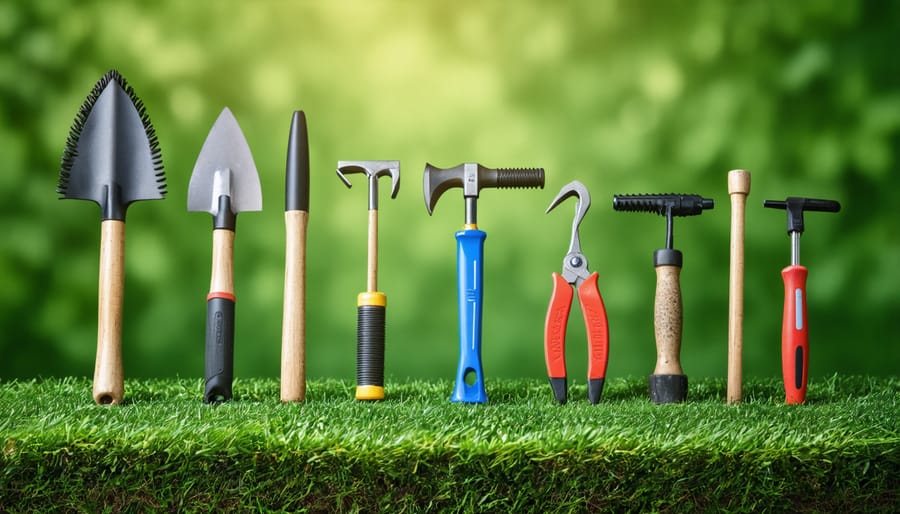
Building Your Tool Arsenal on a Budget
Starting your tool collection doesn’t mean emptying your wallet all at once. The smartest approach is building gradually, prioritizing essentials while making strategic choices about quality and timing.
Begin with the core trio: a reliable mower, a quality rake, and sturdy hand pruners. These form the foundation of any lawn care routine and will see the most use throughout the seasons. For your mower specifically, this is where you should splurge—a dependable machine that starts consistently and cuts evenly will save you frustration and money over years of use. Consider a well-maintained used mower from a reputable brand over a cheap new model that might fail after one season.
Where can you save? Hand tools like trowels, weeding forks, and basic cultivators don’t require premium pricing. Mid-range options often perform just as well as expensive alternatives. Rakes and shovels fall into a middle category—avoid the absolute cheapest, but you don’t need professional-grade either. Look for solid construction with comfortable grips.
Timing matters tremendously for budget-conscious buyers. End-of-season sales in fall offer incredible discounts on mowers and larger equipment. Spring clearances can yield deals on winter tools. Estate sales and community marketplaces often hide quality vintage tools that outlast modern equivalents.
Build your collection strategically by assessing your actual needs. If you’re just getting started, check out our comprehensive lawn care guide to understand which tasks you’ll perform most frequently. Add specialty tools only when specific needs arise—there’s no shame in borrowing a dethatching rake once yearly rather than purchasing one immediately.
Consider tool-sharing arrangements with neighbors or joining local tool libraries. This sustainable approach reduces costs while building community connections and minimizing environmental impact through shared resources.
Choosing the right lawn maintenance tools isn’t about following the latest trends or falling for clever marketing campaigns—it’s about understanding your unique lawn care needs and finding equipment that serves you well for years to come. As we’ve explored throughout this comparison, the “best” tool is always the one that aligns with your specific lawn size, terrain, budget, and personal maintenance goals.
When making your selections, remember to prioritize long-term value over initial cost savings. A moderately priced, well-built tool that lasts a decade is infinitely more sustainable and economical than a bargain model that needs replacing every season. Consider how each tool fits into your broader commitment to environmental stewardship—electric options, manual tools, and equipment made from recycled materials all contribute to a healthier planet while keeping your lawn looking its best.
Don’t underestimate the importance of comfort and enjoyment in this process either. Lawn maintenance shouldn’t feel like punishment. Tools that feel good in your hands, that operate smoothly, and that actually make visible improvements to your outdoor space transform routine chores into satisfying accomplishments. Whether you’re a weekend warrior or a dedicated lawn enthusiast, investing in the right tools means you’ll spend less time struggling and more time enjoying both the process and the beautiful results of your efforts. Your lawn—and your back—will thank you.