Apply 4-6 pounds of grass seed per 1,000 square feet for standard overseeding, or double that amount to 8-12 pounds if your lawn shows significant thinning or bare patches. These rates work for most cool-season grasses like fescue and ryegrass, while warm-season varieties typically need slightly less at 3-5 pounds per 1,000 square feet.
Calculate your exact needs by measuring your lawn’s square footage—multiply length times width for rectangular areas, then divide by 1,000 and multiply by your target seeding rate. A 5,000 square foot lawn with moderate thinning needs roughly 25-30 pounds of seed, which translates to about one 25-pound bag at standard rates or two bags for heavier overseeding.
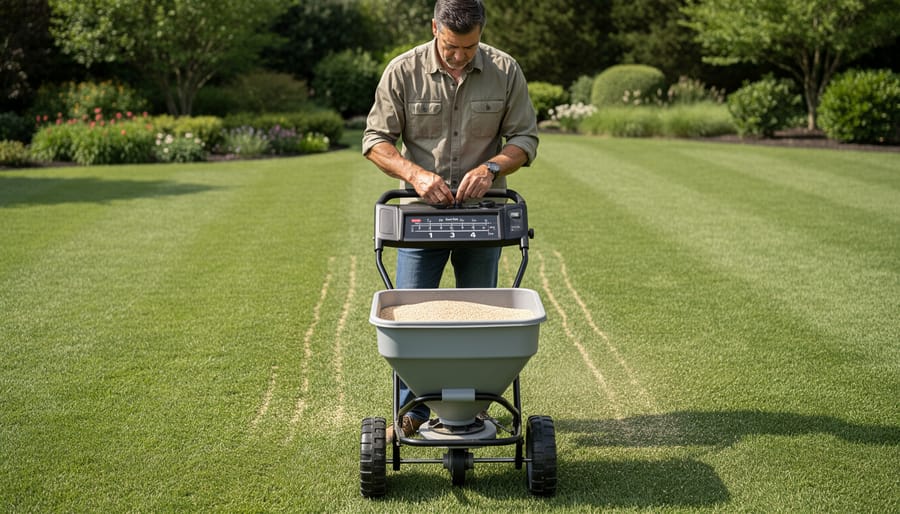
Set your broadcast spreader to half the manufacturer’s recommended setting for new lawns when overseeding, since you’re supplementing existing grass rather than starting from scratch. This prevents oversaturation while ensuring adequate coverage for thickening thin spots.
Choose the right timing and seed quality to maximize germination rates, which means fewer seeds wasted and better value for your investment. Fall overseeding typically produces the strongest results with cool-season grasses, requiring less water and fewer inputs than spring attempts. Understanding these fundamentals transforms overseeding from guesswork into a predictable process that delivers the thick, healthy lawn you’re after without breaking your budget or wasting resources.
Why Getting the Seed Amount Right Actually Matters
Getting the seed amount right isn’t just about following instructions on the bag—it has real consequences for your lawn’s health and your wallet. Let me walk you through what actually happens when things go wrong.
When you overseed with too much seed, you’re essentially creating a competition arena where hundreds of tiny seedlings are fighting for the same resources. Think of it like planting a garden where every vegetable is squeezed inches apart—nothing thrives. These overcrowded seedlings compete for water, nutrients, and sunlight, which often results in weak, spindly grass that’s more susceptible to disease. Plus, you’ve literally thrown money onto your lawn that won’t provide any benefit. At roughly $50 to $150 per bag depending on the variety, that adds up quickly.
On the flip side, using too little seed leaves you with disappointing results. Those thin, patchy areas you were trying to fix? They’ll still be there, just slightly less noticeable. You’ve spent the time and effort preparing your soil, watering consistently, and staying off the lawn during establishment—only to need another round of overseeding next season. That’s double the work and double the expense.
There’s also the disease factor to consider. Both scenarios create problems: overcrowded grass lacks air circulation, creating a humid environment where fungal diseases flourish, while thin lawns with bare spots allow weeds to establish and compete with your desirable grass.
The sweet spot exists for a reason. Getting it right means your investment pays off with a thick, healthy lawn that can naturally crowd out weeds and resist environmental stress. It’s not about perfection—being within the recommended range gives you that margin for success without the headaches.
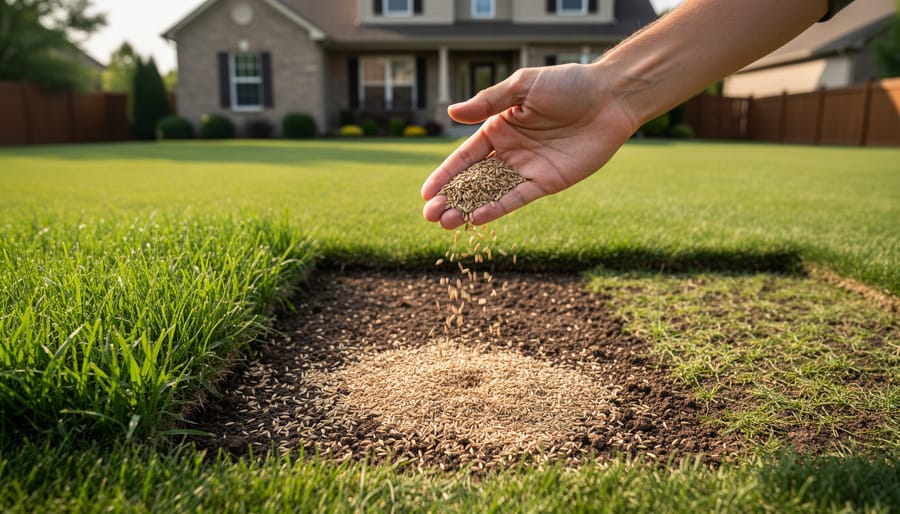
The Standard Overseeding Rate: Your Starting Point
Cool-Season Grasses
Cool-season grasses have different seeding rates because of their varying seed sizes and growth habits. Kentucky bluegrass, with its tiny seeds, needs only 1-2 pounds per 1,000 square feet for overseeding. Don’t be tempted to use more—those little seeds pack quite a punch once they germinate! Perennial ryegrass requires a bit more at 3-5 pounds per 1,000 square feet. It’s my go-to recommendation for high-traffic areas since it establishes quickly and fills in bare spots within a week or two.
Tall fescue, with its larger seeds and robust growth, needs 5-8 pounds per 1,000 square feet. Yes, that’s significantly more, but remember you’re working with bigger seeds that create heartier plants with deep root systems—a sustainable choice for areas with occasional drought. Fine fescues fall somewhere in between at 3-5 pounds per 1,000 square feet. These shade-loving grasses are perfect for those tricky spots under trees where other varieties struggle.
Here’s a practical tip: if your lawn is more than 50% bare or damaged, lean toward the higher end of these ranges. For truly healthy lawns needing a light refresh, stick with the lower numbers.
Warm-Season Grasses
Warm-season grasses have different overseeding requirements than their cool-season cousins, and timing is everything. If you’re working with Bermuda grass, apply 1 to 2 pounds of seed per 1,000 square feet for routine overseeding, bumping up to 5 to 10 pounds for bare spots. The best window is late spring when soil temperatures consistently reach 65 degrees Fahrenheit.
Zoysia grass needs a lighter touch at just 1 to 2 pounds per 1,000 square feet for overseeding. Since zoysia establishes slowly, patience is your friend here. Late spring to early summer gives you the best results.
St. Augustine grass presents a unique challenge since it doesn’t grow well from seed. Most homeowners fill thin areas with plugs or sprigs instead, spacing them 6 to 12 inches apart depending on how quickly you want coverage.
Bahiagrass requires 5 to 10 pounds per 1,000 square feet when overseeding existing lawns. This hardy, sustainable choice tolerates poor soil and requires less water than many alternatives, making it environmentally friendly for southern landscapes. Apply seed in late spring or early summer when temperatures warm up consistently. Remember, warm-season grasses go dormant in winter, so resist the urge to overseed during cold months.
When to Adjust Your Seed Amount (And By How Much)
For Severely Thinned or Damaged Lawns
When your lawn has seen better days—whether from repairing winter damage, disease, or years of neglect—standard seeding rates won’t cut it. For severely thinned or damaged areas, increase your seed application by 25-50% above normal rates. This typically means using 7-9 pounds per 1,000 square feet instead of the standard 5-6 pounds.
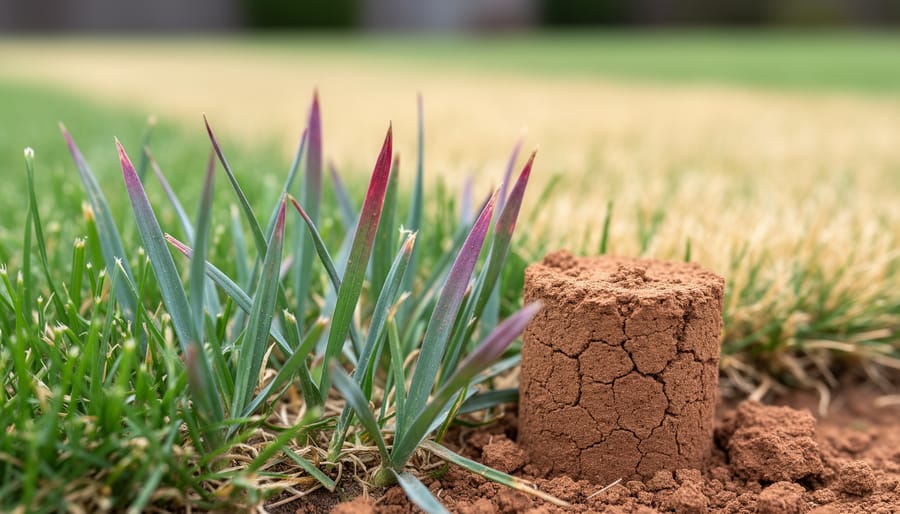
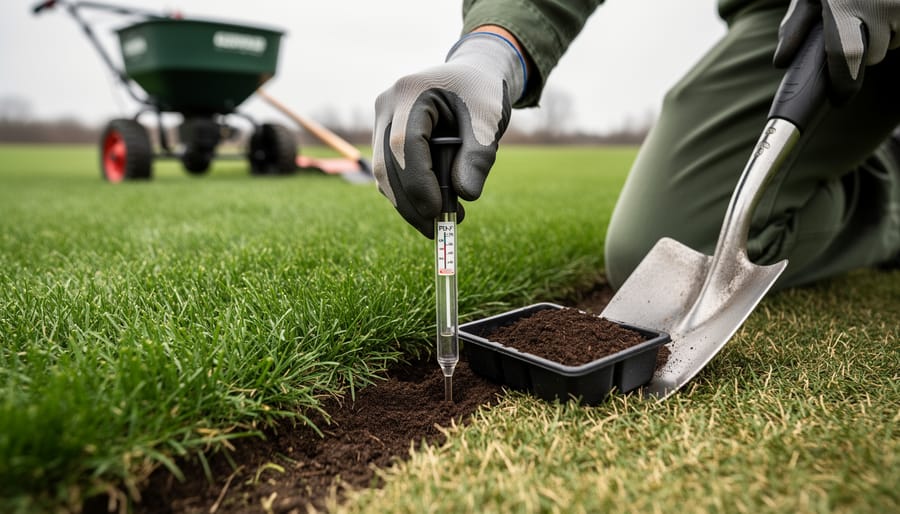
Here’s the thing, though: while extra seed helps, it’s really just putting a bandage on the problem. Before you throw down more seed and money, take time to identify why your lawn struggled in the first place. Is the soil compacted? Are you dealing with drainage issues or too much shade? Piling on seed without fixing these underlying problems is like trying to fill a bucket with a hole in it.
A sustainable approach means aerating compacted soil, adjusting your watering schedule, or even reconsidering grass varieties better suited to your conditions. Sometimes the most environmentally responsible choice is selecting a shade-tolerant mix or reducing lawn areas that constantly struggle. Once you’ve addressed the root causes, that increased seeding rate will actually deliver the thick, healthy lawn you’re after.
For Preventative Maintenance Overseeding
If your lawn is already in pretty good shape, you’re in luck—you can dial back those seeding rates a bit! For healthy, established lawns that just need a refresh, aim for 3 to 4 pounds of seed per 1,000 square feet rather than the full recommended rate. This lighter approach is perfect for filling in minor thin spots and maintaining that lush, dense carpet of grass you’ve worked hard to achieve.
Here’s something I’ve learned over years of lawn care: annual light overseeding is one of the smartest preventative strategies you can adopt. Think of it as routine maintenance rather than emergency repair work. By applying a modest amount of seed each fall, you’re constantly introducing new, vigorous grass plants that crowd out weeds naturally and keep your turf resilient against disease and drought stress.
The sustainability angle here is worth noting too. Regular light overseeding means you’re working with nature rather than against it, reducing the need for herbicides and excessive watering down the line. Plus, you’ll use less seed overall compared to waiting until your lawn becomes patchy and requires aggressive renovation. It’s a win-win for your wallet and the environment.
Seasonal Adjustments That Make a Difference
Timing dramatically affects how much seed you’ll need. Early fall overseeding, when soil is still warm and there’s adequate moisture, creates ideal conditions where seeds germinate quickly and efficiently. You can stick with standard rates—those 4-8 pounds per 1,000 square feet for cool-season grasses. The fall reseeding benefits are hard to beat for establishing strong roots before winter.
Late fall overseeding gets trickier. As temperatures drop, germination slows considerably. If you’re pushing the season’s limits, consider increasing your rate by 10-15% to compensate for lower germination rates. Check optimal seeding temperatures before committing.
Spring overseeding faces competition from weeds and summer heat stress, which means you might lose more seedlings. Boost your rate by about 20% to account for this challenge. However, proper spring seeding timing matters more than extra seed—too late means wasted effort and resources.
Calculate Exactly How Much Seed You Need (Simple Method)
Let me walk you through a simple method that takes the guesswork out of buying grass seed. I’ve helped countless neighbors figure this out, and trust me, it’s much easier than it sounds.
Start by measuring your lawn’s square footage. For rectangular lawns, grab a measuring tape and multiply length times width. If you have an oddly shaped yard like mine, break it into smaller sections. Measure each rectangle or square separately, then add them together. A rolling measuring wheel makes this job easier if you’re covering larger areas.
Now here’s where people often stumble: accounting for obstacles. You don’t need seed for your driveway, patio, flower beds, or that kids’ playset. Measure these areas the same way and subtract them from your total. Don’t worry about being perfectly precise with small obstacles like individual trees. A few extra square feet won’t break the bank or harm your lawn.
Let’s work through a real example. Say your backyard measures 40 feet by 30 feet, giving you 1,200 square feet. You have a 10-foot by 12-foot patio (120 square feet) and a couple of garden beds totaling about 80 square feet. Subtract those: 1,200 minus 200 equals 1,000 square feet of actual lawn to overseed.
Here’s your simple formula: multiply your lawn’s square footage by the recommended seeding rate from your earlier research. For standard overseeding, that’s typically 3 to 5 pounds per 1,000 square feet. Using our example with a moderate rate of 4 pounds per 1,000 square feet: 1,000 square feet times 4 pounds equals 4 pounds of seed needed.
For thin or struggling areas, bump that up to 6 or 7 pounds per 1,000 square feet. If your lawn looks pretty good and you’re just maintaining density, stick with 3 pounds.
A sustainability tip: it’s better to calculate conservatively and buy slightly less than risk over-application. Excess seed often washes away or creates overly dense patches that compete for resources. You can always spot-treat any missed areas later with a small amount of leftover seed stored properly in a cool, dry place.
The Spreader Settings Nobody Tells You About
Here’s the truth most seed bags won’t tell you: the spreader settings printed on the package are often wildly inaccurate. I learned this the hard way when I ended up with patchy results despite following the instructions perfectly. The problem? Different spreader models vary significantly in how they dispense seed, and manufacturers can’t account for every brand and model out there.
Start by calibrating your spreader before you begin. Grab a tarp or large piece of cardboard and mark off a 100-square-foot section. Fill your spreader with a measured amount of seed, walk it across your test area at normal speed, then carefully collect and weigh what came out. This simple test tells you exactly how much seed your specific spreader dispenses at different settings. It takes ten minutes but saves you from wasting expensive seed or creating uneven coverage.
The two-pass technique is your secret weapon for even distribution. Rather than applying all your seed in one direction, split the total amount in half and make two passes at perpendicular angles. So if you need 5 pounds per 1,000 square feet, apply 2.5 pounds going north-south, then 2.5 pounds going east-west. This crosshatch pattern catches any spots you might have missed and creates beautifully uniform coverage. Yes, it takes longer, but the results speak for themselves.
Watch your walking speed too. Most people rush through the job, which throws off the entire application rate. Maintain a steady, moderate pace throughout. Think of it like mowing your lawn at a consistent speed. Slowing down at corners or speeding up when you’re tired creates bare spots or clumps.
One final tip that’s both practical and sustainable: avoid overlapping too much at the edges of each pass. Excessive overlap wastes seed and can actually create overly thick patches that compete for resources. A slight overlap of about 6 inches is perfect.
Smart Ways to Stretch Your Seed Budget Without Sacrificing Results
Getting great results from overseeding doesn’t mean you need to drain your wallet. With a few strategic approaches, you can maximize your investment while still achieving that lush, healthy lawn you’re dreaming of.
Start by focusing your efforts where they’re needed most. Instead of treating your entire lawn uniformly, identify the thin or bare patches and concentrate your seed there. You might need the full recommended rate for problem areas, but healthier sections may only need half that amount. This targeted approach can cut your seed costs by 30-40% while still delivering impressive results.
Consider mixing your own custom seed blend if you’re working with a large area. Purchasing individual grass varieties and blending them yourself costs significantly less than buying pre-mixed products. Just ensure you’re selecting species that match your climate and sun exposure. For example, combining perennial ryegrass with fine fescue gives you a resilient, adaptable lawn at a fraction of premium blend prices.
Buying in bulk makes financial sense if you’re overseeding regularly or have a larger property. Seed stays viable for two to three years when stored properly in a cool, dry place. Split a bulk order with neighbors to share both the savings and the sustainability benefits of reduced packaging.
Another smart strategy is timing your purchase. Many garden centers discount grass seed at season’s end, typically late fall or early spring depending on your region. Stock up during these sales for your next overseeding project. Just remember to perform a germination test on older seed before spreading it across your lawn to ensure you’re still getting good value.
What Happens After You’ve Spread the Seed
Your work doesn’t end when the last seed hits the ground. In fact, the next few weeks are crucial in determining whether you used the right amount of seed and how well your overseeding project succeeds.
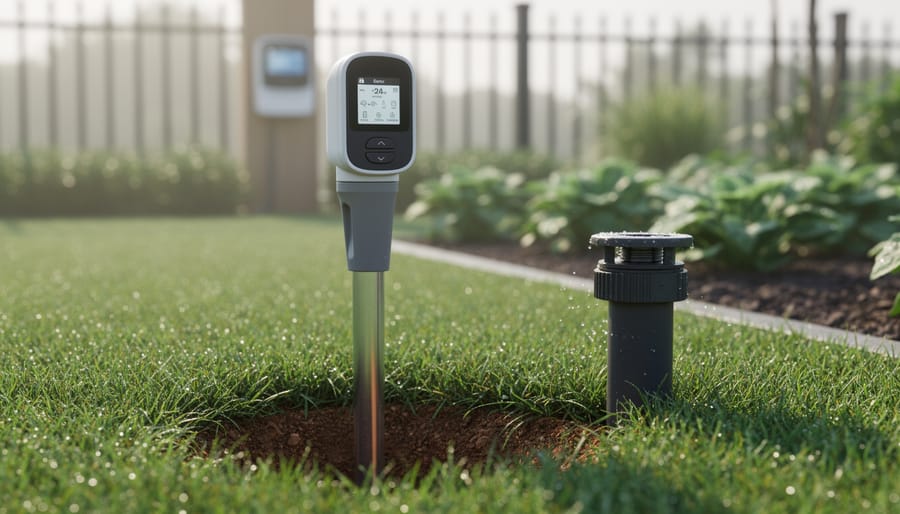
Water is your new best friend. Keeping those seeds consistently moist is essential for germination. You’ll want to water lightly but frequently, ideally twice daily for the first two weeks. The key word here is “lightly”—you want to keep the soil surface damp without creating puddles or washing seeds away. Following a proper watering schedule can make the difference between spotty results and a lush, thick lawn.
Resist the urge to mow too soon. Wait until your new grass reaches about one-third taller than your desired mowing height. This usually means waiting three to four weeks after seeding. When you do mow, make sure your blades are sharp to avoid pulling up tender seedlings.
Here’s the thing about proper aftercare: it directly impacts whether your seeding rate was adequate. If you water inconsistently or mow too early, even perfectly applied seed won’t perform well. You might think you didn’t use enough seed when really, the issue was aftercare. Conversely, excellent post-seeding care can help a slightly light application still produce decent results, though you shouldn’t count on this as your strategy.
Be patient and consistent, and you’ll see those green shoots emerging within seven to fourteen days.
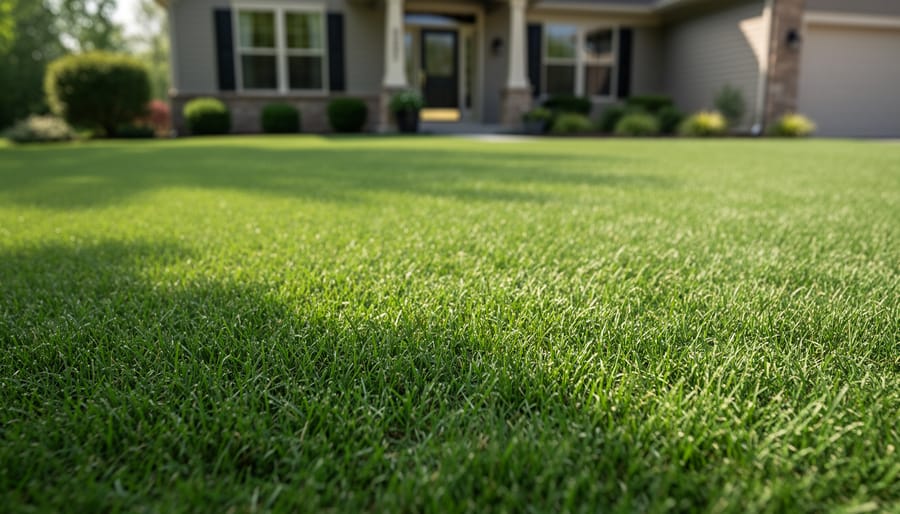
Getting the seeding rate right doesn’t have to be complicated. Remember, for most cool-season grasses, you’re looking at 5-8 pounds per 1,000 square feet for overseeding, while warm-season varieties typically need 3-7 pounds. These aren’t just arbitrary numbers—they’re your baseline for creating a lush, healthy lawn without wasting money or resources.
Don’t be afraid to adjust these rates based on your lawn’s condition. A slightly bare lawn needs less seed than one with significant thin patches, and that’s perfectly okay. Starting with accurate measurements and appropriate rates means you’ll buy only what you need, saving both your budget and reducing excess seed production’s environmental footprint.
Here’s the encouraging truth: precision in overseeding actually makes your lawn care easier long-term. Proper density discourages weeds naturally, reduces the need for chemical treatments, and creates a resilient turf that requires less intervention. You’re not just growing grass—you’re cultivating a sustainable, self-supporting ecosystem right in your own yard.