Match your 5 amp battery maintainer to your equipment’s battery size by checking the amp-hour (Ah) rating on your lawn mower or garden tool battery. A 5 amp charger works best for batteries between 30-100 Ah, making it ideal for most riding mowers, zero-turn mowers, and larger garden tractors. If you’re maintaining smaller push mower batteries or smart yard battery systems under 30 Ah, you’ll risk overcharging and shortening battery life.
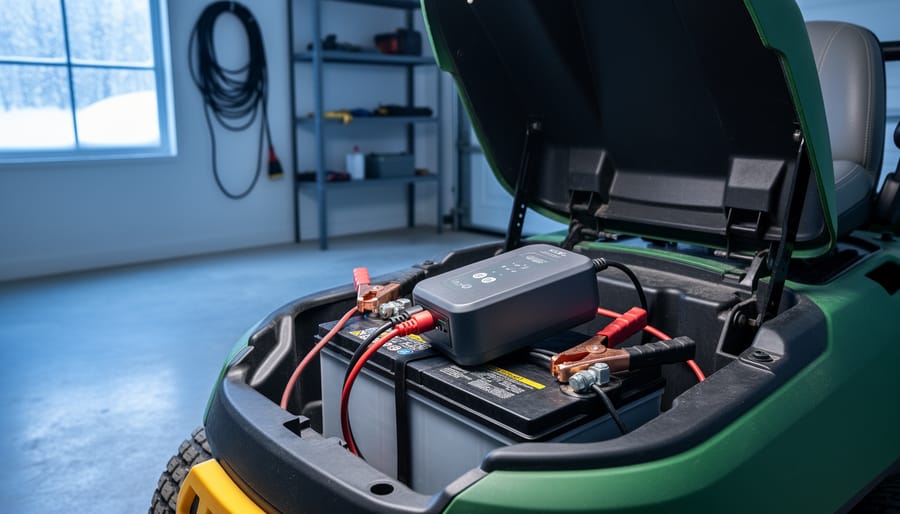
Connect your maintainer during off-season storage by attaching the positive clamp to the positive terminal first, then the negative clamp to the negative terminal, and plugging in the unit only after all connections are secure. This prevents sparking and ensures safe charging. Modern 5 amp maintainers automatically switch to float mode once your battery reaches full charge, which means you can leave them connected for months without damaging your equipment.
Choose a maintainer with desulfation features to break down the lead sulfate crystals that naturally form on battery plates during storage. This single feature can extend your lawn equipment battery life by 2-3 years, reducing waste and saving you the cost of premature replacements. Look for models with waterproof housing if you’re charging in unheated garages or sheds where condensation occurs.
The right 5 amp battery maintainer transforms seasonal equipment storage from a battery-killing problem into an opportunity to maximize your investment while supporting sustainable gardening practices through extended equipment life.
Why Your Lawn Equipment Batteries Die During Storage
You’ve probably experienced this frustrating scenario: You store your battery-powered lawn equipment in the garage or shed for winter, and come spring, the battery is completely dead. What happened? The answer lies in a natural process called self-discharge, and understanding it can save you money and headaches down the road.
All batteries lose charge over time, even when they’re not being used. It’s like having a slow leak in a tire. Lead-acid batteries, commonly found in riding mowers and larger garden equipment, typically lose about 5-10% of their charge per month during storage. Lithium-ion batteries, while generally more efficient, aren’t immune either, losing roughly 2-3% monthly under ideal conditions.
Cold weather makes this problem significantly worse. When temperatures drop below 32°F, the chemical reactions inside batteries slow down dramatically. This doesn’t just affect discharge rates; it actually reduces the battery’s overall capacity. A battery stored in freezing conditions can lose up to 50% of its functional capacity compared to one kept at room temperature. Think of it like trying to pour honey on a cold morning versus a warm afternoon; everything just moves slower.
Modern smart lawn equipment presents an even trickier challenge. Your robot mowers, smart irrigation controllers, and electric push mowers often contain computerized systems that draw small amounts of power continuously, even when switched off. These phantom draws are necessary to maintain memory settings and keep internal clocks running, but they accelerate battery drain during storage.
The combination of natural self-discharge, cold-weather chemistry slowdown, and parasitic draws from electronics creates the perfect storm for dead batteries. Without intervention, you’re looking at diminished battery life, reduced performance, and potentially permanent damage from deep discharge cycles. This is precisely why maintenance charging has become essential for anyone invested in battery-powered lawn care equipment and sustainable gardening practices.

What Makes 5 Amp Battery Maintainers Different
The Sweet Spot for Lawn Equipment
If you’re caring for lawn equipment, you’ve likely discovered that 5 amps hits that perfect balance we gardeners appreciate—much like finding just the right amount of water for your vegetable patch. Too little does nothing, too much creates problems.
Most riding mowers, garden tractors, and battery-powered yard tools use 12-volt batteries ranging from 20 to 50 amp-hours. A 5 amp maintainer charges these at a moderate pace that’s gentle enough to prevent overheating and battery damage, yet efficient enough to bring a depleted battery back to life within several hours rather than days. Think of it as slow-watering your lawn versus blasting it with a pressure washer—one nourishes, the other can harm.
Smaller 1-2 amp trickle chargers work fine for motorcycles but frustratingly take forever with lawn equipment batteries, especially after winter storage. Meanwhile, 10+ amp chargers rush the process, potentially causing excessive heat that degrades battery plates over time. This reduces the lifespan of batteries that already face seasonal challenges.
For the sustainable gardener, extending battery life means fewer replacements heading to landfills and more money saved for seeds and soil amendments. A 5 amp maintainer keeps your equipment ready season after season without the environmental cost of premature battery disposal.
Smart Charging Technology Explained Simply
Think of a 5 amp battery maintainer as a thoughtful gardener who knows exactly when to water and when to hold back. Instead of blasting your lawn mower or tractor battery with power, smart charging technology uses a microprocessor (essentially a tiny computer brain) to assess what your battery needs at any given moment.
The system works in stages, much like how you’d nurture a seedling differently than an established plant. During the bulk charge stage, the maintainer delivers steady power to bring your battery up from low levels. As the battery fills, it automatically shifts to absorption mode, slowing the charge rate like gradually reducing water as soil becomes saturated. Finally, it enters float mode, which is where the real magic happens for long-term storage.
Float mode is your battery’s version of hibernation care. The maintainer monitors voltage constantly and delivers just tiny pulses of electricity to offset natural self-discharge, preventing sulfation (those crusty deposits that kill batteries). It’s like leaving a drip irrigation system on the lowest setting rather than flooding your garden beds.
This intelligent approach means you can leave your equipment connected all winter without worry. The maintainer won’t overcharge or cook your battery, and it helps develop proper battery charging habits that extend lifespan by years. For sustainability-minded gardeners, this means fewer batteries in landfills and more reliable starts when spring planting season arrives.
Setting Up Your Smart Yard Battery System

Choosing the Right Location
Finding the perfect spot for your battery maintainer might seem like a small detail, but it can make a real difference in how well your lawn equipment batteries perform over time. I always recommend choosing a location that stays relatively moderate in temperature year-round. Extreme cold can slow down the charging process, while excessive heat can actually damage your battery. A garage or shed works beautifully for most folks, though I’d suggest avoiding areas that get particularly sweltering in summer months or freezing in winter.
Ventilation is another consideration worth your attention. While 5 amp maintainers are generally quite safe, batteries can release small amounts of hydrogen gas during charging. Nothing to worry about, but you’ll want to ensure there’s adequate airflow around your setup. Don’t tuck your maintainer into a completely sealed cabinet or airtight container.
Finally, think about accessibility. When gardening season rolls around, you’ll want easy access to swap out equipment. I keep mine on a shelf at eye level near my mower, which makes the transition from storage mode to active use absolutely effortless. Consider setting up a dedicated charging station where you can rotate your equipment batteries as needed throughout the year.
Connecting Multiple Batteries Safely
If you’re like many gardening enthusiasts managing multiple pieces of battery-powered equipment, you’ve probably wondered whether you need multiple 5 amp maintainers or if one will suffice. The good news is that with some smart planning, you can keep all your equipment ready without breaking the bank.
For most home gardeners with two to three pieces of equipment like a lawn mower, hedge trimmer, and leaf blower, rotating a single maintainer works beautifully. Simply connect it to each battery for a few days per month, especially during off-season storage. I’ve found that keeping a simple calendar or checklist in my garage helps me stay on track, much like scheduling maintenance for smart irrigation controllers.
However, if you’re managing a larger fleet of equipment or have batteries that require constant monitoring, investing in multiple maintainers makes sense. This is particularly true for professional-grade equipment or if your batteries are stored in different locations. Just remember to never connect one maintainer to multiple batteries simultaneously, as this can lead to uneven charging and potential damage.
Organization is key to success. Label each battery with its purchase date and designate a charging station in your garage or shed with clear ventilation. Store your maintainer cords neatly to prevent damage, and keep a log of when each battery was last charged. This sustainable approach maximizes battery lifespan, reduces waste, and ensures your equipment is always ready when you need it for those weekend gardening projects.
Picking the Right 5 Amp Maintainer for Your Needs
Essential Features That Actually Matter
When shopping for a 5 amp battery maintainer for your lawn equipment, certain features separate the reliable workhorses from the frustrating paperweights. Let me walk you through what really matters based on real-world experience with garden equipment.
Spark-proof connections are absolutely essential. Anyone who’s worked around batteries knows that accidental sparks can be dangerous. Quality maintainers include connectors that prevent sparking when attaching to your battery terminals, giving you peace of mind during those early morning maintenance sessions in the garage.
Reverse polarity protection is another non-negotiable feature. We’ve all been there, slightly distracted while hooking things up, and it’s remarkably easy to swap positive and negative terminals. This built-in safeguard prevents damage to both your maintainer and your expensive lawn equipment battery if you accidentally cross the wires.
For outdoor storage situations, weatherproofing becomes crucial. Even if you’re storing your riding mower in a shed, temperature fluctuations and humidity can affect unprotected electronics. Look for maintainers with weather-resistant casings that can handle typical garage or shed conditions without deteriorating.
Battery type compatibility deserves careful attention. Modern lawn equipment might use traditional flooded lead-acid batteries, maintenance-free AGM batteries, or increasingly, lithium batteries. A quality 5 amp maintainer should recognize and adjust charging patterns for different battery chemistries automatically, ensuring optimal care for whatever your equipment requires.
Finally, energy efficiency ratings matter from both a sustainability and cost perspective. Better maintainers draw minimal power when maintaining your battery’s charge, which aligns with environmentally conscious practices while keeping your electric bill reasonable during those long winter storage months.
Top Recommended Models for Lawn Equipment
After testing various models with different lawn equipment batteries, I’ve found a few 5 amp maintainers that consistently deliver reliable performance while keeping sustainability in mind. Here are my top picks that work beautifully for keeping your mower, trimmer, and other yard equipment batteries in prime condition.
The Battery Tender Plus 5 Amp stands out as a workhorse for garden equipment. This maintainer has proven itself season after season with my riding mower battery, and I appreciate that its smart charging technology prevents overcharging, which extends battery life and reduces waste. The spark-proof connectors are reassuring when you’re working in a cluttered garage. The main drawback is the permanently attached cables, which can be cumbersome in tight spaces. However, its energy-efficient design means it won’t spike your electric bill, even when maintaining batteries through winter months.
For those seeking a budget-friendly option without sacrificing quality, the NOCO Genius 5 offers impressive versatility. What I love most is its ability to charge multiple battery types, from traditional lead-acid to newer lithium options becoming popular in electric lawn equipment. This future-proofs your investment as you transition to more sustainable battery-powered tools. The diagnostic features help identify failing batteries before they leave you stranded mid-mow. The only con is the learning curve with its various modes, though the instruction manual is thankfully comprehensive.
The Schumacher SC1280 deserves mention for its robust build quality and dual functionality as both a maintainer and jump starter. This proves invaluable on those spring mornings when your mower battery needs a quick boost. Its microprocessor-controlled charging optimizes energy use and minimizes environmental impact. The unit runs slightly warmer than competitors, but proper ventilation solves this easily.
Each of these maintainers includes automatic shut-off features that conserve electricity and protect your batteries from damage, aligning perfectly with sustainable lawn care practices while ensuring your equipment starts reliably whenever you need it.
Seasonal Battery Maintenance Schedule
Fall and Winter Storage Protocol
As the growing season winds down, protecting your battery-powered lawn equipment becomes just as important as caring for your garden beds. Here’s a straightforward approach to winter storage that keeps your batteries healthy and ready for spring.
Start by giving your equipment a thorough cleaning, removing grass clippings and debris from both the machinery and battery terminals. A clean connection ensures your maintainer works efficiently throughout winter. Next, remove the battery if possible and store it in a location where temperatures stay above freezing, like a garage or shed. Extreme cold can damage batteries, even when connected to a maintainer.
Connect your 5 amp battery maintainer following the manufacturer’s color-coded instructions: red to positive, black to negative. Double-check these connections before plugging in the unit. The beauty of a quality maintainer is its set-and-forget simplicity. Once connected, it automatically monitors your battery’s charge level and provides power only when needed.
Check your setup monthly during winter. Look for any loose connections, verify the maintainer’s indicator lights show normal operation, and ensure the storage area stays reasonably temperate. This sustainable approach to battery care means you’re not buying replacement batteries every few years, reducing waste while saving money. Come spring, you’ll have fully charged equipment ready to tackle your first mowing with confidence.
Spring Awakening and Summer Checks
As spring arrives and your lawn equipment comes out of hibernation, it’s time to safely disconnect your 5 amp battery maintainer and assess your battery’s health. First, always disconnect the maintainer from the wall outlet before removing the clips from your battery terminals. Remove the negative (black) clip first, then the positive (red) clip to prevent any sparking. This is a perfect opportunity to check your battery terminals for any corrosion buildup—a light brushing with a wire brush and baking soda solution works wonders for keeping connections clean and efficient.
Throughout the active growing season, I recommend doing a quick visual check of your battery-powered equipment monthly. Look for any signs of terminal corrosion or loose connections that might affect performance. If your mower seems sluggish or doesn’t hold a charge like it used to, reconnect your 5 amp maintainer for 24-48 hours to see if a conditioning cycle restores full capacity. This slow, gentle charging approach is especially effective for recovering batteries that have been deeply discharged from extended use.
Common troubleshooting tip: If your maintainer’s indicator light shows an error or won’t engage, double-check that terminals are clean and connections are tight before assuming there’s a battery problem.
Common Mistakes That Shorten Battery Life
Even the most experienced gardeners can unknowingly sabotage their battery’s longevity with a few common missteps. Let’s talk about what to avoid so you can get the most out of your equipment investment.
One of the biggest mistakes is letting your lawn mower or garden tool battery sit completely drained during the off-season. I’ve learned this the hard way myself after storing a perfectly good battery over winter, only to find it dead and beyond recovery come spring. Batteries actually self-discharge over time, and when they drop too low, they can suffer permanent damage. This is exactly where a 5 amp battery maintainer becomes your best friend, keeping that charge level optimal without overdoing it.
Another frequent error is assuming that occasional use keeps your battery healthy enough. If you only mow every few weeks or use your battery-powered trimmer sporadically, the battery might not fully recharge between uses. This creates a cycle of partial charges that gradually reduces overall capacity. Connecting your maintainer between uses ensures the battery stays at peak condition.
Many folks also make the mistake of storing batteries in extreme temperatures. Your garage might get sweltering in summer or freezing in winter, both of which accelerate battery degradation. While a battery maintainer can’t control temperature, pairing it with proper storage in a moderate climate makes a significant difference.
Finally, there’s the trap of thinking bigger is always better when it comes to charging. Using a high-amp charger when you don’t need one can actually stress the battery. A 5 amp maintainer provides gentle, sustainable care that extends battery life rather than rushing the process. Think of it as the difference between a balanced, nutritious approach to lawn care versus quick fixes that might harm your garden’s long-term health.
The Environmental Case for Battery Maintainers
Here’s a sobering truth: Americans discard approximately 180 million lead-acid batteries every year, and that number doesn’t even account for the countless lithium-ion batteries from lawn equipment heading to landfills prematurely. As gardeners who care deeply about the earth we tend, we have a real opportunity to make a difference simply by maintaining our equipment batteries properly.
When you invest in a 5 amp battery maintainer for your lawn mower, trimmer, or other garden tools, you’re doing more than protecting your wallet—you’re taking a stand against unnecessary waste. A well-maintained battery can last three to five years longer than one left to deteriorate through the off-season. That’s potentially five fewer batteries ending up in landfills, leaching heavy metals into soil and groundwater.
The connection to sustainable lawn care practices goes beyond just battery longevity. By extending the life of your equipment, you reduce the demand for new manufacturing, which requires significant energy and raw materials. Think of it as composting for your garage—you’re keeping resources in use rather than discarding them.
The recycling angle matters too. When batteries do eventually reach end-of-life, most auto parts stores and recycling centers accept them for proper processing. However, the best environmental strategy is postponing that recycling trip as long as possible through consistent maintenance.
Consider this: if every gardener with battery-powered equipment extended their battery life by just two years through proper maintenance, we’d collectively prevent millions of pounds of toxic waste. Your 5 amp maintainer becomes more than a convenience—it’s a practical tool for environmental stewardship, perfectly aligned with the values that brought you to gardening in the first place.
Investing in a 5 amp battery maintainer is one of those small decisions that pays big dividends for anyone serious about their lawn care equipment. Think of it as an insurance policy for your garden tools—one that costs far less than replacing batteries that have been damaged by improper storage. By keeping your lawn mower, trimmer, and other battery-powered equipment ready to go, you’re not just saving money; you’re reducing waste and embracing a more sustainable approach to gardening.
As storage season approaches, now is the perfect time to add a quality battery maintainer to your toolkit. Whether you’re winterizing your riding mower or simply want to ensure your push mower starts reliably next spring, a 5 amp maintainer offers the ideal balance of power and gentle care. The peace of mind knowing your equipment will fire up when you need it is priceless, especially on that first warm day when you’re eager to get back in the yard.
Remember, proper battery maintenance extends the life of your equipment significantly, keeping perfectly good tools out of landfills and supporting your commitment to sustainable gardening practices. Your future self—and your wallet—will thank you.