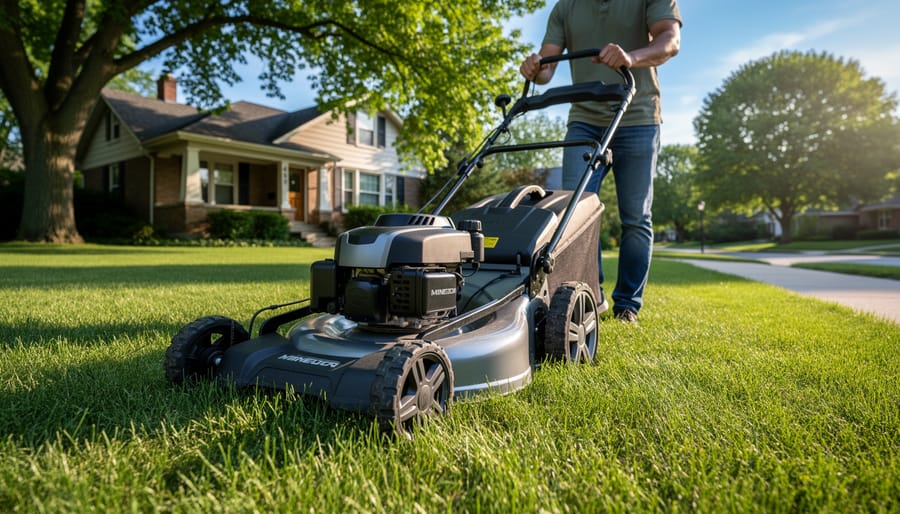
Mow your Minnesota lawn to 3-3.5 inches height, a specific recommendation from University of Minnesota Extension research that strengthens root systems, crowds out weeds naturally, and reduces watering needs by up to 30%. This height isn’t arbitrary—it’s based on decades of turfgrass studies conducted right here in our challenging climate, where cool-season grasses dominate and face unique stressors from harsh winters and variable summers.
Set your mower blade one notch higher than you think necessary. Most Minneapolis and St. Paul ordinances prohibit grass exceeding 8-12 inches, giving you plenty of room to follow U of MN’s science-backed guidance while staying compliant with local regulations. The sweet spot between optimal grass health and city requirements exists comfortably in that 3-4 inch range during peak growing season.
Remove only one-third of the grass blade length per mowing session, following the university’s “one-third rule” that prevents shock to your lawn and eliminates the need to bag clippings. Those clippings return valuable nitrogen to your soil—equivalent to one full fertilizer application per season—supporting the sustainable practices Minnesota’s extension service champions.
Time your mowing for mid-morning after dew dries but before afternoon heat stresses the grass. This Minnesota-specific timing accounts for our climate patterns and reduces disease susceptibility, a concern extension researchers consistently emphasize for our region’s common grass varieties like Kentucky bluegrass and fine fescue blends.
Understanding University of Minnesota’s Lawn Care Research
Why U of MN Extension Matters for Your Lawn
When you’re looking for lawn care advice, you want information you can actually trust—especially when it comes to Minnesota’s unique growing conditions. That’s where the University of Minnesota Extension really shines. Unlike generic lawn care tips you might find elsewhere, U of MN recommendations are backed by decades of turfgrass research conducted right here in our northern climate.
The Extension’s researchers have spent years studying how different grass varieties, mowing heights, and maintenance practices perform through our harsh winters and humid summers. They test everything from cold tolerance to disease resistance at their research stations, so their guidance isn’t just theoretical—it’s proven to work in Minnesota soil and weather patterns.
What makes this especially valuable for homeowners is how their advice bridges the gap between what works scientifically and what’s practical for your yard. They understand that you’re dealing with clay soils, spring freezes in May, and the reality of juggling lawn care with local mowing ordinances. Their research-based approach emphasizes sustainable practices that reduce water use, minimize chemical inputs, and create healthier lawns that naturally resist pests and diseases.
This locally-focused expertise matters because following generic southern lawn care advice in Minnesota can actually harm your grass. The Extension’s climate-specific recommendations help you work with our northern growing season rather than against it, leading to a lawn that thrives without excessive effort or environmental impact.
Core Mowing Guidelines from U of MN Research
The University of Minnesota Extension has spent decades researching what makes lawns thrive in our unique climate, and their mowing recommendations are refreshingly straightforward. Let’s dive into what they’ve discovered.
First up is mowing height, and this is where many of us have been getting it wrong. U of MN research shows that maintaining your grass between 2.5 and 3.5 inches is the sweet spot for Minnesota lawns. I know it might look a bit shaggier than that golf-course cut some neighbors aim for, but trust me on this one. Taller grass develops deeper roots, which means better drought tolerance and fewer weeds muscling their way in. During peak summer heat, lean toward that 3.5-inch mark to help your lawn stay resilient.
The university’s second golden rule is the one-third principle, which is elegantly simple: never remove more than one-third of the grass blade in a single mowing session. If your grass is 3 inches tall, cut it when it reaches 4.5 inches. This prevents shock to the grass plants and keeps them healthier overall. Different mowing methods can help you achieve this consistency.
As for frequency, forget the rigid weekly schedule. Minnesota’s growing season varies dramatically, so let the grass tell you when it needs cutting. During spring’s explosive growth, you might mow twice weekly, while late summer often requires just once every ten days. Finally, consider seasonal adjustments: raise your mower deck slightly in summer for heat protection and lower it moderately for the final fall mowing to discourage snow mold.
Minnesota Lawn Mowing Regulations You Need to Know
Municipal Height and Maintenance Ordinances
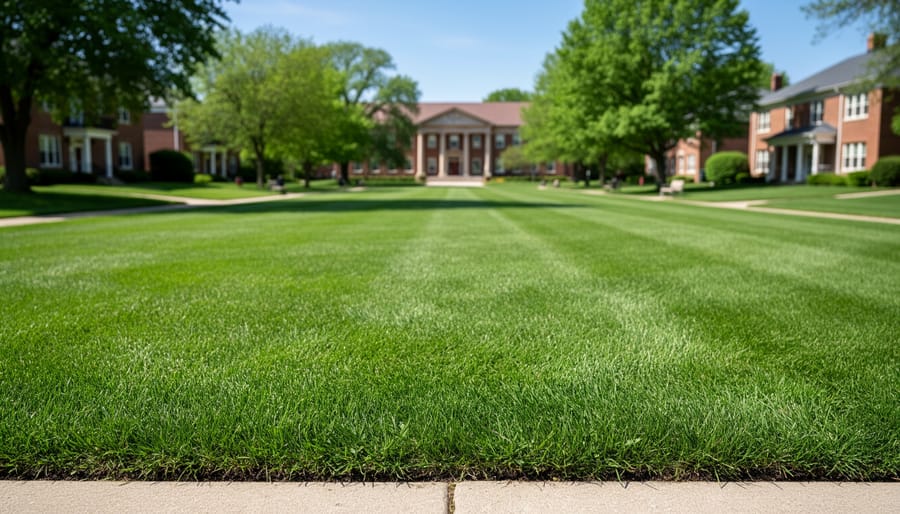
While the University of Minnesota Extension offers fantastic guidance on optimal lawn height for ecological health, you’ll still need to navigate your local municipality’s rules about grass height. Most Minnesota cities have ordinances that cap lawn height between 8 and 12 inches, which fortunately aligns reasonably well with sustainable practices if you’re mindful about timing your mows.
Minneapolis and St. Paul each have their own approaches to lawn mowing regulations. Minneapolis generally requires grass and weeds to stay below 8 inches, while St. Paul’s ordinance typically sets the limit at 8 inches as well, though both cities make exceptions for designated natural areas or rain gardens if properly registered. Smaller communities across Minnesota vary considerably, with some rural townships having no height restrictions at all, while suburban areas often maintain strict standards.
Enforcement usually begins with a neighbor complaint or routine inspection, followed by a written notice giving you a specified timeframe to comply, often 5 to 10 days. If you don’t mow within that period, the city may hire a contractor to cut your lawn and bill you for the service, plus administrative fees that can make it surprisingly expensive.
The good news? You can practice sustainable lawn care within these limits. Maintaining grass at 4 to 6 inches during most of the season keeps you compliant while supporting healthier turf. During peak growing season, you might need to mow more frequently, but you can still avoid cutting too short, which benefits both your lawn’s resilience and local pollinators who appreciate slightly taller grass.
Noise Restrictions and Mowing Time Windows
Let me share some practical guidance on timing your mowing to keep both your neighbors and local ordinances happy. Most Minnesota communities enforce noise restrictions that typically prohibit lawn mowing before 7 or 8 a.m. on weekdays, with some extending the start time to 9 a.m. on weekends. Evening cutoffs usually fall between 8 and 10 p.m., depending on your municipality.
These mowing time restrictions exist for good reason—gas-powered mowers typically produce 85-95 decibels, roughly equivalent to standing next to a running motorcycle. Even modern four-stroke engines remain quite loud during those peaceful early morning hours when sound travels further.
Weekend restrictions tend to be stricter, often starting at 9 a.m. Saturday and sometimes prohibiting mowing entirely before noon on Sundays. I always recommend checking your specific city ordinances, as they can vary significantly even between neighboring communities.
From a sustainability perspective, this actually works in your favor. Mowing during mid-morning allows dew to evaporate, reducing disease risk and creating cleaner cuts that heal faster. If early mowing is essential for your schedule, consider switching to an electric or battery-powered mower, which typically operates at 65-75 decibels—quiet enough that many ordinances permit earlier use.
Environmental and Water Quality Regulations
Minnesota takes water quality seriously, and your lawn care practices play a bigger role than you might think! The state has implemented thoughtful regulations designed to protect our lakes, rivers, and groundwater—and they’re surprisingly easy to follow once you understand the why behind them.
First up is the phosphorus rule. Since 2002, Minnesota has restricted phosphorus in lawn fertilizers unless you’re establishing new turf or a soil test shows deficiency. Phosphorus runoff fuels algae blooms in our beautiful waters, so most fertilizers you’ll find now are phosphorus-free. Look for that middle number on the fertilizer bag to be zero (like 25-0-10). University of Minnesota research confirms that established lawns rarely need phosphorus anyway, so this regulation actually saves you money while protecting the environment.
Grass clipping management matters too. While leaving clippings on your lawn is ideal for soil health, Minnesota municipalities often prohibit blowing or raking them into streets, storm drains, or waterways. Those clippings carry nutrients directly into water systems, contributing to pollution. Keep them on your lawn where they belong—they’ll decompose and feed your grass naturally.
Finally, if your property borders lakes or streams, you’ll need to maintain buffer zones. These vegetated areas filter runoff before it reaches water. Requirements vary by municipality, but typically include restrictions on mowing right up to the water’s edge. Check with your local government for specific setback requirements—it’s about being a good steward of Minnesota’s precious water resources.
Bridging Research and Compliance: Practical Mowing Strategies
The Sustainable Mowing Schedule That Works
Here’s a practical mowing schedule that brings together University of Minnesota research and real-world Minnesota living. The key is flexibility within a framework that keeps your lawn healthy and your neighbors happy.
During Minnesota’s active growing season from May through early September, plan to mow when your grass reaches about 4 inches tall, cutting it back to 3 inches. For most lawns receiving adequate moisture, this means mowing every 5-7 days in peak spring growth, stretching to every 7-10 days during summer’s slower growth period. The U of MN Extension emphasizes that you’re responding to grass height, not the calendar, which is both more sustainable and better for your lawn’s health.
Timing matters for community harmony too. Most Minnesota municipalities restrict mowing to between 7 AM and 9 PM on weekdays, with later start times on weekends. Check your local ordinances, and remember that following mowing etiquette means choosing mid-morning or early evening when possible. Your grass is driest then anyway, giving you a cleaner cut.
As fall approaches, maintain that 3-inch height through October, then drop to 2.5 inches for your final mowing. This prevents snow mold without scalping your lawn. In early spring, start at 2.5 inches for the first cut, gradually raising your mower deck as temperatures warm.
This rhythm works because it mirrors how grass actually grows in Minnesota’s climate while respecting your community. You’re not fighting nature or annoying neighbors—you’re working with both.
Equipment Choices That Meet Regulations and Research Standards
Choosing the right mower makes all the difference when you’re following University of Minnesota recommendations while staying compliant with local noise ordinances. Let’s explore equipment options that help you maintain that ideal 3 to 3.5-inch height without disturbing the peace.
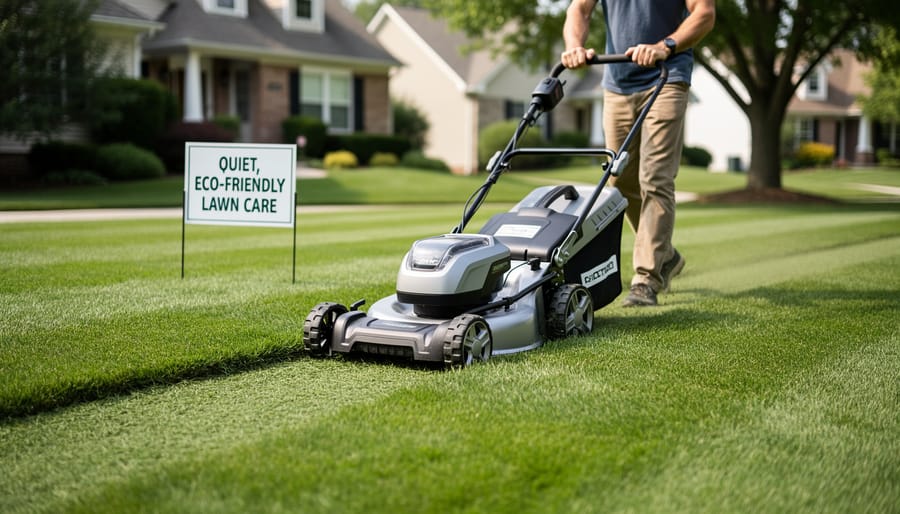
Reel mowers are making a comeback, and for good reason. These quiet, eco-friendly options produce zero emissions and won’t upset neighbors with early morning mowing sessions. They work beautifully for smaller lawns and provide the cleanest cut, which U of MN research shows helps grass recover faster. Modern reel mowers like the Fiskars StaySharp or American Lawn Mower Company models easily adjust to proper cutting heights.
For larger properties, electric and battery-powered rotary mowers offer an excellent middle ground. They’re significantly quieter than gas models, typically operating at 75 decibels compared to gas mowers’ 95 decibels, helping you comply with most municipal noise restrictions. The EGO Power Plus and Greenworks Pro lines receive consistently high marks for maintaining consistent cutting heights across various grass conditions. These battery models now run 45 minutes or more on a single charge, plenty for most residential lawns.
If you’re managing an established lawn, rotary mowers with adjustable deck heights work best. Look for models with easy-to-use height adjustment levers and sharp blades. Remember, U of MN Extension emphasizes that blade sharpness matters as much as mower type. Dull blades tear grass rather than cutting cleanly, leaving your lawn vulnerable to disease regardless of how environmentally friendly your equipment choice might be.
Grasscycling: The U of MN-Approved Regulation Solution
Here’s the good news: the practice the University of Minnesota recommends most strongly also happens to be the easiest way to meet waste reduction requirements. Grasscycling, which simply means leaving your grass clippings on the lawn after mowing, is a win-win solution that satisfies both environmental regulations and lawn health goals.
U of MN Extension research confirms that grass clippings decompose quickly, returning valuable nitrogen and moisture to your soil. In fact, clippings can provide up to 25% of your lawn’s annual fertilizer needs. This means you’re not just complying with ordinances that restrict yard waste disposal, you’re actually improving your lawn while reducing the time and money spent on fertilization.
For effective grasscycling, follow the one-third rule: never remove more than one-third of the grass blade height in a single mowing. This keeps clippings short enough to filter down between grass blades rather than clumping on top. Mow when grass is dry, and keep your mower blade sharp to ensure clean cuts that decompose faster. If you’re mowing weekly during peak growing season, your clippings will be small enough to disappear within days, feeding your lawn naturally while keeping you on the right side of local regulations.
Special Circumstances and Exceptions
No Mow May and Low-Mow Movements
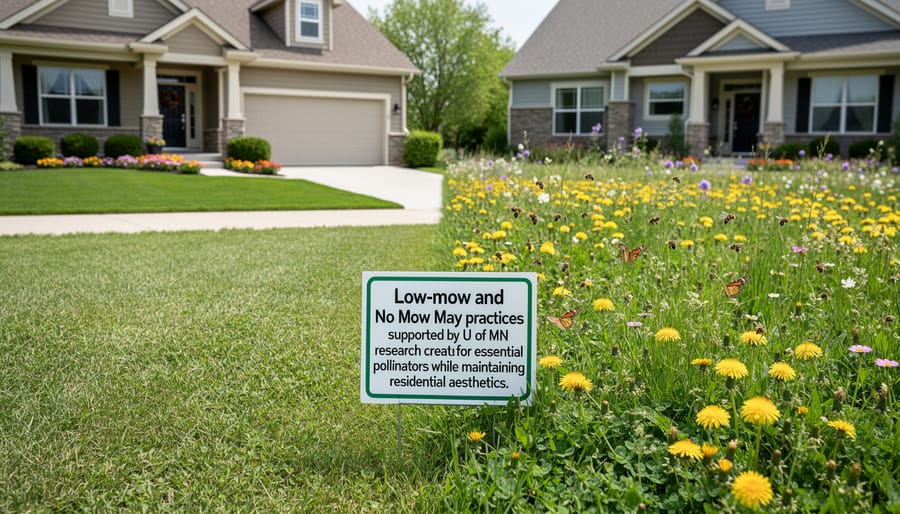
Here’s some exciting news for those of us who’ve been eyeing that unmowed lawn with a mix of guilt and laziness: University of Minnesota researchers have found that delaying mowing actually helps our pollinator friends thrive! Their studies show that letting grass and early-blooming flowers grow taller in spring provides crucial nectar sources when pollinators need them most.
The No Mow May movement, which started in the UK and gained scientific backing from U of MN research, encourages homeowners to skip mowing during May. Several Minnesota municipalities have embraced this approach, with cities like Edina and Minneapolis relaxing enforcement of height restrictions during peak pollinator season. The data is compelling: lawns left unmowed for just one month can support five times more bee species than regularly mowed lawns.
If you’re interested in participating, check your local ordinances first. Many communities now allow taller grass in May specifically, while others require permits or have designated pollinator-friendly zones. You don’t need to go completely wild either. A “low-mow” approach works too: raise your mower deck to the highest setting and mow just pathways or front yards if regulations require visibility from streets. The key is reducing mowing frequency and letting those dandelions and clover bloom, transforming your lawn into a mini pollinator buffet without abandoning it entirely.
Dealing with Violations and Neighbor Concerns
Receiving a city notice about your lawn can feel stressful, but staying calm and proactive makes all the difference. If you get a violation notice, respond promptly and document your lawn care practices. Many municipalities offer grace periods or educational first warnings, especially if you’re implementing research-based sustainable practices from U of MN Extension.
When neighbors express concerns about taller grass or diverse plantings, consider it an opportunity for friendly conversation rather than confrontation. Explain that you’re following University of Minnesota recommendations for sustainable lawn care, which promotes healthier soil and reduces environmental impact. Share that allowing grass to grow to 3-4 inches conserves water and strengthens root systems. Sometimes a simple chat over the fence, perhaps with a printed Extension fact sheet in hand, can turn skeptics into supporters.
If your sustainable practices conflict with local ordinances, research whether your city offers variance or exemption processes. Many Minnesota communities now recognize pollinator lawns and alternative landscaping options. Submit a formal variance request explaining the environmental benefits and citing U of MN research to support your case. Include photos of well-maintained sustainable landscapes as examples. Remember, you’re not just advocating for your yard, you’re potentially helping shift community standards toward more sustainable practices that benefit everyone.
Here’s the wonderful news: University of Minnesota research and local lawn care regulations aren’t opposing forces—they’re actually working toward the same goal of healthier, more sustainable landscapes. When you dig into the science behind U of MN Extension’s recommendations, you’ll find they align beautifully with what most municipal codes are trying to achieve: reducing waste, conserving water, and creating resilient green spaces that benefit everyone.
Instead of viewing compliance as just another box to check, think of it as your gateway to implementing proven, research-backed practices that make your lawn healthier while reducing your workload. Those mowing height recommendations? They’re based on decades of turfgrass research showing what actually works in Minnesota’s unique climate.
Take some time to review your specific city or county ordinances—they’re usually available online and surprisingly straightforward. Then explore the wealth of free resources at U of MN Extension, where you’ll find everything from soil testing guides to seasonal maintenance calendars. For even more practical strategies, check out our comprehensive lawn care guide that combines regulatory compliance with sustainable practices. Your lawn will thank you, your neighbors will appreciate it, and you’ll be doing your part for Minnesota’s environmental future.