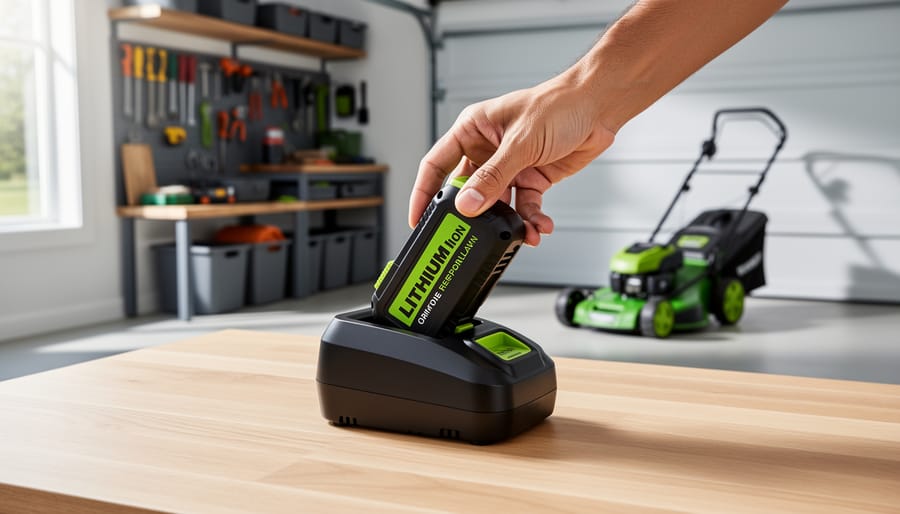
Charge your battery-powered lawn tools immediately after each use, even if the battery isn’t fully depleted—modern lithium-ion batteries perform best with regular top-ups rather than complete drain cycles. Store batteries at room temperature between 50-77°F and remove them from equipment during off-season months, maintaining a 40-60% charge level to prevent degradation. Clean battery contacts monthly with a dry cloth to ensure optimal connection, and always use the manufacturer-designated charger to avoid voltage mismatches that can permanently damage cells.
The shift to battery-powered smart yard equipment represents one of the most significant advances in sustainable lawn care, but many gardeners unknowingly sabotage their investment through improper charging habits. That expensive mower battery that died after just one season? It probably wasn’t defective—it was likely charged incorrectly. Understanding battery chemistry isn’t just technical minutiae; it directly impacts your wallet, your weekend plans, and your environmental footprint.
Most battery failures stem from preventable charging mistakes: leaving batteries on the charger for days, storing them in freezing garages, or waiting until they’re completely dead before recharging. These common practices can reduce battery lifespan by 50% or more. The good news? Proper charging techniques are surprisingly simple and become second nature quickly. Whether you’re troubleshooting a battery that won’t hold a charge or maximizing the lifespan of new equipment, mastering these fundamentals will save you hundreds of dollars and countless frustrations while supporting your commitment to emission-free yard care.
Why Battery Charging Matters More Than You Think
The Real Cost of Poor Charging Habits
Let me share something that might surprise you: poor charging habits can cost you hundreds of dollars over the lifetime of your battery-powered lawn equipment. I’ve seen this play out countless times with fellow gardeners who wonder why they’re replacing batteries every couple of years when these systems should last much longer.
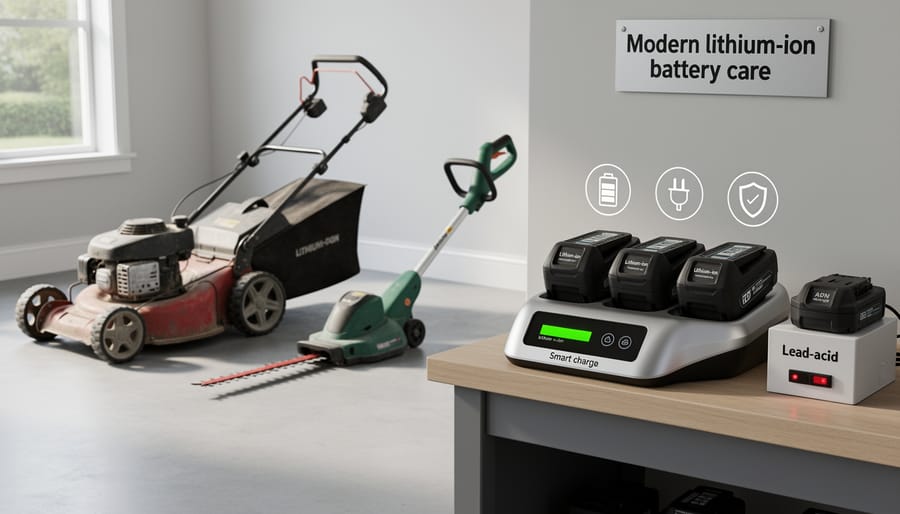
Here’s the reality. A quality lithium-ion battery for your mower typically costs between $150 to $400 to replace. When you consistently drain your battery to zero before charging, leave it plugged in continuously, or store it in extreme temperatures, you’re cutting its lifespan in half or worse. What should have been a five to seven-year battery becomes a two to three-year expense. That’s an extra $300 to $800 you’re throwing away during your equipment’s lifetime.
Beyond the financial hit, there’s the practical frustration. Picture this: you’re halfway through mowing on a beautiful Saturday morning, and your battery dies unexpectedly. Poor charging habits lead to reduced capacity and unpredictable performance, meaning your equipment simply won’t hold the charge you’re expecting. You’re left with a half-finished lawn and a wasted afternoon.
The environmental cost matters too. Every prematurely discarded battery adds to landfill waste, undermining the very sustainability benefits that likely drew you to battery-powered equipment in the first place. By adopting proper charging practices, you’re not just protecting your wallet and schedule, you’re honoring your commitment to greener gardening.
Understanding Your Smart Yard Battery System
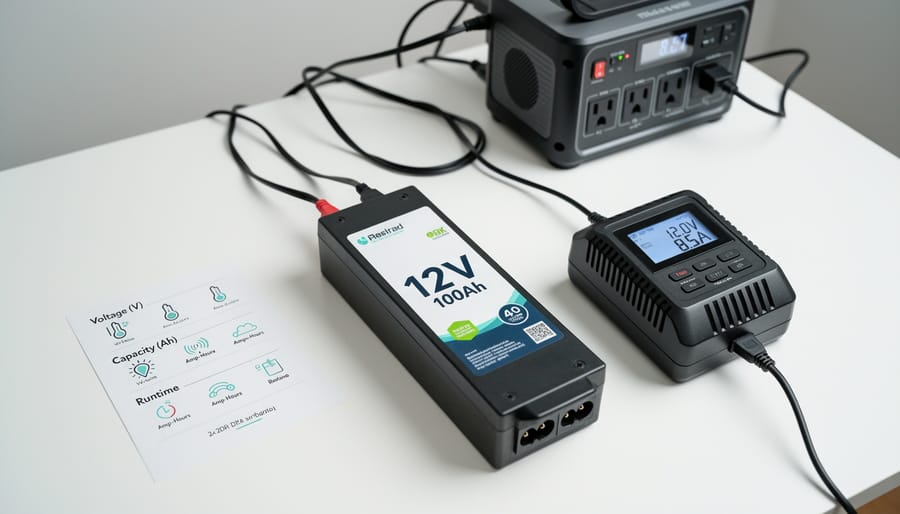
What Those Battery Numbers Actually Mean
Let me break down those mysterious battery specifications you’ll find on your lawn equipment in plain English. Think of them as your battery’s vital statistics – once you understand them, choosing and maintaining your equipment becomes much simpler.
Voltage (V) is essentially the power’s pressure. Most cordless lawn tools run on 20V, 40V, or 80V systems. Higher voltage generally means more muscle for demanding jobs like cutting thick grass or powering robot mowers up steep slopes. It’s similar to water pressure in your garden hose – higher pressure pushes through tougher tasks more easily.
Amp-hours (Ah) measure your battery’s fuel tank size. A 4.0Ah battery holds twice the energy of a 2.0Ah battery at the same voltage. This number tells you how long you can work before recharging. If you’ve got a larger yard, you’ll want higher amp-hours to finish the job without stopping.
Watt-hours (Wh) combine both measurements and give you the complete picture of your battery’s total energy capacity. Calculate it by multiplying voltage times amp-hours. For example, a 40V 5.0Ah battery delivers 200Wh of energy. This specification is particularly helpful when comparing batteries across different voltage platforms.
Understanding these numbers helps you match the right battery to your needs without overspending on unnecessary capacity or underbuying and facing constant recharges. It’s about finding that sustainable sweet spot for your specific yard size and equipment demands.
Smart vs. Standard Charging Systems
When I first switched to battery-powered lawn equipment, I assumed all chargers worked the same way—plug it in, wait for the light, and you’re done. But after noticing my batteries weren’t lasting as long as expected, I learned there’s a real difference between standard and smart charging systems, and it matters more than you might think.
Standard chargers are straightforward devices that deliver a constant charge until you unplug them. They get the job done, but they don’t communicate with your battery. This means they can’t adjust their charging rate based on temperature, current charge level, or battery condition. The result? You might be overcharging your batteries without realizing it, which gradually reduces their capacity and lifespan.
Smart charging systems, on the other hand, are like having a personal battery health coach. These intelligent chargers monitor your battery’s status in real-time and adjust the charging process accordingly. They prevent overcharging by automatically switching to a maintenance mode once the battery reaches full capacity. Many also optimize charging speed based on temperature—slowing down in extreme heat or cold to protect the battery cells. Some even diagnose potential battery issues before they become problems.
The investment in smart charging technology typically pays for itself through extended battery life and better performance, making it a practical and sustainable choice for your gardening equipment.
The Right Way to Charge Your Smart Yard Equipment
The First Charge: Setting Up for Success
When you first unbox your shiny new battery-powered mower or trimmer, it’s tempting to charge it up and get straight to work. But taking a few extra minutes to properly charge that battery for the first time can significantly extend its lifespan, saving you money and reducing environmental waste down the road.
Most modern lithium-ion batteries used in lawn equipment come partially charged from the factory, typically around 30-50%. While you could technically use them right away, manufacturers recommend a full initial charge before first use. This helps calibrate the battery’s internal management system and ensures all cells are balanced and working together efficiently.
Here’s what to do: Remove any protective tabs or packaging from the battery contacts, then place it on the charger in a cool, dry location away from direct sunlight. Let it charge uninterrupted until the indicator light signals completion, usually 60-90 minutes for most lawn care batteries. Avoid the common mistake of removing it early “just to test” – patience here pays dividends later.
Once fully charged, you’re ready to tackle your yard work knowing you’ve given your battery the best possible start for years of reliable, sustainable performance.
Daily and Seasonal Charging Routines
During the busy growing season, your charging routine should align with your mowing schedule. For most battery-powered lawn equipment, the sweet spot is charging after each use, even if the battery isn’t completely depleted. Think of it like this: you wouldn’t wait until your phone is dead before plugging it in, right? The same principle applies here. After mowing, let your battery cool down for about 15-20 minutes before charging. This cooling period helps preserve battery health and ensures safer, more efficient charging.
Here’s a practical tip from my own experience: I keep a simple chart on my garage wall noting when I last charged each battery. During peak season (typically spring through early fall), I’m mowing weekly, so my batteries get regular workout sessions. This frequent use actually keeps them in better condition than sporadic charging.
When winter arrives and your mower takes a well-deserved rest, your charging strategy needs to shift. The key here is maintaining about a 40-60% charge level during storage. Check your batteries monthly and give them a top-up if they’ve dropped below 40%. Store them in a cool, dry place away from extreme temperatures. Your basement is usually perfect, but avoid unheated garages in freezing climates. This off-season care ensures your batteries wake up refreshed and ready when spring returns, extending their lifespan by years.
Temperature Matters: Where to Charge Your Batteries
Here’s a tip that might surprise you: your garage temperature matters just as much as your charging technique! I learned this the hard way when my mower batteries started losing capacity during a particularly hot summer. It turns out that batteries are surprisingly sensitive to temperature, much like those tender seedlings we protect from frost.
The sweet spot for charging your lawn equipment batteries is between 50-86°F (10-30°C). When temperatures climb above 95°F or drop below freezing, the chemical reactions inside your battery go haywire. Hot conditions can cause overcharging and permanent capacity loss, while cold temperatures slow the charging process and may even prevent proper charging altogether.
Think of it this way: you wouldn’t leave your prized tomato plants in extreme heat or frost, right? Your batteries deserve the same consideration. If your garage gets sweltering in summer, move your charging station to a cooler spot like a basement or shaded area. In winter, bring batteries inside to a temperature-controlled space before charging.
This simple adjustment not only extends battery life but supports sustainable practices by reducing waste and the need for premature replacements. Your wallet and the environment will thank you!
Common Charging Mistakes That Kill Your Batteries
The Overnight Charging Debate
We’ve all been there—you finish mowing in the evening, plug in your battery, and wonder if leaving it on the charger until morning will harm its lifespan. Here’s the good news: modern lithium-ion batteries in quality lawn equipment typically include smart charging technology that prevents overcharging. Once your battery reaches full capacity, these intelligent systems automatically switch to trickle or maintenance mode, protecting your investment while you sleep.
However, this convenience comes with a few caveats. Older chargers without smart technology can indeed stress batteries if left connected for extended periods. Check your equipment manual to confirm whether your charger has automatic shut-off features. If you’re using basic chargers from older equipment, it’s better to set a reminder and unplug once charging completes—usually within 1-3 hours depending on battery size.
From a sustainability perspective, overnight charging with smart chargers is perfectly acceptable and won’t significantly impact your battery’s long-term health. The key is knowing your equipment’s capabilities and following manufacturer guidelines. When in doubt, investing in a quality smart charger pays dividends in battery longevity and peace of mind.
Partial Charging and Battery Memory Myths
Remember when you had to fully drain your cordless drill before recharging it? Good news: those days are long gone! If you’ve been babying your battery-powered mower or trimmer by waiting until it’s completely dead before plugging it back in, you can relax. Modern lithium-ion batteries that power today’s smart yard equipment don’t suffer from the old “battery memory” problem that plagued earlier nickel-cadmium batteries.
In fact, partial charging is actually better for your lithium-ion batteries. Think of it like snacking throughout the day instead of waiting until you’re absolutely starving. Topping off your battery after each use, even if it’s only dropped to 60 or 70 percent, helps extend its overall lifespan. You’re not “confusing” the battery or reducing its capacity by doing this.
Here’s another myth worth busting: you don’t need to condition new lithium-ion batteries through multiple complete discharge cycles. Unlike their older cousins, these batteries are ready to work right out of the box. Simply charge them up according to the manufacturer’s guidelines and start mowing. This convenience is one of many reasons battery-powered equipment has become so popular among environmentally conscious gardeners who want reliable, sustainable lawn care solutions without the fuss.
Choosing the Right Charger for Your System
Fast Chargers: Speed vs. Battery Health
We’ve all been there – you need to tackle the lawn, but your battery-powered mower or trimmer is dead. Fast chargers seem like the perfect solution, promising a full charge in under an hour. And honestly, they’re incredibly convenient! But here’s what you should know: while these speedy chargers won’t immediately damage your battery, frequent use can gradually reduce its overall lifespan.
Think of it like this: fast charging generates more heat, and batteries don’t love heat. It’s similar to how running your mower on the hottest day of summer requires a bit more care. For most weekend gardeners, using a fast charger occasionally when you’re in a pinch is perfectly fine. Your battery can handle it.
However, if you’re charging daily or multiple times per week, consider using the standard charger that came with your equipment for routine charges. Save the fast charger for those times when you genuinely need that quick turnaround. This balanced approach gives you convenience when necessary while protecting your investment in quality battery-powered tools. Remember, replacing batteries isn’t cheap or particularly sustainable, so a little patience during regular charging sessions goes a long way toward keeping your equipment running strong for years.
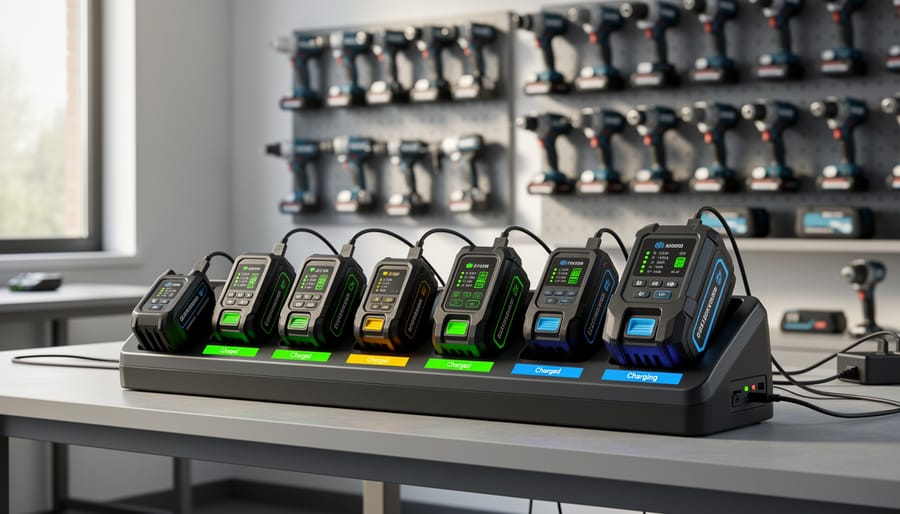
Multi-Battery Charging Stations
If you’re like many gardening enthusiasts who’ve embraced battery-powered tools, you probably have quite the collection: a string trimmer, hedge clipper, blower, and maybe even equipment for automated lawn care. Managing multiple batteries can quickly become chaotic without a proper charging station.
Multi-battery charging stations are game-changers for organization and efficiency. These hubs allow you to charge several batteries simultaneously, eliminating the frustration of waiting for one battery to finish before charging the next. Look for stations compatible with your tool brand, as most manufacturers design systems where batteries work across their entire product line.
When choosing a charging station, consider models with individual LED indicators that show each battery’s charge status at a glance. Some advanced options even prioritize which batteries charge first based on their depletion levels. Wall-mounted stations save valuable workbench space and keep cords tidy.
From a sustainability perspective, efficient charging stations reduce energy waste by optimizing charge cycles and preventing overcharging. They also extend battery lifespan by maintaining proper charging protocols across all your batteries, ultimately reducing the number of replacements you’ll need over time.
Maximizing Battery Life Through Smart Charging
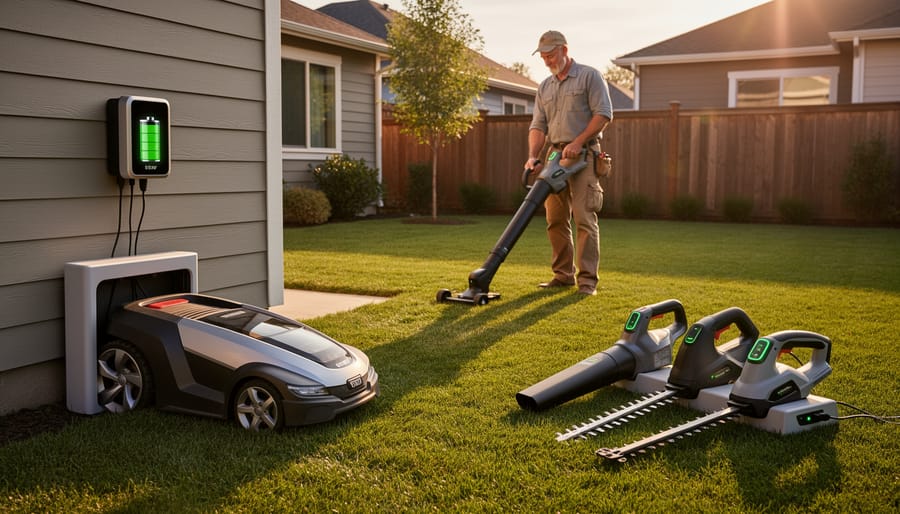
The 20-80 Rule Explained
Here’s something that might surprise you: letting your battery-powered lawn equipment drain to empty or charging it to 100% every time can actually shorten its lifespan significantly. The sweet spot? Keeping your batteries between 20% and 80% charge whenever possible.
This practice is rooted in solid battery science. Lithium-ion batteries, which power most modern lawn equipment, experience less stress and degradation when they operate in this middle range. Think of it like your own energy levels – you’re most productive when you’re neither exhausted nor overstimulated, right? Batteries work similarly.
When you consistently charge to 100%, the battery cells experience higher voltage stress. Conversely, draining below 20% can strain the cells and reduce their ability to hold a charge over time. By staying in that comfortable middle zone, you’re essentially giving your battery a longer, healthier life.
Now, I know what you’re thinking: “But won’t I run out of power mid-mow?” For most residential lawns, 60% charge provides plenty of juice. If you have a larger property, consider investing in a second battery rather than always maxing out to 100%. This approach is not only better for battery longevity but also more sustainable, reducing how often you’ll need to replace expensive battery packs.
Off-Season Storage and Maintenance Charging
When winter arrives and your lawn equipment heads into hibernation, proper battery storage becomes crucial for maintaining long-term performance. Think of it like tucking your tools in for a long nap – you want them to wake up refreshed and ready to go come spring.
Start by giving your batteries a good charge to about 40-60% capacity before storing them away. This partial charge is the sweet spot that prevents both the stress of being fully charged and the damage that comes from complete depletion. Store batteries in a cool, dry location where temperatures remain between 40-60°F, like a basement or insulated garage. Avoid unheated sheds where freezing temperatures can cause permanent damage to the cells.
Here’s where many gardeners slip up: you can’t just charge them once and forget about them. Check your batteries monthly and give them a maintenance charge if they’ve dropped below 40%. Set a calendar reminder on your phone – it’s an easy task that takes just a few minutes but can add years to your battery’s lifespan.
Remove batteries from the equipment itself during storage. This prevents any phantom drain and protects both the battery and tool from potential moisture damage. Keep batteries away from metal objects that could cause short circuits, and always store them in their original cases or protective sleeves. This simple winter routine ensures your sustainable lawn care system stays reliable season after season.
Troubleshooting Charging Problems
When to Replace vs. When to Troubleshoot
Knowing when to troubleshoot versus replace can save you money and reduce waste, which is always a win for sustainable gardening. If your battery won’t hold a charge after trying different outlets and cleaning the contacts, it might be time for a replacement. Most lithium-ion batteries in lawn equipment last 3-5 years or 300-500 charge cycles. Signs your battery has reached its end include significantly reduced runtime (less than half the original), overheating during charging, visible swelling or damage, and refusing to charge at all despite troubleshooting efforts.
On the other hand, issues like occasional charging failures, slightly diminished capacity, or needing a firmware update are usually fixable. Before replacing anything, check your charger with another compatible battery if possible. Sometimes the charger fails before the battery does.
Here’s a sustainable approach: if your battery still holds 60-70% of its original capacity, keep using it for lighter tasks like trimming while reserving newer batteries for heavy-duty mowing. This extends the useful life of older batteries and delays their entry into the waste stream. When replacement is inevitable, always recycle old batteries at designated collection points rather than tossing them in the trash. Many retailers offer recycling programs specifically for power tool and lawn equipment batteries.
Sustainable Battery Charging Practices
As gardening enthusiasts, we care deeply about the environment, and that extends to how we charge our battery-powered lawn equipment. The good news is that making sustainable charging choices doesn’t require sacrificing performance or convenience.
One of the simplest ways to reduce your carbon footprint is charging during off-peak hours, typically late evening or early morning. Many power grids rely more heavily on renewable energy sources during these times, and you’ll often benefit from lower electricity rates too. Set a reminder on your phone or use a basic timer to make this a habit.
If you’re ready to take sustainability a step further, consider investing in solar charging solutions. Small portable solar panels can trickle-charge batteries for handheld tools like trimmers and hedge clippers, while larger setups can handle lawn mower batteries. I’ve found that combining solar charging with traditional charging creates a flexible system that keeps equipment ready while reducing grid dependence. Even partial solar charging makes a meaningful difference over time.
Energy-efficient charging also means being mindful of your habits. Remove batteries from chargers once they reach full capacity, as continued connection wastes electricity. Store batteries at moderate temperatures to maintain efficiency and reduce the energy needed for each charge cycle.
Eventually, every battery reaches the end of its lifespan. When that happens, never toss batteries in household trash. Lithium-ion and other rechargeable batteries contain valuable materials that can be recovered and harmful substances that shouldn’t enter landfills. Most home improvement stores and municipal recycling centers accept old batteries free of charge. Some manufacturers even offer trade-in programs, giving you credit toward replacement batteries while ensuring proper recycling.
By adopting these sustainable charging practices, you’re not just caring for your lawn equipment, you’re contributing to a healthier planet for future gardeners to enjoy.
Taking care of your battery-powered lawn equipment starts with smart charging habits, and the good news is that these practices are simple to implement right away. By following the guidelines we’ve covered, you’re not just protecting your investment in quality garden tools, you’re also contributing to a more sustainable approach to lawn care. Remember that proper charging reduces the frequency of battery replacements, which means less waste in landfills and fewer resources used in manufacturing new batteries.
Start today by checking your current charging setup. Are you storing batteries in a cool, dry place? Are you avoiding the temptation to leave them on the charger indefinitely? Small adjustments to your routine can add years to your battery’s lifespan and save you significant money over time. Your garden deserves tools that work reliably, and with these charging practices, you’ll ensure your equipment is always ready when you need it. Think of battery care as an extension of your commitment to sustainable gardening, one that benefits both your wallet and the planet with every charge cycle.