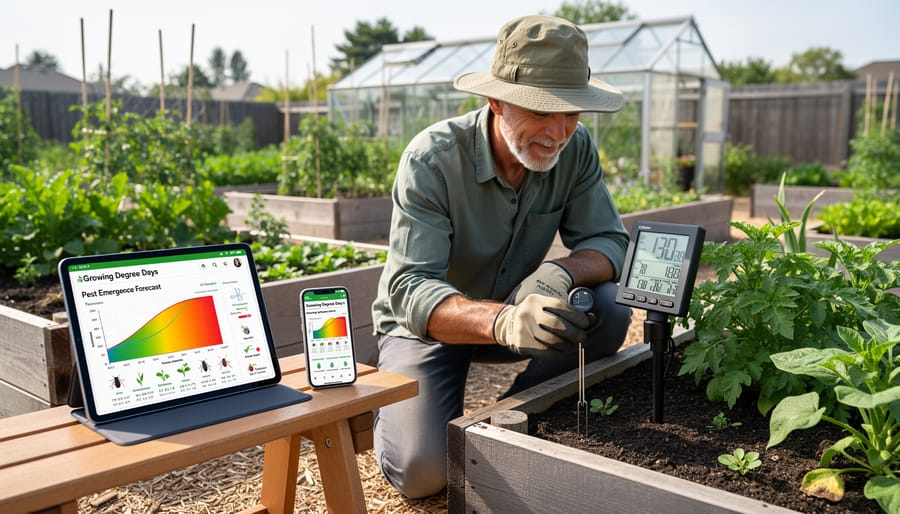
Monitor growing degree days starting in early spring to predict when aphids, scale insects, and spider mites will emerge on your ornamental plants. Download a free weather-based pest forecasting app or check your local cooperative extension’s pest alert system, which sends notifications when conditions favor specific pest outbreaks in your ZIP code.
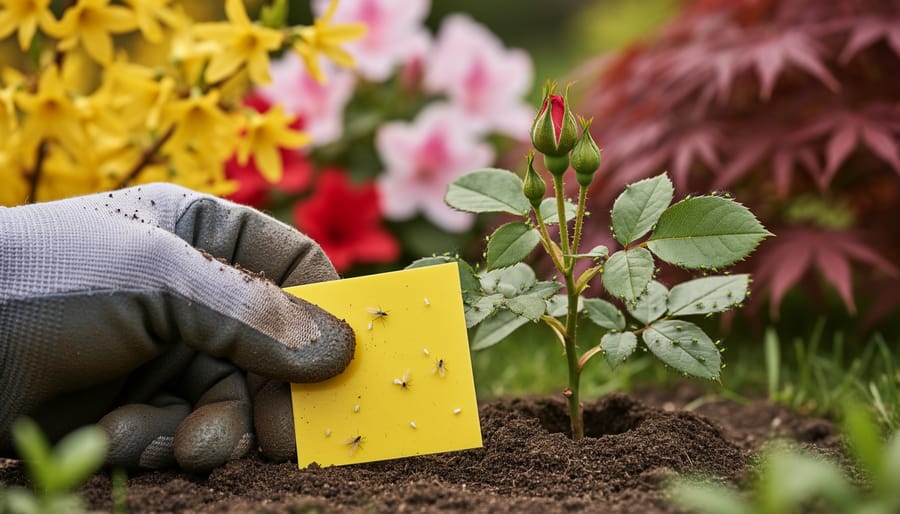
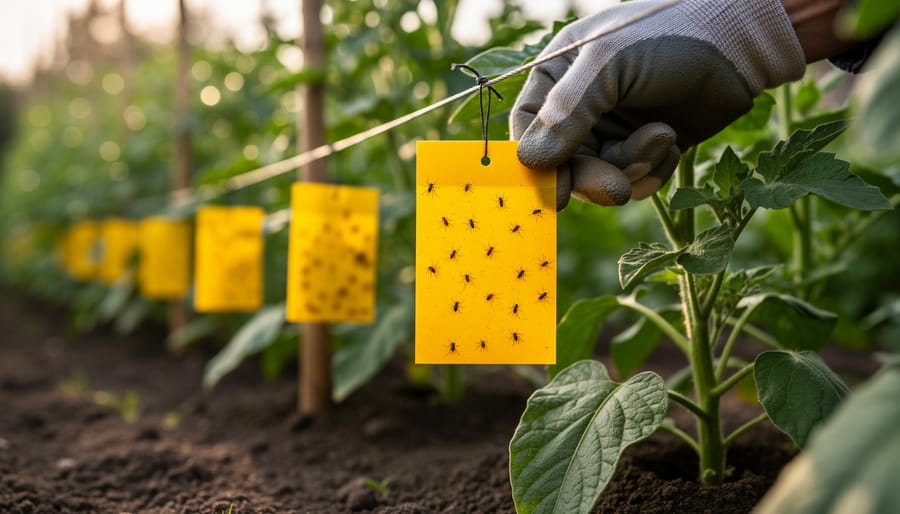
Install yellow sticky traps near susceptible plants like roses, azaleas, and Japanese maples by mid-March to catch the first sign of adult whiteflies, thrips, and leaf miners before populations explode. Count trapped insects weekly and take action when numbers double from one week to the next.
Record bloom times, first leaf emergence, and when you spot indicator plants like dandelions flowering in your landscape. These phenological markers reliably predict pest activity better than calendar dates alone. For example, when forsythia blooms, expect overwintering scale crawlers to become active within 7-10 days.
Create a simple pest journal noting temperature patterns, rainfall amounts, and which pests appeared when throughout the season. After two years, you’ll recognize your property’s unique pest cycles and can apply targeted treatments during vulnerable life stages, reducing the need for broad-spectrum pesticides.
The difference between a pest-ravaged garden and thriving ornamentals isn’t luck. It’s anticipation. By shifting from reactive spraying to predictive monitoring, you’ll protect your landscape investment while using fewer chemical interventions and supporting beneficial insects that naturally keep pest populations in check.
Why Ornamental Plants Need Different Pest Forecasting Approaches
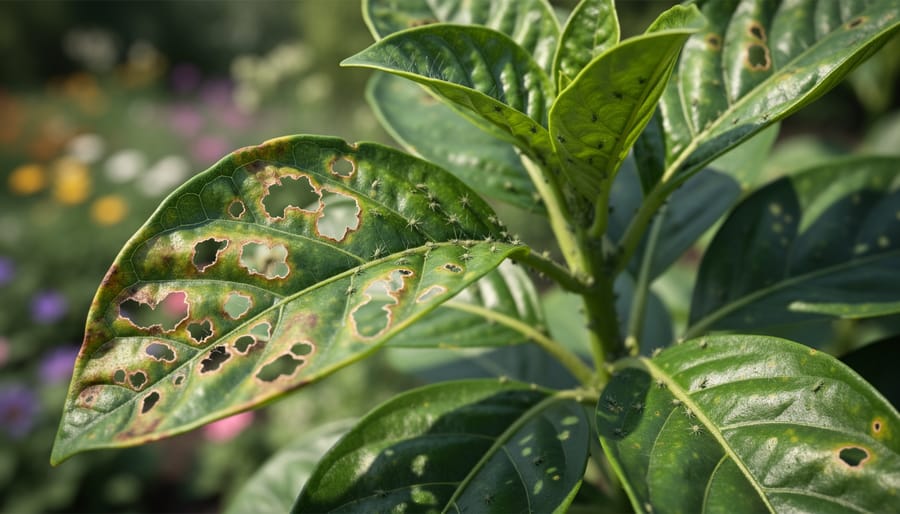
If you’ve ever watched a single aphid infestation turn your prized rose bush into a sticky, distorted mess seemingly overnight, you understand why ornamental plants need their own specialized approach to pest forecasting. Unlike your lawn, which can bounce back from a grub invasion with some overseeding, or vegetable crops where you might lose a harvest but can replant, ornamental plants present unique challenges that make prevention absolutely essential.
The biggest difference comes down to aesthetics versus function. When Japanese beetles chew holes in your hostas or spider mites cause unsightly stippling on your azaleas, the damage isn’t just about plant health—it’s about beauty. A tomato plant with some leaf damage can still produce perfectly good tomatoes, but an ornamental shrub with defoliated branches has lost its entire purpose in your landscape design. That visual damage often can’t be undone, even after the pests are gone. Brown spots stay brown, distorted leaves remain twisted, and some plants may take years to recover their shape and form.
Then there’s the incredible diversity factor. While lawns typically consist of a handful of grass species with similar pest pressures, ornamental gardens are botanical melting pots. You might have roses, hostas, hydrangeas, Japanese maples, and ornamental grasses all within a few square feet—each attracting different pests at different times. This complexity means you can’t rely on a one-size-fits-all forecasting approach.
Perhaps most importantly, many ornamental plants represent significant investments of both time and money. That mature Japanese maple you planted fifteen years ago or the specimen rhododendron you splurged on can’t simply be replaced without losing years of growth and character. This is why forecasting tools become invaluable—they help you stay ahead of problems before irreversible damage occurs. When you know adelgids typically emerge in early spring on your hemlocks or that spider mites peak during hot, dry July weather, you can monitor closely and intervene at the first sign of trouble, protecting both your plants and your investment.
Understanding the Pest Triangle: Timing, Temperature, and Triggers
Growing Degree Days: Your Pest Calendar
Here’s the thing about pests: they don’t follow our calendars. That Japanese beetle doesn’t check the date on your phone before deciding to emerge and munch on your roses. Instead, these little critters are remarkably tuned into temperature, responding to accumulated heat over time. This is where growing degree days become your secret weapon for predicting pest activity.
Growing degree days, or GDD, measure the accumulation of heat units above a certain threshold temperature. Think of it like a countdown timer that only runs when it’s warm enough for a particular pest to develop. Different insects need specific amounts of heat to complete their life stages, which means we can predict their appearance far more accurately than any calendar date ever could.
For example, black vine weevil adults typically emerge at around 450 GDD (base 50°F). Knowing this allows you to apply controls precisely when they’re most vulnerable, rather than spraying on a random date in May. Similarly, magnolia scale crawlers appear at approximately 2,200-2,400 GDD, while euonymus scale crawlers show up around 1,300-1,500 GDD.
The beauty of this system is its adaptability. A warm spring advances pest emergence, but your GDD tracking adjusts accordingly, keeping you ahead of the problem. You can calculate degree days manually using daily temperature records, or better yet, access free online calculators and apps that do the math for you based on your zip code.
Many university extension services provide region-specific GDD models for common ornamental pests. By consulting these resources and keeping simple records, you’ll shift from reactive pest control to proactive prevention, reducing pesticide use while protecting your plants more effectively. It’s sustainable gardening at its smartest.
Moisture and Weather Patterns That Signal Trouble
Mother Nature has a direct hotline to your ornamental garden’s pest population, and learning to read her signals can help you stay one step ahead of trouble. Understanding the connection between weather patterns and pest activity is like having a crystal ball for your landscape.
When we talk about moisture-related problems, we’re really discussing two main troublemakers: fungal diseases and moisture-loving insects. Both thrive when conditions are just right, and unfortunately, “just right” for them usually means challenging for your ornamentals. Extended periods of humidity above 80 percent create the perfect breeding ground for powdery mildew, black spot, and rust diseases. These fungi spread rapidly during warm, damp conditions, especially when foliage stays wet overnight.
Rainfall patterns tell an important story too. Heavy spring rains followed by warm temperatures trigger explosive aphid populations, as these soft-bodied insects multiply at astonishing rates. Similarly, slugs and snails become garden marauders after consistent rainfall, leaving their telltale slime trails and chewed leaves behind. I’ve noticed in my own garden that a week of evening rain showers practically rolls out the red carpet for these pests.
Conversely, drought stress weakens plants, making them more susceptible to spider mites, which actually prefer hot, dry conditions. It’s a delicate balance. Using weather-based forecasting techniques helps you anticipate these conditions before problems escalate.
Monitor your local weather forecast regularly, paying special attention to humidity levels and rainfall predictions. When extended wet periods are forecasted, consider preventive fungicide applications on susceptible plants. During prolonged dry spells, increase watering to maintain plant vigor and reduce spider mite pressure. This proactive approach, guided by weather awareness, transforms you from reactive problem-solver to strategic pest preventer.
Digital Tools and Apps That Actually Work for Ornamental Pest Forecasting
Weather-Based Prediction Apps
Modern weather-based prediction apps are game-changers for staying ahead of pest problems in your ornamental garden. These digital tools combine local weather data with pest life cycle information to alert you when conditions are ripe for infestations, letting you take preventive action before trouble starts.
One standout option is RainMachine, which primarily focuses on irrigation but includes insect pressure forecasts based on temperature and humidity patterns. The sustainability angle here is excellent since it helps you water efficiently while monitoring pest risks. The interface is intuitive, though the pest forecasting features require a learning curve to interpret properly. Another reliable choice is WeatherBug, which offers basic pest alerts tied to regional conditions. It’s free and user-friendly, making it perfect for beginners, but the pest data isn’t as detailed as specialized platforms.
For those willing to invest a bit more, Growing Degree Day calculators like those offered through university extension services provide highly accurate predictions for specific pests in your region. Many state universities offer these free through their websites. The downside? They’re often less polished than commercial apps and require you to understand degree-day accumulation, which sounds intimidating but is actually quite straightforward once you get the hang of it.
The real pro of weather-based prediction apps is their proactive approach, perfectly aligned with sustainable pest management by reducing unnecessary pesticide applications. However, they work best when you combine their forecasts with your own garden observations, creating a personalized early warning system that keeps your ornamentals healthy and thriving.
University Extension Services and Regional Forecasting Systems
One of the best-kept secrets in garden pest management is sitting right in your backyard—well, technically at your local university extension service. These incredible resources are typically free and offer region-specific pest forecasting that’s tailored to your exact area. Think of them as having a personal meteorologist, but for bugs!
Most land-grant universities maintain extension services that collect and analyze local pest activity data. They track growing degree days, monitor trap counts, and observe environmental conditions to predict when specific pests will emerge in your region. For ornamental gardens, this means you’ll know weeks in advance when aphids, Japanese beetles, or spider mites are likely to become active.
Accessing these resources is refreshingly simple. Start by searching for your state university’s extension website—just type “your state” plus “extension service” into any search engine. Once there, look for sections labeled “pest alerts,” “integrated pest management,” or “growing degree day calculators.” Many extensions also offer free email subscriptions that send weekly updates directly to your inbox.
Interpreting the information doesn’t require a science degree. Extension services typically present data with clear explanations of what it means for home gardeners. When you see a prediction for high aphid activity in two weeks, that’s your cue to inspect susceptible plants like roses and encourage beneficial insects. Some even provide spray timing recommendations, though we always encourage exploring sustainable control methods first. These forecasting tools empower you to act proactively, protecting your ornamentals before damage occurs while minimizing unnecessary interventions.
Smart Garden Monitors and Sensors
Modern technology has made pest prediction easier than ever for home gardeners. Soil moisture sensors are surprisingly affordable starting around $20 to $40, and they do more than prevent overwatering. By tracking moisture patterns, you’ll notice when conditions favor fungal diseases and pest activity. Many insects, like thrips and spider mites, thrive in dry soil conditions, while overly moist environments attract fungus gnats and root-damaging pests.
Temperature monitors paired with humidity sensors create a complete picture of your garden’s microclimate. These devices often connect to smartphone apps, sending alerts when conditions hit that sweet spot for pest development. For instance, aphid populations explode when temperatures hover between 65-80°F with moderate humidity.
Integrated smart garden systems range from $100 to $500 and combine multiple sensors with weather data to predict pest windows. While they’re an investment, they’re genuinely cost-effective if you’re managing larger ornamental beds or valuable specimens. For beginners with smaller gardens, starting with a basic soil moisture sensor and a simple outdoor thermometer works beautifully. The key is consistency in checking your data and learning your garden’s unique patterns over a season or two.
Traditional Observation Methods That Complement Technology
Trap Monitoring and Threshold Counts
Think of traps as your early warning system for pest problems. Just like checking the weather before planning a picnic, monitoring traps helps you catch pest issues before they crash your garden party.
Sticky traps are your go-to scouts. These simple yellow or blue cards catch flying pests like whiteflies, aphids, and fungus gnats. Hang them at plant height throughout your ornamental beds, checking them weekly. When you start seeing more than 10-15 insects per trap, it’s time to take action. The beauty of sticky traps is their simplicity and reusability if you opt for washable versions made from recycled materials.
Pheromone traps work differently, using insect hormones to lure specific pests. They’re particularly effective for moths and beetles that target ornamentals. Place these traps around your garden’s perimeter in early spring, before you spot any damage. Count the catches weekly and note when numbers spike. For most ornamental pests, catching five or more adults per trap per week signals an approaching threshold.
Don’t underestimate good old-fashioned visual scouting either. Walk your garden every few days, turning over leaves and checking stems. Look for egg clusters, feeding damage, or the pests themselves. Combine this hands-on approach with trap data for the most accurate picture.
For sustainability, choose traps made from biodegradable materials or reusable designs. Some gardeners make DIY sticky traps using recycled cardboard coated with petroleum jelly. Remember, traps aren’t meant to eliminate pests entirely but to help you predict and prevent damaging outbreaks through timely, targeted intervention.
Indicator Plants and Phenological Signals
Nature has been giving gardeners timing cues for generations, and learning to read these signals is like having a crystal ball for pest management. Instead of relying solely on calendar dates, you can watch certain plants and their development stages to predict when specific pests will emerge in your ornamental garden.
The concept is surprisingly straightforward: many pests emerge at consistent points in plant development rather than on specific dates. For example, when your forsythia blooms, it’s time to start monitoring for boxwood leafminers. When lilacs finish blooming, Japanese beetles are likely just around the corner. These connections happen because both the plants and pests respond to the same environmental triggers, particularly accumulated heat over time.
Indicator plants act as living alarm systems. Dogwood trees are particularly helpful—when they bloom, watch for borers in susceptible ornamental trees. When magnolias reach full bloom, azalea lace bugs typically begin their activity. Redbud flowering signals that it’s time to apply preventive treatments for certain caterpillars on ornamental plants.
You can create your own phenological calendar by noting which pests appear alongside specific plant developments in your garden. Keep a simple journal recording when flowering begins, when leaves emerge, and when you first spot pest activity. After a season or two, patterns will emerge that are specific to your microclimate.
This approach works beautifully alongside identifying pest species accurately. Once you know what you’re dealing with, connecting their emergence to observable plant stages makes timing your interventions much more precise.
The sustainability advantage here is significant. By treating only when pests are vulnerable rather than on a fixed schedule, you reduce unnecessary pesticide applications while improving control effectiveness. Your garden becomes both teacher and early warning system.
Common Ornamental Pests and Their Forecasting Profiles
Aphids, Scale, and Sap-Feeding Insects
Sap-feeding insects like aphids, scale, and mealybugs are among the sneakiest ornamental pests because they start small and explode fast. Understanding their timing helps you catch them before they turn your prized plants into sticky, distorted messes.
Most aphids begin appearing in early spring when temperatures consistently hit 50°F. They reproduce incredibly quickly—a single female can birth up to 12 offspring daily without mating! Peak populations typically occur in late spring and early fall when conditions are mild. Hot summer weather often provides natural relief as beneficial insects catch up with aphid populations.
Scale insects have a trickier life cycle. The vulnerable crawler stage—when young scales are mobile and most susceptible to treatment—typically occurs in late spring through early summer, varying by species. Mark your calendar for mid-May through June for most common ornamental scales. Missing this window means dealing with armored adults that shrug off most treatments.
Here’s your forecasting advantage: inspect new growth weekly starting in early April. When you spot the first aphid scouts or notice ants farming honeydew, you’ve got about two weeks before populations boom. This is your intervention window for sustainable controls like insecticidal soaps, neem oil, or simply blasting them off with water. Prevention beats reaction every time with these persistent pests.
Japanese Beetles, Weevils, and Chewing Pests
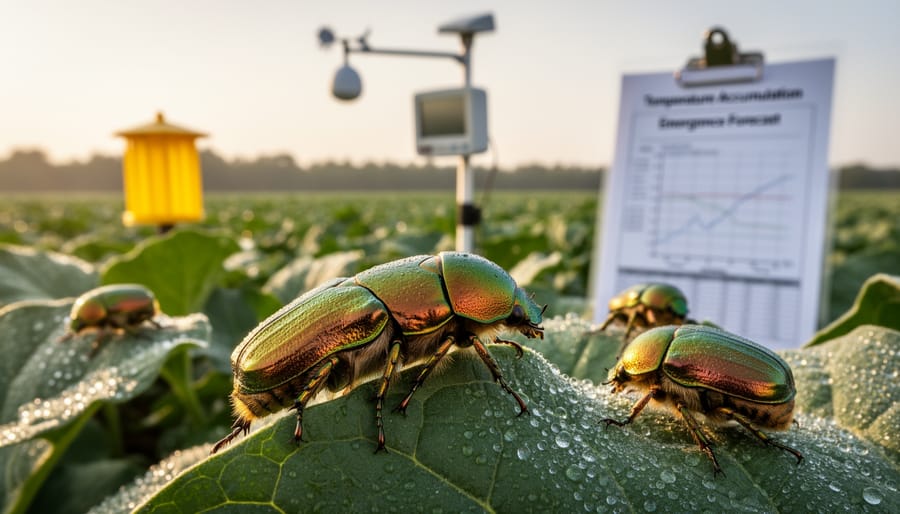
Japanese beetles are perhaps the most predictable pest you’ll encounter in your ornamental garden, and that’s actually good news for prevention! These metallic green and copper troublemakers emerge with remarkable consistency, typically appearing in late June through early July in most regions. You can practically set your calendar by them.
The key to staying ahead of Japanese beetles and their chewing cousins lies in understanding their life cycle. Adult beetles emerge from soil when temperatures reach specific thresholds, usually after several consecutive days above 70°F combined with adequate soil moisture. This predictability makes them perfect candidates for forecasting-based control strategies.
Similarly, vine weevils and root weevils follow dependable patterns, with adults becoming active during spring and early summer evenings. You’ll notice their characteristic notched leaf edges before you spot the nocturnal culprits themselves.
Here’s where sustainable prevention shines: by tracking degree days and local emergence reports through cooperative extension services or weather-based pest apps, you can apply targeted treatments like neem oil or introduce beneficial nematodes right before peak activity. This timing-focused approach means you’re using fewer treatments overall while achieving better results. I’ve found that marking my calendar based on previous years’ emergence dates, adjusted for current spring temperatures, gives me a reliable two-week window to prepare defenses before the feeding frenzy begins.
Fungal Diseases and Leaf Spot Conditions
Here’s a secret that experienced gardeners know: fungal diseases are some of the most predictable problems you’ll face in your ornamental beds. Unlike insects that might show up unexpectedly, many common fungal issues follow weather patterns so reliably that you can actually forecast their arrival and prevent them before they take hold.
Powdery mildew is probably the easiest to anticipate. This white, dusty coating thrives when nights are cool and humid, but days are warm and dry. If you’re seeing overnight temperatures dropping into the 50s with daytime highs in the 70s, combined with heavy dew in the mornings, powdery mildew will likely appear within 7-10 days on susceptible plants like bee balm, lilacs, and roses. The good news? A simple preventive spray of diluted milk solution (1 part milk to 9 parts water) applied before you see symptoms can work wonders.
Black spot on roses follows a different pattern. This one loves consistent moisture. After three or more days of wet leaves, whether from rain, overhead watering, or prolonged humidity above 85 percent, you can expect black spot to emerge within two weeks. The trigger is specifically leaf wetness, so this is where morning watering becomes your friend since leaves dry quickly in sunlight.
Other leaf spot diseases, like septoria and cercospora, follow similar moisture-based patterns. Most need at least six hours of continuous leaf wetness combined with temperatures between 60-80 degrees Fahrenheit to establish. By monitoring local weather forecasts and tracking these conditions, you can apply organic fungicides preventively rather than scrambling after infection occurs.
Creating Your Personal Pest Forecasting System
Building Your Record-Keeping Habit
The secret to becoming an excellent pest forecaster? Creating a simple record-keeping system that you’ll actually use. I learned this the hard way after losing three years of mental notes when I couldn’t remember whether the aphids showed up in late April or early May!
Start with a basic garden journal, whether digital or paper. Each week during growing season, jot down three key observations: current weather conditions (especially temperature and rainfall), any pest activity you spot, and the general health of your ornamental plants. Even five minutes of notes can reveal patterns you’d never notice otherwise.
Here’s what makes the difference: consistency beats complexity every time. Rather than elaborate descriptions, use shorthand that works for you. I mark my calendar with simple codes like “A+” for aphid sightings or “SR” for spider mites, along with severity ratings of 1-5. Take quick photos with your phone to document damage levels and track progression.
Pay special attention to what gardeners call “indicator plants”—those specimens that pests always attack first in your yard. For me, it’s my roses for Japanese beetles and the hydrangeas for spider mites. When you notice these early warnings, record the date and what’s blooming nearby. These become your personal alarm bells.
After just one season of tracking, you’ll spot connections between weather patterns and pest arrivals. By year two, you’ll be confidently predicting outbreaks before they happen, giving you time to implement preventive measures rather than scrambling for damage control.
Timing Your Preventative Actions
Once you’ve identified which pests are likely to arrive and when, the real power of forecasting lies in taking action before trouble starts. Think of it as setting up your garden’s defense system while the enemy is still on the march, not when they’re already at your doorstep.
The beauty of prevention is that it works with nature rather than against it. About two weeks before your forecast predicts pest emergence, consider releasing beneficial insects like ladybugs for aphid control or lacewings for soft-bodied pests. These natural allies establish themselves in your garden before the pest population explodes, giving them a head start in keeping things balanced.
Horticultural oils and insecticidal soaps are your gentle first line of defense when applied just as pests begin their active season. These products smother overwintering eggs and early-stage insects without the harsh environmental impact of synthetic pesticides. Apply dormant oils in late winter before bud break, and lighter summer oils as temperatures warm but before populations surge.
Cultural practices deserve equal attention in your season-by-season pest management approach. When forecasts indicate high disease pressure from humid conditions, increase air circulation by proper pruning and plant spacing. If drought-stressed plants are predicted to attract certain pests, adjust your watering schedule proactively. Remove potential pest habitats like fallen leaves or damaged fruit before they become breeding grounds.
The key is consistency. Mark your calendar based on your forecasts, and you’ll find prevention becomes second nature, saving you headaches and creating a healthier, more resilient garden.
Here’s the truth: effective pest forecasting isn’t about having the fanciest technology or becoming an entomologist overnight. It’s about combining smart tools, regular observation, and consistent effort to protect your ornamental plants before problems spiral out of control. Think of it as shifting from firefighter mode to strategic planner mode in your garden.
If you’re feeling overwhelmed by all the forecasting options we’ve covered, take a deep breath. Start small. Choose just one or two simple tools that fit your lifestyle—maybe it’s downloading a degree day calculator app and committing to weekly garden walks with a notebook. As you build confidence and start noticing patterns, you can layer in additional forecasting methods. There’s no need to implement everything at once.
The beauty of prediction-based pest management is that you’re working smarter, not harder. Instead of reaching for pesticides every time you spot damage, you’re applying targeted interventions at precisely the right moment when pests are most vulnerable. This approach isn’t just better for your wallet and your time—it’s significantly better for the environment. You’ll reduce chemical usage, protect beneficial insects, and create a healthier ecosystem in your yard.
Remember, every pest you anticipate is one you don’t have to battle after it’s already wreaked havoc on your prized azaleas or roses. You’ve got this. Start today, stay observant, and watch how forecasting transforms you from someone who reacts to pests into someone who stays confidently ahead of them.