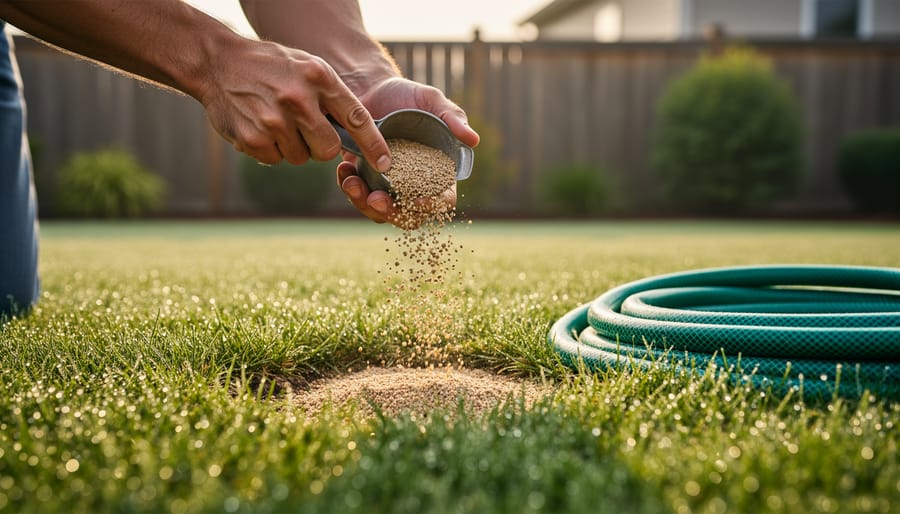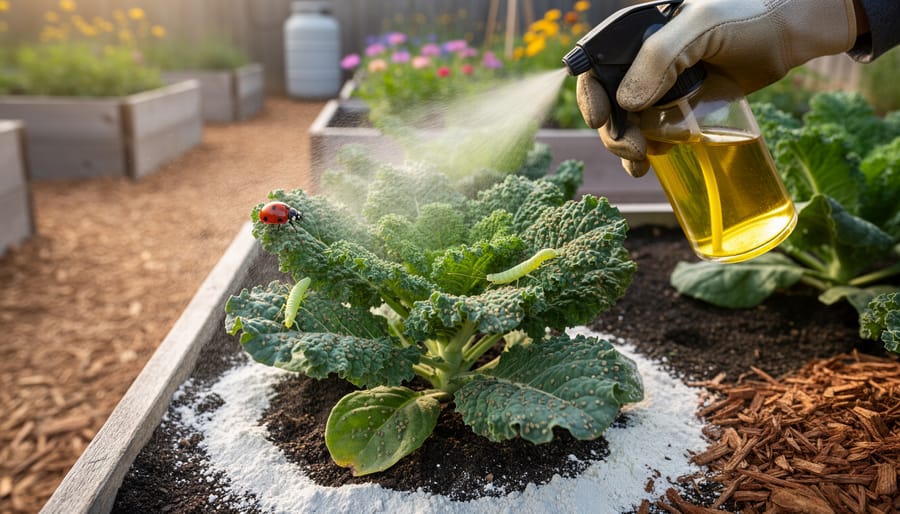
Choose neem oil for soft-bodied pests like aphids and whiteflies by mixing one tablespoon per quart of water and spraying leaf surfaces in early morning or evening to avoid plant burn. Apply diatomaceous earth around plant bases to create a protective barrier against crawling insects like ants and slugs, reapplying after rain since moisture reduces effectiveness. Mix insecticidal soap at two tablespoons per quart of water to target spider mites and mealybugs on contact, ensuring complete coverage of affected areas without rinsing. Deploy beneficial insects like ladybugs and lacewings to establish natural predator populations that continuously manage pest numbers throughout the growing season.
The shift toward eco-friendly insecticides represents more than just swapping one product for another—it’s about understanding how sustainable pest control works within your garden ecosystem. While conventional chemicals often eliminate both harmful and beneficial insects indiscriminately, environmentally responsible alternatives target specific pests while preserving the natural balance your lawn and garden need to thrive. This approach fits perfectly within Integrated Pest Management strategies that prioritize prevention and monitoring before intervention.
The good news? Eco-friendly doesn’t mean ineffective. Today’s sustainable insecticides leverage natural compounds and biological controls that have protected crops for centuries, now refined through modern understanding of pest behavior and plant chemistry. Whether you’re dealing with a sudden aphid invasion or managing persistent beetle populations, choosing the right eco-friendly solution means matching the product to your specific pest problem and application timing—not just grabbing whatever promises the quickest kill.
What Makes an Insecticide Actually Eco-Friendly?
Understanding the Environmental Impact
Let’s be honest—when we reach for that conventional insecticide spray, we’re often thinking about one thing: getting rid of those pesky bugs quickly. But here’s what’s happening beneath the surface that we don’t always see.
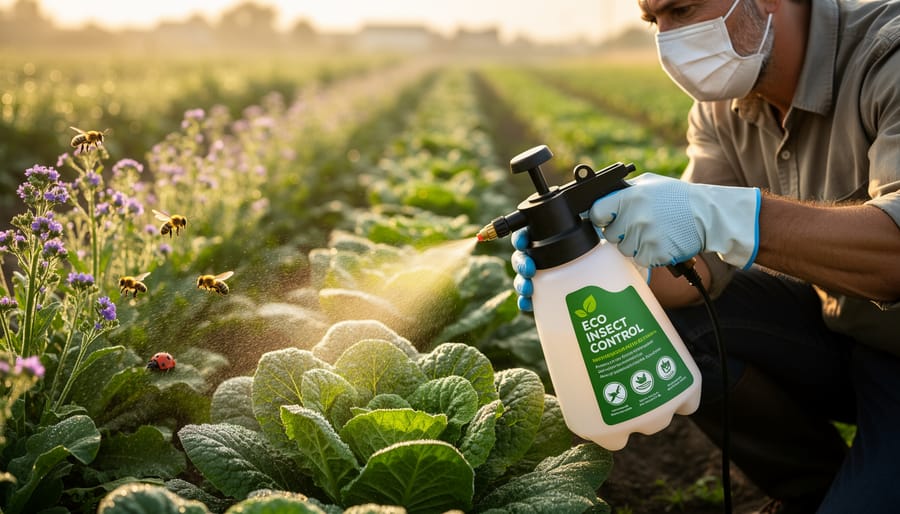
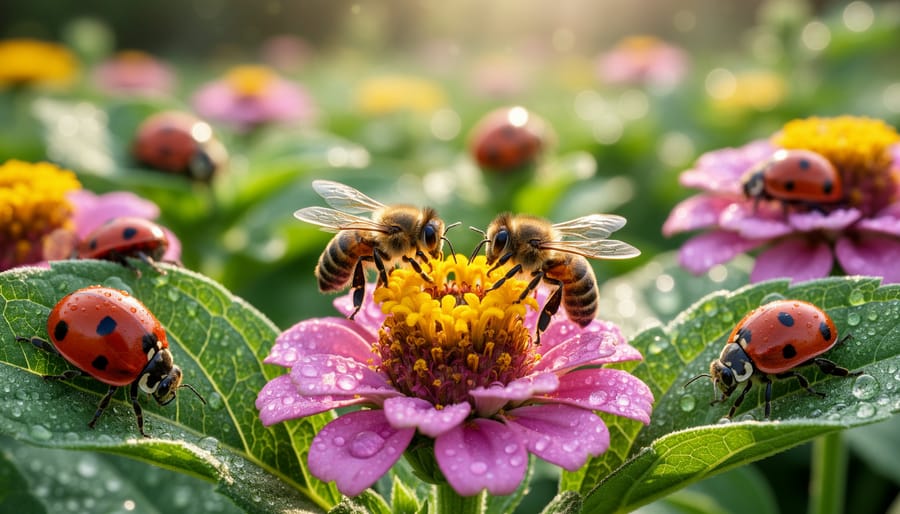
Traditional chemical insecticides don’t discriminate. They kill indiscriminately, wiping out beneficial insects like ladybugs, lacewings, and ground beetles that naturally keep pest populations in check. I’ve talked with gardeners who eliminated their aphid problem but wondered why they suddenly had an even worse infestation the next season—they’d accidentally destroyed their garden’s natural pest control team.
The impact goes deeper than insects, too. These chemicals seep into the ground, disrupting the delicate microbial communities that make soil health possible. When beneficial bacteria and fungi die off, your soil becomes lifeless dirt that can’t support robust plant growth. Runoff carries these chemicals into streams and ponds, harming aquatic life and contaminating water sources. Birds and small mammals that feed on affected insects can experience reproductive problems and population decline.
Eco-friendly insecticides work differently. They target specific pests while leaving beneficial insects unharmed, break down quickly in the environment, and don’t persist in soil or waterways. Products like neem oil, insecticidal soaps, and beneficial nematodes align with nature’s systems rather than fighting against them. You’re protecting your garden while preserving the ecosystem that supports it—a win-win that makes sustainable gardening truly sustainable.
Certifications You Can Trust
Navigating the world of eco-friendly insecticides can feel overwhelming when every product claims to be “natural” or “green.” That’s where third-party certifications become your best friends. These badges aren’t just marketing fluff – they represent rigorous testing and verification that a product actually lives up to its environmental promises.
The OMRI Listed seal, issued by the Organic Materials Review Institute, is the gold standard for organic gardeners. Products bearing this certification meet strict standards for use in certified organic production, giving you confidence that what you’re spraying aligns with organic principles.
The EPA Safer Choice label is another trustworthy indicator. This certification means the Environmental Protection Agency has verified that a product’s ingredients are safer for people, pets, and the environment compared to conventional alternatives. These products undergo thorough ingredient screening and must meet stringent safety criteria.
You might also encounter certifications like Leaping Bunny for cruelty-free products or USDA Organic for certain formulations. When shopping, look for these specific labels rather than vague marketing claims. Remember, certified products often cost slightly more, but that price difference reflects genuine environmental accountability and third-party oversight. These certifications take the guesswork out of choosing truly sustainable pest control solutions for your garden.
How Eco-Friendly Insecticides Fit Into Integrated Pest Management
The IPM Pyramid: Prevention First, Chemicals Last
Think of Integrated Pest Management as a pyramid, where the foundation consists of your most sustainable, least invasive strategies, and eco-friendly insecticides sit right at the top as your final option. This approach isn’t about avoiding chemicals altogether, but rather about using them wisely and only when necessary.
At the base of the pyramid, we have cultural controls. These are the everyday practices that prevent pest problems before they start. Think proper watering schedules, choosing pest-resistant plant varieties, and maintaining healthy soil. When your lawn or garden is thriving, it naturally becomes more resilient against pest invasions. I’ve seen countless gardens transform simply by adjusting watering times or improving soil drainage.
Moving up, mechanical and physical controls come next. This includes barriers like row covers, hand-picking larger pests, using traps, or simply hosing off aphids with a strong spray of water. These methods require a bit more effort but remain completely chemical-free.
The third tier involves biological controls, where you enlist nature’s help. Introducing beneficial insects like ladybugs or lacewings, encouraging birds to visit your garden, or using bacterial insecticides like Bacillus thuringiensis all fall into this category.
Only after you’ve explored these options and a pest problem persists do you reach for eco-friendly insecticides at the pyramid’s peak. This might mean applying neem oil for stubborn aphids or using insecticidal soap when infestations threaten your harvest. By following this hierarchy, you’re ensuring that chemical interventions, even natural ones, remain your last resort rather than your first response. This strategy protects beneficial insects, maintains ecosystem balance, and keeps your garden truly sustainable.
Types of Eco-Friendly Insecticides That Actually Deliver Results
Botanical Insecticides: Nature’s Own Pest Fighters
When you’re ready to bring in reinforcements against garden pests, botanical insecticides offer a wonderful middle ground between doing nothing and reaching for synthetic chemicals. These plant-derived solutions have been protecting gardens for generations, and they work remarkably well when used correctly.
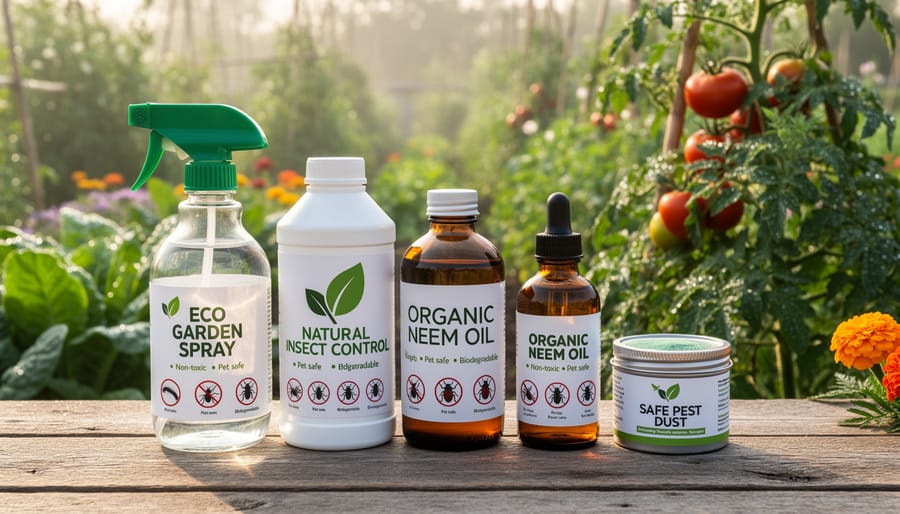
Neem oil stands out as one of the most versatile botanical insecticides you can keep in your garden shed. Extracted from the seeds of the neem tree, it disrupts the life cycle of soft-bodied insects like aphids, whiteflies, and spider mites. What I love about neem is its multi-action approach – it works as an insecticide, fungicide, and even a feeding deterrent. Mix it according to package directions (usually 2-4 tablespoons per gallon of water), add a drop of dish soap to help it emulsify, and spray thoroughly on affected plants. Apply in early morning or evening to avoid leaf burn, and reapply after rain.
Pyrethrin, derived from chrysanthemum flowers, acts quickly on contact with insects. It’s particularly effective against beetles, caterpillars, and flying insects. Unlike neem’s slow disruption approach, pyrethrin delivers fast knockdown power by attacking the nervous system of pests. The trade-off? It breaks down rapidly in sunlight, typically within a day, which is actually good news for beneficial insects that visit later.
Both options are generally safe around humans and pets once dry, though pyrethrin can irritate bees, so timing applications for evening when pollinators aren’t active is crucial. Essential oils like rosemary, peppermint, and clove oil are gaining popularity too, offering similar pest-repelling properties with pleasant garden fragrances.
Remember, botanical doesn’t mean you can spray carelessly – these are still pesticides that require thoughtful application and respect for beneficial insects.
Microbial Insecticides: Beneficial Bacteria and Fungi
Nature has gifted us with some incredibly effective pest fighters that work like tiny, targeted missiles against problem insects. If you’re looking for eco-friendly options that really pack a punch, microbial insecticides deserve a place in your garden toolkit.
Let me introduce you to Bacillus thuringiensis, or Bt as it’s commonly known. This naturally occurring soil bacterium is probably the most widely used biological insecticide, and for good reason. When certain caterpillars, beetles, or mosquito larvae eat Bt, it produces proteins that disrupt their digestive systems. Here’s what makes it brilliant: Bt only affects specific insect groups while leaving beneficial insects like bees, ladybugs, and butterflies completely unharmed. Different Bt strains target different pests, so Bt kurstaki works on caterpillars munching your vegetables, while Bt israelensis tackles mosquito and fungus gnat larvae.
Another fantastic option is Beauveria bassiana, a fungus that acts like nature’s pest control agent. It attaches to insects like aphids, whiteflies, and thrips, then penetrates their bodies and essentially takes over. It sounds like science fiction, but it’s completely natural and has been used in agriculture for decades.
What makes these microbial insecticides so appealing is their precision. They target pests without disrupting the beneficial insects that keep your garden ecosystem balanced. Plus, they break down naturally without leaving harmful residues in your soil or water.
The key to success with microbial insecticides is timing and proper application. Apply them when you first notice pest activity, ensure good coverage on plant surfaces, and reapply after heavy rain. They work more slowly than chemical options, but their targeted action and environmental safety make them worth the patience.
Insecticidal Soaps and Oils
Insecticidal soaps and oils are your garden’s gentle warriors—they work on contact to suffocate soft-bodied pests without leaving harmful residues behind. I’ve found these products incredibly effective when you catch problems early, especially against aphids, spider mites, whiteflies, and mealybugs.
The beauty of insecticidal soaps lies in their simplicity. Commercial options like Safer Brand offer consistent formulations that have been tested for effectiveness, but you can also make your own by mixing one tablespoon of pure liquid castile soap (not detergent!) with one quart of water. I’ve used both approaches successfully, though commercial products often include additional ingredients that improve coverage and sticking power.
Horticultural oils, including neem oil and dormant oils, work similarly by coating insects and their eggs. They’re particularly useful against scale insects and overwintering pests. Just remember that oils can damage plants in extreme heat, so apply them during cooler morning hours.
Timing is everything with these contact killers. You need to spray directly on the pests to be effective, which means thorough coverage of leaf undersides where many insects hide. Plan to reapply every 5-7 days for active infestations, as these products don’t provide residual protection.
One word of caution: even though these are eco-friendly options, they can harm beneficial insects like ladybugs if sprayed directly. That’s why targeted application matters—spray only the affected areas, and always do a spot test on a few leaves first to ensure your plants tolerate the treatment well.
Diatomaceous Earth: The Physical Pest Barrier
If you’re looking for a non-toxic solution that works purely through physical action, food-grade diatomaceous earth is worth considering. This powdery substance is made from fossilized aquatic organisms, and here’s the clever part: it works mechanically, not chemically. The microscopic sharp edges damage the waxy coating on insects’ exoskeletons, causing them to dehydrate. It’s completely safe for humans and pets when you use food-grade DE.
To apply it effectively, dust a thin layer around plant bases, on leaves, or anywhere pests travel. You can use a flour sifter or specialized applicator for even coverage. Just remember that diatomaceous earth becomes ineffective when wet, so you’ll need to reapply after rain or heavy dew. This makes it best suited for covered areas or during dry weather periods.
While DE won’t provide instant knockdown like some other options, it’s excellent for long-term prevention when conditions stay dry. I’ve found it particularly useful in greenhouses and around the perimeter of garden beds where slugs and crawling insects enter. Keep in mind that it works on contact, so strategic placement near pest pathways gives you the best results in your sustainable pest management strategy.
Choosing the Right Eco-Friendly Insecticide for Your Pest Problem
Common Lawn and Garden Pests and Their Best Matches
Let’s talk about matching the right eco-friendly solution to your specific pest problem. Think of this as your quick-reference guide when you spot trouble in your garden.
Aphids are probably the most common culprits you’ll encounter, clustering on tender new growth and sucking plant juices. The good news? They’re incredibly easy to control with insecticidal soap or a strong spray of neem oil. I’ve had great success simply blasting them off with a garden hose, followed by a neem oil application to prevent their return.
Japanese beetles, with their metallic green bodies, can devastate roses and other ornamentals seemingly overnight. Spinosad works well here, or you can hand-pick them early in the morning when they’re sluggish. For longer-term control, consider beneficial nematodes applied to your lawn to target their grubs.
Caterpillars, including cabbage worms and tomato hornworms, respond beautifully to Bacillus thuringiensis, or Bt. This naturally occurring bacteria specifically targets caterpillars without harming beneficial insects like bees and ladybugs. Apply it in the evening for best results.
Whiteflies can be stubborn, but yellow sticky traps combined with insecticidal soap applications every five to seven days will break their life cycle. Consistency is key with these persistent pests.
For spider mites, which aren’t insects but arachnids, neem oil or a simple water spray works wonders. They hate humidity, so regular misting can be preventative.
Scale insects require a more patient approach. Horticultural oil applied during their crawler stage is most effective, though you might need to physically remove larger, established scales with a soft brush dipped in soapy water.
Remember, correct identification comes first. Take a photo and consult your local extension office if you’re unsure what you’re dealing with.
Application Best Practices That Make Eco-Friendly Insecticides Work Better
Timing Is Everything: When to Apply for Maximum Impact
Here’s the truth that many gardeners miss: even the best eco-friendly insecticide won’t work effectively if your timing is off. I’ve watched neighbors spray their gardens at high noon in July, wondering why they’re not getting results. Understanding when to apply your chosen product can make the difference between success and disappointment.
Start by learning your pest’s life cycle. Most insects are most vulnerable during their larval or nymph stages, before they develop into harder-to-kill adults. Aphids, for instance, reproduce incredibly quickly during spring and early summer, so catching them early in the season prevents exponential population growth. Japanese beetles are best targeted as grubs in late summer or early fall, rather than waiting until they emerge as adults to feast on your roses.
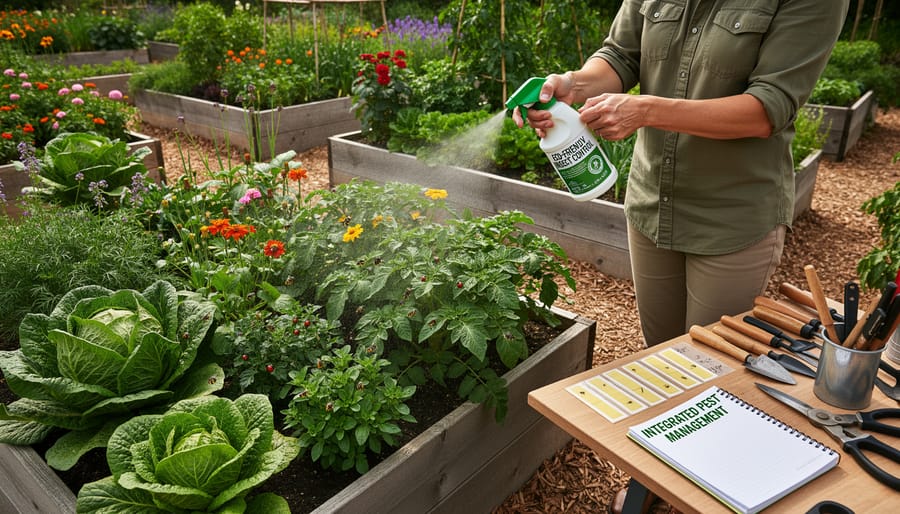
Time of day matters tremendously. Early morning or late evening applications work best for several reasons. First, beneficial insects like bees and butterflies are less active, reducing unintended harm. Second, cooler temperatures mean slower evaporation, giving products like insecticidal soaps and neem oil more contact time with pests. I’ve found that spraying in the cooler evening hours also prevents leaf burn, especially during hot summer months.
Weather plays a crucial role too. Avoid applying products right before rain, which washes away treatments before they work. Similarly, windy conditions cause drift and reduce effectiveness. Check your forecast and choose calm, dry periods for application. For seasonal timing, remember that prevention beats reaction. Monitor your garden regularly starting in early spring, so you can apply treatments at the first sign of trouble rather than waiting until infestations overwhelm your plants.
Protecting Beneficial Insects While Treating Pests
The key to using eco-friendly insecticides responsibly is timing and precision. Apply treatments in the early morning or late evening when beneficial pollinators are least active. This simple shift in schedule can make a huge difference in protecting pollinators while still addressing your pest problems effectively.
Target your applications directly to affected plants rather than broadcasting spray across your entire garden. Spot-treating keeps helpful insects like ladybugs, lacewings, and ground beetles safe while controlling pests where they’re actually causing damage. I’ve found that using a spray bottle instead of a sprayer helps me stay focused on problem areas.
Learn to identify beneficial insects so you don’t accidentally treat areas where your garden allies are working. Those aphid-munching ladybug larvae might look strange, but they’re doing your pest control for free. Similarly, avoid treating flowering plants during bloom periods when possible, as this is when bees and butterflies are most likely to visit.
Consider creating untreated buffer zones around your garden’s edges where beneficial insects can take refuge. These safe havens help maintain a healthy population of natural pest controllers.
What Eco-Friendly Insecticides Can’t Do (And What to Try Instead)
Let’s be real for a moment: eco-friendly insecticides are fantastic tools, but they’re not magic wands that solve every pest problem. Understanding their limitations helps you set realistic expectations and choose the right approach for your situation.
First, eco-friendly options typically work slower than synthetic chemicals. That neem oil or insecticidal soap won’t eliminate an aphid colony overnight like a chemical blitz might. If you’re facing a massive infestation that’s threatening your entire garden, you might need to combine products with other tactics or accept that recovery takes time.
Coverage is another challenge. Most eco-friendly insecticides require direct contact with pests, meaning you need thorough application. Miss the undersides of leaves where insects hide, and you’ll miss the pests. This makes them less effective for large-scale infestations or hard-to-reach areas compared to systemic chemicals that plants absorb.
Weather matters too. Rain can wash away products like insecticidal soap before they work, and strong sun can reduce effectiveness. You’ll likely need multiple applications, which requires more time and attention than one-and-done synthetic treatments.
Here’s the good news: when eco-friendly insecticides reach their limits, alternative IPM strategies often work better anyway. Introducing beneficial insects, improving soil health, choosing pest-resistant plant varieties, or using physical barriers like row covers can prevent problems before they start. Sometimes the best “insecticide” is simply removing affected plant parts or blasting pests off with water.
Think of eco-friendly insecticides as one tool in your sustainable gardening toolkit, not the only solution. When combined with preventive strategies and good garden hygiene, they’re incredibly effective at keeping your outdoor space healthy and pest-free.
Making the switch to eco-friendly insecticides is one of the most impactful steps you can take toward creating a truly sustainable landscape. You’re not just protecting your family, pets, and pollinators—you’re becoming part of a growing movement of gardeners who understand that a beautiful lawn and garden doesn’t have to come at the expense of environmental health.
If you’re feeling overwhelmed by all the options we’ve covered, remember that you don’t need to overhaul your entire approach overnight. Start small. Pick one or two products that address your most pressing pest challenges, whether that’s neem oil for aphids or Bacillus thuringiensis for caterpillars. As you gain confidence and see results, you can gradually expand your integrated pest management toolkit.
The beauty of IPM is that it’s a journey, not a destination. Each season brings new learning opportunities, and every time you choose an eco-friendly solution over a conventional chemical, you’re making a measurable difference. You’re protecting beneficial insects that pollinate your vegetables, preserving soil health for years to come, and keeping harmful residues out of watersheds.
Your lawn and garden can be both stunning and sustainable. By embracing eco-friendly insecticides as part of a thoughtful, observation-based approach to pest management, you’re proving that responsible stewardship and landscape beauty go hand in hand. Start today, stay curious, and watch your confidence grow along with your garden.