Check your weather forecast three days ahead before applying any lawn treatments—a surprise rainstorm within 48 hours will wash away herbicides, fertilizers, and pest controls, wasting your money and potentially harming nearby waterways. Download a hyperlocal weather app that tracks conditions within your specific neighborhood rather than relying on citywide forecasts, since temperature and moisture variations of just a few miles can mean the difference between successful fungicide application and a disease outbreak. Monitor soil temperature readings, not just air temperature, because pre-emergent herbicides only work when soil hits specific thresholds (typically 55°F for crabgrass prevention), and applying too early or late renders them completely ineffective.
Your lawn’s health depends far more on timing than on the products you choose. Weather patterns dictate when weeds germinate, when diseases spread, and when beneficial insects emerge. Most lawn care failures happen because homeowners apply the right solution at the wrong time, missing critical windows that weather forecasting tools reveal days or weeks in advance.
The good news is that weather forecasting for lawn care doesn’t require expensive equipment or meteorology degrees. Simple, often free tools can tell you exactly when to fertilize before expected rain, when overnight humidity will trigger fungal problems, and when heat stress means you should delay any chemical applications. Understanding basic weather patterns transforms you from someone constantly battling lawn problems to someone preventing them before they start.
This guide walks you through practical weather forecasting tools matched to your experience level and budget, then shows you exactly how to translate weather data into confident lawn care decisions that save time, money, and your grass.
Why Weather Matters More Than You Think for Lawn Health
The Weather-Disease Connection
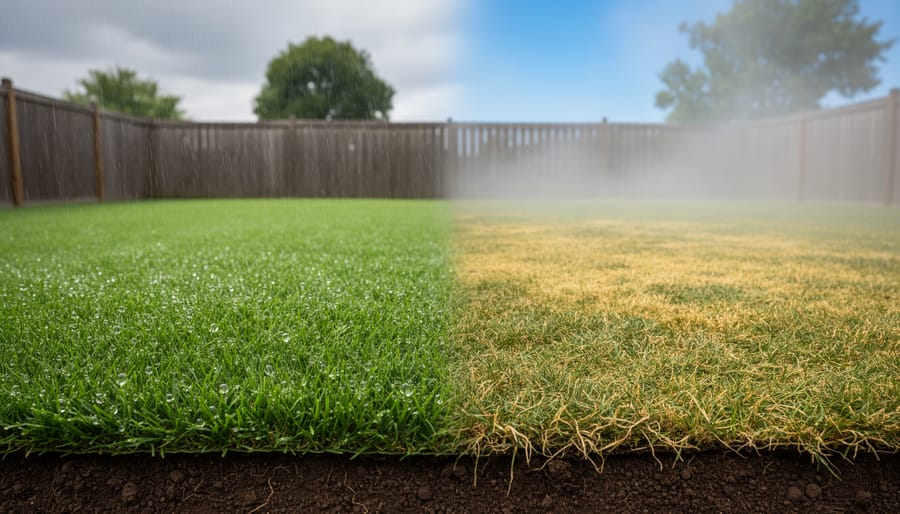
Here’s something many lawn owners discover the hard way: fungal diseases don’t just appear randomly. They’re actually triggered by very specific weather conditions, and understanding this connection can transform how you care for your lawn.
Brown patch thrives when nighttime temperatures hover above 68°F combined with high humidity. If you’ve noticed those telltale circular brown patches after a stretch of warm, muggy nights, that’s no coincidence. Dollar spot prefers similar conditions but can tolerate slightly cooler temperatures in the 60-80°F range, especially when moisture lingers on grass blades from dew or light rain.
Rust disease takes a different approach, developing during extended periods of moderate temperatures (60-75°F) with frequent moisture but not necessarily heavy rain. Those rusty orange spores you might spot on your grass shoes? They’re the result of persistent dampness without enough air circulation to dry things out.
The real troublemaker is extended wet periods. When your lawn stays damp for more than 10-12 hours at a time, especially overnight, you’re creating a perfect incubator for fungal spores. This is why checking your local weather forecast becomes crucial. By spotting these patterns developing, you can adjust irrigation schedules, improve air circulation, or apply preventive treatments before you see lawn disease warning signs appearing across your yard.
When Pests Follow the Forecast
Weather patterns don’t just affect your grass—they also dictate when unwelcome visitors decide to crash your lawn party. Understanding the connection between specific weather conditions and pest activity gives you a powerful advantage in protecting your turf before damage occurs.
Temperature serves as nature’s alarm clock for many lawn pests. Grubs, those C-shaped larvae that munch on grass roots, become most active when soil temperatures reach 50-60°F in spring and fall. Chinch bugs, meanwhile, thrive during hot, dry stretches—typically when daytime temperatures consistently exceed 80°F and rainfall is scarce. They love stressed grass in full sun, making drought conditions their ideal hunting ground.
Moisture levels play an equally critical role. Armyworms emerge after periods of heavy rain or high humidity, often appearing seemingly overnight in devastating numbers. Their name comes from their behavior of moving across lawns in army-like formations, leaving brown patches in their wake. By monitoring humidity levels and rainfall patterns, you can anticipate their arrival and take preventive action.
The key is identifying lawn pests through weather cues rather than waiting to see damage. When your weather forecast shows conditions favorable for specific pests, you can inspect more carefully, apply targeted treatments, or adjust watering schedules to make your lawn less hospitable—all sustainable strategies that protect your grass proactively.
Weed Germination and Weather Windows
Understanding when weeds will germinate gives you a powerful advantage in your lawn care routine. Soil temperature is the primary trigger for weed seed germination, and tracking it with weather tools helps you anticipate problems before they start. Most annual weeds germinate when soil temperatures consistently reach specific thresholds – crabgrass springs to life around 55-60°F, while other summer annuals wait for 65-70°F.
By monitoring soil temperature forecasts through your weather apps or soil thermometers, you can time pre-emergent herbicide applications perfectly. Apply too early, and the product breaks down before weeds germinate. Too late, and you’ve missed your window entirely. Rainfall patterns matter equally because moist soil activates dormant seeds and fuels rapid growth spurts. A warm week followed by steady rain creates ideal germination conditions.
This is where weed germination timing becomes crucial for sustainable lawn care. Rather than constantly applying chemicals reactively, you can target specific weather windows for preventive action, using fewer products more effectively while protecting your lawn’s ecosystem and your wallet.
Essential Weather Forecasting Tools Every Lawn Owner Needs
Your Smartphone Weather App (Better Than You Think)
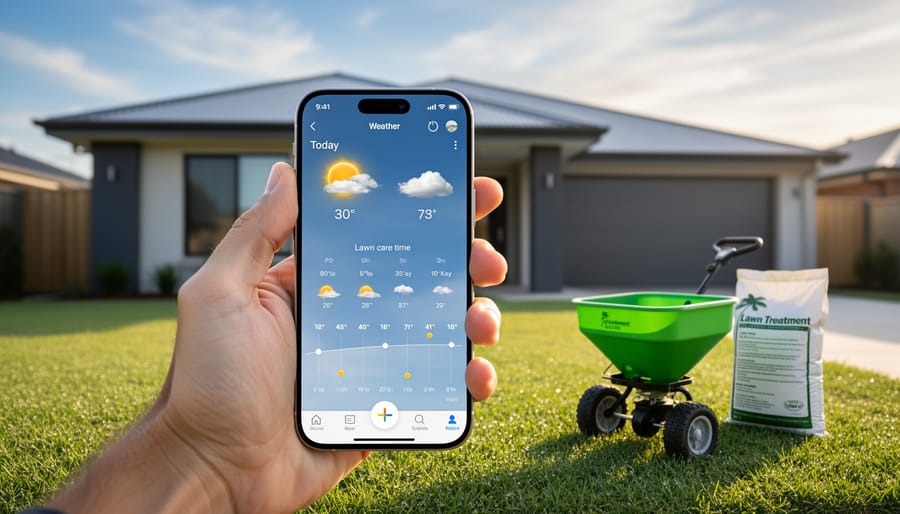
You probably already have everything you need for basic weather forecasting right in your pocket. The weather app that came pre-installed on your smartphone is likely more capable than you realize, especially for lawn care planning.
Modern weather apps offer three essential features for lawn maintenance. First, hourly forecasts let you time your mowing, fertilizing, or pest treatments perfectly. Instead of just knowing it’ll rain “tomorrow,” you can see that showers are predicted between 2-4 PM, giving you a clear morning window for yard work. Second, precipitation predictions help you avoid watering when nature’s about to do it for you, saving water and preventing those soggy conditions that invite fungal diseases. Third, humidity readings are surprisingly valuable since high humidity combined with warm temperatures creates the perfect storm for lawn diseases like brown patch.
For the best lawn-focused experience, I recommend trying a few options. Dark Sky (now integrated into Apple Weather) provides incredibly detailed precipitation forecasts down to the minute. Weather Underground offers hyperlocal data by pulling from nearby personal weather stations, which can be more accurate than regional forecasts. For Android users, AccuWeather’s MinuteCast feature delivers similar minute-by-minute precipitation tracking.
The sustainability bonus? Better weather prediction means less wasted water, fewer unnecessary chemical applications, and healthier grass that naturally resists problems. Take ten minutes this week to explore your current weather app’s hourly forecast and humidity features. You’ll be amazed at how this free tool transforms your lawn care timing.
Home Weather Stations: Your Personal Microclimate Monitor
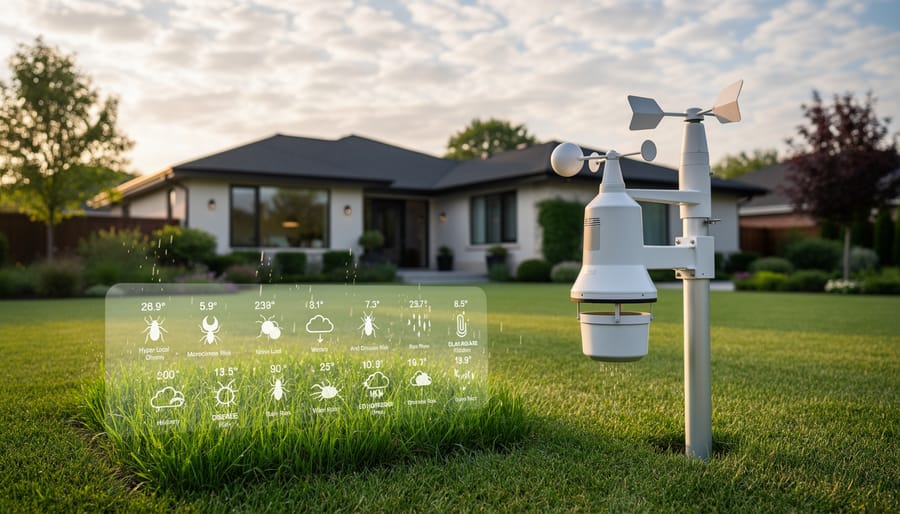
If you’re serious about preventing lawn problems before they start, a home weather station is like having a meteorologist living in your backyard. I installed one three years ago, and honestly, it transformed how I care for my lawn. Instead of relying on weather data from the airport fifteen miles away, I get readings from the exact spot where my grass is growing.
The magic of personal weather stations lies in their ability to capture your microclimate. That airport data might say it rained half an inch yesterday, but your station reveals you actually got a quarter inch because of the rain shadow from your neighbor’s trees. This precision matters tremendously when you’re deciding whether to water or skip it.
For gardeners, look for stations that track rainfall accumulation, soil temperature, and humidity levels. Soil temperature sensors are particularly valuable because they tell you exactly when conditions are right for pre-emergent applications or when grassy weeds are about to germinate. I check my soil temps religiously in early spring to time my crabgrass preventer perfectly.
Affordable options start around $100 to $150. The Ambient Weather WS-2902 and Ecowitt stations offer excellent value with wireless transmission to your phone and integration with weather apps. More budget-conscious gardeners can start with simple rain gauges and soil thermometers for under $30 combined.
Key features worth prioritizing include wireless connectivity so you can check conditions without going outside, data logging to spot patterns over time, and reliable rainfall measurement. Some models even upload your data to community weather networks, contributing to better local forecasting for everyone.
The investment pays for itself quickly through more precise irrigation decisions, better-timed treatments, and fewer wasted products applied at the wrong moment.
Agricultural Weather Services and Websites
Beyond general weather apps, specialized agricultural weather services offer tools specifically designed for lawn and garden management. These platforms go far deeper than temperature and rainfall predictions, providing the kind of targeted information that helps you stay ahead of problems rather than scrambling to fix them after the damage is done.
NOAA’s National Weather Service offers surprisingly detailed agricultural forecasts through their regional offices, including soil temperature data and growing degree days. These growing degree day calculations are particularly valuable because they help you predict when specific weeds will germinate or when disease pressure typically increases in your area. I’ve found their Extended Forecast discussions especially helpful because meteorologists actually explain the reasoning behind their predictions, not just the numbers.
Weather Underground stands out for its network of personal weather stations, which means you can often find hyperlocal data from within your own neighborhood. Their disease risk forecasting tools alert you to conditions favorable for common lawn diseases like brown patch or dollar spot, giving you a chance to adjust irrigation or apply preventive treatments before problems develop.
Don’t overlook your state’s agricultural extension services, which often maintain their own weather networks with lawn care focused tools. Many provide free pest and disease forecasting models calibrated specifically for your region’s climate and common grass types. These services represent some of the most practical, science-based resources available to home gardeners, and they’re typically funded by your tax dollars anyway. The sustainable approach is working smarter with weather data rather than constantly fighting problems with chemicals after they arrive.
Integrated Pest Management (IPM) Forecasting Platforms
Here’s the exciting part: you can move beyond just tracking rainfall and temperatures to using sophisticated platforms that actually predict when pests and diseases are most likely to strike your lawn. Integrated Pest Management (IPM) forecasting platforms combine real-time weather data with scientific disease and pest models to give you advance warning of potential problems.
Think of these tools as your lawn’s early warning system. They analyze temperature patterns, humidity levels, leaf wetness duration, and other environmental factors that create perfect conditions for specific threats. Instead of spraying preventatively or waiting until you spot brown patches, you’ll know exactly when conditions favor fungal diseases like dollar spot or when grubs are most vulnerable to treatment.
Many state university extension services offer free IPM forecasting tools tailored to your region. The NEWA (Network for Environment and Weather Applications) platform, developed by Cornell University, is particularly excellent and covers multiple states. It provides disease forecasting for turfgrass along with treatment timing recommendations. Your state’s extension website likely offers similar resources designed specifically for local conditions and common lawn problems in your area.
For those wanting more specialized support, commercial platforms like GreenCast and Spectrum Technologies offer advanced forecasting with mobile apps and customized alerts. While some charge subscription fees, they often provide more granular predictions and integrate pest pressure tracking with spray planning tools.
The sustainability angle here is significant: by treating only when conditions truly warrant intervention, you reduce unnecessary pesticide applications. You’re working smarter, not harder, and minimizing your environmental impact while protecting your lawn more effectively. These platforms help you transition from reactive to proactive care, which is exactly what integrated pest management is all about.
How to Actually Use Weather Forecasts for Lawn Protection
Reading the 10-Day Forecast Like a Pro
Think of reading a 10-day forecast like scanning the horizon for approaching storms—you’re looking for patterns that signal trouble ahead. Here’s how to extract the most useful information for your lawn care planning.
Start by examining the temperature trends rather than fixating on individual daily highs and lows. A sudden 20-degree temperature swing can stress your grass and create opportunities for disease. Look especially for those shoulder-season periods when daytime temps reach the 70s but nights dip into the 40s—this is prime time for fungal issues like brown patch to take hold.
Next, identify extended wet periods. Two or three consecutive rainy days might seem manageable, but when you spot four to seven days of precipitation or high humidity in the forecast, that’s your red flag window. This prolonged moisture is exactly when fungal diseases spread rapidly, and it’s also when you should hold off on mowing to avoid compacting wet soil or spreading spores.
Pay attention to humidity patterns alongside precipitation. Even without rain, three or more days of 80-percent-plus humidity creates conditions where disease pathogens thrive. This is particularly important during warm weather when your lawn is already stressed.
Finally, circle those high-risk windows where multiple factors converge—warm temperatures, high humidity, and rain occurring together. These are your action triggers. When you spot this combination five to seven days out, that’s when you should apply preventive treatments, adjust watering schedules, or hold off on fertilizing until conditions improve. Planning around these windows transforms you from reactive to proactive.
Timing Your Preventive Applications
Success with preventive treatments isn’t just about what you apply, it’s about when you apply them. This is where weather forecasting transforms from interesting information into a powerful lawn care advantage.
For pre-emergent herbicides, timing is everything. These products create a protective barrier in the soil that stops weed seeds from germinating, but they need to be down before those seeds sprout. Your weather app becomes your best friend here. Apply when soil temperatures consistently reach 50-55 degrees Fahrenheit for about three days straight. That’s when crabgrass and other summer weeds start waking up. In most regions, this coincides with when forsythia blooms, but a soil thermometer paired with your extended forecast gives you precise timing.
Fungicide applications require a different weather dance. Most lawn diseases love warm, humid conditions with extended leaf wetness. Check your forecast for periods when nighttime temperatures stay above 60 degrees with high humidity. If you see three or more days of these conditions predicted, apply fungicides 24-48 hours before the weather pattern arrives. This gives products time to establish protection before disease pressure hits.
Rain-free windows matter tremendously. Most preventive treatments need 4-6 hours without rain to properly absorb or bind to grass and soil. Some products require up to 24 hours. Always check your hourly forecast before applying anything. A sudden afternoon thunderstorm can wash away your investment and effort before it has a chance to work.
Temperature thresholds also affect product performance. Many treatments work best when temperatures fall between 60-85 degrees Fahrenheit. Applying outside this range can reduce effectiveness or even stress your lawn.
Adjusting Your Mowing and Watering Schedule
Once you’ve mastered weather forecasting tools, the real magic happens when you apply that knowledge to your lawn care schedule. Think of weather data as your planning partner, helping you work smarter, not harder.
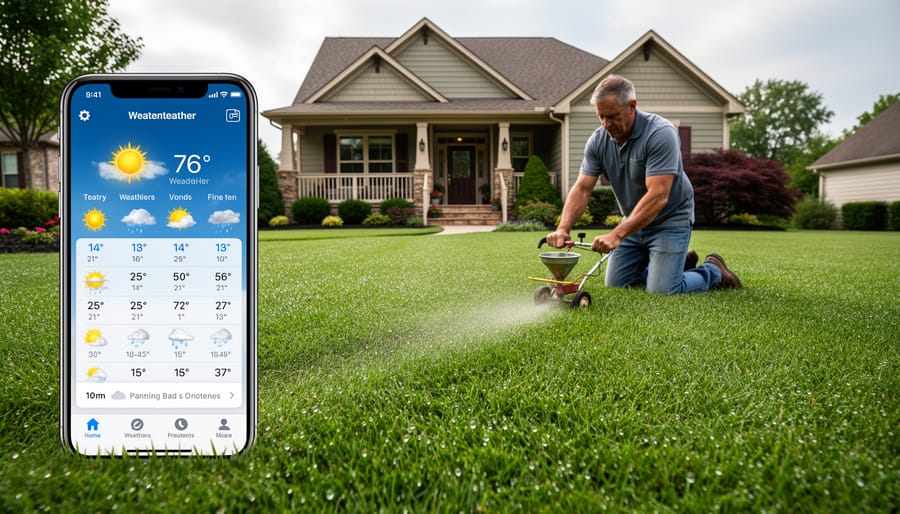
Start with your mowing schedule. When heavy rain is forecast within 24-48 hours, mow beforehand if conditions allow. Wet grass invites fungal diseases and creates uneven cuts that stress your lawn. Conversely, if a heat wave is approaching, raise your mower blade height by half an inch. Taller grass shades roots and retains moisture better during drought conditions.
Watering becomes incredibly efficient when aligned with rainfall predictions. Check your seven-day forecast before watering. If rain is expected within two days, skip irrigation entirely and let nature do the work. This simple adjustment can reduce water consumption by 30-40 percent while maintaining a healthy lawn. When rainfall is scarce, water deeply but infrequently in early morning hours, ideally before temperatures rise above 75 degrees.
Integrate weather insights into your preventive lawn care routine by timing fertilizer applications before moderate rain, which helps nutrients absorb without runoff. Avoid fertilizing before heavy downpours that wash treatments away. These weather-informed adjustments reduce chemical waste, lower costs, and minimize environmental impact while keeping your lawn resilient against stress and disease.
Creating Your Weather-Based Lawn Care Calendar
Ditch the rigid calendar dates and embrace a weather-responsive approach to lawn care. Instead of marking “fertilize April 15” in permanent ink, check your forecasts and adjust accordingly. If heavy rain is predicted within 48 hours of planned fertilizing, postpone it to prevent runoff and wasted product. When a dry spell looms, you’ll know to water deeply beforehand or delay mowing to reduce stress on your grass.
Start by identifying your region’s typical weather patterns and microclimates. A coastal lawn faces different challenges than an inland property just 20 miles away. Build your season-by-season battle plan around predicted temperature swings, rainfall patterns, and humidity levels rather than arbitrary dates.
Use weather apps to set alerts for conditions that matter most to your lawn. Program notifications for frost warnings, extended dry periods, or disease-favorable humidity spikes. This responsive strategy not only protects your lawn better but also saves resources by timing treatments when they’ll be most effective, making your care routine both smarter and more sustainable.
Weather Alert Systems That Protect Your Lawn While You Sleep
Setting Up Smart Alerts
The real power of weather forecasting tools emerges when you’re not constantly checking them. Instead, let your devices do the monitoring for you through smart alerts that notify you when conditions require action.
Most weather apps include customizable notification features. Start by enabling frost warnings, which are crucial for protecting tender plants and knowing when to delay fertilizer applications. Set temperature alerts for when conditions drop below 35°F, giving you time to cover vulnerable plants or hold off on that early spring lawn treatment.
For disease prevention, configure humidity and rain alerts. Many apps let you set notifications when rainfall exceeds specific amounts or when humidity remains above 85% for extended periods. These conditions often trigger fungal diseases, so receiving an alert means you can postpone irrigation or apply preventive treatments before problems appear.
Smart home systems like Alexa or Google Home integrate beautifully with weather services. You can create routines that announce severe weather warnings or remind you to check moisture levels before predicted dry spells. Some systems even connect directly to smart sprinkler controllers, automatically adjusting watering schedules based on forecasted conditions.
Specialized lawn care apps often provide the most targeted alerts. These platforms analyze multiple weather factors simultaneously and send notifications specifically about disease-favorable conditions, optimal mowing windows, or ideal treatment timing. Taking ten minutes to configure these alerts once saves countless hours of reactive lawn repair throughout the season.
Regional Extension Service Notifications
One of my favorite weather forecasting resources that many gardeners overlook is their local university extension service. These programs are absolutely fantastic because they’re hyper-focused on your specific region and completely free to use. Most land-grant universities operate cooperative extension services that monitor local weather patterns and send timely alerts about pest and disease threats before they become widespread problems in your area.
You can typically sign up for email alerts or text message notifications that warn you when conditions are right for issues like fungal diseases, grub activity, or weed germination. For example, when my extension service alerts me that we’re entering a high-risk period for brown patch fungus due to humidity and temperature patterns, I can adjust my watering schedule proactively rather than scrambling to treat an outbreak later.
To find your local service, simply search for “your state + cooperative extension” online. Many now offer specialized lawn care alert systems that combine real-time weather data with decades of regional pest and disease research, giving you incredibly practical, localized forecasting tailored to your lawn’s specific challenges.
Making the shift from reactive to proactive lawn care doesn’t require a complete overhaul of your routine or a significant investment in high-tech equipment. The beautiful thing about weather-aware lawn care is that you can start small and build your confidence as you go. Pick just one tool that feels accessible to you, whether that’s a simple rain gauge you check daily or a free weather app on your phone, and begin noticing the patterns between weather conditions and what’s happening in your yard.
As you become more comfortable reading weather forecasts and connecting them to your lawn’s needs, you’ll naturally start making better decisions about when to fertilize, when to hold off on mowing, and when to apply preventive treatments. This knowledge transforms you from someone who’s always playing catch-up with problems to someone who’s anticipating challenges before they arrive. That sense of control is incredibly empowering.
What’s equally rewarding is recognizing how this approach benefits not just your lawn, but the environment too. When you apply treatments only when conditions are right, you’re preventing waste, reducing chemical runoff, and supporting a healthier ecosystem in your own backyard. You’re using fewer resources more effectively, which is the essence of sustainable lawn care.
Remember, every seasoned gardener started as a beginner, learning to read their landscape one season at a time. Weather awareness is simply another skill in your growing toolkit, one that puts you firmly in the driver’s seat of your lawn’s health and vitality.