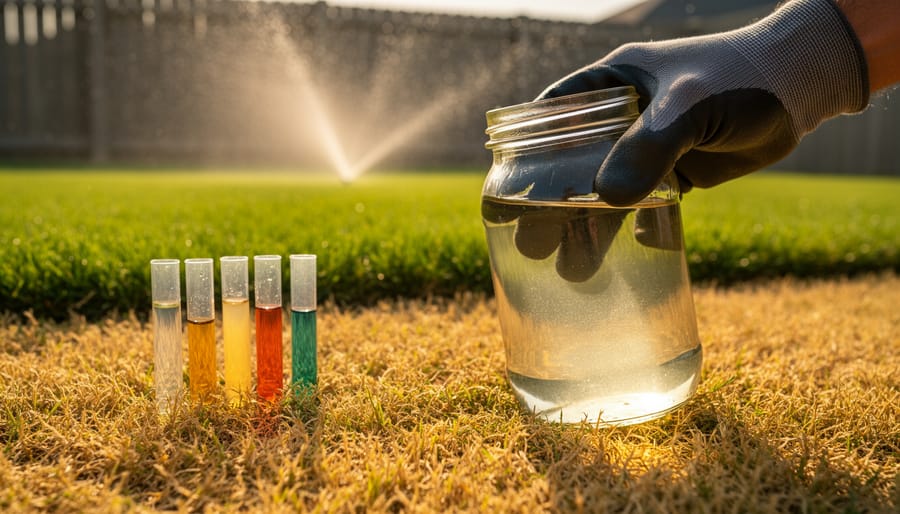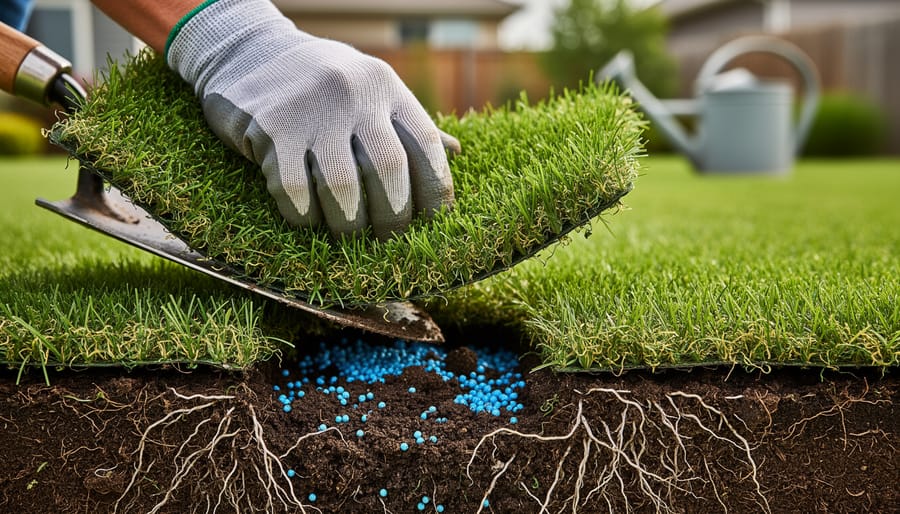
Your lawn’s struggle with fertilizer might not be about what you’re feeding it, but whether your soil can actually hold onto those nutrients. That’s where cation exchange capacity comes in—a soil property that determines how well your ground acts like a nutrient savings account versus a leaky bucket.
Think of CEC as your soil’s magnetic personality. Nutrients like calcium, magnesium, and potassium carry positive charges (cations), and they need negatively charged soil particles to cling to. Without adequate CEC, you’re essentially watching your expensive fertilizer wash away with the next rain, leaving your grass hungry despite your best efforts. Clay soils naturally excel at this, holding onto nutrients like champions, while sandy soils struggle, releasing everything too quickly.
Here’s what makes this matter for your lawn: if you’re applying fertilizer regularly but still seeing yellowing grass, poor growth, or patchy areas that never quite green up, low CEC might be your hidden culprit. You’re not doing anything wrong—your soil simply can’t retain what you’re giving it.
The good news? You’re not stuck with the CEC you were born with. Understanding this soil property opens the door to smarter, more sustainable lawn care. Instead of throwing more fertilizer at the problem and hoping something sticks, you can actually improve your soil’s nutrient-holding capacity through strategic amendments and organic matter additions.
This isn’t just soil science theory—it’s the difference between a lawn that thrives on minimal inputs and one that demands constant feeding while delivering disappointing results. Let’s decode what CEC means for your specific turf situation and how to work with it, not against it.
What Cation Exchange Capacity Actually Means (Without the Chemistry Headache)
The Nutrients Your Lawn Needs Most (And Why They Need to Stick Around)
Your lawn thrives on a handful of essential nutrients that carry positive charges, making them cations. Think of these as the VIP guests your soil needs to welcome and keep around for a healthy, vibrant turf.
Calcium is the backbone of cell structure, helping grass develop strong roots and resist disease. Magnesium sits at the center of every chlorophyll molecule, making it essential for that rich green color we all love. Potassium acts like a multitasking superhero, regulating water movement, strengthening cell walls, and boosting disease resistance. While you’re probably familiar with NPK nutrient basics, understanding how these nutrients behave in your soil takes your lawn care to the next level.
Here’s where CEC becomes your lawn’s best friend or worst enemy. Soils with high CEC have plenty of negative charges on clay particles and organic matter that attract and hold onto these positively charged nutrients. When rain falls or you water your lawn, these nutrients stay put, clinging to soil particles like magnets. Low CEC soils, typically sandy ones, lack these holding sites. Nutrients simply wash through with the next rainfall, leaving your grass hungry despite your fertilizing efforts.
Even hydrogen ions matter here. While not a nutrient itself, hydrogen occupies exchange sites and influences soil pH, which directly affects nutrient availability. A soil’s CEC essentially determines whether you’re building a nutrient savings account or watching your investments wash away with every storm.
How CEC Controls Everything Happening in Your Turf Soil
Sandy Soil vs. Clay Soil: The CEC Showdown
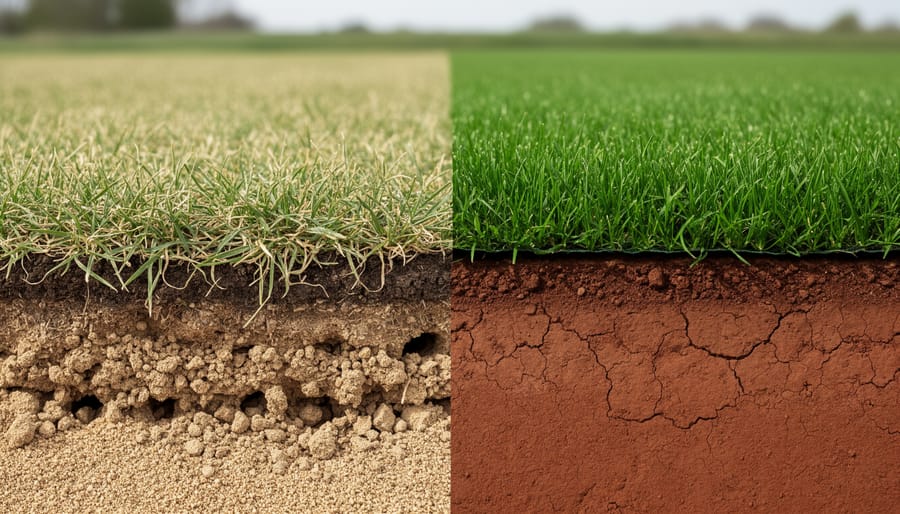
Here’s the thing about soil texture: it’s the secret behind why your neighbor’s sandy lawn needs constant attention while your clay-based turf seems to hold onto everything—sometimes too well!
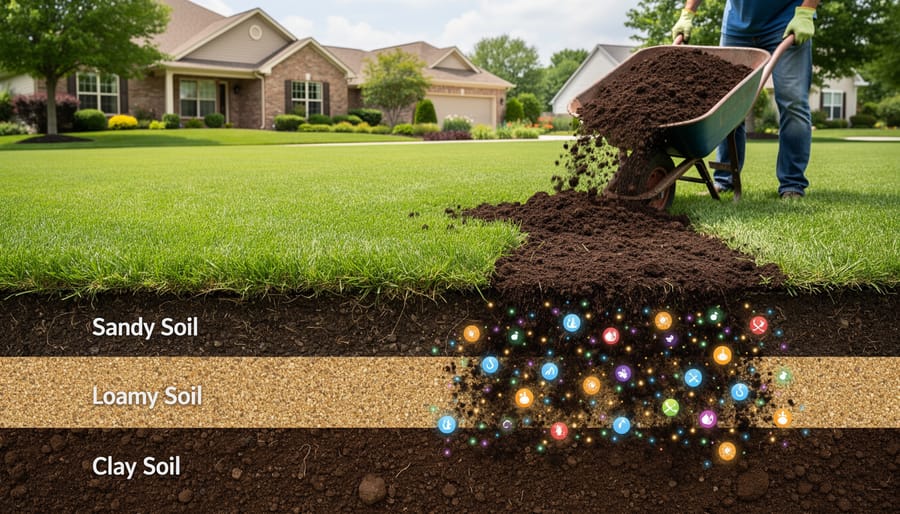
The CEC difference between these soil types is dramatic. Sandy soils typically have a CEC of 1-5 meq/100g, while clay soils can range from 10-40 meq/100g or higher. Think of sandy soil as having just a few sticky notes on the wall, while clay soil has an entire bulletin board covered in them. Those numbers translate directly into how you should be caring for your lawn.
If you’re working with sandy soil, you’re dealing with large particles that create big spaces between them. Water drains quickly, and those negatively charged cation exchange sites are few and far between. Your lawn can’t hold onto nutrients for long, which means they’re either taken up quickly by grass roots or leached away with the next rainfall. This is why sandy lawns benefit from more frequent, lighter applications of fertilizer—maybe every 4-6 weeks during the growing season with smaller amounts. You’re essentially topping off the tank more often because it’s smaller and drains faster.
Clay soils are the opposite challenge. With abundant exchange sites, they’re excellent at holding nutrients, but they can also hold too much of certain elements, potentially creating imbalances. Clay-based lawns typically need less frequent fertilization—perhaps every 8-10 weeks—and you’ll want to be more thoughtful about what you’re adding since it sticks around longer.
The good news? Both soil types improve dramatically with organic matter additions, which boost CEC in sandy soils while improving drainage and nutrient availability in clay. It’s a sustainable solution that works across the board.
Why Organic Matter is Your Secret Weapon
Here’s the truth that might surprise you: organic matter is the great equalizer when it comes to CEC. Whether you’re struggling with sandy soil that can’t hold onto nutrients or dense clay that needs better structure, compost is your best friend.
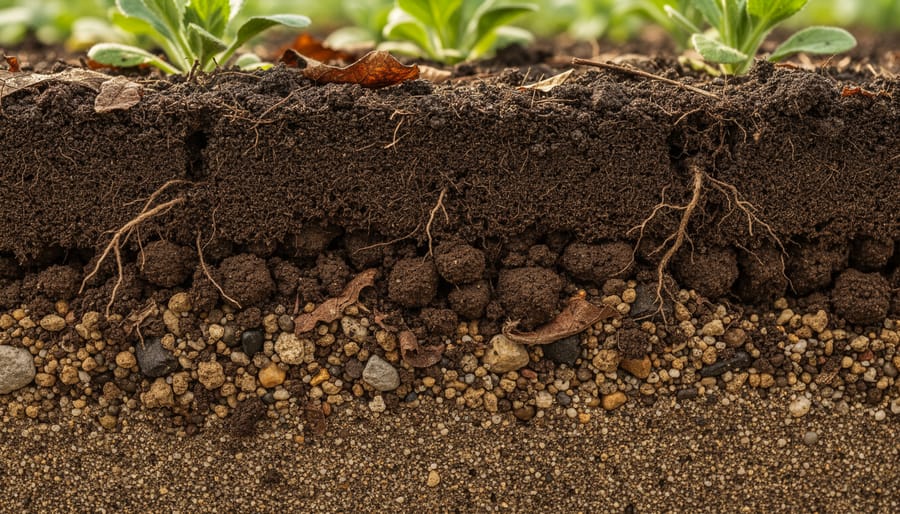
When you add organic matter to your soil, you’re doing something remarkable. Humus, the stable end-product of decomposition, has an exceptionally high CEC—sometimes 10 to 30 times higher than clay particles. Think of it as installing thousands of tiny nutrient warehouses throughout your lawn. As organic matter breaks down, it creates negatively charged sites that grab onto calcium, magnesium, potassium, and other essential nutrients your grass needs.
The beauty of this approach is its accessibility. You don’t need a soil science degree or expensive amendments. Regular applications of compost through compost topdressing techniques can transform your soil’s nutrient-holding capacity over time. I’ve seen sandy lawns that once required weekly fertilizing maintain lush growth with half the inputs after just two seasons of consistent organic matter additions.
Start small if you’re new to this. A quarter-inch layer of quality compost applied once or twice yearly makes a measurable difference. You’re not just feeding your lawn; you’re building a sustainable soil ecosystem that works harder for you with each passing season. This is environmental stewardship that actually saves you money and effort in the long run.
Base Saturation: The Balance Your Soil is Begging For
The Ideal Nutrient Recipe for Healthy Turf
Think of your soil’s CEC like a perfectly balanced smoothie recipe—you need the right ingredients in the right proportions for optimal results. When it comes to turf health, we’re aiming for a specific nutrient blend on those exchange sites we talked about earlier.
The ideal recipe breaks down like this: calcium should occupy about 60-70% of your CEC sites, making it the superstar of soil nutrients. Magnesium follows at 10-20%, potassium sits comfortably at 2-5%, and other nutrients like sodium and hydrogen fill in the remaining spots. These aren’t arbitrary numbers—they represent decades of research showing what healthy, thriving turf actually needs.
When these ratios slip out of balance, your lawn starts showing its displeasure in various ways. Too much magnesium, for instance, can lock out calcium, leading to weak cell walls and grass that’s more susceptible to disease and drought stress. I’ve seen lawns that looked perpetually tired despite regular fertilizing, only to discover their calcium-magnesium ratio was completely inverted.
Excessive potassium creates similar headaches, blocking magnesium uptake and leaving you with yellowing grass that just won’t green up no matter how much fertilizer you throw at it. This phenomenon, called nutrient lockout, is like having plenty of food in your refrigerator but being unable to open the door.
Perhaps most frustrating is when high sodium levels crowd out the beneficial cations entirely. Your grass becomes stunted, disease-prone, and struggles to access the nutrients it desperately needs—even though soil tests show adequate nutrient levels. Getting these ratios right isn’t just about feeding your lawn; it’s about ensuring your grass can actually use what you’re providing, creating that lush, resilient turf you’re working toward.
When Good Nutrients Go Bad: The Calcium-Magnesium Tug-of-War
Here’s the thing about soil nutrients: having them present doesn’t always mean your grass can actually use them. It’s like having a fully stocked pantry but discovering someone changed all the locks on the cupboards.
The calcium-magnesium relationship is where this drama plays out most often in turf soils. Both are essential nutrients that occupy CEC sites, but when the balance tips too far in either direction, problems emerge. Think of these two minerals as dance partners who need equal floor space. When one hogs the spotlight, the other can’t perform.
Too much calcium in relation to magnesium creates a tight soil structure that resists water infiltration. You’ll notice poor drainage and compaction issues, even though your soil test shows plenty of both nutrients present. Conversely, excessive magnesium can create a sticky, dispersed soil structure that also drains poorly and may develop a surface crust after rain.
The ideal ratio varies slightly by soil type, but generally you’re aiming for calcium to occupy about 60-70 percent of your CEC sites, with magnesium claiming 10-20 percent. When magnesium creeps above 25 percent of base saturation, it starts blocking calcium uptake even though calcium is physically present in the soil.
This is why a complete soil test matters so much. You might see adequate magnesium levels and think all is well, but if it’s disproportionate to calcium, your turf can display magnesium deficiency symptoms like interveinal yellowing in older leaf blades. The solution isn’t always adding more nutrients but rather rebalancing what’s already there through targeted amendments and encouraging the natural buffering capacity that organic matter provides.
Testing Your Soil: What You Need to Know Before You Start Fixing
Reading Your Soil Test Like a Pro (Even If You’re Not One)
When you receive your comprehensive soil testing results, don’t let the numbers intimidate you. Think of it as getting a report card for your soil, one that tells you exactly what your lawn needs to thrive.
Look for the CEC number first, usually expressed as milliequivalents per 100 grams. If you see something like CEC: 12, you’re working with moderate holding capacity, typical of many home lawns. Sandy soils might show 5-10, while clay-rich soils can reach 20-30. This number tells you how much your soil can hold onto nutrients before they wash away.
Next, scan for base saturation percentages. These show what’s actually occupying those nutrient holding spots. Ideally, you want to see calcium around 60-70 percent, magnesium 10-20 percent, potassium 2-5 percent, and other nutrients filling the remainder. If your calcium is only at 40 percent while magnesium sits at 30 percent, that imbalance might explain why your grass isn’t responding to fertilizer.
The recommendations section translates these numbers into action. You might see suggestions like “add gypsum” or “incorporate compost.” These aren’t random. They’re targeted fixes based on your soil’s unique chemistry. A low CEC with poor base saturation often means one thing: your soil needs more organic matter to hold nutrients better and create those ideal ratios that make grass thrive naturally.
Practical Fixes: Improving CEC and Balancing Base Saturation in Your Lawn
Building CEC: The Long Game That Pays Off
Here’s the truth about improving your soil’s CEC: it’s not an overnight transformation, and that’s actually good news. Unlike quick-fix chemical solutions that can disrupt your soil ecosystem, building CEC naturally is like investing in a retirement account. Small, consistent deposits compound over time into something genuinely valuable.
Start with compost topdressing, the most accessible strategy for home gardeners. Apply a quarter-inch layer of quality compost across your lawn twice yearly, ideally in spring and fall. This doesn’t sound like much, but remember that CEC improvement happens in the root zone, not just on the surface. As earthworms and beneficial organisms pull that organic matter down into the soil profile, you’re gradually building those negatively charged sites that hold onto nutrients.
Quality matters tremendously here. Look for finished compost that’s dark, crumbly, and smells earthy, not sour or ammonia-like. Municipal compost works well for most lawns, but if you’re dealing with particularly sandy soil, seek out compost with higher humus content. Your county extension office can often recommend local sources that have been tested for consistency.
Between compost applications, practice grasscycling by leaving clippings on your lawn. Those clippings contribute organic matter with every mowing, feeding the soil biology that creates humus and boosts CEC. Avoid excessive tilling or disturbance, which breaks down organic matter faster than you can add it.
Track your progress by testing CEC every two to three years. Most gardeners see measurable improvements within 18 to 24 months, with sandy soils showing the most dramatic changes. Your lawn will tell the story too through deeper green color, better drought tolerance, and reduced fertilizer needs as that improved CEC starts holding nutrients right where roots can access them.
Correcting Base Saturation: Targeted Amendments That Work
Once you understand your soil’s base saturation levels from testing, you can make targeted amendments to bring those numbers into the ideal range. Think of this as fine-tuning your soil’s nutrient-holding capacity rather than just dumping fertilizer and hoping for the best.
For lawns low in calcium (below 60-70% base saturation), regular agricultural lime is your go-to amendment. It raises pH while boosting calcium levels, making it perfect for acidic soils. Application rates typically range from 25 to 50 pounds per 1,000 square feet, but always follow your soil test recommendations. You’ll want to apply lime in fall or early spring when you can water it in thoroughly. Results aren’t instant—expect to see improvements over 3-6 months as the lime breaks down and gets incorporated into your soil’s exchange sites.
If your soil test reveals low magnesium (under 10-15% base saturation), dolomitic lime delivers both calcium and magnesium. It’s especially valuable in sandy soils where magnesium leaches away quickly. Apply at similar rates to regular lime, again guided by your specific soil test results.
Here’s where it gets interesting: when you need calcium but your pH is already fine or high, gypsum (calcium sulfate) becomes incredibly useful. It adds calcium without raising pH and actually helps improve soil structure in heavy clay. Use 20-40 pounds per 1,000 square feet, and you can apply it any time of year.
For potassium deficiencies (below 3-5% base saturation), sulfate of potash or greensand work beautifully in organic programs. These release slowly and won’t burn your lawn like some synthetic sources can.
The key to success? Work with your soil test results, apply amendments during active growing seasons when possible, and remember that soil pH management and base saturation go hand-in-hand. Retest annually to track your progress and adjust your strategy accordingly.
The Fertilizer Strategy for High vs. Low CEC Soils
Understanding your soil’s CEC is like having a personalized feeding plan for your lawn. Sandy soils with low CEC are like a colander—nutrients flow right through them. Clay soils with high CEC act more like a sponge, holding onto nutrients much longer. This fundamental difference should completely change how you fertilize.
For low CEC soils (typically under 10), think “little and often.” Apply smaller amounts of fertilizer more frequently throughout the growing season. Instead of dumping a heavy dose that will leach away with the next rain, split your applications into three or four lighter feedings. This approach prevents waste, saves you money, and most importantly, protects nearby waterways from nutrient runoff. A quarter-inch of water after each application helps nutrients reach the root zone before they escape.
High CEC soils (above 20) can handle less frequent, heavier applications because they naturally hold nutrients longer. You might only need two substantial feedings per season. However, don’t interpret this as permission to over-fertilize. More isn’t always better, even when your soil can store it.
Regardless of your CEC, embracing organic fertilization practices offers environmental benefits that synthetic options can’t match. Organic amendments release nutrients slowly, matching your lawn’s natural uptake patterns while building soil structure over time. This reduces the risk of nutrient runoff that pollutes streams and lakes, making you a responsible steward of your local environment while achieving that beautiful lawn you’re after.
If you’ve made it this far, congratulations! You now understand more about what makes soil tick than most lawn owners ever will. The best part? CEC and base saturation aren’t mysterious forces beyond your control. They’re manageable soil properties that you can improve with simple, sustainable practices.
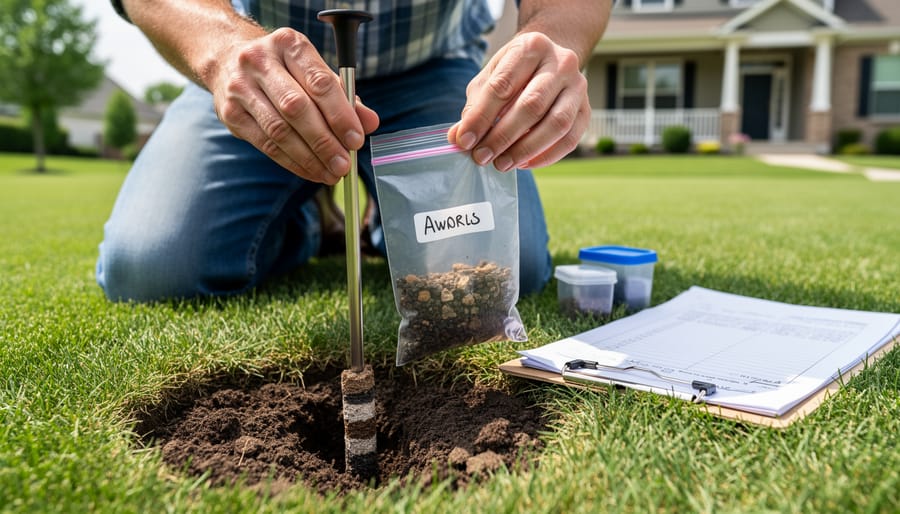
Your first step is always a soil test. Think of it as getting a health checkup for your lawn. For about twenty dollars and a couple weeks of waiting, you’ll know exactly where your soil stands and what it needs. No more guessing, no more wasting money on fertilizers your soil can’t hold onto anyway.
Once you have that information, the path forward becomes clear. Building organic matter is the single most accessible improvement anyone can make, regardless of budget or experience level. Leaving grass clippings where they fall, top-dressing with compost once or twice a year, or simply being patient with organic amendments all contribute to increasing your soil’s CEC over time. This isn’t overnight magic, and that’s actually a good thing. Slow, steady improvements create lasting change that won’t disappear after one rainy season.
Remember, healthy soil is the foundation of a healthy lawn. When your soil can hold and exchange nutrients efficiently, everything else gets easier. You’ll need less fertilizer, your grass will handle stress better, and you’ll spend less time troubleshooting problems that trace back to poor nutrient availability.
The knowledge you’ve gained here puts you in the driver’s seat. You’re not just following someone else’s fertilizer schedule anymore. You understand why certain practices work and others don’t. That understanding is what transforms lawn care from frustrating guesswork into confident, sustainable stewardship. Your lawn and the environment will thank you for it.