Here’s the truth that might surprise you: Integrated Pest Management does use pesticides, but it’s the complete opposite of spraying chemicals at the first sign of a bug. Think of IPM as the difference between taking antibiotics for every sniffle versus saving them for when you genuinely need them. This science-backed approach treats pesticides as a last resort, not a first response, and that distinction makes all the difference for your garden’s ecosystem and your family’s health.
The confusion is understandable. You’ve probably seen IPM marketed as “natural” or “organic,” which leads many gardeners to assume it’s completely chemical-free. The reality is more nuanced and, honestly, more practical. IPM relies on a hierarchy of strategies: monitoring pest populations, using physical barriers, encouraging beneficial insects, adjusting cultural practices like watering schedules, and only then considering targeted pesticide applications when other methods aren’t enough. When pesticides are necessary, IPM practitioners choose the least toxic option that will solve the specific problem, apply it at the most effective timing, and use the minimum amount needed.
This isn’t greenwashing or conventional pest control with a fancy name. It’s a thoughtful framework that acknowledges both the genuine need to protect your plants and the legitimate concern about environmental impact. Whether you’re managing a vegetable garden, lawn, or ornamental beds, understanding how IPM incorporates pesticides helps you make informed decisions that actually work long-term.
What Integrated Pest Management Actually Means

The IPM Pyramid: Understanding the Priority System
Think of IPM as a pyramid, where the base represents your first line of defense and the narrow tip at the top is your last resort. This visual helps you understand why IPM is fundamentally different from conventional pest control, even though pesticides remain part of the toolkit.
At the pyramid’s broad base sits prevention. This is where you invest most of your energy—choosing pest-resistant plant varieties, improving soil health, and creating conditions where beneficial insects thrive while pests struggle. Prevention might mean adjusting your watering schedule to avoid fungal problems or planting marigolds to deter certain insects naturally.
The next level up involves monitoring and identification. Here, you’re regularly checking your garden, counting pest populations, and identifying exactly what you’re dealing with. This step ensures you’re not overreacting to a few harmless bugs that your garden can easily tolerate.
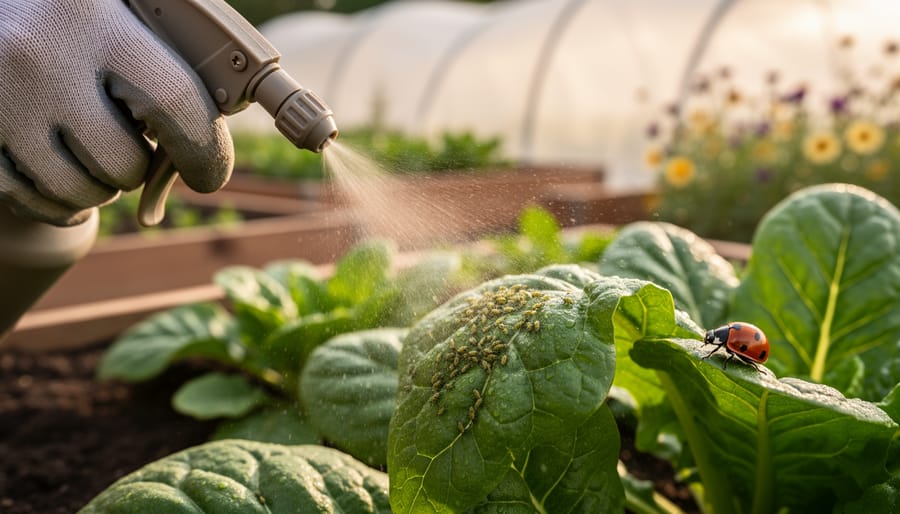
Moving higher, you’ll find non-chemical controls like introducing ladybugs for aphid problems, using physical barriers such as row covers, or hand-picking larger pests. You might also employ cultural practices like crop rotation or adjusting planting times to avoid peak pest seasons.
Only at the pyramid’s tip do pesticides appear. When you reach this level, you’ve already tried prevention, monitoring showed unacceptable pest levels, and non-chemical methods either failed or weren’t practical. Even then, IPM favors targeted, low-toxicity options over broad-spectrum chemicals. This hierarchy ensures pesticides become the exception, not the automatic response, making your pest management truly sustainable.
When and Why IPM Uses Pesticides
The Threshold Concept: Not Every Pest Needs Treatment
Here’s something that might surprise you: in Integrated Pest Management, a few aphids on your roses or some grubs in your lawn aren’t automatically cause for alarm. That’s because IPM operates on the principle of thresholds, which fundamentally changes how we think about pest control.
Think of thresholds as your decision-making guideposts. The economic threshold refers to the pest population level at which the damage they’ll cause costs more than the treatment itself. For home gardeners, the aesthetic threshold is often more relevant—this is the point where pest damage becomes visually unacceptable or threatens plant health beyond your tolerance level.
Let’s say you spot five Japanese beetles on your fruit tree. In traditional pest control, you might reach for a spray immediately. With IPM, you’d ask yourself: Are these five beetles actually causing significant damage? Will their numbers likely increase to problematic levels? Can beneficial insects handle them naturally? If the answer is no to the first two questions and yes to the third, you simply monitor and wait.
This threshold approach is exactly why IPM uses fewer pesticides overall. You’re not treating every single pest you see—you’re only intervening when populations exceed acceptable levels. A healthy garden ecosystem can handle some pest presence. In fact, those small pest populations actually support beneficial insects that need them as a food source, creating a natural balance that protects your plants long-term.
The Types of Pesticides IPM Prefers
Biological Pesticides: Nature’s Own Solutions
When IPM does call for pesticide use, biological options are your first line of defense—and honestly, they’re pretty amazing. These products harness nature’s own pest control mechanisms, making them a perfect fit for sustainable gardening.
Let’s start with Bacillus thuringiensis, or Bt as most gardeners know it. This naturally occurring soil bacterium specifically targets caterpillars and certain larvae without harming beneficial insects, pets, or people. I’ve used Bt spray on cabbage worms with fantastic results—those pesky caterpillars stopped munching within hours, while my garden’s pollinators went about their business undisturbed.
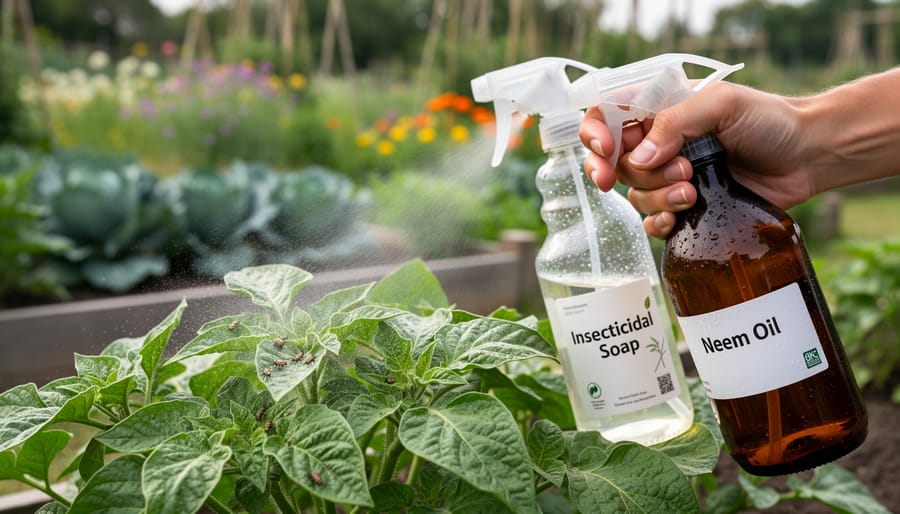
Neem oil is another superstar in the biopesticide world. Extracted from neem tree seeds, it disrupts the life cycle of soft-bodied insects like aphids and whiteflies. What I love about neem is its versatility—it works as both a pesticide and fungicide, tackling multiple problems with one earth-friendly solution.
Insecticidal soaps might sound fancy, but they’re beautifully simple. These specially formulated soaps break down insect cell membranes on contact, particularly effective against spider mites and mealybugs. The best part? They break down quickly, leaving no harmful residues in your soil.
Microbial controls take this concept even further, using beneficial fungi, bacteria, and even nematodes to target specific pests. These microscopic allies work quietly beneath the surface, controlling pest populations while supporting your garden’s natural ecosystem. The key advantage of all these biological pesticides is their selectivity—they target pests while preserving the beneficial organisms that keep your garden thriving naturally.
Targeted Synthetic Options: Precision Over Blanket Application
When IPM does call for pesticides, think of it as using a scalpel rather than a sledgehammer. Instead of spraying broad-spectrum chemicals that kill everything in their path, IPM practitioners select targeted synthetic options designed to address specific pest problems while leaving the rest of your garden ecosystem intact.
These selective pesticides work in clever ways. Some target only certain insect families, meaning a product designed for aphids won’t harm ladybugs or honeybees. Others might be formulated to attract specific pests through pheromones or taste preferences that beneficial insects simply ignore. It’s like setting a trap that only the troublemakers fall into.
Timing matters tremendously here. IPM practitioners apply these products when and where they’re actually needed, not on a predetermined schedule. You might spot-treat a rose bush suffering from Japanese beetles while leaving the rest of your garden untouched. This precision approach drastically reduces the total amount of pesticide entering your landscape.
Protecting beneficial insects remains a top priority throughout this process. That’s why IPM guidelines often recommend applying pesticides during early morning or evening hours when pollinators are less active, or choosing formulations that break down quickly in sunlight.
The beauty of this targeted approach is that it acknowledges reality: sometimes pests truly threaten your plants’ survival. But rather than carpet-bombing your entire yard, you’re making surgical strikes that solve the immediate problem while preserving the good guys working hard to keep your garden healthy.
How IPM Pesticide Use Differs From Conventional Approaches
Think of conventional pest control like taking antibiotics every day whether you’re sick or not—it’s preventative overkill. Traditional approaches often rely on calendar-based spraying, where pesticides are applied on a fixed schedule regardless of whether pests are actually present. It’s a “spray first, ask questions later” mentality that can feel reassuringly proactive but often does more harm than good.
IPM flips this script entirely. The philosophy is “diagnose, then treat”—much like how your doctor examines you before prescribing medication. Instead of automatic weekly or monthly applications, IPM practitioners monitor pest populations and only intervene when numbers exceed acceptable thresholds. This means you might go an entire season without needing pesticides if other methods keep problems in check.
The differences become even more striking when you look at product selection. Conventional approaches frequently default to broad-spectrum synthetic pesticides that kill everything in their path—beneficial insects included. IPM prioritizes targeted solutions: introducing ladybugs for aphids, using insecticidal soaps for soft-bodied pests, or selecting the least toxic option that will effectively address the specific problem at hand. When synthetic pesticides are necessary, IPM chooses narrow-spectrum products that target the pest while minimizing collateral damage.
Application frequency tells the whole story. Where traditional programs might spray 8-12 times per season “just to be safe,” a well-executed IPM plan might require only 1-3 applications—and sometimes none at all. Each application is strategic, timed precisely when pests are most vulnerable and when beneficial insects are least active.
The environmental impact difference is substantial. Conventional methods often lead to pesticide resistance, requiring stronger chemicals over time. They can contaminate groundwater, harm pollinators, and disrupt entire ecosystems. IPM’s thoughtful approach preserves beneficial organisms, protects water quality, and actually improves long-term pest management by maintaining natural predator-prey relationships. You’re not just protecting your garden—you’re becoming part of a healthier, more sustainable ecosystem.
Building Your Eco-Friendly IPM Landscape: The Steps Before Pesticides
Prevention: Designing Pest Problems Away
The best pest problem is the one that never happens, and thoughtful design can keep many issues from taking root in the first place. Think of it as setting your garden up for success rather than setting yourself up for constant battles.
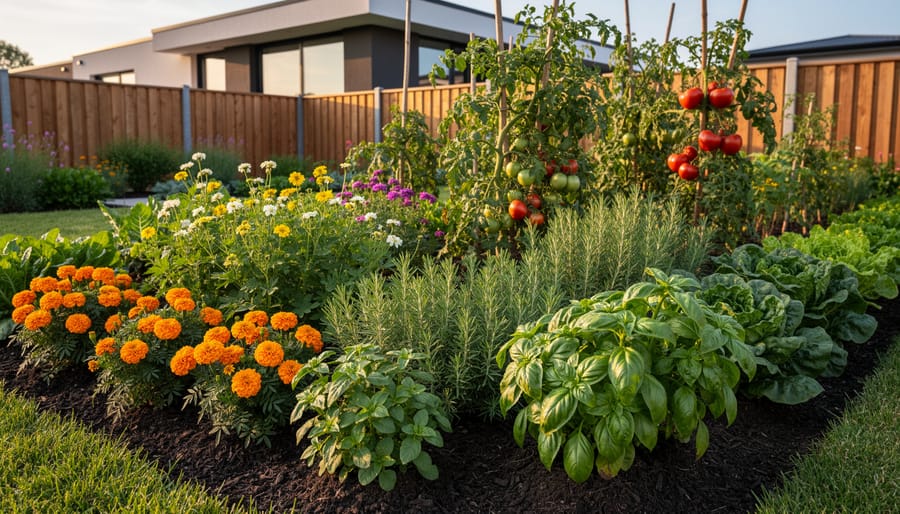
Start with pest-resistant plant selection—choosing varieties suited to your climate and resistant to common local pests means you’re working with nature rather than against it. Native plants are champions here, having evolved alongside local conditions and requiring far less intervention.
Proper spacing might seem like a small detail, but crowded plants create the humid, airflow-deprived conditions that pests and diseases love. Give your plants room to breathe, and you’ll notice fewer problems from the start. Similarly, building healthy soil creates strong, resilient plants that naturally fend off pests better than stressed, struggling ones.
Consider your landscape layout too. Mixing plant types rather than planting in monoculture blocks makes it harder for pest populations to explode. A diverse garden naturally houses beneficial insects that keep problem bugs in check. These preventive strategies are the foundation of IPM, reducing the need for any intervention—including the targeted pesticides IPM reserves as last resorts.
Monitoring: Catching Problems Early
Think of monitoring as your garden’s early warning system. Just like checking your car’s oil prevents engine trouble, regular pest inspections catch problems when they’re still manageable with minimal intervention.
Start with a weekly garden walk-through, especially during growing season. Look for telltale signs like chewed leaves, discolored spots, sticky residue, or wilting plants. Get up close and flip leaves over since many pests hide underneath. You might spot the culprits themselves or evidence like webbing, eggs, or droppings.
For lawns, watch for brown patches, thinning areas, or spots that feel spongy underfoot. A simple trick: push a coffee can with both ends removed into the soil, fill it with soapy water, and wait ten minutes. If grubs or other soil pests are present, they’ll float to the surface.
The beauty of early detection is that a small aphid colony might wash off with your hose, while a full-blown infestation might require stronger measures. Keep a garden journal noting what you find and when. You’ll start recognizing patterns, like that Japanese beetles always appear in late June, giving you time to prepare preventive strategies. This proactive approach is what makes IPM so effective while keeping pesticide use minimal.
Non-Chemical Controls: Your First Line of Defense
Before reaching for any spray bottle, IPM encourages you to explore gentler, non-chemical tactics that often solve pest problems beautifully. Think of these as your secret weapons that work with nature rather than against it.
Start simple: hand-picking larger pests like tomato hornworms or Japanese beetles might seem tedious, but it’s remarkably effective for small gardens. A strong blast from your garden hose can dislodge aphids and spider mites without harming plants. Physical barriers like row covers, copper tape for slugs, or netting over berry bushes prevent pests from ever reaching your plants.
Here’s where it gets exciting: beneficial insects are nature’s pest control team. Ladybugs devour aphids, lacewings tackle whiteflies, and parasitic wasps control caterpillars. You can attract these helpers by planting diverse flowers and herbs nearby.
Cultural controls address the root cause of pest problems. Proper spacing improves air circulation, reducing fungal diseases. Rotating crops confuses pests that overwinter in soil. Watering at ground level keeps foliage dry and disease-free. Mulching suppresses weeds while improving soil health.
These methods require patience and observation, but they’re incredibly satisfying when they work. Most importantly, they keep your garden ecosystem balanced and thriving.
Making Smart Pesticide Choices When You Need Them
When you’ve exhausted other IPM methods and still need to reach for a pesticide, making informed choices can mean the difference between solving your problem and creating new ones. Think of pesticides as your last resort, not your first response.
Start by reading the entire product label before purchasing anything. I know it’s tempting to grab whatever promises quick results, but labels contain crucial information about active ingredients, target pests, and application instructions. Look for products specifically formulated for your problem pest rather than broad-spectrum killers that wipe out everything in their path.
Spot-treating is your best friend in IPM. Instead of blanket-spraying your entire yard, apply pesticides only where you’ve identified active infestations. This targeted approach uses significantly less product and minimizes environmental impact. I’ve seen homeowners solve their pest problems with just a few ounces of properly applied pesticide rather than gallons of unnecessary spray.
Timing matters tremendously. Apply products during calm weather to prevent drift, and avoid treating during peak pollinator activity hours. Early morning or evening applications protect beneficial insects that might be visiting your landscape. Speaking of which, implementing pollinator-safe pest control practices should always be a priority, even when using low-toxicity options.
Consider the pesticide hierarchy: start with the least toxic option that will effectively address your problem. Insecticidal soaps, horticultural oils, and botanical pesticides like neem often work beautifully for common garden pests while breaking down quickly in the environment. Reserve synthetic products for situations where nothing else will work.
Finally, keep records of what you’ve applied, where, and when. This documentation helps you evaluate effectiveness and adjust your approach for next season. You might discover that certain products work better than others, or that you can extend intervals between applications as your overall IPM strategy strengthens your landscape’s natural defenses.
So, does integrated pest management use pesticides? Yes, it does—but here’s the important part: IPM isn’t about being pesticide-free, it’s about being pesticide-smart. And that distinction makes all the difference for your garden, your family, and the environment.
Think of IPM as a toolkit where pesticides are just one tool among many, and they’re only pulled out when absolutely necessary. You’re not relying on a spray bottle as your first line of defense. Instead, you’re creating a healthy, balanced garden ecosystem that naturally resists pest problems. When challenges do arise, you’re addressing them thoughtfully, using the least harmful option that will actually work.
By embracing IPM principles in your own yard, you’re genuinely part of the solution. You’re reducing unnecessary chemical use, protecting beneficial insects like bees and butterflies, and creating healthier soil and plants. Even if you occasionally need to use a targeted pesticide for a specific problem, you’re doing so as a last resort rather than a default action.
This approach isn’t about perfection—it’s about progress. IPM acknowledges that real-world pest control sometimes requires real-world solutions, including judicious pesticide use. But by following IPM’s monitoring, prevention, and threshold-based approach, you’re achieving effective pest control while being a responsible steward of your little corner of the earth. That’s something to feel good about, whether you’re tending a small vegetable patch or managing acres of lawn.