Look closely at the flower structure and leaf pattern of those yellow invaders dotting your lawn—you’re likely dealing with dandelions, lesser celandine, or creeping buttercup, each requiring different removal strategies. Pull dandelions before they set seed by grasping the base firmly and extracting the entire taproot with a weeding tool, ideally after rain when soil is moist. Tackle lesser celandine in early spring by digging out the entire root system including tiny bulbils, since even fragments can regenerate into new plants. Apply corn gluten meal in early March as a pre-emergent that prevents weed seeds from germinating while feeding your lawn with 9% nitrogen.
These cheerful yellow blooms aren’t just random visitors—they’re signals that your lawn has underlying weaknesses. Bare patches, compacted soil, and inadequate mowing height create perfect conditions for opportunistic weeds to establish themselves when temperatures warm and spring rains arrive. The good news? You don’t need harsh chemicals to reclaim your turf. By understanding what you’re fighting and why it appeared now, you can implement targeted solutions that address both the symptoms and root causes. This spring presents the ideal window to intervene before these weeds spread exponentially, transforming a manageable problem into a persistent headache that plagues you through summer and beyond. Let’s identify your specific culprits and create a sustainable action plan.
Why Yellow Weeds Dominate Your Lawn Every Spring
If you’ve noticed your lawn turning into a yellow-dotted carpet each spring, you’re not alone—and there’s actually a fascinating reason why these cheerful but unwelcome visitors show up right on schedule. Yellow-flowered weeds like dandelions, wild mustard, and lesser celandine have evolved to take advantage of specific spring conditions that give them a significant edge over your grass.
The secret to their success starts underground during winter. While your lawn grass sits dormant, these weeds are preparing for an explosive spring entrance. Many yellow-flowering weeds break dormancy at surprisingly low soil temperatures—often when the ground reaches just 45-50°F. That’s typically several weeks before most turfgrasses wake up and start actively growing. This head start means they’re already establishing deep root systems and producing leaves while your grass is still hitting the snooze button.
Understanding when weeds emerge helps explain why spring feels like such a losing battle. These plants aren’t just early risers—they’re incredibly efficient at capturing resources. Their low-growing rosette formation allows them to absorb maximum sunlight without competing upward, while their taproots dive deep to access moisture and nutrients that shallow grass roots can’t reach yet.
Spring’s cool, moist conditions are essentially a five-star resort for these weeds. They’ve adapted to thrive in environments where grass struggles. Many produce thousands of seeds per plant, ensuring future generations, while others spread through aggressive root systems that fragment and regrow from small pieces.
The environmental factor that really tips the scales? Bare spots and thin turf. Winter damage, compacted soil, and areas with poor drainage create perfect opportunities for these opportunistic plants. They’re not invading a healthy lawn—they’re filling the gaps your grass hasn’t claimed.
The good news? Once you understand their strategy, you can develop a sustainable approach that strengthens your lawn’s natural defenses rather than relying solely on reactive treatments.
The Most Common Yellow Spring Weeds (And How to Identify Them)
Dandelions: The Notorious Spring Survivor
You’ve probably spotted them countless times—those cheerful yellow flowers dotting your lawn like uninvited guests at a garden party. Dandelions are the ultimate spring survivors, and there’s a good reason they’re so notoriously difficult to eliminate.
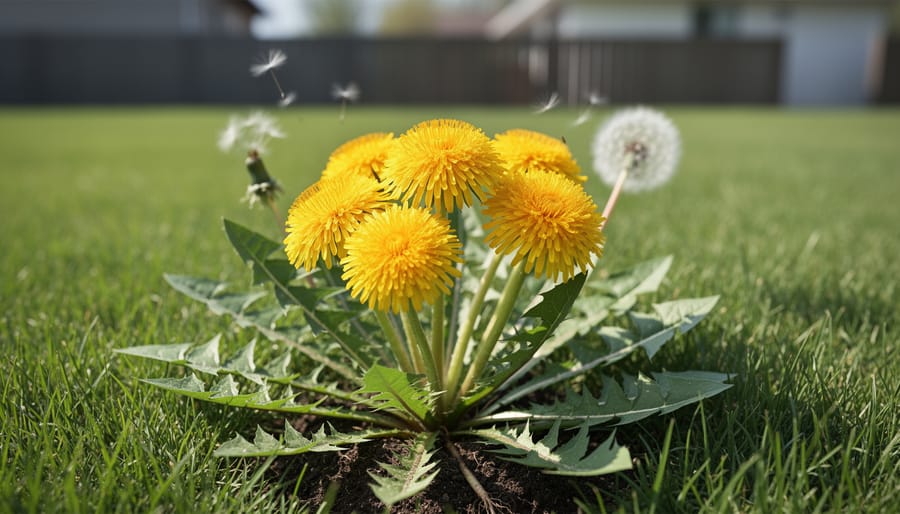
Identifying dandelions is straightforward once you know what to look for. Each bright yellow flower sits atop a hollow, leafless stem that oozes a milky sap when broken. The leaves form a distinctive rosette at ground level, with their deeply toothed edges giving them their name—from the French “dent de lion,” meaning lion’s tooth.
What makes dandelions particularly persistent is their impressive taproot system. These roots can plunge 6 to 18 inches deep into your soil, sometimes even deeper in optimal conditions. This remarkable root structure serves as both an anchor and a storage system, allowing the plant to survive mowing, light weeding attempts, and even harsh weather conditions. If you leave even a small piece of that taproot behind when pulling, the dandelion will regenerate and return with a vengeance.
Each plant can produce up to 15,000 seeds per season, and those familiar white puffballs ensure widespread distribution with the slightest breeze. Understanding this lifecycle is your first step toward effective, sustainable management.
Creeping Buttercup: The Moisture-Loving Spreader
If you’ve noticed glossy, buttercup-yellow flowers hugging the ground in the damper areas of your lawn, you’re likely dealing with Creeping Buttercup. This persistent spreader loves the moist conditions that spring brings, making it a common sight in poorly drained lawns or shady spots that stay wet longer.
Creeping Buttercup is easy to identify by its bright yellow, five-petaled flowers that sit just an inch or two above the ground. The leaves are distinctive too—divided into three leaflets with a slightly hairy texture. What makes this weed particularly challenging is its spreading habit. It sends out horizontal runners, called stolons, that root at the nodes and create new plants, forming thick patches if left unchecked.
The key to managing Creeping Buttercup sustainably is addressing the underlying moisture issue. Improving drainage through aeration, reducing shade where possible, and avoiding overwatering will make your lawn less hospitable to this moisture-loving invader. Hand-pulling works for small patches, but you’ll need to remove all the runners to prevent regrowth.
Lesser Celandine: The Early Spring Invader
Lesser celandine is a sneaky invader that gets a head start on your lawn, often appearing in late winter or early spring when everything else is still dormant. You’ll recognize this perennial by its cheerful buttercup-like yellow flowers with eight to twelve petals and glossy, dark green, heart-shaped leaves that hug the ground. What makes this plant particularly challenging is its ability to form thick, suffocating mats that choke out grass before it even has a chance to green up. Look for it in moist, shady spots first, though it can spread into sunnier areas. The plant spreads through tiny bulbils that develop along its roots and in leaf axils, making it remarkably persistent. If you spot those shiny leaves carpeting bare spots in late winter, you’ve likely found your culprit. Early identification is key since this invasive spreads rapidly once established.
Yellow Wood Sorrel: The Clover Imposter
Yellow wood sorrel often gets mistaken for clover, but a closer look reveals its true identity. While clover sports rounded leaves in groups of three, wood sorrel displays delicate heart-shaped leaflets that fold up at night or in bright sunlight—a charming but tell-tale characteristic. The cheerful yellow flowers, typically with five petals, bloom from spring through fall and produce seed pods that explosively scatter seeds when touched. This vigorous spreader thrives in both sunny and partially shaded areas, making it a persistent lawn guest. The good news? Wood sorrel is edible with a pleasant lemony tang, so if you can’t beat it immediately, you might enjoy it in salads while developing your long-term management strategy.
Black Medic: The Nitrogen-Loving Ground Hugger
Black medic hugs the ground with trailing stems and clusters of tiny yellow flowers that look like miniature versions of its relative, clover. Each flower head contains 10-15 bright yellow blooms that later form characteristic black seedpods, giving this weed its name. Here’s the silver lining: black medic’s presence actually indicates your soil is low in nitrogen. As a legume, it fixes atmospheric nitrogen into the soil, essentially doing free fertilizer work for you. While you might not want it dominating your lawn, understanding this relationship helps you address the underlying issue rather than just the symptom.
Your Spring IPM Calendar: Month-by-Month Action Steps
Early Spring (March): Prevention and Preparation
March is your golden opportunity to outsmart those yellow weeds before they even think about sprouting. Think of it as setting up a defensive perimeter around your lawn while those pesky invaders are still dormant underground. This is when prevention truly shines.
Start by getting to know your soil. A simple soil test will reveal pH levels and nutrient deficiencies that might be giving yellow weeds an advantage over your grass. Many cooperative extension offices offer affordable testing, and the results will guide your entire spring strategy. Yellow weeds often thrive in compacted, poorly nourished soil where grass struggles, so addressing these issues now makes all the difference.
Pre-emergent herbicides can be your friend if applied correctly, but timing is everything. Apply them when soil temperatures consistently reach 50-55 degrees Fahrenheit for several days. Too early or too late, and you’ve wasted your effort. For those preferring organic approaches, corn gluten meal works as a natural pre-emergent, though it requires precise timing and won’t be quite as effective as synthetic options.
Don’t overlook cultural practices either. Rake away dead thatch and aerate compacted areas to help your grass breathe and compete more effectively. Overseed thin spots where yellow weeds love to sneak in. A thick, healthy lawn is nature’s best weed barrier.
Finally, sharpen your mower blades and commit to proper mowing height for your grass type. Taller grass shades out weed seeds trying to germinate. These simple preparation steps create an environment where your lawn thrives and yellow weeds struggle.
Mid-Spring (April): Active Monitoring and Early Intervention
April brings warmer weather and, unfortunately, the peak of yellow weed activity. This is when those dandelions and similar invaders are in full bloom, producing the seeds that will become next year’s problem. But don’t worry—this is also your window for smart, effective intervention that can make a real difference.
Start by scouting your lawn at least once a week. Walk your entire property with a critical eye, noting where yellow weeds are concentrated. You’ll often find them clustered in thin or compacted areas, along edges, or in spots where grass struggles. This information helps you understand the underlying issues contributing to weed success.
Set yourself a realistic threshold. If you’re seeing fewer than five dandelions per hundred square feet, hand-pulling might be entirely manageable. It’s actually quite satisfying work on a pleasant spring morning, and when populations are still reasonable, this sustainable approach can be incredibly effective. The key is timing—pull them before they go to seed, and make sure you’re getting the entire taproot. A dandelion weeder tool makes this job much easier and protects your back.
For larger infestations, spot treatments become necessary. Consider targeted applications of organic herbicides containing ingredients like iron-based formulas or horticultural vinegar. These work best on young, actively growing weeds during sunny, dry conditions. Always follow product instructions carefully, and apply only where needed rather than broadcasting across your entire lawn. This targeted approach minimizes environmental impact while maximizing effectiveness, giving your grass the competitive advantage it needs to fill in those gaps naturally.
Late Spring (May): Competitive Exclusion and Maintenance
By late spring, your focus shifts from active weed removal to creating conditions where yellow weeds simply can’t compete. Think of it as crowding out the troublemakers by throwing a party for healthy grass instead.
Mowing height becomes your secret weapon now. Raise those mower blades to about 3 to 3.5 inches. I know it might feel counterintuitive, letting your grass grow taller, but here’s what happens: longer grass blades shade the soil surface, making it nearly impossible for those light-hungry weed seeds to germinate. Plus, deeper roots develop when grass grows taller, creating a more resilient lawn that basically tells weeds there’s no room at the inn.
Timing your fertilization correctly makes all the difference too. Late spring is ideal for a slow-release organic fertilizer application. This gives your grass the sustained energy boost it needs without the rapid growth spurts that chemical fertilizers create, which often leave lawns stressed and vulnerable to new weed invasions. Look for products with a balanced NPK ratio that feed your soil biology, not just your grass.
Here’s where things get exciting: overseeding bare or thin patches now prevents those spots from becoming next spring’s weed gardens. Yellow weeds are opportunists, remember? They thrive in gaps. By introducing new grass seed into weakened areas, you’re essentially locking the door before unwanted guests arrive.
The beauty of this competitive exclusion approach is its sustainability. You’re not constantly battling weeds; you’re building a lawn ecosystem so robust that weeds struggle to establish themselves. It’s preventive care at its finest, and your future self will thank you when next spring arrives with far fewer yellow invaders dotting your landscape.
Sustainable Control Methods That Actually Work
Cultural Controls: Your First Line of Defense
Before you reach for any weed killer, let’s talk about the most sustainable and cost-effective approach to managing those yellow spring weeds: building a healthier lawn that naturally crowds them out. Think of it as creating an environment where your grass thrives and weeds struggle to get established.
Start with proper mowing practices. Keep your grass at 3 to 4 inches tall during spring. This might feel counterintuitive if you’re used to a close-cropped lawn, but taller grass shades the soil surface, making it harder for weed seeds to germinate. Plus, deeper grass roots access more water and nutrients, giving your lawn a competitive edge.
Your watering strategy matters too. Water deeply but infrequently, encouraging grass roots to grow down rather than staying shallow. Aim for about one inch per week, including rainfall. Early morning watering reduces disease risk and gives grass the moisture it needs for the day ahead.
Spring aeration is your secret weapon against compacted soil. Those yellow weeds often love hard, oxygen-poor conditions where grass struggles. Core aeration creates breathing room for grassroots and improves water penetration.
Finally, test your soil and amend accordingly. Many yellow weeds tolerate poor soil that quality turfgrass cannot. Adding organic matter and adjusting pH creates conditions that favor your grass over invaders. A strong lawn care routine truly is your best defense against spring weed invasions.

Mechanical Removal: When and How to Do It Right
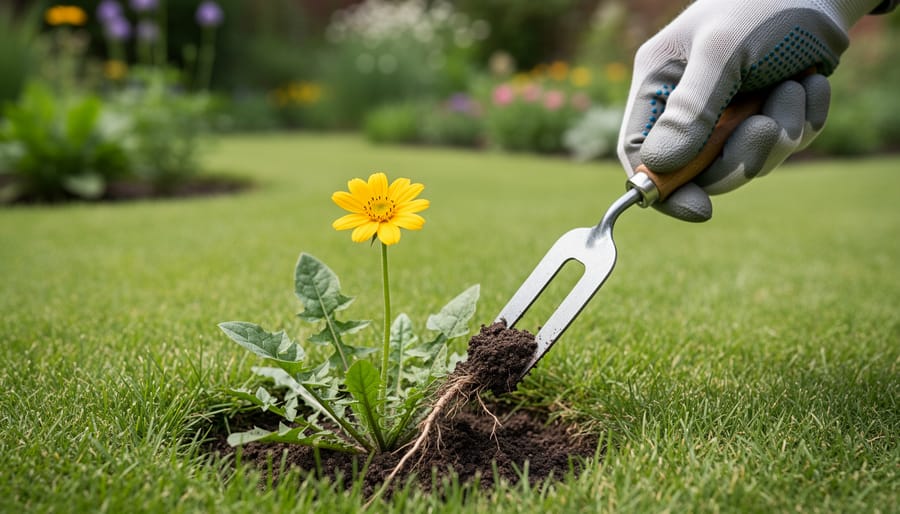
Sometimes the best solution is also the simplest. Hand-pulling yellow weeds like dandelions can be incredibly satisfying and effective, especially when you catch them early. The key is timing: tackle these invaders right after a good rain when the soil is moist and loosened. This makes it much easier to extract the entire root system, which is essential for preventing regrowth.
For shallow-rooted weeds like lesser celandine, your hands might be all you need. But for deep-taproot champions like dandelions, invest in a good weeding tool. I’m a big fan of the long-handled dandelion digger—it saves your back and provides excellent leverage to pop out those stubborn roots. The fishtail weeder is another great option that lets you work standing up while getting deep enough to remove the whole root.
Here’s my golden rule: pull before they flower. Once those cheerful yellow blooms appear, you’re racing against seed production. Even if you can’t prevent flowering entirely, removing them before seeds form prevents thousands of future problems. Always dispose of pulled weeds in your compost or yard waste—never leave flowering specimens on the lawn where they might continue setting seed. With consistent effort and the right technique, mechanical removal becomes your first line of defense in maintaining a healthy, weed-free lawn.
Organic and Selective Herbicides: The Targeted Approach
If you prefer working with nature rather than against it, organic and selective herbicides offer effective alternatives that won’t harm your lawn or the environment. Let me share what actually works.
Corn gluten meal is often touted as a natural pre-emergent, but here’s the honest truth: timing is everything, and it’s tricky. Applied in early spring before seeds germinate, it can suppress some yellow weeds like dandelions and crabgrass. However, it won’t work on established weeds, and you’ll need patience. Results typically appear after 2-3 seasons of consistent use. Think of it as a long-term investment rather than a quick fix.
Iron-based herbicides have become my go-to recommendation for spot-treating yellow weeds organically. Products containing iron HEDTA or chelated iron work by causing broadleaf weeds to literally burn out while leaving grass unharmed. You’ll see those cheerful dandelions turn dark and crispy within days. The beauty is that iron is actually beneficial to your lawn, potentially greening it up as it eliminates the competition. Apply on a sunny day when rain isn’t forecast for 24 hours for best results.
Selective herbicides containing ingredients like 2,4-D target broadleaf weeds without damaging grass. While synthetic, many are considered low-toxicity options when used properly. Apply when weeds are actively growing and temperatures are between 60-80°F.
Whatever route you choose, remember that no herbicide replaces good lawn care practices. Healthy, thick turf naturally crowds out weeds, making your job significantly easier season after season.
Understanding What Your Yellow Weeds Are Telling You
Those cheerful yellow blooms popping up across your lawn aren’t just random invaders—they’re actually messengers delivering important information about what’s happening beneath the surface. Think of yellow weeds as your lawn’s way of waving a flag and saying, “Hey, something’s not quite right here!”
When dandelions, buttercups, or other yellow-flowering weeds take hold, they’re often exploiting specific weaknesses in your turf. Compacted soil? Weeds with deep taproots like dandelions love it because grass roots struggle to penetrate while their robust roots punch right through. Poor drainage leaving soggy spots? That’s prime real estate for moisture-loving yellow weeds. Thin, weak grass from improper mowing or inadequate fertilization? Weeds see that as an open invitation to move in and spread out.
The key to long-term success isn’t just yanking out every yellow flower you see—though that can be satisfying in the moment. Instead, you need to play detective and identify what underlying conditions allowed these weeds to thrive in the first place. This is exactly why weeds keep returning if you only address the surface problem without fixing the root cause.
Start by examining where yellow weeds cluster most densely. Are they concentrated in shaded areas where grass struggles? Along walkways where soil gets compacted? In low spots that stay wet after rain? These patterns tell you what to address: perhaps aerating compacted zones, improving drainage with amendments, overseeding thin areas, or adjusting your mowing height to strengthen grass vigor.
By shifting your mindset from “how do I kill these weeds” to “what is my lawn trying to tell me,” you’ll develop more sustainable, effective solutions that create an environment where thick, healthy grass naturally outcompetes weeds. This approach takes a bit more observation upfront but delivers lasting results that simple herbicide applications never will.
Common Mistakes That Make Yellow Weeds Worse
Sometimes our best intentions in lawn care can backfire, creating perfect conditions for those pesky yellow weeds to thrive. Let’s talk about some common missteps that might be making your spring weed problem worse.
One of the biggest culprits is mowing too short. While that freshly cropped look might seem appealing, scalping your lawn weakens the grass and lets in more sunlight for weed seeds to germinate. Think of taller grass as nature’s mulch, shading out unwanted invaders. Aim to keep your mowing height at about 3 to 3.5 inches during spring.
Overwatering is another frequent offender. Many yellow-flowering weeds, particularly dandelions and buttercups, actually love moist conditions. When you water too frequently or apply too much at once, you’re rolling out the welcome mat for these opportunists while potentially stressing your grass. Deep, infrequent watering encourages stronger grass roots instead.
Timing matters tremendously with fertilization. Applying fertilizer at the wrong time or in excessive amounts can feed weeds just as readily as your grass. Early spring fertilization, before your grass truly needs it, often gives yellow weeds a head start. This can even contribute to treatment resistance issues down the line when weeds become harder to control.
Finally, ignoring soil health is like treating symptoms instead of the underlying condition. Compacted, poorly draining, or nutrient-imbalanced soil favors many yellow weeds over healthy turfgrass. Without addressing soil pH, aeration needs, and organic matter content, you’ll find yourself fighting the same battles year after year. A simple soil test can reveal exactly what your lawn needs to outcompete those yellow invaders naturally.
Building Long-Term Resistance: Beyond This Spring
The real secret to winning the battle against yellow weeds isn’t just about what you do this spring—it’s about building a lawn that’s naturally inhospitable to these opportunistic invaders year after year.
Think of your lawn as a community. When grass plants are healthy, thick, and well-established, they act like a gated neighborhood that doesn’t leave room for uninvited guests. The key is creating conditions where your grass thrives so completely that weeds simply can’t find a foothold.
Start with your soil. I can’t stress this enough: soil health is the foundation of everything. Get a soil test done this fall (most extension offices offer them affordably) to understand your pH levels and nutrient profile. Most lawn grasses prefer slightly acidic soil with a pH between 6.0 and 7.0. When your soil pH is off, grass struggles while many weeds flourish. Amending your soil based on test results gives your grass the competitive edge it needs.
Next, consider overseeding with appropriate grass varieties for your region and specific yard conditions. If you have shady areas where thin grass invites dandelions, choose shade-tolerant varieties. For high-traffic zones, opt for durable species that can take the wear. Dense, diverse grass coverage is your best defense.
Adopt what I call the “feed the grass, not the weeds” mentality. Apply slow-release organic fertilizers in fall rather than heavy spring applications. This strengthens grass roots during their active growing season without triggering a weed feeding frenzy. Spring feeding should be light and strategic.
Mowing height matters more than most people realize. Keep your mower blade at 3 to 4 inches. Taller grass shades the soil, preventing weed seeds from germinating, while developing deeper roots that access water and nutrients more efficiently. Those deeper roots make your lawn naturally more drought-resistant and resilient.
Finally, embrace patience. Building this kind of resistance takes two to three seasons, but the payoff is a truly low-maintenance lawn that largely takes care of itself.

Managing those cheerful yet frustrating yellow weeds that pop up every spring isn’t about winning a single battle—it’s about establishing a rhythm with your lawn that gets easier over time. If you’re feeling overwhelmed looking at a yard full of dandelions or creeping buttercup right now, take a breath. You don’t need to tackle everything at once.
Start with just one or two strategies that feel manageable. Maybe that’s pulling weeds after a good rain this week and overseeding a bare patch next month. Perhaps it’s simply mowing higher and testing your soil before making any other changes. Each small step builds momentum and moves you toward a healthier, more resilient lawn that naturally crowds out those persistent yellow bloomers.
The IPM approach we’ve discussed throughout this article works because it’s sustainable—for both your lawn and your energy levels. You’re not chasing perfection or relying on quick fixes that harm beneficial insects and soil life. Instead, you’re creating an ecosystem where grass thrives and weeds struggle to gain a foothold.
Remember, even experienced gardeners deal with yellow weeds each spring. The difference is they’ve learned to see them as a signal rather than a failure—a reminder to stay consistent with those prevention practices that make all the difference.