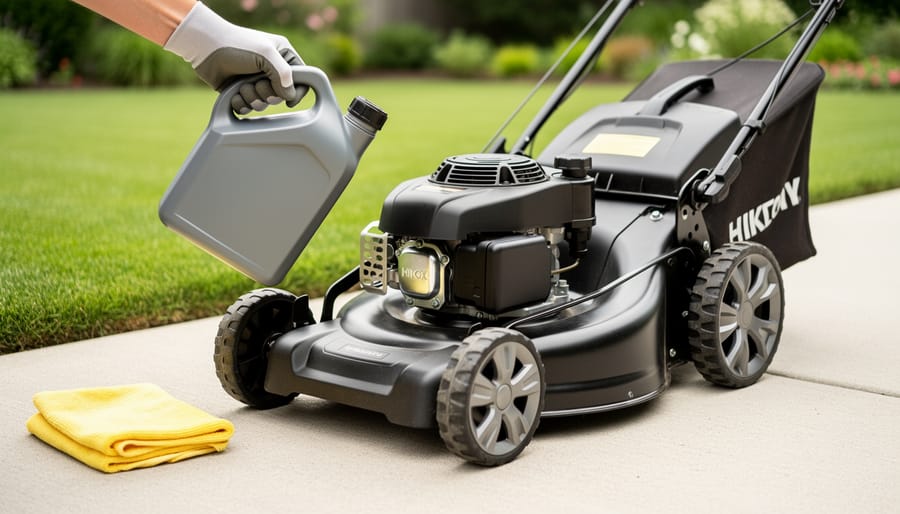
Mix your fuel at exactly 50:1 ratio using quality two-stroke oil and fresh gasoline no more than 30 days old—this single practice prevents 80% of 2-stroke engine failures. Clean or replace your spark plug every 25 hours of operation, checking for carbon buildup that chokes performance and causes hard starting. Drain your carburetor completely before storing your mower for more than two weeks, since stale fuel gums up jets and passages within days, leading to costly repairs or complete engine replacement.
Your 2-stroke lawn mower represents a different breed of engine technology than the 4-stroke models dominating today’s market. These simpler, lighter machines rely on oil mixed directly with gasoline for lubrication, making them incredibly powerful for their size but surprisingly vulnerable to neglect. While many homeowners struggle with sputtering engines, difficulty starting, and premature breakdowns, these problems rarely stem from design flaws. Instead, they’re almost always preventable through understanding how your engine actually works and following a consistent maintenance rhythm.
The good news? Proper 2-stroke care takes less time than you’d spend troubleshooting problems later. These engines thrive on simplicity—no oil changes, fewer moving parts, and straightforward repairs—but they demand attention to fuel quality and air filtration. Whether you’re reviving a temperamental machine that’s been sitting in your shed or protecting a reliable workhorse from future problems, the techniques ahead will extend your mower’s life by years while improving performance. You’ll also reduce waste and repair costs, aligning perfectly with sustainable gardening practices that benefit both your wallet and the environment.
What Makes 2-Stroke Engines Different (And Why It Matters)
The Oil-Fuel Mix: Your Mower’s Lifeline
Getting the oil-fuel mixture right is honestly the single most important thing you can do to keep your 2-stroke mower running strong for years. Think of it as your engine’s favorite meal—get the recipe wrong, and you’re essentially starving it or drowning it, neither of which ends well.
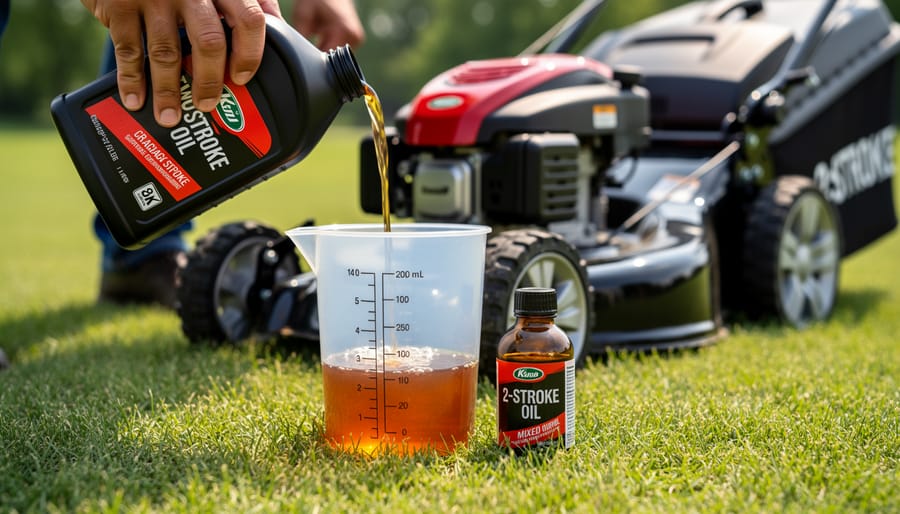
Most 2-stroke mowers require a 50:1 ratio, which means 50 parts gasoline to 1 part 2-stroke oil. That translates to about 2.6 ounces of oil per gallon of gas. Some older models might need 40:1 or even 32:1, so always check your owner’s manual first. I can’t stress this enough—the manufacturer knows what your specific engine needs.
Here’s where many folks go wrong: eyeballing the mixture. I’ve seen neighbors pour oil into their gas can with the confidence of a chef adding salt to taste. Don’t do this. Invest in a simple measuring cup or buy pre-measured oil bottles. Too much oil creates excessive carbon buildup, fouling spark plugs and clogging exhaust ports. Your mower will smoke like a barbecue and lose power over time. Too little oil, and you’re running a dry engine that’s literally grinding itself to death through friction and heat.
Another common mistake is using old fuel. Gasoline degrades within 30 days, forming gums and varnishes that clog carburetors. Mix only what you’ll use in a month, and consider adding a fuel stabilizer if you’re storing mixed fuel longer. Also, never use automotive motor oil—always use quality 2-stroke oil specifically designed for air-cooled engines.
This careful attention to your fuel mixture might seem fussy, but it’s a simple sustainability practice that prevents premature engine failure, saving you money and keeping another mower out of the landfill.
Components That Wear Out First
If you’re running a 2-stroke lawn mower, you’ll quickly notice that certain components seem to need attention more frequently than their 4-stroke counterparts. Understanding which parts wear out fastest can save you time, money, and frustration while keeping your mower running smoothly.
Spark plugs top the list of vulnerable components in 2-stroke engines. Because these engines mix oil with fuel, spark plugs accumulate carbon deposits much faster than in 4-stroke models. This buildup can cause misfiring, hard starting, and reduced power. You’ll typically need to inspect and clean your spark plug every 25 hours of operation and replace it at least once per season for optimal performance.
Air filters face a similar challenge. The oil-fuel mixture creates a stickier environment that attracts and traps more debris. Regular air filter maintenance becomes essential, as a clogged filter restricts airflow and disrupts the precise fuel-to-air ratio these engines require. Check your filter after every few uses, especially in dusty conditions.
Fuel lines and fuel filters deteriorate faster in 2-stroke systems because the oil mixed with gasoline can break down rubber and plastic components over time. These parts become brittle, crack, and eventually leak, creating both performance issues and potential safety hazards. Inspecting fuel lines seasonally and replacing them every two years helps prevent unexpected breakdowns.
The good news is that staying ahead of these common wear points through preventive maintenance significantly extends your mower’s life while reducing environmental impact by preventing fuel leaks and ensuring efficient combustion.
The Fuel System: Where Most 2-Strokes Die
Fresh Fuel Isn’t Optional—It’s Essential
Here’s something many gardeners learn the hard way: that gas can sitting in your shed since last season is quietly sabotaging your 2-stroke mower. Unlike their 4-stroke cousins, 2-stroke engines are surprisingly fussy about fuel freshness, and understanding why can save you countless frustrating pull-starts and expensive repairs.
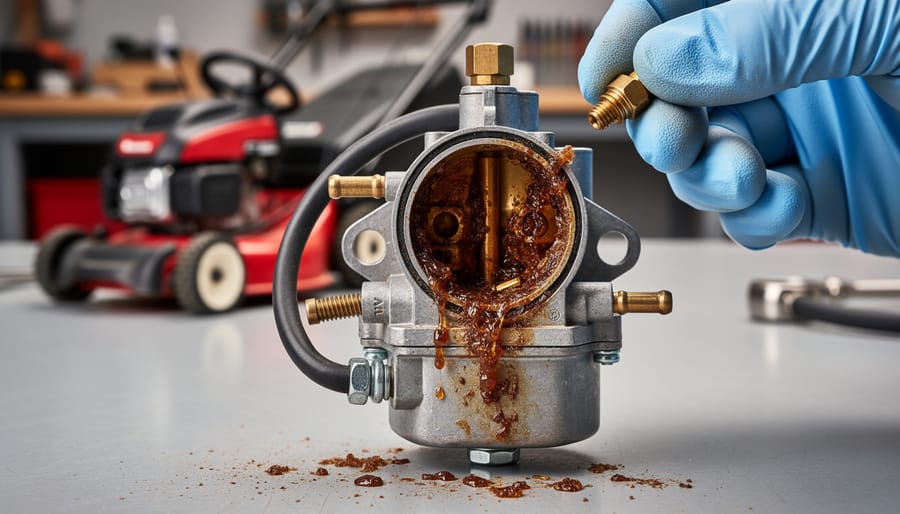
The culprit is chemistry. Modern gasoline begins degrading within 30 days, forming gums and varnishes that clog the tiny passages in your 2-stroke’s carburetor. Since 2-stroke engines mix oil directly with fuel, there’s no separate lubrication system to compensate when that mixture goes bad. The result? Poor combustion, hard starting, and accelerated wear on critical engine components.
Ethanol blends compound the problem significantly. That E10 fuel at most pumps absorbs moisture from the air, which can separate from the gasoline and cause corrosion inside your engine. For 2-strokes especially, ethanol deteriorates fuel lines and carburetor components designed before ethanol became standard. Whenever possible, opt for ethanol-free fuel, which stays stable longer and runs cleaner through your engine.
The practical takeaway is simple: never use fuel older than 30 days in your 2-stroke mower. Buy only what you’ll use in a month, or add a quality fuel stabilizer immediately after purchase. Before storing your mower for winter, either run the tank completely dry or fill it with stabilized fresh fuel. This single habit prevents more 2-stroke problems than any other maintenance practice, keeping your mower running strong season after season while reducing waste and unnecessary repairs.
Carburetor Care That Actually Works
Your carburetor is the heart of your 2-stroke mower’s fuel system, and keeping it clean doesn’t require a mechanical engineering degree. I’ve learned through plenty of trial and error that a little preventive care goes a long way toward avoiding those frustrating mid-season breakdowns.
Start each season by running fresh fuel through your mower. Old fuel sitting in the carburetor over winter creates varnish deposits that clog those tiny jets and passages. Before storing your mower for more than 30 days, either drain the carburetor completely or add a fuel stabilizer. I personally prefer draining because it’s foolproof and doesn’t rely on chemical additives.
Every 25 hours of operation, check your air filter. A clogged filter forces the carburetor to work harder and can throw off the fuel-to-air ratio, leading to poor performance and increased wear. Clean foam filters with warm soapy water, let them dry completely, then apply a light coat of clean engine oil before reinstalling.
If your mower starts hard or runs rough, the carburetor likely needs cleaning. Remove the air filter and spray carburetor cleaner into the intake while the engine runs briefly. This quick flush often resolves minor buildup. For persistent problems, you’ll need to remove the carburetor and clean it thoroughly with carburetor cleaner, paying special attention to the jets and needle valve.
Here’s a sustainability tip: instead of replacing a gunked-up carburetor, invest time in proper cleaning. Most carburetors can be restored to perfect working condition, saving money and keeping functional parts out of landfills. Keep a small carburetor rebuild kit on hand with gaskets and diaphragms, which wear out over time and cost just a few dollars to replace.
Maintenance Rituals That Add Years to Your Mower
Before Every Mowing Session
Think of this pre-flight check as your two-minute insurance policy against a frustrating mowing session. Before you pull that starter cord, invest a little time in these essential inspections that’ll save you from costly repairs down the road.
Start by examining the spark plug. Remove it and look for carbon buildup, which appears as black, sooty deposits. A worn or fouled spark plug won’t ignite your fuel-oil mixture properly, leading to poor performance and potential engine damage. If it looks dirty, clean it with a wire brush or replace it—they’re inexpensive and make a world of difference.
Next, check your air filter. A clogged filter starves your engine of oxygen, causing it to run rich and burn inefficiently. This not only wastes fuel but also shortens engine life. Pull it out and hold it up to the light—if you can’t see through it clearly, it needs attention. Regular cleaning air filters takes just minutes and dramatically improves performance.
Finally, verify your fuel quality. Two-stroke engines are picky about their fuel-oil mixture. Give your tank a sniff—stale fuel smells like varnish and won’t combust properly. If your mixture has been sitting for more than 30 days, drain it and mix fresh fuel with the correct oil ratio specified in your manual.

Monthly Deep-Care Habits
Once a month, set aside some time for deeper maintenance that keeps your 2-stroke mower running like new. These tasks might sound intimidating, but trust me, they’re easier than you think and absolutely worth the effort for extending your mower’s lifespan.
Start by inspecting the cooling fins on your engine. These little ridges are lifesavers, keeping your engine from overheating, but they collect grass clippings and debris like magnets. Use a stiff brush or compressed air to clear them out thoroughly. A clean cooling system prevents those expensive overheating issues that can prematurely age your engine.
Next, check your exhaust port. This is where burnt fuel exits, and over time, carbon deposits build up here, restricting airflow and reducing performance. With the spark plug removed for safety, gently scrape away visible carbon buildup using a wooden or plastic scraper. Avoid metal tools that could damage the port. This simple task restores lost power and improves fuel efficiency, which is great for both your wallet and the environment.
Finally, flush your fuel system monthly, especially during peak mowing season. Run your mower until the tank is nearly empty, then add fresh pre-mixed fuel. This prevents old fuel from gumming up your carburetor and fuel lines. If you’re storing your mower for more than a few weeks, drain the fuel completely. Stale fuel is one of the biggest culprits behind starting problems and poor performance, so staying on top of this keeps everything flowing smoothly.
End-of-Season Storage That Prevents Spring Heartbreak
Here’s the honest truth about 2-stroke mower storage: those few minutes you spend preparing your mower in fall will save you hours of frustration come spring. I learned this the hard way after finding my neglected mower with gummed-up fuel lines one too many times.
The fuel debate has two camps. Some swear by adding fuel stabilizer to a full tank, which prevents condensation and keeps seals lubricated. Others prefer draining old fuel completely to avoid any varnish buildup. For 2-strokes, I recommend the complete drain method since your premixed fuel degrades faster than straight gasoline. Run the engine until it dies naturally after draining to clear the carburetor.
Before storing, give your mower a thorough cleaning. Grass clippings trap moisture and accelerate rust. Store upright in a dry location, never on damp concrete if possible. A wooden pallet underneath works wonders for air circulation.
Spring restart is simple if you’ve done the prep work. Add fresh premixed fuel, check your spark plug, and prime the engine. Most well-stored 2-strokes fire up within three pulls, rewarding your autumn diligence with reliable performance when that first lawn growth arrives.
Sustainable Practices for Longer 2-Stroke Life

Choosing the Right 2-Stroke Oil
When it comes to keeping your 2-stroke lawn mower running smoothly for years, selecting the right oil is one of the most important decisions you’ll make. Think of it as choosing the right fuel for your body—quality matters.
Let’s start with the basics: synthetic versus conventional oil. Synthetic oils are the premium choice, offering superior engine protection, cleaner combustion, and less smoke. They’re particularly good at preventing carbon buildup, which is a common culprit behind 2-stroke engine failures. While they cost more upfront, they extend your engine’s life and reduce environmental impact through lower emissions. Conventional oils work fine too, especially if you’re on a budget, but they tend to produce more smoke and residue.
Look for oils specifically labeled for air-cooled 2-stroke engines and check your mower’s manual for the recommended mix ratio—usually 50:1 or 40:1. This ratio is crucial; too much oil creates excessive smoke and carbon deposits, while too little starves your engine of lubrication.
From a sustainability perspective, consider low-smoke or biodegradable formulations. These eco-friendly options minimize your environmental footprint without compromising performance. Brands like STIHL, Husqvarna, and Echo offer quality choices that meet modern emission standards.
One tip from experience: always mix fresh fuel. Old gas-oil mixtures lose potency and can gum up your carburetor. If you’re storing mixed fuel, use it within 30 days or add a fuel stabilizer to extend its life.
Smart Mowing Habits That Reduce Engine Strain
Your mowing technique plays a surprisingly big role in how long your 2-stroke engine lasts. Think of it like driving a car—how you operate it matters just as much as regular maintenance.
Start by letting your mower warm up for about 30 seconds before diving into thick grass. This allows the fuel mixture to circulate properly and prevents unnecessary strain on cold engine parts. I know we’re all eager to get mowing done quickly, but this small pause pays dividends.
Set your cutting height appropriately for the season. Cutting more than one-third of the grass blade at once forces your engine to work harder, consuming more fuel and generating excess heat. During peak growing season, you might need to mow more frequently rather than scalping the lawn in one go.
Avoid mowing wet grass whenever possible. Not only does moisture make your engine work harder to power through clumpy, heavy grass, but it also increases the risk of clogging your deck and discharge chute. Wet conditions can even affect spark plug performance in 2-stroke engines.
Finally, maintain a steady walking pace. Rushing creates uneven loads on the engine, while going too slowly in thick patches can cause bogging. Find that comfortable rhythm where your mower hums consistently—your engine will thank you with years of reliable service.
Troubleshooting Common 2-Stroke Problems Before They Become Fatal
Warning Signs Your Mower Is Crying for Help
Your 2-stroke mower will send you clear distress signals when something’s amiss. Learning to recognize these early warnings can save you from costly repairs and extend your mower’s lifespan considerably.
Hard starting typically tops the list of complaints. If your mower requires more than four or five pulls to fire up, pay attention. This often points to old fuel, a fouled spark plug, or carburetor issues. While occasional stubborn starts happen to all machines, consistently difficult starting demands immediate investigation. Don’t ignore this one, as it usually gets worse and can indicate fuel mixture problems that damage internal components over time.
Excessive smoke tells an important story about your engine’s health. A little blue-gray smoke at startup is normal for 2-strokes, but thick, continuous clouds signal trouble. Black smoke means you’re running too rich, possibly from a dirty air filter or incorrect fuel-oil ratio. White or blue smoke suggests you’ve got too much oil in the mix or worn piston rings. Address smoking issues promptly, as they indicate incomplete combustion that wastes fuel and harms the environment.
Power loss during operation deserves urgent attention. If your mower bogs down in grass it previously handled easily, check the air filter first, then inspect the spark arrestor screen for carbon buildup. Gradual power decline often stems from carbon deposits restricting exhaust flow, while sudden loss might indicate ignition system failure. Both situations require quick action to prevent permanent engine damage and maintain effective lawn care performance.
When to DIY and When to Call for Help
Good news for DIY enthusiasts: most basic 2-stroke maintenance falls within beginner territory. You can confidently tackle cleaning or replacing air filters, spark plugs, and fuel filters yourself with simple tools and a little patience. These jobs typically cost under $30 in parts and can save you $75-150 in service fees.
However, carburetor rebuilds, engine compression issues, and anything involving internal engine components warrant professional help. If your mower is over ten years old and needs major repairs costing more than half its replacement value, consider the sustainability angle too. Sometimes investing in a quality new mower with better fuel efficiency makes more environmental and financial sense than repeatedly fixing an aging machine. When you’re unsure, many repair shops offer free diagnostics that can guide your decision without commitment.
Your 2-stroke lawn mower has the potential to be a faithful gardening companion for many years to come. By following the maintenance practices we’ve discussed throughout this article, you’re not just extending mower lifespan, you’re making a smart investment in both your wallet and our planet. Regular attention to fuel mixture ratios, air filter cleaning, spark plug maintenance, and proper storage might seem like small tasks, but they add up to significant savings over time. You’ll avoid costly repairs and premature replacements while reducing waste that ends up in landfills. Remember, a well-maintained 2-stroke engine runs cleaner and more efficiently, which means fewer emissions and less environmental impact. Whether you’re new to lawn care or a seasoned gardening enthusiast, these simple habits become second nature with practice. Your mower works hard to keep your outdoor space looking beautiful, so give it the care it deserves and enjoy the satisfaction of knowing you’re making environmentally conscious choices while keeping your lawn in top shape.