Mark your calendar now with four essential lawn care windows: early spring soil preparation before weeds germinate, late spring overseeding when grass grows most vigorously, fall aeration to repair summer damage, and winter planning to prevent next year’s problems before they start. This simple framework transforms lawn care from an overwhelming guessing game into a manageable rhythm that works with nature’s cycles rather than against them.
Think of seasonal lawn care as preventive medicine for your yard. Just as you wouldn’t wait until you’re sick to think about health, the most successful lawn caregivers address potential issues months before they become visible problems. A single well-timed application of organic fertilizer in fall does more for spring greenery than three desperate treatments applied when your lawn already looks patchy. Similarly, aerating compacted soil in September prevents the standing water that invites moss and disease the following spring.
The beauty of a seasonal approach lies in its efficiency. Instead of spending weekends battling the same weeds year after year, you’ll learn to interrupt their life cycles at vulnerable moments. Cool-season grasses have different needs than warm-season varieties, early spring soil temperatures trigger specific weed germinations, and pest populations follow predictable patterns you can anticipate and manage sustainably.
This guide breaks down the entire year into actionable monthly tasks, explaining not just what to do, but why timing matters so critically. You’ll discover how fall preparations set up spring success, why summer maintenance determines winter resilience, and how small interventions at the right moment save hours of corrective work later. Whether you’re planning your first full year of intentional lawn care or refining decades of experience, this schedule provides the roadmap for a healthier, more resilient lawn that requires less intervention over time.
Understanding IPM: Your Lawn’s First Line of Defense
Why Traditional Lawn Care Falls Short
Most of us have been there: you notice brown patches in your lawn, grab whatever product promises quick results, and hope for the best. This reactive approach might seem practical, but it’s actually the reason many homeowners find themselves stuck in an expensive, frustrating cycle of treating the same problems year after year.
Traditional lawn care often relies on responding to visible damage rather than preventing it. By the time you see weeds taking over or pest damage spreading, you’re already fighting an uphill battle. Worse, repeatedly applying the same chemicals can lead to resistance to treatments, making your efforts increasingly ineffective over time.
There’s also the environmental consideration. Overusing synthetic chemicals doesn’t just impact your lawn; it affects beneficial insects, soil health, and nearby water sources. Many homeowners are discovering that what worked quickly in the short term has created long-term problems for their yards and the local ecosystem.
Here’s the good news: prevention is almost always more cost-effective than reaction. A proactive Integrated Pest Management approach focuses on building healthy soil, choosing appropriate grass varieties, and timing interventions strategically. Instead of constantly buying products to fix problems, you’re investing in creating conditions where problems don’t develop in the first place. This seasonal approach saves money, reduces chemical dependency, and gives you a genuinely healthier lawn that can defend itself naturally.
The Three Pillars of Lawn IPM
Think of Integrated Pest Management as a three-legged stool for your lawn—each leg equally important for keeping everything balanced and healthy. Let me walk you through these three pillars that’ll transform how you care for your turf.
The first pillar is cultural practices, and honestly, this is where most of your success begins. We’re talking about the fundamentals: proper mowing height (generally keeping grass at 3-4 inches), smart watering schedules that encourage deep roots, and soil management through aeration and topdressing. When you mow high, you’re literally shading out weed seeds before they can germinate. When you water deeply but infrequently, you’re building a resilient lawn that can weather stress without inviting disease. These practices create an environment where your grass thrives and problems struggle to gain a foothold.
The second pillar involves biological controls—nature’s own pest management team. This includes beneficial insects like ground beetles that munch on grub eggs, nematodes you can apply to control various soil pests, and even the microbial life in healthy soil that competes with disease organisms. Encouraging these natural allies means fewer problems down the road.
The third pillar is targeted treatments, used only when monitoring shows they’re truly necessary. This might mean spot-treating a small patch of crabgrass rather than broadcasting herbicide across your entire lawn, or applying organic pest controls to specific problem areas. The key word here is targeted—we’re being surgical, not applying chemicals preventively or unnecessarily, which saves money and protects the environment.
Spring: Awakening and Prevention (March-May)
Early Spring Tasks (March-Early April)
As the ground begins to thaw and those first green shoots appear, early spring is your window of opportunity to set your lawn up for success. This is prevention season, friends, and the work you do now will save you countless hours of frustration come summer.
Start with a soil test if you haven’t done one recently. Think of it as a health checkup for your lawn. Your local extension office can provide testing, often for a modest fee, and the results will tell you exactly what your soil needs rather than having you guess with fertilizers. This data-driven approach is both economical and environmentally responsible.
Timing is everything when it comes to pre-emergent herbicide for crabgrass. Apply when soil temperatures consistently reach 50-55 degrees Fahrenheit, which typically coincides with forsythia blooming in your area. This creates a chemical barrier that prevents crabgrass seeds from germinating. Mark your calendar based on local phenological indicators rather than specific dates, as spring arrives differently across regions.
Take time to assess winter damage by walking your entire lawn. Look for areas of compaction from snow piles, salt damage along walkways, and bare patches that need attention. Identifying overwintered pests like grub damage from the previous fall is crucial now before they emerge as beetles.
When grass reaches about 3 inches, it’s time for that first mowing. Set your blade high and ensure it’s sharp. A clean cut helps grass recover from winter stress and discourages disease. Never remove more than one-third of the blade height in a single mowing.
Mid to Late Spring Actions (Late April-May)
As the weather warms and your lawn shifts into active growth mode, late April through May becomes a critical time for addressing emerging challenges while supporting healthy development. This is when your preventive efforts from early spring start paying dividends, but vigilance remains essential.
Now is the perfect time to scout for grub activity, especially if you noticed beetle activity last summer. Walk your lawn and look for irregular brown patches that peel back like loose carpet—a telltale sign of grub damage. If you find more than 10 grubs per square foot, consider applying beneficial nematodes, a sustainable biological control that targets grubs without harming earthworms or other beneficial organisms.
Broadleaf weeds like dandelions are likely making their presence known. Before reaching for herbicides, try hand-pulling them using a weeding tool that removes the entire taproot. For larger infestations, spot-treat with organic herbicides containing iron-based compounds or traditional selective herbicides, but avoid blanket applications that can harm beneficial plants and pollinators.
If you fertilized in early spring, hold off on additional applications until late May or early June. Over-fertilizing during this period encourages excessive top growth at the expense of root development and increases disease susceptibility. Instead, focus on overseeding any bare spots that emerged over winter. Choose a quality seed blend suited to your region and keep it consistently moist for two to three weeks.
Watch carefully for fungal disease warning signs as humidity increases. Brown patch, dollar spot, and rust thrive in warm, moist conditions. Improve air circulation by raising your mower height to three inches and watering deeply but infrequently in early morning hours.
Spring Pest and Disease Watch List
Spring brings welcome warmth, but it also awakens some familiar lawn troublemakers. Let’s identify and tackle them before they take over.
Crabgrass is your early-season nemesis, germinating when soil temperatures reach 55-60°F. The best defense? Apply corn gluten meal as a natural pre-emergent in early spring, typically 2-4 weeks before your last frost date. This prevents seeds from sprouting without harming established grass.
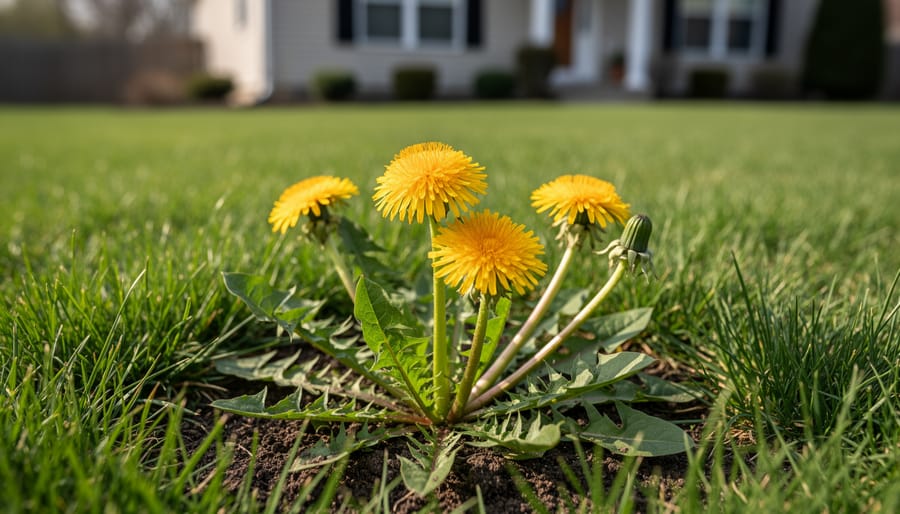
Dandelions and clover thrive in nutrient-poor lawns, so they’re actually signaling an underlying issue. Hand-pull dandelions before they go to seed, getting the entire taproot. For clover, focus on improving soil nitrogen levels through organic fertilizers rather than reaching for herbicides immediately.
Snow mold appears as circular pink or gray patches after snow melts. Rake affected areas gently to improve air circulation and let them dry out naturally. Red thread shows up as pink-tinged grass blades during cool, wet weather. Both fungal issues typically resolve as temperatures warm and you maintain proper mowing height.
Watch for grubs just below the soil surface as they become active. If you had significant damage last fall, beneficial nematodes applied to moist soil now can reduce populations sustainably. Monitor your lawn regularly, checking for irregular brown patches that pull up easily.
Summer: Stress Management and Vigilance (June-August)
Early Summer Priorities (June)
As summer officially arrives, your lawn enters survival mode, and your care strategy needs to shift accordingly. The heat is ramping up, and your grass needs every advantage you can give it to stay healthy and resilient against both weather stress and opportunistic pests.
The single most important adjustment you can make right now is raising your mower height by at least half an inch, ideally to 3-4 inches for most cool-season grasses. I know it feels counterintuitive to let grass grow taller when you’re already mowing frequently, but those extra blades provide crucial shade to the soil, keeping roots cooler and reducing water evaporation. Taller grass also develops deeper root systems, which means better drought tolerance as we move through summer. Think of it as giving your lawn its own built-in sunscreen.
June is when irrigation becomes non-negotiable in most regions. Rather than frequent shallow watering, aim for deep soaking sessions 1-2 times per week, delivering about an inch of water each time. Water early in the morning, ideally between 4-8 AM, to minimize evaporation and reduce disease pressure. A simple tuna can placed in your irrigation zone helps you measure exactly how long to run your sprinklers.
Keep your eyes peeled for chinch bugs, particularly in sunny, drought-stressed areas near driveways and sidewalks. These tiny pests create irregular yellow patches that spread quickly in hot weather. Check by parting the grass at the edge of damaged areas and looking for small black bugs with white wings. Similarly, sod webworms leave brown patches and small silk-lined tunnels near the soil surface.
For summer annual weeds like crabgrass that slipped through spring prevention, spot-treat individual plants rather than broadcasting chemicals across healthy turf, protecting beneficial insects while addressing problem areas effectively.
Peak Summer Maintenance (July-August)
July and August can feel like your lawn’s trial by fire, but with smart practices, your grass can thrive even during the dog days of summer. The key is reducing stress while staying vigilant against heat-loving diseases and pests.
During peak summer, your primary mission is stress management. Think of your lawn like an athlete running a marathon—it needs consistent support, not sudden changes. Raise your mower height to 3-4 inches if you haven’t already. Those taller grass blades shade the soil, keeping roots cooler and reducing water evaporation. Never remove more than one-third of the blade length in a single mowing, and consider mowing less frequently during extreme heat.
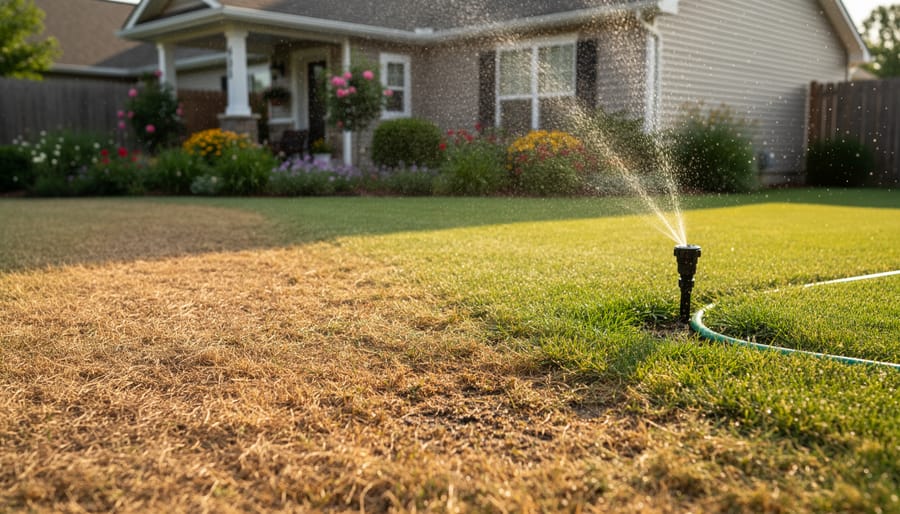
Watering technique becomes critical now. Deep, infrequent watering is your mantra—aim for 1-1.5 inches per week, applied in one or two sessions rather than daily sprinkles. Water early morning, ideally between 4-8 AM, to minimize disease pressure. Shallow, frequent watering creates the perfect humid environment for brown patch and dollar spot fungi while weakening root systems. If your lawn shows signs of drought stress like a blue-gray tint or footprints that don’t bounce back, it’s time to water.
Keep watch for brown patch, which appears as circular brown areas with a distinctive smoke-ring border in humid conditions, and dollar spot, showing silver-dollar-sized tan spots. Diagnosing lawn diseases early prevents widespread damage. Improve air circulation by pruning overhanging branches and avoiding evening watering.
August is prime time for white grub monitoring. These C-shaped larvae feed on grass roots, causing irregular brown patches that peel back like carpet. Check by cutting three sides of a one-square-foot section and peeling it back—more than five grubs per square foot warrants treatment with beneficial nematodes or milky spore, sustainable options that target grubs without harming beneficial insects.
Summer Threat Assessment
Summer heat brings both opportunities and challenges for your lawn. As temperatures rise, keep a watchful eye on these common troublemakers that thrive in warm conditions.
Crabgrass reaches maturity during summer, spreading aggressively if left unchecked. The good news? A healthy, thick lawn naturally crowds out this opportunistic weed. Focus on proper watering and maintaining your grass at the recommended height for your variety rather than reaching for harsh chemicals.
Watch for spurge and nutsedge, two persistent summer weeds that flourish in moist areas. These indicate drainage issues that need addressing. Nutsedge, with its distinctive triangular stems, particularly loves overwatered spots. Adjust your irrigation practices before resorting to treatments.
In humid climates, fungal diseases like brown patch and dollar spot become more prevalent. Prevention is key here: water deeply but infrequently in early morning hours, allowing grass blades to dry quickly. This simple timing change dramatically reduces disease pressure.
Here’s an important reminder: summer lawns are buzzing with beneficial insects like ground beetles and parasitic wasps that naturally control pest populations. Before applying any treatment, even organic ones, consider whether you’re disrupting these helpful garden allies. Spot-treating specific problem areas preserves these natural pest controllers while addressing genuine concerns.
Fall: Strengthening and Strategic Planning (September-November)
Early Fall Rejuvenation (September-Early October)
Early fall is when your lawn gets a second chance at life, and honestly, it’s my favorite time of year for lawn care. The combination of warm soil and cooler air creates perfect growing conditions, making this the most productive season for rejuvenating your turf.
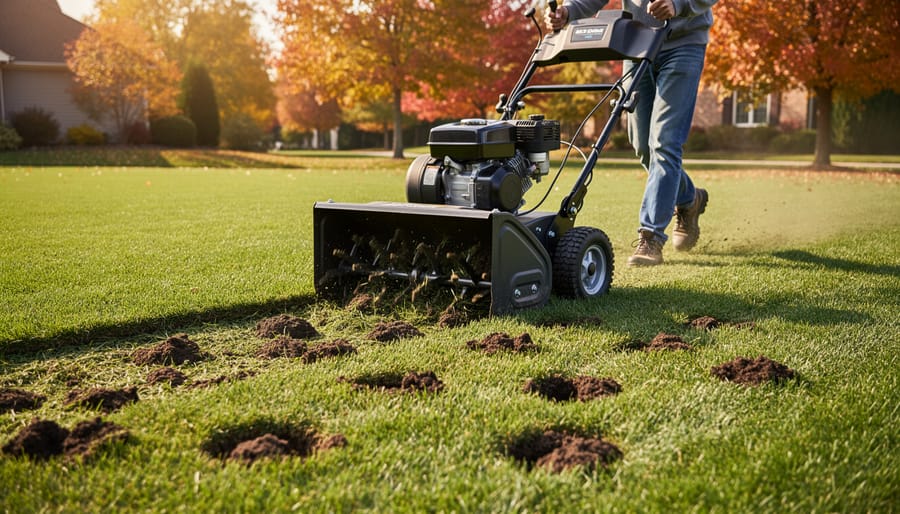
Start with core aeration in early September, especially if your lawn saw heavy foot traffic over summer. This process pulls small plugs of soil from the ground, allowing oxygen, water, and nutrients to penetrate compacted areas. Don’t rake up those plugs – they’ll break down naturally and return beneficial microorganisms to your soil. For best results, aerate when the soil is slightly moist, not bone dry or soggy.
Overseeding should follow immediately after aeration, ideally within 24 hours. The holes created by aeration provide perfect pockets for seed-to-soil contact. Choose grass varieties suited to your region and existing lawn type. Apply seed at recommended rates – more isn’t always better and can lead to overcrowding. Keep the top inch of soil consistently moist until germination occurs, usually within 7-14 days.
For winter annual weeds like chickweed and henbit, apply pre-emergent herbicide in mid-September, but only to established lawn areas. Skip pre-emergent where you’ve overseeded, as it will prevent your grass seed from germinating too. Instead, plan to spot-treat any weeds that emerge in overseeded areas.
Fall fertilization focuses on building strong root systems rather than excessive top growth. Choose a slow-release fertilizer with higher potassium content to improve cold tolerance and disease resistance. This investment now pays dividends when spring arrives, giving you a lawn that greens up faster and stronger than your neighbors’ yards.
Late Fall Preparations (Late October-November)
As fall deepens and your lawn prepares for winter dormancy, these final preparations set the stage for a healthier, more resilient lawn come spring. Think of this period as tucking your lawn in for a long winter’s rest—you want to make sure it’s comfortable and protected.
Continue mowing until grass growth stops completely, gradually lowering your mowing height with each cut. For the final mow of the season, aim for about 2 to 2.5 inches. This shorter height helps prevent snow mold and reduces hiding spots for voles and other winter pests, while still providing enough blade length to capture sunlight during mild winter days.
Late fall presents your last opportunity for effective broadleaf weed control. Dandelions, clover, and other perennial weeds are actively pulling nutrients into their roots now, making them especially vulnerable to herbicides. If you’ve been battling persistent weed problems, spot-treat remaining stragglers on days when temperatures are above 50°F and rain isn’t forecasted for 24 hours.
For sustainable grub control, consider applying beneficial nematodes in late fall if you’ve had significant damage this year. These microscopic helpers target grubs naturally without harsh chemicals, establishing themselves in your soil for next season’s protection.
Leaf management deserves special attention. While it’s tempting to leave leaves as wildlife habitat, thick layers can smother grass and encourage disease. The best compromise? Mulch leaves with your mower, creating a thin layer that feeds your soil while allowing air circulation. Rake or remove excessive accumulations, especially from shaded areas.
Finally, winterize by applying a slow-release, low-nitrogen fertilizer if you didn’t in early fall. Clean and store equipment properly, drain hoses, and mark any problem areas you’ll want to address come spring.
Fall Prevention Checklist
As fall winds down, take time to walk your lawn with a critical eye and a notepad. This season is your best opportunity to set yourself up for success next spring by identifying and addressing underlying issues now.
Target those stubborn perennial weeds like dandelions, clover, and ground ivy while they’re actively storing energy in their roots for winter. Fall herbicide applications are incredibly effective because the weeds readily absorb treatments as they prepare for dormancy. Hand-pulling or spot-treating now means fewer invasive species competing with your grass come spring.
Map out problem areas as you walk. Notice where water pools after rain, where moss thrives in shady patches, or where traffic has compacted the soil. Take photos on your phone and jot down notes about bare spots, pest damage patterns, or disease-prone sections. These observations become your action plan for spring repairs, whether that means improving drainage, adjusting irrigation, or overseeding thin areas.
Apply preventative treatments strategically. A late-fall application of beneficial nematodes can reduce grub populations overwintering in your soil. Consider marking areas where you’ve noticed recurring disease issues for improved air circulation work next season.
This proactive approach embodies sustainable lawn care. You’re preventing problems rather than reacting to them, reducing the need for intensive interventions later while building a healthier, more resilient lawn ecosystem.
Winter: Dormancy and Observation (December-February)
Winter Protection and Monitoring
Winter might seem like your lawn’s dormant period, but it’s actually a critical time for protection and observation. Think of it as your lawn’s hibernation—you want to make sure nothing disturbs that much-needed rest.
The golden rule? Stay off frozen grass. Those seemingly harmless footprints or tire tracks can crush grass blades and damage crowns, leaving you with dead patches come spring. It’s especially tempting to trudge across the lawn on those beautiful crisp mornings, but dormant grass is incredibly fragile when frozen.
If you live in snowy regions, be strategic about snow removal. Minimize traffic patterns and create dedicated pathways rather than cutting across different areas of your lawn each time. Salt and de-icing chemicals are particularly damaging to grass, so keep them on hardscapes only. Consider using sand or pet-safe alternatives near lawn edges.
Watch for snow mold, especially after heavy, wet snowfall. These fungal diseases thrive under snow cover and appear as circular patches of matted, discolored grass. Good fall preparation helps prevent this, but keep an eye out for symptoms as snow melts. Light raking can improve air circulation if you spot early signs.
In warmer climates, winter brings a different challenge: winter annual weeds like chickweed and henbit start emerging. Scout your lawn regularly and hand-pull young weeds before they establish deep roots. This proactive approach saves you from dealing with a full-blown infestation when spring arrives, perfectly aligning with sustainable IPM principles by catching problems early.
Planning Your Next Season
The best time to plan your lawn care season isn’t spring—it’s right now, before winter fully sets in or as you’re wrapping up your current growing year. Trust me, those notes you jot down today about that stubborn patch of crabgrass or the area where grubs wreaked havoc will be gold come March when you’re ready to tackle the new season.
Start by walking your lawn with a notebook or phone camera. Document problem areas while they’re still fresh in your mind. Where did weeds take over? Which spots stayed brown despite your best efforts? Mark these locations on a simple sketch of your yard so you’ll know exactly where to focus preventive treatments in spring.
Next, review what worked and what didn’t. If your pre-emergent application failed in certain areas, note the timing and conditions. Maybe you applied too late, or perhaps that shady spot needs a different approach altogether. These insights help you refine your strategy using integrated pest management principles rather than simply repeating the same mistakes.
Order your supplies now while you’re thinking clearly about what you need. Pre-emergent herbicides, beneficial nematodes for grub control, and quality compost are often cheaper when purchased off-season. Plus, you won’t face those frustrating spring shortages when everyone else suddenly remembers their lawn exists.
Don’t forget equipment maintenance. Clean your mower, sharpen blades, and service your spreader now. A well-maintained mower makes cleaner cuts that help grass resist disease, and a calibrated spreader ensures you’re applying products at proper sustainable rates.
Creating Your Personalized IPM Calendar

Regional Adjustments and Grass Type Considerations
Your lawn care calendar needs a personal touch based on where you live and what type of grass you’re growing. Think of it as customizing a recipe – the basic steps remain the same, but timing and ingredients shift depending on your kitchen, or in this case, your climate zone.
Cool-season grasses like fescue, bluegrass, and ryegrass thrive in northern regions and hit their growth peak during spring and fall. Your main feeding and overseeding should happen in early September, with a lighter spring application in April. These grasses go semi-dormant during summer heat, so resist the urge to fertilize heavily then – you’ll just encourage weeds and stress the turf.
Warm-season grasses such as bermudagrass, zoysia, and St. Augustine dominate southern lawns, with their active growing season running from late spring through summer. Wait until soil temperatures consistently reach 65 degrees Fahrenheit before your first feeding, typically late April or May. Your core aeration and overseeding efforts should shift to late spring or early summer for optimal results.
Climate zones dramatically affect pest and disease timing too. Grub control in Massachusetts happens in August, while Florida gardeners tackle the same pest in May. Brown patch disease threatens cool-season lawns during humid summer nights, but warm-season varieties face it more in spring and fall.
Check with your local cooperative extension office – they’re fantastic free resources that provide region-specific timing guides and help you identify which pests and diseases commonly plague your area. This localized knowledge transforms a generic schedule into your personalized lawn care roadmap.
Tracking Success and Making Improvements
Keeping track of your lawn care efforts doesn’t require complicated spreadsheets or fancy apps. A simple garden journal or even a notes app on your phone works perfectly. Record what you did, when you did it, and what the weather was like. Note any pest problems, bare patches, or unusually lush areas. I like to snap quick photos throughout the season—they’re worth a thousand words when you’re trying to remember what your lawn looked like in June.
The real magic happens when you compare notes across multiple growing seasons. You’ll start spotting patterns that transform you from a reactive lawn caretaker into a proactive one. Maybe crabgrass always appears in that sunny corner by mid-May, or grubs become problematic every third year. These insights let you adjust your timing and methods before problems escalate. Understanding treatment resistance patterns becomes easier when you have historical data showing which approaches worked and which didn’t.
Don’t be afraid to experiment and adapt. If overseeding in fall didn’t take well last year, try adjusting your timing or preparation methods. Perhaps your soil needs more attention before seeding, or maybe spring overseeding works better in your microclimate. The beauty of sustainable lawn care is that it’s flexible and forgiving.
Celebrate your wins, too. When that weedy patch finally fills in with thick grass, or when beneficial insects start showing up in greater numbers, you’re seeing the cumulative effect of thoughtful care. Each season builds on the last, creating a healthier, more resilient lawn that requires less intervention over time. That’s the sustainable approach in action—working smarter, not harder, guided by what your lawn tells you.
Essential Tools and Resources for Year-Round Monitoring
Having the right tools at your fingertips makes year-round lawn monitoring not just easier, but actually enjoyable. Think of these as your IPM toolkit – investments that’ll pay dividends season after season.
Let’s start with the foundation: soil health. A quality soil test kit is absolutely essential for understanding what’s happening beneath your grass. I recommend the MySoil Test Kit or Luster Leaf’s Rapitest – both provide comprehensive analysis of pH, nitrogen, phosphorus, and potassium levels without requiring a chemistry degree to interpret. Testing twice yearly (spring and fall) gives you the data needed to make informed decisions rather than guessing at fertilizer needs.
For pest and disease identification, your smartphone becomes an invaluable tool. The Picture This app and iNaturalist have revolutionized how we identify lawn problems. Simply snap a photo of that suspicious brown patch or unfamiliar insect, and you’ll get identification help within minutes. These apps also connect you to communities of gardeners who can offer region-specific advice.
A soil moisture meter takes the guesswork out of watering decisions. The XLUX model is affordable and reliable – just push it into your soil to know whether your lawn actually needs water or if you’re about to overdo it. This simple tool prevents the excess moisture that invites fungal diseases and helps you water more sustainably.
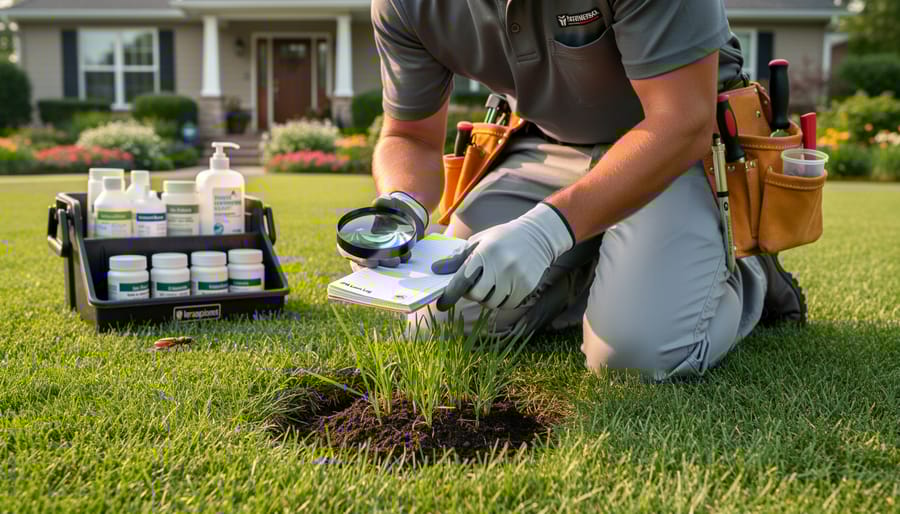
For hands-on monitoring, invest in a good magnifying glass or jeweler’s loupe. Many lawn problems reveal themselves when you look closely at grass blades, roots, and soil inhabitants. Pair this with a basic lawn journal – whether that’s a notebook or a phone app – to track patterns over time. You’ll start noticing that chinch bugs appear in the same sunny spot every July, or that certain areas always stay too wet after rain.
Don’t overlook a quality rain gauge for accurate precipitation tracking. Knowing exactly how much water nature provided helps you adjust supplemental irrigation accordingly, preventing the overwatering that weakens grass and promotes disease.
Finally, consider a manual or battery-powered sprayer for spot-treating problems with organic solutions. A one or two-gallon capacity works well for most residential lawns, letting you target specific issues without broadcasting treatments across your entire yard. This precision approach embodies the IPM philosophy of using the least invasive solution first.
Creating a healthier, more resilient lawn doesn’t happen overnight, but it doesn’t have to be overwhelming either. The beauty of a seasonal approach to lawn care is that you can start exactly where you are, in whatever season you’re reading this. Pick up with the current season’s checklist and commit to those tasks first. As you move through the year, you’ll naturally build momentum and see how each season’s work sets up success for the next.
The Integrated Pest Management principles woven throughout this seasonal schedule aren’t just about reducing chemical use, though that’s certainly a welcome benefit for your family, pets, and the environment. IPM creates genuinely healthier lawns by addressing root causes rather than masking symptoms. When you build soil health in spring, overseed strategically in fall, and monitor regularly throughout the year, you’re cultivating a lawn ecosystem that naturally resists problems. Over time, you’ll notice you’re reaching for chemical solutions less frequently because your lawn simply doesn’t need them.
Think of your seasonal lawn care schedule as a living document. Print it out, keep it on your phone, or pin it to your garage wall. Check off tasks as you complete them and make notes about what worked particularly well in your yard. Every lawn is unique, and you’ll quickly discover which practices deliver the biggest impact for your specific conditions.
This week, commit to just one action item from your current season’s checklist. That single step forward is how every thriving, low-maintenance lawn begins.