
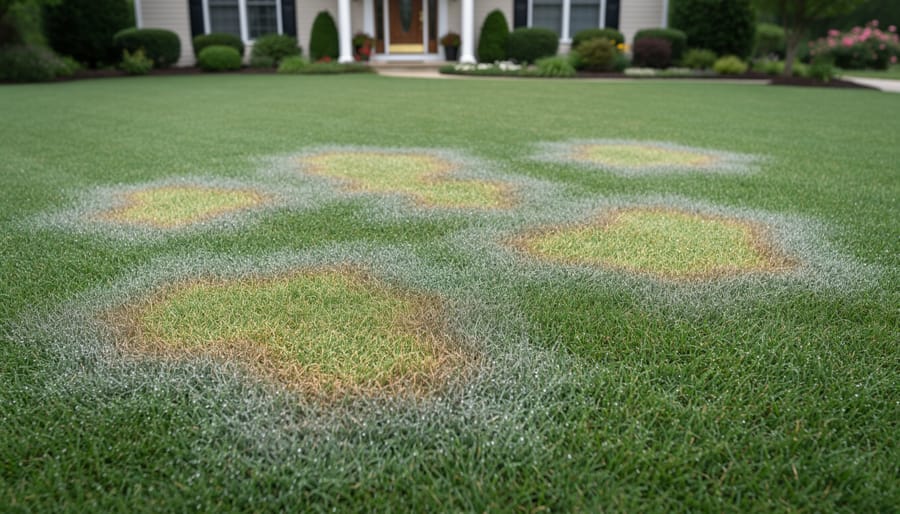
Examine your lawn in early morning when dew reveals patterns invisible during midday—mysterious rings, unusual discoloration, or patches that seem to defy standard disease descriptions often indicate what lawn care professionals call “Disease X”: the catch-all term for undiagnosed or misidentified problems that leave homeowners puzzled and frustrated.
Walk your lawn systematically in a grid pattern, photographing affected areas from multiple angles and documenting when symptoms first appeared, how quickly they’re spreading, and whether they follow any environmental patterns like shade lines, drainage paths, or irrigation zones. This detective work matters because what appears to be a fungal disease might actually be chemical burn from uneven fertilizer application, compacted soil suffocating grass roots, or even pet urine damage masquerading as brown patch.
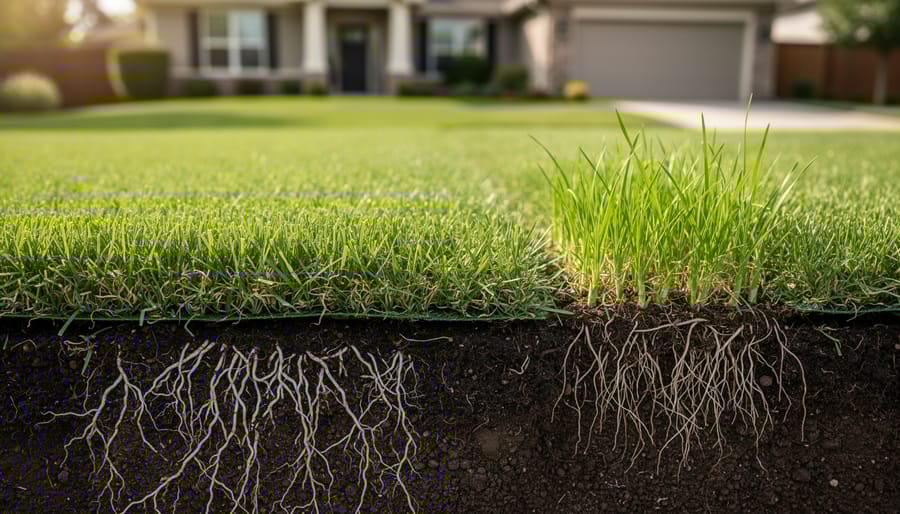
Check soil conditions before assuming disease by pushing a screwdriver six inches into affected and healthy areas—if it won’t penetrate easily in problem spots, you’re dealing with compaction or drought stress, not pathogens. Pull up several grass plants from symptomatic areas and examine roots closely; healthy white roots indicate surface issues while black, mushy, or absent roots point to genuine disease or grub damage below.
Disease X represents the gap between textbook lawn problems and real-world complexity, where multiple stressors combine to create symptoms that don’t match any single condition. Understanding this concept transforms you from a frustrated homeowner applying random treatments into an informed diagnostician who can identify the true culprit—whether it’s environmental stress, cultural problems, actual disease, or that tricky combination of factors that makes lawn care both challenging and rewarding. The good news? Once you learn to read what your lawn is telling you, solutions become remarkably clear.
What Is ‘Disease X’ for Your Lawn?
If you’ve been staring at your lawn, puzzled by symptoms that don’t quite match anything you’ve read about, you’re dealing with what I like to call “Disease X.” Don’t worry—you’re not alone, and this mystery absolutely has a solution.
Disease X isn’t actually a single disease at all. Think of it as an umbrella term for those frustrating lawn problems that leave you scratching your head. Maybe your grass is yellowing in odd patterns that don’t look like typical brown patch. Perhaps you’re seeing wilting that doesn’t respond to watering, or strange discoloration that doesn’t fit the textbook descriptions of common lawn diseases. These are the moments when even experienced gardeners feel stumped.
The challenge with lawn diagnostics is that similar symptoms can stem from wildly different causes. What looks like a fungal disease might actually be insect damage, nutrient deficiency, or even chemical burn from overfertilizing. Sometimes it’s a combination of factors working together, which is often why treatments fail when we’ve misidentified the root cause. Environmental stressors like compacted soil or poor drainage can mimic disease symptoms perfectly, sending us down the wrong treatment path entirely.
Here’s the encouraging news: most mystery lawn problems aren’t actually mysterious once you know what to look for. They’re simply misdiagnosed or misunderstood. The key is learning to be a lawn detective rather than jumping straight to conclusions. By taking a systematic approach to observation and diagnosis, you can unravel what’s really happening beneath those confusing symptoms.
The first step is accepting that uncertainty is part of the process. Professional lawn care specialists encounter puzzling situations regularly, and they solve them by methodically ruling out possibilities. With some patience and the right diagnostic approach, you’ll move from confused to confident—and your lawn will thank you for the accurate treatment it actually needs.
The Symptom Detective Approach: Reading What Your Lawn Is Telling You
Visual Symptoms: What You Can See
When trying to identify what’s happening with your lawn, becoming a good observer is your first step toward solving the mystery. Let’s walk through what to look for and how to capture the details that will help you crack the case.
Start by examining the overall pattern of damage. Are you seeing distinct circular or irregular patches, or is the problem spread randomly across your lawn? Disease X often presents in ways that don’t quite fit the textbook descriptions you might find online. You might notice patches that start small but expand over time, or areas where the grass simply looks off without an obvious reason why.
Get down close to individual grass blades and look for telltale signs. Check for unusual discoloration beyond simple browning—think yellowing in odd patterns, reddish tints, gray patches, or even a slimy appearance. Look at the blade tips and work your way down to where the grass meets the soil. Are the blades thinning, developing spots, or showing a water-soaked appearance? Sometimes the damage appears as streaks or lesions along the blade itself.
Pay attention to growth abnormalities too. Is your grass growing in stunted clumps? Are some areas refusing to grow while others seem fine? These irregular growth patterns often provide crucial clues.
Here’s my advice for documentation: grab your smartphone and start taking photos from multiple angles. Capture wide shots showing the overall pattern, then move in for close-ups of affected blades. Take pictures at the same time of day over several days to track progression. Jot down notes about recent weather conditions, watering schedules, and any lawn treatments you’ve applied. This visual diary becomes invaluable when consulting with experts or comparing symptoms over time, helping you move from confusion to clarity in identifying your lawn’s mysterious ailment.

Environmental Clues: Context Matters
Your lawn doesn’t exist in a vacuum, and understanding its environment is crucial for solving mysterious problems. Think of yourself as a detective gathering clues from everything happening around your grass.
Start with recent weather patterns. Has your area experienced unusual humidity, extended periods of rain, or unexpected temperature swings? Many fungal diseases thrive when conditions shift from their normal patterns. Conversely, prolonged drought can stress grass and make it vulnerable to issues that wouldn’t typically take hold.
Take a hard look at your watering habits. Are you irrigating in the evening when grass stays wet overnight? This creates a perfect breeding ground for disease. Overwatering can also lead to shallow root systems and oxygen-starved soil, mimicking disease symptoms. Check if sprinklers are distributing water evenly or creating soggy spots where problems concentrate.
Consider what you’ve recently applied to your lawn. That fertilizer you used three weeks ago might have been too nitrogen-heavy, causing rapid growth that’s now disease-prone. Herbicides can sometimes injure grass if applied incorrectly, creating symptoms that look like mysterious diseases.
Don’t forget your soil. Compacted soil prevents proper drainage and air circulation, while pH imbalances can prevent grass from absorbing nutrients, leading to puzzling decline. Grab a shovel and examine what’s happening below the surface.
Finally, look beyond your property line. Are neighbors battling similar issues? Sometimes the answer lies in shared environmental factors or even airborne spores traveling from nearby yards. Taking this holistic view often reveals patterns that point toward your solution.
Timeline and Spread Pattern
Understanding when and how your lawn problem developed can be one of your most valuable diagnostic tools. Think of yourself as a lawn detective—the timeline tells an important story.
Did those brown patches appear overnight after a freeze, or did they slowly develop over weeks? Sudden changes often point to environmental stress like cold damage, chemical spills, or pet urine, while gradual symptoms typically indicate disease or pest activity. If you noticed yellowing that started small and crept outward in expanding circles, you’re likely dealing with a fungal disease. But if entire sections turned brown uniformly after a hot weekend, heat stress or irrigation problems are more probable culprits.
Pay attention to the pattern too. Is the damage scattered randomly across your lawn, concentrated in one area, or following a distinct shape? Diseases often spread in circular or irregular patterns, while pest damage might appear as winding trails or concentrated patches. Fertilizer burn usually shows up in stripes matching your spreader’s path, and irrigation issues reveal themselves through geometric patterns tied to sprinkler coverage.
Keep notes or take photos weekly. This documentation helps you spot patterns you might otherwise miss and provides valuable information if you need to consult a lawn care professional. Understanding the progression of symptoms transforms confusing lawn problems into solvable puzzles.
Common Culprits Masquerading as Disease X
Hidden Fungal Diseases
Sometimes the most perplexing lawn problems come from fungi that fly under the radar. While many homeowners can spot dollar spot or brown patch, there are three sneaky culprits that often leave people scratching their heads: take-all patch, summer patch, and necrotic ring spot.
Take-all patch loves acidic soil and tends to strike in spring and fall when conditions are cool and wet. You’ll notice circular patches that start small but can expand to several feet across, with grass that turns bronze or straw-colored. The real telltale sign? Darkened roots that break easily when you tug on affected plants. This disease particularly favors bentgrass and fine fescues, and it thrives when soil pH drops below 6.
Summer patch is the warm-weather troublemaker, appearing as circular areas of wilted, straw-colored grass during hot, humid periods. What makes it confusing is that the center of these rings sometimes recovers, creating a “frog-eye” pattern. This fungus targets Kentucky bluegrass and fine fescue, especially when lawns are over-fertilized with nitrogen or compacted soil restricts root growth.
Necrotic ring spot mimics summer patch so closely that even professionals sometimes struggle to tell them apart without lab testing. It also creates those distinctive rings or arcs of dead grass, but it’s more active during cool, wet spring weather. The key difference? Necrotic ring spot attacks roots over multiple years, so affected areas often return to the same spots season after season.
Understanding these conditions helps you move beyond guesswork and toward real solutions.
Underground Pest Damage
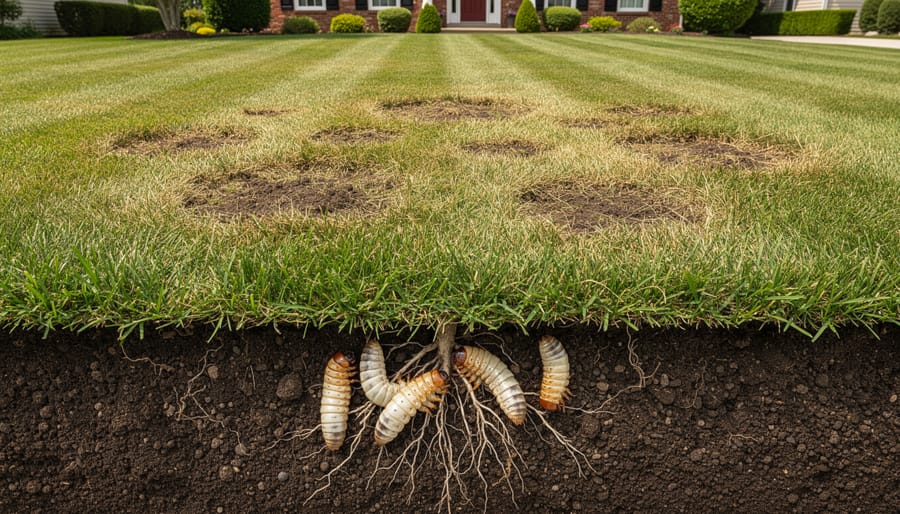
Sometimes what looks like lawn disease is actually the work of underground troublemakers. Grubs, chinch bugs, and billbugs feast on grass roots and stems beneath the surface, creating symptoms that can easily fool even experienced gardeners into thinking they’re dealing with a fungal infection or mysterious blight.
The good news? These pest problems are relatively easy to diagnose once you know what to look for. Start with the simple tug test: grab a handful of affected grass and pull gently. If the grass lifts up like a loose carpet with no root resistance, you’re likely dealing with root-feeding grubs rather than disease. Healthy or merely diseased grass will resist your pull because the roots remain anchored.
For a more thorough investigation, peel back a square foot of damaged turf and examine the soil layer. Count any C-shaped white grubs you find. More than five to ten per square foot typically warrants treatment. Chinch bugs, on the other hand, prefer hot, sunny areas and leave yellowing patches that spread outward. You can spot these tiny black insects by parting the grass at the boundary between healthy and damaged areas.
Billbugs are sneakier, but look for hollowed-out grass stems and small white larvae inside. Understanding these resistant pests helps you choose targeted, sustainable solutions rather than blanket chemical applications.
Cultural and Environmental Stressors
Before you blame a fungus or pest, take a step back. Sometimes what looks like disease is actually your lawn’s way of saying it’s stressed by environmental or cultural factors. These non-biological culprits often mimic disease symptoms perfectly, leading many homeowners down the wrong treatment path.
Dog urine spots are classic offenders, creating circular brown patches with dark green rings that look remarkably like fungal infections. The concentrated nitrogen acts like a chemical burn, killing grass in the center while stimulating growth around the edges. Similarly, over-fertilizing can create yellow or brown streaks following your spreader pattern, not a mysterious pathogen.
Soil compaction from heavy foot traffic or equipment restricts root growth and water penetration, leading to weak, thinning grass that appears diseased. These areas become more vulnerable to actual diseases later, creating a compound problem. Drought stress produces symptoms nearly identical to summer patch or dollar spot, with straw-colored patches that expand during hot weather.
Perhaps most common is improper mowing. Scalping your lawn by cutting too short removes the grass’s food reserves and exposes it to temperature extremes. Dull mower blades shred grass tips, creating ragged brown edges that look suspiciously like leaf spot diseases.
The good news? These issues are often easier to correct than true diseases. Addressing cultural problems creates a naturally resilient lawn that resists biological threats through its own vigor.
Herbicide Drift and Chemical Damage
Sometimes what looks like a mysterious lawn disease is actually chemical damage in disguise. Herbicide drift from a neighbor’s yard treatment or accidental overspray can create puzzling symptoms that mimic disease or pest problems. You might notice yellowing patches, twisted or cupped leaves, or irregular brown spots that don’t match typical disease patterns.
The tricky part is that chemical damage often appears suddenly and affects plants in unusual ways. Unlike diseases that typically spread gradually, herbicide damage might show up in distinct patterns following wind direction or spray application. Broadleaf herbicides can cause dramatic leaf distortion, while non-selective herbicides create more uniform browning or bleaching.
If you suspect chemical damage, consider recent lawn treatments in your area and check whether the damage pattern aligns with wind direction or proximity to treated areas. The good news is that many lawns can recover from herbicide exposure with proper care, though it takes patience. Focus on maintaining healthy soil, providing adequate water, and avoiding additional stress.
To prevent future issues, communicate with neighbors about treatment schedules and always apply lawn chemicals on calm days. When using herbicides yourself, follow label directions precisely and consider spot-treating problem areas rather than broadcasting chemicals across your entire lawn. This sustainable approach protects both your grass and the broader environment.
Your Step-by-Step Diagnostic Protocol
Let’s tackle this mystery together with a systematic approach that will help you get to the bottom of what’s troubling your lawn. Think of yourself as a lawn detective, and we’re going to gather evidence step by step.
Start with the Big Picture Assessment. Walk your entire lawn during daylight hours, preferably in the morning when dew makes symptoms more visible. Take photos from multiple angles, including close-ups of affected areas and wider shots showing the pattern of damage. Note whether the problem appears in patches, strips, circles, or is scattered randomly throughout your yard. This pattern often tells us more than the symptoms themselves.
Document the Symptoms Carefully. Get down close and examine the grass blades. Are they yellowing from the tip down or from the base up? Do you see spots, lesions, or unusual discoloration? Check the crown of the grass plant where blade meets root. Look for signs of insects, webbing, or fungal growth. Don’t forget to dig up a small section of affected turf with a garden trowel, going about three inches deep, to examine the roots and soil beneath.
Consider Your Recent Lawn History. This step is crucial and often reveals the culprit. Have you applied any fertilizers, herbicides, or pesticides in the past month? Did you change your watering schedule? Have there been any construction projects, heavy foot traffic, or vehicle parking on the lawn? Sometimes what looks like disease is actually environmental stress or chemical damage, especially if your treatments stopped working as expected.
Test Your Soil and Environment. Purchase an inexpensive soil test kit from your local garden center or send a sample to your county extension office. Check soil pH, nutrient levels, and drainage. Water an affected area thoroughly and return in 24 hours to see if water is pooling, which indicates drainage issues. Measure how much you’re actually watering by placing tuna cans around your lawn during irrigation.
Finally, Seek Expert Confirmation when needed. Take your photos and notes to your local extension office or a reputable garden center. Many offer free diagnostic services and can identify problems you might miss. Collect samples in clean plastic bags, keeping different symptoms separate. The small investment in professional identification can save you hundreds in misguided treatments and help you move toward sustainable solutions that actually address your lawn’s specific needs.
When to Call in Professional Help
Here’s the truth: some lawn mysteries are simply beyond the scope of weekend detective work, and that’s perfectly okay. Knowing when to bring in reinforcements isn’t admitting defeat—it’s making a smart investment in your lawn’s long-term health.
If you’ve followed systematic diagnostic steps and you’re still stumped after a few weeks, it’s time to expand your resources. Start with your local cooperative extension office, which offers an incredible wealth of free or low-cost services. Many extension offices provide soil testing that reveals nutrient deficiencies, pH imbalances, and even contamination issues that visual inspection alone can’t catch. These tests typically cost between $15-40 and deliver insights that can save you hundreds in misdirected treatments.
Extension agents can also identify disease samples you submit, giving you definitive answers instead of educated guesses. This is especially valuable when dealing with emerging problems like resistant lawn pests or unusual fungal pathogens that don’t respond to standard treatments.
Consider hiring a certified lawn care professional when you’re facing rapid decline that threatens your entire lawn, when patterns suggest environmental contamination, or when previous DIY attempts have made matters worse. Look for professionals with credentials like Certified Turfgrass Professional or similar state certifications. A quality diagnostic visit typically costs $75-150, but you’re paying for specialized knowledge and equipment that can pinpoint issues in a single visit.
Remember, the most sustainable approach to lawn care often involves collaboration. Extension resources and professionals complement your own efforts, helping you develop targeted solutions rather than carpet-bombing your yard with products. That’s both environmentally responsible and economically smart.
Prevention: Making Your Lawn Resistant to Disease X
The best defense against mysterious lawn problems is creating an environment where grass thrives and issues struggle to take hold. Think of it like building a strong immune system for your lawn – when conditions are right, your turf can naturally resist most problems that come its way.
Let’s start with the foundation: soil health. I can’t emphasize this enough – healthy soil creates healthy grass. Get your soil tested every few years to understand exactly what you’re working with. Most county extension offices offer affordable testing that reveals pH levels and nutrient content. Armed with this information, you can amend your soil specifically for what it needs rather than guessing. Adding compost annually works wonders too, improving soil structure, drainage, and beneficial microbial activity. These microscopic helpers are your lawn’s invisible allies, breaking down organic matter and keeping harmful pathogens in check.
Watering properly might sound simple, but it’s where many well-intentioned homeowners go wrong. Deep, infrequent watering encourages roots to grow downward, creating a resilient lawn that can weather stress. Aim for about an inch of water per week, including rainfall, applied in one or two sessions rather than daily sprinkling. Water early in the morning so grass blades dry quickly, reducing the damp conditions that many lawn diseases love. Evening watering leaves grass wet overnight – basically rolling out the welcome mat for fungal problems.
Fertilization requires a Goldilocks approach – not too much, not too little, but just right. Over-fertilizing creates lush, weak growth that’s incredibly susceptible to disease, while under-fertilizing leaves grass too weak to defend itself. Follow soil test recommendations and use slow-release fertilizers that feed steadily rather than creating growth spurts. During stressful periods like summer heat or drought, ease back on feeding.
Choosing the right grass varieties makes a tremendous difference. Disease-resistant cultivars have been specifically bred to withstand common problems in your region. Check with local garden centers or extension offices about which varieties perform best in your area. Many newer cultivars offer impressive resistance while maintaining attractive appearance and good wear tolerance.
Finally, maintain proper mowing height for your grass type. Taller grass shades soil, reduces water evaporation, and develops deeper roots – all contributing to natural disease resistance.
Treatment Strategies for Unknown Problems
When your lawn is clearly struggling but you can’t identify the exact culprit, don’t panic. Taking a thoughtful, measured approach can help your grass recover while you continue investigating. The key is choosing interventions that support overall lawn health without potentially making things worse.
Start with the safest, most fundamental care practices. Sometimes what looks like a mysterious disease is actually stress from basic cultural problems. Adjust your watering schedule to provide deep, infrequent irrigation rather than frequent shallow watering, which promotes both disease and weak roots. Ensure you’re mowing at the correct height for your grass type, as scalping creates entry points for pathogens and stresses plants. Remove no more than one-third of the blade length at each mowing.
Consider implementing gentle, broad-spectrum organic treatments that won’t harm beneficial organisms. Compost tea applications can introduce helpful microbes that compete with pathogens and support plant immunity. A light topdressing of quality compost provides slow-release nutrients and improves soil biology. Seaweed or kelp extracts can strengthen plant defenses without the risks associated with synthetic chemicals.
If you suspect disease but aren’t certain which one, avoid nitrogen-heavy fertilizers temporarily, as lush growth can be more susceptible to infection. Instead, focus on balanced nutrients with adequate potassium, which enhances disease resistance. Keep the lawn surface dry by watering early in the morning so grass blades dry quickly.
Aerate compacted areas to improve air circulation and drainage, conditions that discourage most fungal problems. Remove thatch if it exceeds half an inch, as excessive thatch harbors pathogens and insects. Speaking of insects, remember that symptoms resembling disease might actually indicate pest resistance issues or hidden insect damage.
Throughout this process, keep documenting symptoms with photos and notes. This detective work helps identify patterns and provides valuable information if you eventually consult an extension office or lawn care professional. Patience combined with gentle, supportive care often allows lawns to recover while you solve the mystery.
Here’s the truth that every lawn detective needs to hear: mystery lawn problems are absolutely solvable, and you’re more capable of cracking these cases than you might think. If you’ve made it through this guide, you’re already equipped with the observation skills and systematic approach that separate guesswork from genuine problem-solving.
Remember, even professional turf managers and experienced gardeners encounter their share of Disease X scenarios. That brown patch that appeared overnight? The mysterious yellowing that doesn’t match any textbook description? We’ve all been there, scratching our heads and second-guessing ourselves. The difference isn’t in having all the answers immediately—it’s in trusting the diagnostic process and being patient enough to let the clues reveal themselves.
Each lawn challenge you face is actually an opportunity to become a better observer of your unique growing conditions. You’ll start noticing patterns you missed before: how water pools in that corner after heavy rain, how the afternoon sun creates a stress zone along the fence line, or how your neighbor’s towering oak affects more of your yard than you realized. These insights don’t just help you solve today’s problem—they make you better prepared for tomorrow’s challenges.
The sustainable approach to lawn care isn’t about having a chemical solution for every issue. It’s about understanding your lawn’s ecosystem well enough to support its natural resilience. Sometimes the best treatment is simply adjusting your watering schedule or aerating compacted soil.
So the next time you spot something unusual on your lawn, take a deep breath and channel your inner detective. Observe, document, test your theories, and don’t be afraid to adjust course. You’ve got this, and your lawn will be healthier because you took the time to really understand what it needed.