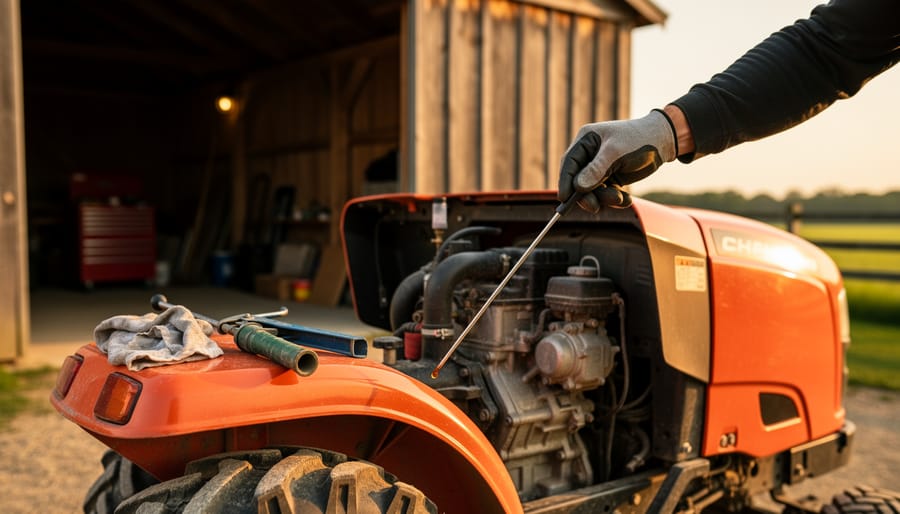
Check your compact tractor’s engine oil every 8-10 operating hours, looking for proper level and clarity—dark, gritty oil means it’s time for a change, which you can easily handle yourself with basic tools and about 30 minutes. Inspect your hydraulic fluid monthly by checking the sight glass or dipstick when the machine is cool and level; low fluid levels often explain sluggish loader performance or unresponsive implements before they become expensive repair issues.
Grease all fittings every 10 hours of operation, paying special attention to loader pivot points, three-point hitch pins, and steering components—this single habit prevents 80% of premature wear problems that tractor owners face. Clean or replace your air filter every 50 hours in dusty conditions, or at least twice per season for typical lawn and property work; a clogged filter reduces power by up to 20% and increases fuel consumption noticeably.
Establish a seasonal deep-service routine that includes checking tire pressure (critical for loader stability and turf protection), inspecting belts for cracks or glazing, and testing battery terminals for corrosion. Document every service in a simple notebook kept in your tractor’s toolbox—this running history helps identify patterns when problems arise and proves invaluable for warranty claims or resale value.
Most compact tractor maintenance falls well within DIY capabilities once you understand the basics, saving substantial money over professional service calls while building confidence in your equipment. Know your limits though: transmission issues, electrical diagnostics beyond basic fuses, and major hydraulic repairs typically require professional expertise and specialized tools.
Why Regular Compact Tractor Service Matters More Than You Think
Let’s be honest – most of us don’t get excited about tractor maintenance. It’s easy to think, “It’s running fine, so why bother?” But here’s the reality: skipping regular compact tractor service can turn into a headache faster than you might expect, and it often happens at the worst possible time.
Picture this: It’s late spring, your grass is growing like wildfire after all that rain, and you fire up your tractor only to have it sputter and die. Now you’re facing a week without equipment during peak mowing season, watching your lawn turn into a meadow while you wait for parts. I’ve heard this story countless times from fellow gardeners, and it’s entirely preventable.
Regular maintenance does more than just prevent breakdowns. When your tractor isn’t serviced properly, its performance gradually declines. You might not notice at first, but dirty air filters reduce engine efficiency, old hydraulic fluid makes your loader sluggish, and worn belts mean your mower deck isn’t cutting as cleanly. Your beautiful lawn suffers, and you’re working harder for worse results.
There’s also the financial reality. A neglected tractor doesn’t just stop working one day – it deteriorates in ways that cause expensive damage. Skip oil changes, and you’re looking at potential engine rebuilds costing thousands instead of a twenty-dollar oil filter. Ignore leaking seals, and you’ll contaminate your soil with hydraulic fluid while also running low on fluids that protect critical components.
Safety deserves serious consideration too. Worn steering components, failing brakes, or loose blades create genuine hazards for you, your family, and your property. And from a sustainability perspective, a poorly maintained tractor runs inefficiently, burning more fuel and producing more emissions than necessary – the opposite of the environmentally conscious approach most of us strive for in our gardening practices.
The bottom line? Regular service isn’t an expense; it’s an investment in reliability, performance, and peace of mind. Your compact tractor is a significant tool for maintaining your property sustainably and effectively, and treating it right ensures it’s ready when you need it most.
The Essential Service Schedule Every Compact Tractor Owner Should Follow
Before Every Use: Your Quick Pre-Operation Checklist
Think of this five-minute walk-around as your tractor’s morning coffee ritual. These quick checks can save you from heartache down the road and keep your equipment running smoothly for years.
Start with the obvious: walk around your tractor looking for anything unusual. Puddles underneath? That’s your first clue something needs attention. Check for loose bolts, damaged hoses, or anything that looks out of place. Your eyes are powerful diagnostic tools.
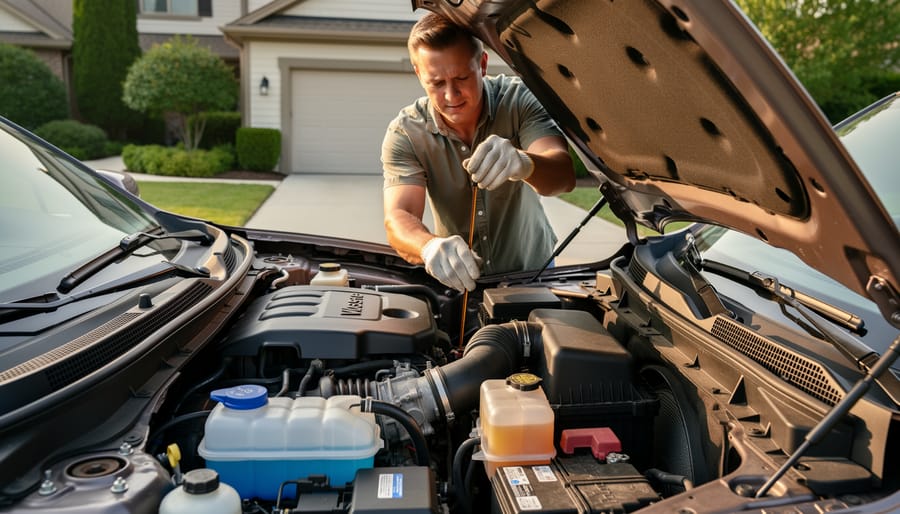
Next, pop the hood and check your fluid levels. Engine oil should sit between the minimum and maximum marks on the dipstick. Coolant levels matter too, especially before tackling big jobs on warm days. Hydraulic fluid keeps your loader and attachments working properly, so give that reservoir a quick glance. Low fluids often signal leaks or maintenance neglect.
Don’t forget your tires. Proper pressure prevents uneven wear and keeps your tractor stable on slopes. A quick squeeze test works in a pinch, but an inexpensive tire gauge gives you accurate readings. Look for cuts, bulges, or embedded debris while you’re down there.
Finally, test your safety features. Do the brakes respond firmly? Does the parking brake hold on an incline? These aren’t just regulatory checkboxes; they’re genuine safety essentials that protect you and your property.
Every 25-50 Hours: The Regular Maintenance Rhythm
Think of this maintenance window as your tractor’s “coffee break” – a quick check-in that takes about fifteen minutes but saves you from major headaches down the road. Every 25-50 hours of use (which might mean weekly if you’re actively maintaining your property, or monthly during lighter seasons), you’ll want to develop a simple routine that becomes second nature.
Start by checking your engine oil level when the engine is cool and on level ground. Pull that dipstick, wipe it clean, reinsert it, and check again. It’s like checking the pulse of your machine. While you’re under the hood, take a peek at your air filter. A clogged air filter is like trying to breathe through a dusty bandana – your engine works harder and burns more fuel. If it looks dirty, give it a gentle tap to dislodge loose debris, or replace it if it’s really grimy.
Next up are your grease points. Most compact tractors have several zerks (those little nipple-shaped fittings) on loader arms, bucket pins, and steering components. A few pumps of grease at each point keeps everything moving smoothly and prevents premature wear. Your owner’s manual has a diagram showing exactly where these hide.
Finally, grab a brush and blow off accumulated grass clippings, dirt, and debris from around the engine, radiator, and undercarriage. This simple cleaning prevents overheating and lets you spot potential issues like fluid leaks early. Build these checks into your routine right after you finish mowing or working – when maintenance becomes habit, your tractor rewards you with years of reliable service.
Seasonal Service: Preparing for Heavy Use and Storage
Your compact tractor works hard during peak mowing season, so it deserves proper care when transitioning between heavy use and storage periods. Think of seasonal service as giving your trusty machine a well-earned spa treatment before and after its busiest months.
Spring preparation starts with checking your tractor after months of sitting idle. Begin by inspecting the battery, which often loses charge during storage. Clean any corrosion from terminals using a baking soda solution, then test the charge level. If you stored your tractor with fuel stabilizer added last fall, you’re ahead of the game. If not, drain any old fuel and replace it with fresh gasoline to prevent starting issues and engine damage. Change the oil and filter, as contaminants can settle during storage and cause problems when you fire up the engine.
Before winter arrives, proper winterization procedures protect your investment from harsh conditions. Add fuel stabilizer to prevent ethanol-related fuel degradation, then run the engine for several minutes to circulate the treated fuel throughout the system. Some owners prefer draining the fuel tank completely, which is equally effective but requires more effort. Remove the battery and store it in a temperature-controlled location, checking and charging it monthly to maintain longevity.
Protect your tractor’s exterior by thoroughly washing off dirt, grass clippings, and debris that trap moisture and accelerate rust. Apply a coat of protective wax to painted surfaces. Store your tractor in a dry, covered area whenever possible. If outdoor storage is unavoidable, invest in a breathable, weather-resistant cover that prevents moisture accumulation while protecting against rain and snow. These simple steps ensure your compact tractor emerges from storage ready for another productive season.
Compact Tractor Service You Can Handle Yourself (And What to Leave to Pros)
DIY-Friendly Maintenance Tasks That Save You Money
Keeping your compact tractor in top shape doesn’t always require a mechanic’s expertise or hefty service bills. There are several maintenance tasks you can confidently tackle yourself with just a few basic tools and a Saturday morning. Not only will this hands-on approach save you money, but you’ll also develop a deeper understanding of your machine and catch potential problems before they become expensive repairs.
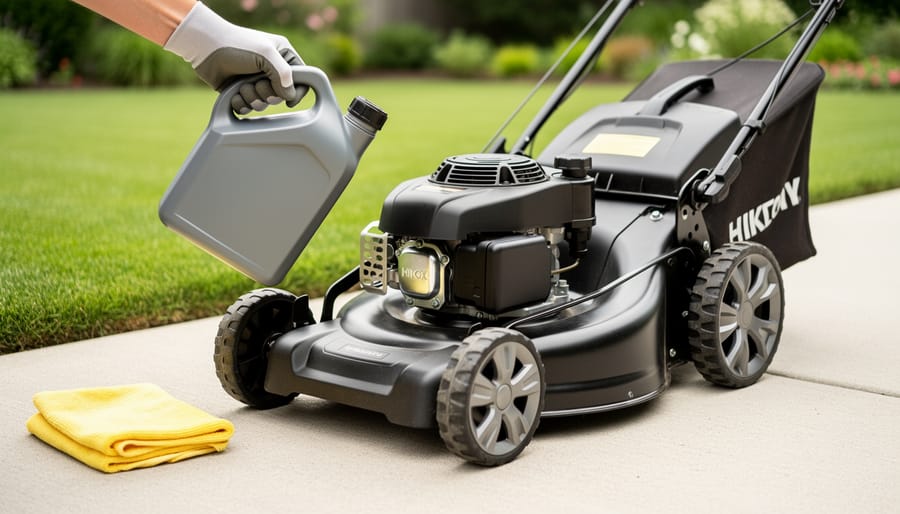
Let’s start with oil changes, which are surprisingly straightforward. Most compact tractors need fresh oil every 50-100 hours of operation. You’ll need an oil pan, a socket wrench, and the correct oil type for your model. Professional oil changes typically cost between 75 and 150 dollars, but doing it yourself runs about 30 to 40 dollars for the oil and filter. Plus, you’re eliminating the hassle of scheduling and transporting your tractor. Just remember to let the engine cool first, and dispose of used oil responsibly at a recycling center.
Air filter replacement is even simpler and takes about five minutes. A dirty air filter reduces engine efficiency and can lead to costly damage over time. Check yours monthly during heavy-use seasons. Replacement filters cost around 15 to 30 dollars compared to 50 to 75 dollars at a service center. Most filters are accessible without tools, just clips or wing nuts you can loosen by hand.
Blade sharpening is another money-saver that dramatically improves cutting performance. Dull blades tear grass rather than cut it cleanly, stressing your lawn and your engine. A basic angle grinder or file costs about 30 to 60 dollars and will last years. Professional sharpening services charge 10 to 20 dollars per blade, so the investment pays for itself quickly. Remove the blade, secure it in a vice, and file at the existing angle until sharp.
Finally, never underestimate the power of regular cleaning. Washing away grass clippings, dirt, and debris prevents rust and helps you spot leaks or loose bolts early. A simple garden hose and brush are all you need.
When to Call in a Professional Mechanic
Look, I’m all for the satisfaction of fixing things yourself—there’s something wonderful about keeping your compact tractor running with your own two hands. But let’s have an honest conversation about when it’s time to call in a professional mechanic, because some repairs are simply beyond what most of us should tackle in our home workshops.
Hydraulic system repairs top my list of “leave it to the pros” situations. These systems operate under extreme pressure, and a mistake during repair can be dangerous—not to mention messy and expensive. If you’re seeing significant hydraulic fluid leaks, experiencing total system failure, or need to replace major components like pumps or cylinders, a qualified mechanic has the specialized knowledge and tools to do it safely.
Transmission problems are another area where professional expertise pays off. While you can certainly handle fluid changes, internal transmission work requires precise knowledge of complex gear systems. Grinding noises, slipping gears, or complete transmission failure warrant expert attention. The cost of getting it wrong far exceeds the service fee.
Electrical system troubleshooting can be particularly frustrating because problems aren’t always visible. If you’ve checked the obvious culprits like battery connections and fuses but still have starting issues, alternator problems, or mysterious electrical gremlins, a mechanic with diagnostic equipment can save you hours of head-scratching.
Engine rebuilds definitely fall into professional territory. While changing oil and filters is straightforward maintenance, internal engine work demands precision, specialized tools, and experience. If you’re facing significant power loss, excessive smoke, or knocking sounds that suggest major internal damage, it’s time to call the experts.
Remember too that professional service often protects any remaining warranty coverage. Many manufacturers require documented professional service for warranty claims, making DIY repairs on newer equipment a risky proposition that could cost you thousands in denied coverage.
Common Compact Tractor Problems and How to Fix Them
Starting and Performance Issues
There’s nothing quite as frustrating as heading out to tackle yard work only to find your compact tractor won’t fire up. The good news? Many starting and performance problems are surprisingly straightforward to diagnose and fix yourself.
When your tractor refuses to start, begin with the basics. Check that there’s adequate fuel in the tank and that the fuel shutoff valve is open. It sounds simple, but you’d be amazed how often this is the culprit! Next, examine your battery connections. Loose or corroded terminals are among the most common won’t start scenarios. Clean any corrosion with a wire brush and ensure connections are snug. For more detailed troubleshooting, review battery diagnostics to determine if replacement is needed.
If your tractor starts but runs roughly or loses power, suspect fuel quality issues first. Old or contaminated fuel can cause significant performance problems. Drain and replace stale fuel, and consider adding a fuel stabilizer for future storage periods.
Spark plugs deserve attention too. Remove and inspect them for fouling or wear. A quick cleaning or inexpensive replacement often restores smooth operation. Also check your air filter for dirt and debris that restrict airflow.
Stalling issues during operation typically point to fuel delivery problems or a clogged fuel filter. Replace filters according to your maintenance schedule, and inspect fuel lines for cracks or blockages. These simple checks often restore your tractor’s reliable performance without requiring professional intervention.
Hydraulic and PTO Problems
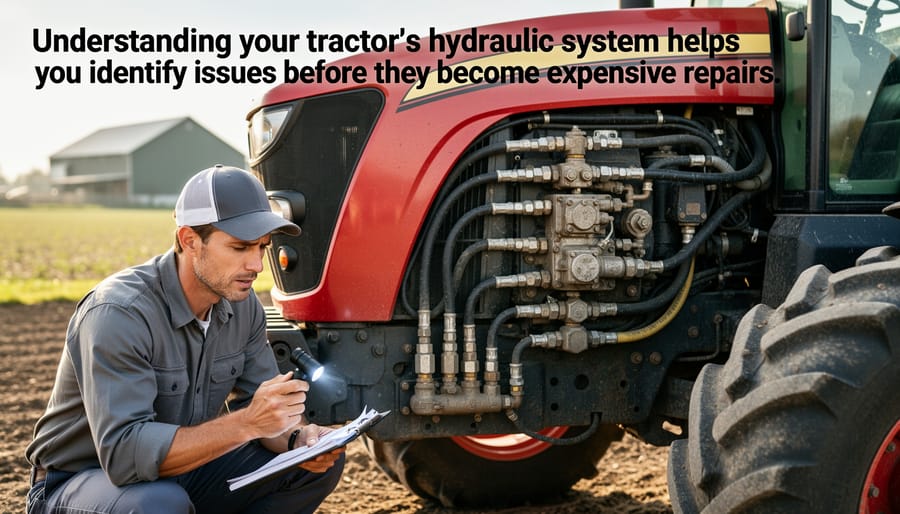
If you’ve noticed your loader moving sluggishly or struggling to lift loads it used to handle easily, you’re likely dealing with hydraulic system troubles. Start by checking your hydraulic fluid level—low fluid is the most common culprit behind weak performance. Top it off with the manufacturer-recommended fluid and watch for improvement. While you’re at it, inspect all visible hydraulic hoses and connections for leaks, which often appear as dark, oily spots on components or pooling beneath your tractor.
PTO engagement issues can prevent your mower deck or other attachments from working properly. If your PTO won’t engage or makes grinding noises, first ensure the engagement lever or switch moves freely and isn’t obstructed. Check the PTO belt for excessive wear, cracks, or glazing—a worn belt often slips and needs replacement. For electric PTOs, verify all electrical connections are clean and secure.
Hydraulic leaks require prompt attention to prevent damage and maintain safe operation. Small weeping from fittings can often be resolved by carefully tightening connections, but don’t overtighten. Cracked hoses need immediate replacement. Keep your system clean—dirt entering through leaks can cause expensive internal damage. Regular fluid changes every 200 hours help prevent many hydraulic problems before they start, supporting both reliable performance and sustainable equipment longevity.
Unusual Noises and Vibrations
Your compact tractor will communicate with you through sounds and sensations, and learning to distinguish normal operation from warning signs is an essential skill for any tractor owner. Let’s break down what you should listen and feel for during regular use.
Belt squealing typically indicates loose or worn belts that need adjustment or replacement. This high-pitched sound often appears when engaging the PTO or during startup. While it might seem minor, addressing it quickly prevents belt failure at inconvenient times and protects your pulleys from excessive wear.
Grinding noises usually signal more serious concerns. If you hear grinding from the transmission or differential, stop operation immediately and investigate. This could indicate low fluid levels, damaged gears, or failing bearings. Similarly, grinding brakes need prompt attention for your safety.
Knocking sounds from the engine compartment deserve immediate investigation. Loose components, worn engine mounts, or internal engine problems could be the culprit. Regular maintenance helps prevent these issues, but when they occur, don’t ignore them.
Excessive vibration beyond the normal operational hum often points to unbalanced blades, loose mounting bolts, or damaged drive components. Check blade condition first, then inspect all visible fasteners and connections. Unusual vibrations can cause additional wear throughout your tractor, so addressing them quickly supports your sustainable equipment management goals.
Building Your Compact Tractor Service Toolkit and Keeping Records
Essential Tools and Supplies Every Owner Should Have
Having the right tools and supplies on hand makes compact tractor maintenance much more manageable and helps you tackle routine service without last-minute trips to the store. Let’s talk about what you really need in your toolkit.
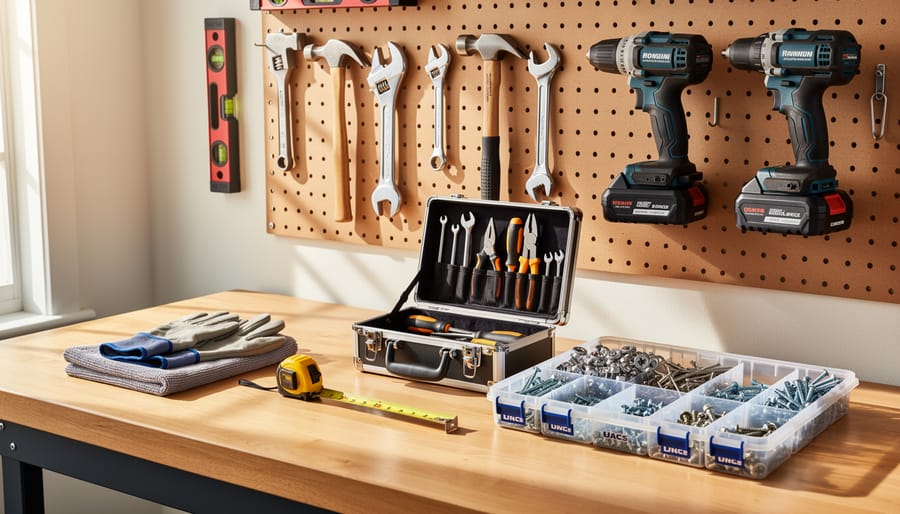
Start with a quality socket and wrench set that includes both metric and standard sizes. Your tractor likely uses a mix of both, and having the right fit prevents rounded bolt heads and frustration. A good torque wrench is essential for reassembling components to manufacturer specifications, especially when working with hydraulic fittings or engine parts.
Stock up on the basics that need regular replacement: oil filters, air filters, fuel filters, and hydraulic filters specific to your tractor model. Buying these in small quantities ahead of time means you’re ready when maintenance day arrives. Keep appropriate fluids on hand too, including engine oil, hydraulic fluid, and grease for all those fittings. Many manufacturers now offer biodegradable hydraulic fluids and plant-based lubricants that work beautifully while reducing environmental impact if spills occur on your property.
A grease gun with multiple tips is non-negotiable for keeping moving parts happy. Add a funnel set, oil drain pan, shop rags made from recycled materials, and work gloves to round out your collection.
For quality supplies, your local tractor dealer often stocks OEM parts, but farm supply stores and online retailers frequently carry eco-friendly alternatives at competitive prices. Look for products with environmental certifications when choosing oils and cleaners. Building this toolkit gradually makes sense financially while ensuring you’re prepared for whatever your compact tractor needs.
Why a Maintenance Log Will Save You Headaches
Here’s something I learned the hard way after my compact tractor mysteriously started losing power: I had no idea when I’d last changed the fuel filter. A simple maintenance log would have saved me hours of head-scratching and an unnecessary service call.
Think of your maintenance log as your tractor’s health diary. You don’t need anything fancy—a basic notebook, spreadsheet, or even a smartphone app works perfectly. Record the date, engine hours, what service you performed, any parts you replaced (including brand and part numbers), and a quick note about how the tractor was running. Notice a slight vibration? Jot it down. Changed the hydraulic fluid? Note the type and amount used.
This simple habit pays off in multiple ways. When troubleshooting problems, you can quickly identify patterns or eliminate recently serviced components as culprits. If you ever need professional help, your mechanic will appreciate having a clear service history—it speeds up diagnosis and can save you money. Plus, if you decide to sell your tractor down the road, a detailed maintenance log proves you’ve been a responsible owner, which can significantly boost resale value. It’s one of those small investments of time that delivers big returns in peace of mind and keeping your equipment running sustainably for years.
Sustainable Service Practices for the Environmentally Conscious Owner
Maintaining your compact tractor responsibly means thinking beyond just keeping it running—it’s about minimizing your environmental footprint while you care for your property. The good news? Sustainable service practices often save you money and extend your equipment’s life, making this truly a win-win situation.
Let’s start with fluid management, which is probably the most critical environmental consideration. When changing engine oil, hydraulic fluid, or coolant, always use a proper drain pan and never, ever pour used fluids down drains or onto the ground. These substances can contaminate groundwater and harm soil health for years. Instead, collect them in sealed containers and take them to your local recycling center or auto parts store—many accept used oil for free. I keep dedicated containers in my garage specifically for this purpose, clearly labeled to avoid any mix-ups.
Speaking of fluids, consider switching to biodegradable hydraulic oils and lubricants when they’re compatible with your tractor’s specifications. Modern bio-based options perform remarkably well and break down much faster if accidental spills occur. Always check your owner’s manual first, but these products have come a long way in recent years.
Preventing leaks should be a top priority during every service session. Even small drips add up over time, wasting money and potentially contaminating your soil. Keep absorbent pads under your tractor when parked, and address any seepage immediately by replacing worn seals, gaskets, or hoses. Regular inspections catch these issues before they become environmental hazards.
Fuel efficiency deserves attention too. A well-maintained tractor burns less fuel, reducing both emissions and operating costs. Keep your air filter clean, maintain proper tire pressure, and ensure your engine runs at the correct temperature. Sharp mower blades require less power, and removing unnecessary attachments when not in use reduces drag.
Finally, choose cleaning products wisely. Biodegradable degreasers and soaps work wonderfully for washing your tractor without introducing harsh chemicals into your lawn or garden runoff. Your property—and the environment—will thank you for these thoughtful choices.
Taking care of your compact tractor doesn’t have to be intimidating or expensive. By learning to handle basic maintenance tasks yourself, you’re not just saving money on service calls—you’re building a valuable skill set that gives you true ownership over your property care equipment. Start small. Begin with simple tasks like checking fluid levels and cleaning air filters, then gradually work your way up to more involved procedures as your confidence grows. There’s real satisfaction in knowing you can keep your tractor running smoothly with your own two hands.
The beauty of consistent maintenance is that it prevents those frustrating moments when you’re ready to tackle a project and your equipment won’t cooperate. A well-maintained compact tractor becomes a reliable partner in your gardening journey, always ready when inspiration strikes or when your lawn needs attention. Think of regular service not as a chore, but as an investment in stress-free property care and long-term equipment longevity.
Remember, even professional mechanics started somewhere. Every oil change you complete, every filter you replace, and every routine inspection you perform builds your mechanical knowledge and saves you significant money over time. Your compact tractor is a workhorse designed to serve you for years, and with proper care, it absolutely will. So grab that owner’s manual, set aside a Saturday morning, and give your tractor the attention it deserves. Your future self—and your thriving garden—will thank you for it.