That sputtering, uneven rhythm coming from your riding mower isn’t something you need to live with. When your engine surges, revving up and down like it can’t decide what speed to maintain, you’re dealing with one of the most common yet fixable lawn care frustrations. This intermittent acceleration typically points to fuel delivery issues, air intake problems, or carburetor complications that disrupt the steady flow your engine needs.
Check your fuel system first by replacing old gasoline with fresh fuel and inspecting fuel lines for cracks or blockages. Gas degrades in as little as 30 days, creating varnish deposits that choke your carburetor and starve your engine of consistent fuel flow.
Clean or replace your air filter if it appears dirty or clogged, as restricted airflow forces your engine to compensate by hunting for the right fuel-to-air mixture. This simple five-minute task solves surging problems in nearly 40 percent of cases.
Inspect your carburetor for debris and clean the main jet using carburetor cleaner spray, focusing on tiny passages where buildup restricts fuel flow. A contaminated carburetor is the culprit behind most persistent surging issues.
Understanding what causes surging helps whether you’re maintaining your current equipment or choosing the right mower for future seasons. The good news? Most surging problems respond well to straightforward DIY fixes that cost less than twenty dollars and require only basic tools. Let’s walk through exactly how to diagnose your specific situation and get your mower running smoothly again.
What Does Engine Surging Actually Mean?
If you’ve ever been out mowing your lawn and noticed your riding mower engine sounds like it’s constantly changing its mind about how fast it wants to run, you’re experiencing what we call surging. It’s one of those frustrating problems that can turn a peaceful Saturday morning mow into a real headache.
So what exactly is surging? Picture this: your engine speed rhythmically rises and falls, kind of like someone’s tapping the gas pedal over and over again, except nobody is. You’ll hear the engine revving up—sometimes quite loudly—then slowing down, then revving up again. This cycle typically repeats every few seconds, creating that distinctive “vroom-vroom-vroom” pattern that’s hard to miss.
When you’re sitting in the driver’s seat, surging feels a bit like the mower is having hiccups. You might notice the whole machine vibrating differently as the RPMs fluctuate, and if you’re in the middle of cutting grass, you’ll probably see your cutting quality suffer since the blade speed keeps changing. Some folks describe it as the engine “hunting” for the right speed but never quite finding it.
It’s important to distinguish surging from other engine problems. Unlike backfiring, which gives you loud pops or bangs, or rough idling where the engine just runs unevenly, surging has that distinctive up-and-down rhythm. It’s also different from sputtering, which sounds more like the engine is gasping for fuel and might stall completely.
Think of it like a car struggling to maintain cruise control on a hilly road—constantly accelerating and decelerating without any input from you. Once you recognize this pattern, you’re well on your way to fixing the problem and getting back to smooth, efficient mowing.
The Real Culprits Behind Riding Mower Surging
Dirty or Clogged Carburetor
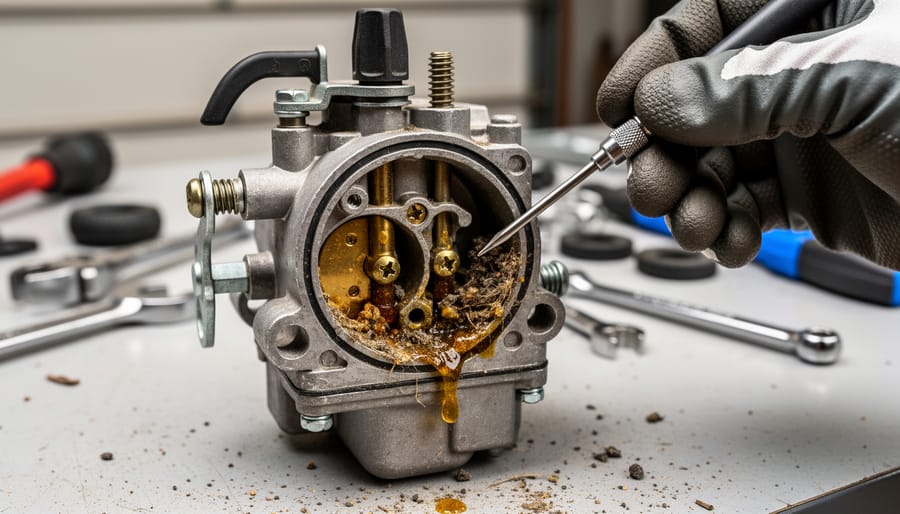
Your riding mower’s carburetor is like the chef in a restaurant kitchen—it’s responsible for mixing the perfect recipe of fuel and air for your engine. When this mixture is just right, your mower runs smoothly. But when the carburetor gets dirty or clogged, that’s when the trouble starts.
Here’s what happens: Old fuel left sitting in your mower over winter breaks down and leaves behind a gummy, varnish-like residue. Debris and tiny particles can also sneak into the fuel system. These gunky deposits clog the small jets and passages inside the carburetor, preventing the right amount of fuel from mixing with air. The result? Your engine gets an inconsistent fuel supply, causing that frustrating surging you’re experiencing.
How can you tell if your carburetor is the culprit? Watch for these telltale signs: your mower runs fine when cold but surges once it warms up, you notice black smoke from the exhaust, or the engine struggles to maintain steady speed even on level ground. You might also smell raw fuel or see it leaking near the carburetor.
The good news is that cleaning a carburetor is a manageable DIY project for most mower owners, and it’s an environmentally responsible fix since you’re extending your equipment’s life rather than replacing it.
Contaminated or Old Fuel
Old or contaminated fuel is one of the most common culprits behind riding mower surging, and it’s something many of us overlook when troubleshooting. Here’s what happens: gasoline, particularly ethanol-blended fuel, starts breaking down after just 30 days in your tank. As it ages, the ethanol attracts moisture and the fuel separates, creating gummy deposits that clog your carburetor jets and fuel lines.
Think of stale fuel like milk left too long in the fridge—it simply goes bad. These deposits disrupt the precise fuel-air mixture your engine needs, causing those frustrating RPM fluctuations. If your mower sat unused over winter or you filled it up months ago, there’s your likely problem.
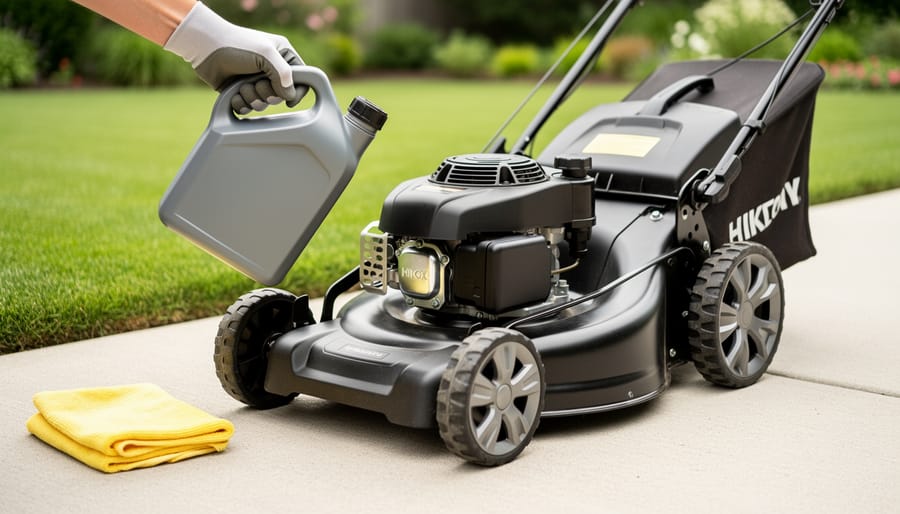
The fix is straightforward and eco-friendly: drain the old fuel properly (take it to a hazardous waste facility rather than pouring it out) and refill with fresh gasoline. For sustainability-minded gardeners, consider using ethanol-free fuel when available—it lasts longer and reduces environmental impact from frequent disposal. Adding a quality fuel stabilizer before storage keeps fuel fresh up to 12 months, saving you money and hassle next season.
Blocked or Dirty Air Filter
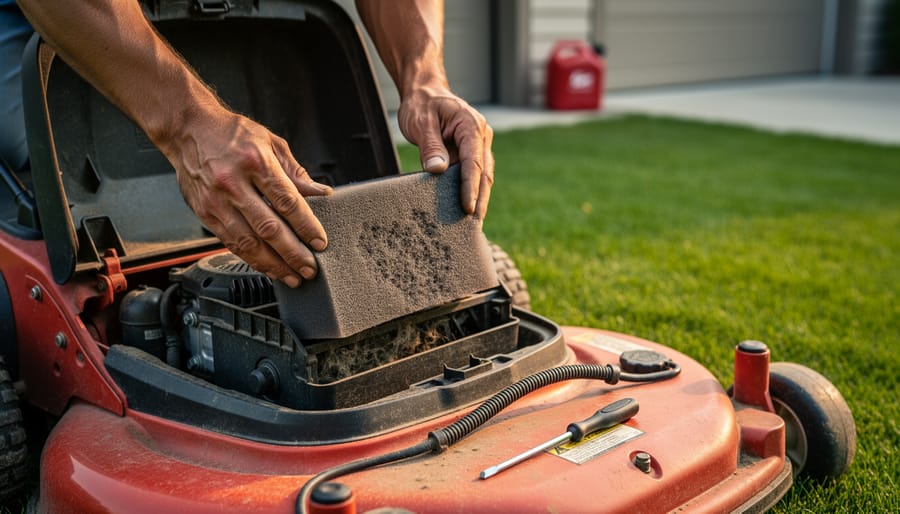
Here’s something I see all the time, and honestly, it’s such an easy fix that you’ll want to kick yourself for not checking it first. Your air filter might be the culprit behind that annoying surging. Think of your mower’s engine like your own lungs—it needs clean air to breathe properly. When the air filter gets clogged with grass clippings, dust, and debris, it restricts airflow into the carburetor. This throws off the delicate fuel-to-air ratio your engine needs to run smoothly.
What happens next? Your engine starts hunting for the right mixture, revving up and down as it struggles to compensate for the lack of air. The good news is that checking your air filter takes about two minutes. Simply locate it (usually under a cover near the carburetor), remove it, and hold it up to the light. If you can’t see light passing through, it’s time for a replacement. Paper filters should be replaced, while foam filters can often be washed with warm soapy water and reused once completely dry. This simple maintenance step can save you from more serious carburetor problems down the road.
Faulty Fuel Pump or Fuel Line Issues
Your mower’s fuel system works like a circulatory system, and when there’s a blockage or weak flow, you’ll notice that frustrating surge. A failing fuel pump can’t maintain consistent pressure, causing the engine to starve for fuel intermittently. Similarly, cracked or deteriorated fuel lines allow air into the system, disrupting smooth delivery. Check your fuel lines for visible cracks, especially where they bend near connections. Clogs often hide in the fuel filter or pump screen, restricting flow. Listen for a steady humming from your fuel pump when you turn the key—silence or sputtering indicates trouble. Replacing worn lines is an easy DIY fix that prevents future headaches. For pump issues, testing fuel pressure with an inexpensive gauge confirms whether replacement is needed, a straightforward job that restores reliable performance.
Governor Problems
Your riding mower’s governor acts like a cruise control for the engine, automatically adjusting the throttle to maintain steady power whether you’re cutting thick grass or cruising across flat lawn. When this small but mighty component malfunctions, your engine speed fluctuates wildly, causing that frustrating surging sensation. Common culprits include a stuck governor linkage, weak or disconnected springs, or worn internal governor gears. Sometimes dirt and debris simply gum up the moving parts. The good news? Many governor issues are surprisingly straightforward to fix yourself with basic tools and a bit of patience, saving you a service call while keeping your mower running smoothly for seasons to come.
Step-by-Step Fixes You Can Do Yourself
Check and Replace Your Air Filter (5 Minutes)
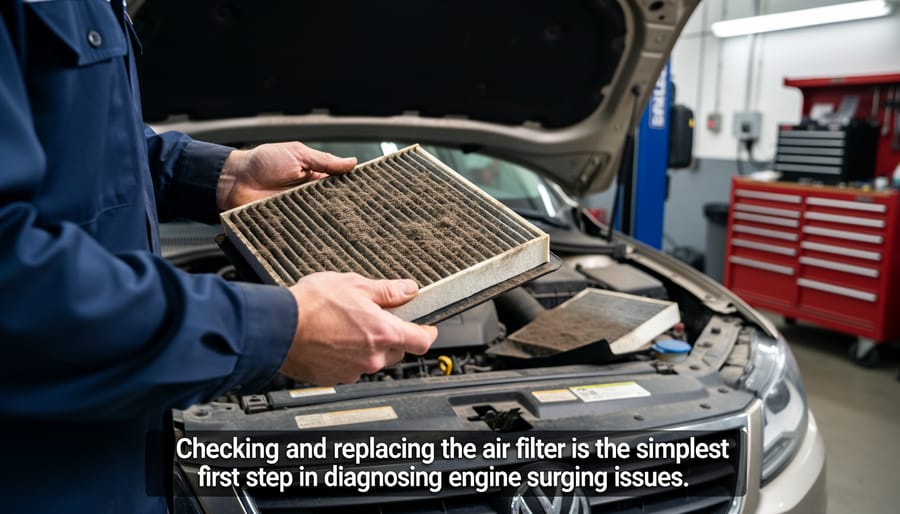
Before diving into complex repairs, let’s start with the simplest solution that fixes surging issues about 40% of the time. Your air filter is your mower’s first line of defense, keeping dirt and debris from entering the engine, and a clogged filter is often the culprit behind frustrating performance problems.
Locate your air filter housing, typically found near the carburetor with a plastic or metal cover secured by clips or screws. Remove the cover and carefully slide out the filter. Hold it up to sunlight—if you can’t see light passing through, it’s time for a replacement. Even filters that look moderately dirty can restrict airflow enough to cause surging.
For foam filters, you can extend their life by washing them in warm, soapy water, letting them dry completely, then applying a light coating of clean engine oil. Paper filters aren’t washable, so replace them when dirty. This is sustainable lawn care at its finest—a five-dollar filter can save you hundreds in unnecessary repairs.
Make this your go-to first check whenever your mower acts up. It’s quick, affordable, and surprisingly effective at resolving common engine problems.
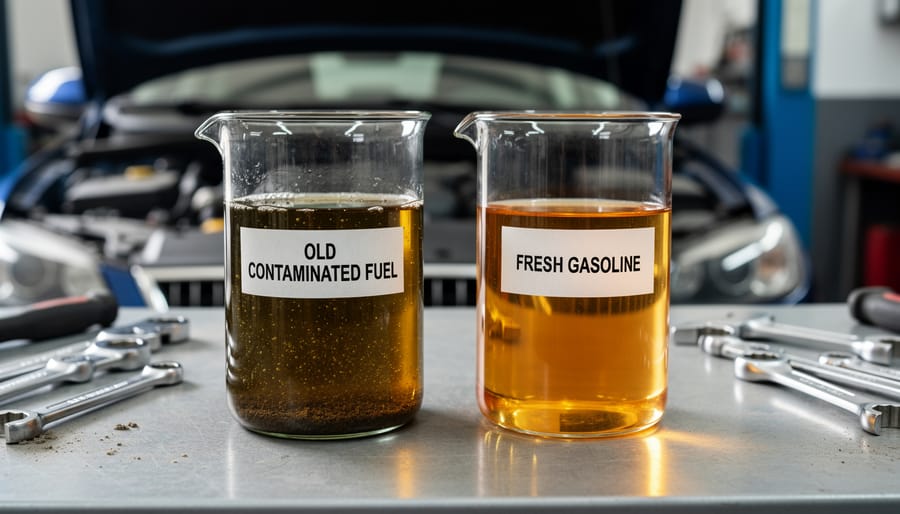
Drain Old Fuel and Refill with Fresh Gas
Old fuel is often the culprit behind engine surging, and thankfully, it’s one of the easier fixes to tackle yourself. Gasoline begins breaking down after just 30 days, forming varnish-like deposits that clog your carburetor and fuel system. If your mower has been sitting idle for a month or more, draining and replacing the fuel should be your first step.
Start by running your mower until the tank is nearly empty, making disposal easier. For any remaining fuel, use a hand pump or siphon specifically designed for gasoline—never use your mouth to start a siphon. Transfer the old fuel into an approved gas container. Most auto parts stores and service stations accept old gasoline for proper recycling, so please don’t pour it down drains or onto the ground. This protects our soil and water systems from contamination.
Refill with fresh, unleaded gasoline with an octane rating of 87 or higher. For optimal performance and sustainability, avoid fuel containing more than 10 percent ethanol, as higher ethanol blends can damage small engines and reduce efficiency.
Here’s a pro tip that will save you future headaches: add a quality fuel stabilizer immediately when you fill up. This extends fuel life up to 24 months and prevents the very problem you’re fixing now. It’s a small investment that protects your mower and reduces waste from discarded fuel.
Clean Your Carburetor
A dirty carburetor is often the culprit behind that frustrating surging, but the good news is you have options depending on your comfort level and the severity of the problem.
For a quick first attempt, try the spray method. With your mower off and cool, locate the carburetor (it’s connected to your air filter housing). Remove the air filter and spray carburetor cleaner directly into the carburetor throat while the engine is running. This can dissolve light buildup and varnish deposits that restrict fuel flow. Rev the engine a few times to help work the cleaner through. If your surging improves immediately, you’ve likely solved the problem without even picking up a wrench.
However, if the spray method doesn’t help or your surging returns quickly, you’re looking at a full carburetor cleaning. This involves removing the carburetor, disassembling it, and cleaning each component, including the jets, float bowl, and needle valve. You’ll need basic tools, carburetor cleaner, and a clean workspace. While this sounds intimidating, many gardening enthusiasts find it’s actually quite manageable with a good online video tutorial specific to your mower model.
Here’s the thing: if you notice damaged gaskets, stuck float mechanisms, or corroded parts during disassembly, those components need replacement. A carburetor rebuild kit typically costs between fifteen and thirty dollars and includes all the small parts you’ll need.
Not comfortable going this route? There’s zero shame in calling a small engine repair shop. Sometimes the most sustainable choice is having a professional do it right the first time, preventing further damage to your mower.
Inspect Fuel Lines and Fuel Filter
Fuel delivery issues are a surprisingly common culprit behind that frustrating surge. Let’s do some detective work on those fuel lines and filter. Start by inspecting your fuel lines from the tank to the carburetor. Look closely for any cracks, splits, or soft spots in the rubber tubing. Even tiny cracks can let air sneak into the system, disrupting the fuel-air mixture and causing surging. If you spot any damage, replacing the line is an easy, budget-friendly fix that makes a big difference.
Next, check for blockages. Gently squeeze the fuel lines while the engine is off. They should feel pliable, not hard or collapsed. If you notice any kinks or restrictions, straighten or replace the affected section.
Now, locate your inline fuel filter, typically a small translucent cylinder along the fuel line. If it looks dirty or clogged with debris, it’s time for a replacement. This simple component filters out contaminants before they reach your carburetor. As a sustainable practice, replacing your fuel filter annually during routine maintenance prevents bigger problems down the road and keeps your mower running efficiently, which means less fuel waste and fewer emissions.
Test and Adjust the Governor
The governor controls your engine’s RPM and maintains consistent speed, so when it malfunctions, surging often results. Start by locating the governor linkage—usually a series of springs and metal rods connected near the carburetor. With your mower off, gently check that all connections are secure and springs aren’t stretched or damaged. Look for any obvious wear or disconnected parts.
While you can visually inspect these components yourself, actual governor adjustments require precise calibration. If you notice damaged springs or loose connections, replacing those parts is straightforward and often solves surging issues. However, if everything looks intact but surging persists, this is where professional help becomes valuable. Incorrect governor settings can cause more problems than they solve, potentially damaging your engine. Think of it like tuning a musical instrument—you can change the strings yourself, but fine-tuning sometimes needs an expert’s ear. Many small engine repair shops can adjust governors quickly and affordably, saving you frustration and preventing costly mistakes.
When to Call a Professional
If you’ve tried the basic fixes and your mower still surges, it’s time to call a qualified technician. Signs you need professional help include persistent issues after cleaning, suspected internal engine problems, or carburetor rebuilds beyond your comfort level. Professional service typically costs $75-150 for diagnostics and $150-400 for repairs, depending on parts needed. Find reputable technicians through your mower’s dealer network, local small engine repair shops with good reviews, or ask fellow gardeners for recommendations. Getting expert help protects your investment and ensures safe, reliable operation.
Preventing Surging Before It Starts
Seasonal Maintenance Checklist
Preventing surging starts with proper seasonal maintenance at the beginning and end of each mowing season. Before storing your mower for winter, either run the fuel tank completely dry or add a quality fuel stabilizer to prevent gum and varnish buildup in the carburetor. This simple step eliminates one of the most common surging culprits.
At season’s start, fresh fuel makes all the difference. Replace any fuel older than 30 days, as gasoline degrades quickly and causes performance issues. Change your air filter annually and inspect it monthly during heavy use. A clean filter ensures proper air-fuel mixture, preventing the lean conditions that trigger surging.
Don’t overlook your spark plug either. Replace it each season or after every 100 hours of operation. Clean connections ensure consistent ignition. While you’re at it, include battery maintenance in your routine, as electrical issues can sometimes mimic fuel problems.
Consider giving your carburetor a thorough cleaning during off-season maintenance. Remove the float bowl, spray carburetor cleaner through all passages, and ensure jets are completely clear. This preventive approach keeps your mower running smoothly and helps you avoid mid-season frustration.
Best Practices for Fuel Storage and Usage
Preventing fuel-related surging starts with smart fuel management. Think of gasoline as fresh produce for your mower – it doesn’t stay good forever! Use fuel within 30 days of purchase, or add a quality fuel stabilizer if you’re storing it longer. I learned this the hard way after leaving untreated fuel in my mower over winter and spending a frustrating spring morning troubleshooting the resulting surge.
Store gasoline only in approved containers designed for fuel storage, keeping them in a cool, dry location away from direct sunlight. These containers prevent moisture contamination and evaporation of volatile fuel components that help your engine run smoothly.
Before each mowing season, start fresh. Drain old fuel from your mower’s tank and refill with new gasoline mixed with stabilizer. This simple habit prevents most fuel-related performance issues, including that annoying surge.
For environmental responsibility, never dump old fuel down drains or onto the ground. Instead, take it to your local hazardous waste collection facility or an auto service center that accepts old gasoline. Many communities offer seasonal collection events specifically for this purpose. By managing fuel properly, you’re protecting both your mower’s performance and the environment – a win-win for any conscientious gardener.
The good news? A surging riding mower is almost always fixable with some straightforward troubleshooting. Whether the culprit is a dirty carburetor, clogged fuel filter, compromised air filter, or faulty spark plugs, these are all issues you can tackle yourself with basic tools and a little patience. Most surging problems stem from fuel or air delivery issues that prevent your engine from running smoothly.
The best way to avoid surging altogether is through regular maintenance. Clean or replace your air filter seasonally, use fresh fuel with a quality stabilizer, and keep your carburetor clean. These simple habits will save you frustration and extend your mower’s lifespan considerably. If you’re investing in new equipment, choosing from reliable riding mower brands can make a significant difference in long-term performance.
With consistent care and attention, your riding mower will reward you with years of smooth, dependable operation. Your lawn deserves it, and so do you.