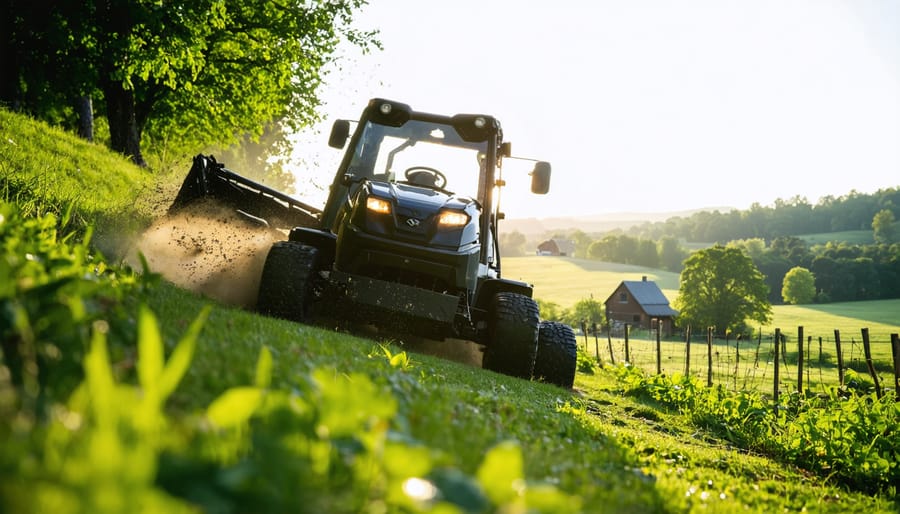
**Consider your terrain before investing in a four-wheel-drive riding mower.** If you’re mowing slopes steeper than 15 degrees, navigating wet conditions regularly, or tackling uneven ground with poor traction, 4WD technology transforms an impossible task into a manageable one. Standard two-wheel-drive mowers spin their wheels and leave ruts on challenging terrain, while 4WD models distribute power to all wheels, maintaining grip and preventing turf damage.
**Assess whether you actually need the added power and cost.** For flat, dry lawns under two acres, a standard rear-wheel-drive mower performs beautifully at a fraction of the price and with better fuel efficiency. You’re paying 20-30% more for 4WD capability, plus increased maintenance costs and fuel consumption. However, if you’ve ever been stranded mid-mow on a dewy hillside or watched helplessly as your mower carved trenches through soft spring soil, that premium becomes worthwhile insurance.
**Match your mower’s capabilities to your property’s demands, not just its size.** The most sustainable choice isn’t always the most powerful—it’s the one that accomplishes your mowing efficiently without excessive fuel consumption or unnecessary features. A 4WD mower excels when terrain dictates it, preventing soil compaction from repeated passes and reducing the time your engine runs. Understanding when four-wheel drive becomes essential rather than excessive helps you invest wisely while maintaining your lawn responsibly and effectively.
What Makes 4WD Riding Mowers Different
The Power Distribution Advantage
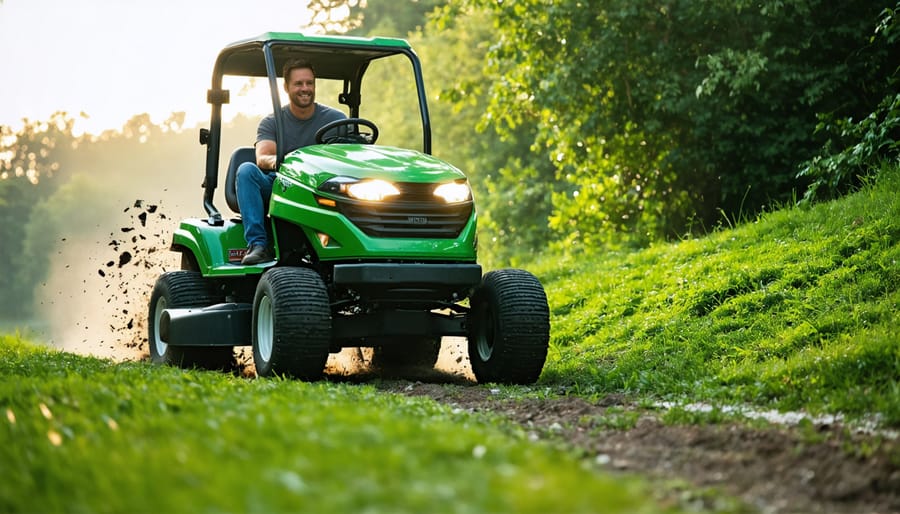
Think of a 4WD riding mower like a four-wheel drive truck navigating a slippery mountain road. Just as power distributed to all four tires keeps that truck stable on challenging terrain, a 4WD mower sends power to all four wheels simultaneously, giving you significantly better traction and control across your lawn.
With traditional two-wheel drive mowers, only the rear wheels provide the push. This works fine on flat, dry grass, but introduce a slope, morning dew, or uneven ground, and those rear wheels can spin helplessly while you’re stuck in place. A 4WD system eliminates this frustration by engaging all wheels, reducing slippage by up to 50% compared to standard models.
This power distribution advantage becomes especially valuable on properties with hills, where maintaining control isn’t just convenient—it’s a safety priority. You’ll notice improved handling when turning on slopes and reduced turf damage since the mower doesn’t need to work as hard to maintain momentum. For environmentally conscious gardeners, this efficiency means less wheel spin, which translates to healthier grass and reduced soil compaction over time.
When You Actually Need Four-Wheel Drive
Let’s be honest—four-wheel drive isn’t necessary for every lawn, and that’s perfectly okay! You’ll genuinely benefit from 4WD if you’re working with hills steeper than 10-15 degrees, where rear wheels might spin out on dewy mornings or after rain. If your property features varied terrain with sudden elevation changes, loose soil areas, or sections that stay consistently damp, 4WD makes real sense. Properties with wooded edges where leaves create slippery conditions, or lawns with sandy patches that offer little traction, are prime candidates for mowers for challenging terrain.
However, if you’re maintaining a relatively flat, well-established lawn with good drainage, standard two-wheel drive handles the job beautifully while saving you money upfront and on fuel costs. Many gardeners overestimate their needs—a gentle slope that feels dramatic when walking often doesn’t require 4WD at all. Consider your wettest, muddiest day: if a regular mower would get stuck or tear up turf from wheel spinning, that’s when 4WD proves its worth. Otherwise, you’re investing in capability you won’t use, which isn’t the most sustainable approach to lawn care equipment.
Real-World Benefits for Your Lawn Care
Mastering Slopes and Inclines Safely
Hills and slopes are where 4WD riding mowers truly shine. If you’ve ever felt that stomach-dropping moment when your mower starts sliding sideways on a dewy morning incline, you’ll appreciate what all-wheel power brings to the table.
The magic lies in weight distribution and constant power delivery. While 2WD mowers rely solely on rear wheels for propulsion—which can spin uselessly on wet grass or loose terrain—4WD systems engage all four wheels simultaneously. This dramatically improves traction and control, especially on grades above 10 degrees.
Real users consistently report feeling more confident tackling their sloped yards after switching to 4WD. One homeowner shared how his previous mower required multiple careful passes on his hillside, but his 4WD model handles it in one confident sweep.
Safety considerations remain crucial, though. Even 4WD has limits—most manufacturers recommend not exceeding 15-20 degree slopes. Always mow across slopes rather than up and down, watch for hidden obstacles, and avoid mowing wet grass when possible. The enhanced traction helps prevent accidents, but responsible operation matters most. Your safety and your lawn’s health both depend on matching your equipment capabilities with your terrain’s demands.

Better Traction in Wet Conditions
If you’ve ever tried mowing after a heavy morning dew or light rain shower, you know that slippery grass can turn your lawn care routine into a frustrating slip-and-slide event. This is where 4WD mowers truly shine. The power distributed to all four wheels provides significantly better grip on damp turf, allowing you to maintain your mowing schedule without waiting hours for conditions to dry out perfectly.
What I particularly appreciate about this feature is how it protects your lawn’s health. Standard two-wheel drive mowers often spin their rear wheels on wet grass, tearing up turf and creating muddy ruts that take weeks to recover. With 4WD, the weight and traction distribute more evenly, letting you glide across dewy grass without leaving behind damage. This means you can take advantage of cooler morning temperatures for mowing—better for you and less stressful for your grass—without worrying about getting stuck halfway through or creating unsightly tracks. It’s a practical solution that keeps both your schedule and your lawn in good shape.
Reducing Lawn Damage and Turf Wear
Here’s something many lawn enthusiasts don’t realize: those rutted tracks and torn-up patches aren’t just cosmetic issues—they’re signs your mower is literally fighting against itself. When a two-wheel-drive mower loses traction on slopes or damp grass, the rear wheels spin frantically, tearing through turf and exposing soil. It’s frustrating and creates lasting damage that takes weeks to repair.
With a 4WD system, power distributes evenly across all four wheels, maintaining consistent traction without the aggressive wheel spin. Think of it like walking across soft ground versus running and slipping—the steady, controlled movement preserves what’s underneath. This becomes especially valuable on hillsides or after rain when soil is vulnerable.
The environmental benefit extends beyond aesthetics too. Fewer ruts mean less soil erosion, better water retention, and reduced need for reseeding or patching. You’re protecting the living ecosystem beneath your grass, maintaining healthier root systems that naturally resist weeds and drought. For sustainable lawn care, preventing damage always beats repairing it.
The Trade-Offs You Should Know About
Price Premium and Long-Term Value
Let’s be honest about the investment: 4WD riding mowers typically cost 15-30% more than their 2WD counterparts, with premium models ranging from $3,500 to $7,000+. That’s a significant chunk of your gardening budget, so when does it actually make financial sense?
If you’re mowing flat, dry terrain under an acre, you’re probably paying for features you won’t use. However, the investment pays dividends when you’re tackling slopes over 10 degrees, dealing with wet conditions regularly, or maintaining properties over two acres with varied terrain. Think of it this way: a 4WD mower that prevents erosion damage, completes jobs in fewer passes, and lasts 10+ years with proper maintenance isn’t just a mower—it’s protecting your landscape investment.
The real value shows up in reduced turf damage from wheel spin, fewer stuck situations requiring costly extraction, and the ability to maintain your property year-round regardless of conditions. For weekend warriors spending hours fighting a struggling 2WD mower on challenging terrain, the time savings alone justify the premium within a few seasons. Just remember, the most expensive mower isn’t always the best choice—match the capability to your actual conditions, not your aspirations.
Maintenance Requirements
Let’s be honest – when you first hear “4WD system,” you might picture complicated mechanics and expensive repairs. But here’s the good news: maintaining a 4WD riding mower isn’t nearly as daunting as it sounds, and with a straightforward routine, you’ll keep yours running smoothly for years.
The main difference from standard mowers is attention to the front axle system. You’ll want to check and grease the front axle fittings every 25 hours of operation – think of it like giving your mower a quick spa treatment. Most models have grease zerks (those little nipple-shaped fittings) that make this a five-minute job with a basic grease gun.
Beyond that, keep an eye on your front drive belt tension. It’s usually accessible without removing half the mower, and a quick visual check every few weeks catches wear before it becomes a problem. If you notice the front wheels slipping when they shouldn’t, the belt likely needs adjustment or replacement – a relatively inexpensive fix.
The transmission fluid deserves attention too, though most quality 4WD mowers only need this checked annually. Your owner’s manual will specify the schedule, but it’s typically straightforward.
Here’s my favorite sustainable tip: regular maintenance actually extends your mower’s life significantly, reducing waste and keeping equipment out of landfills. Clean grass buildup from around the front axle area after each mowing session – it takes two minutes and prevents corrosion. These simple practices mean your 4WD investment pays dividends season after season without drama.
Top 4WD Riding Mowers Worth Considering
Best for Challenging Terrain
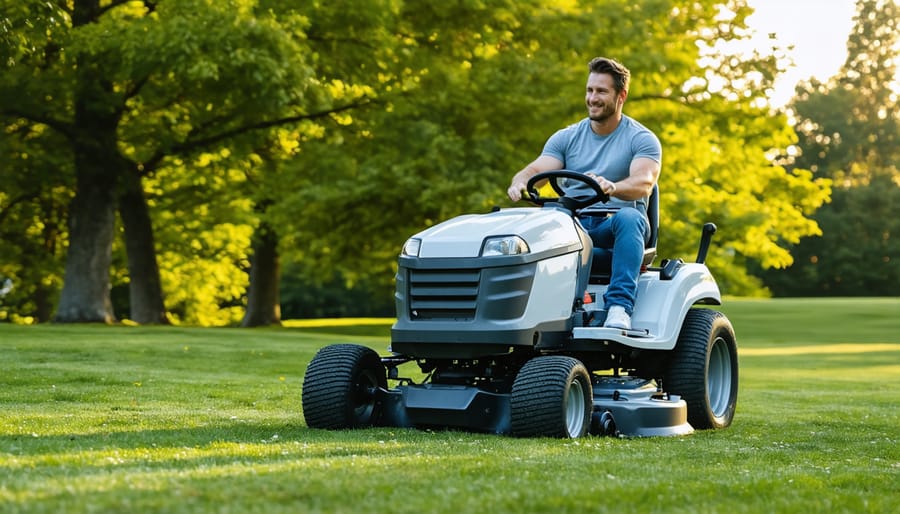
When you’re facing serious hills, muddy patches, or uneven terrain that would leave standard mowers spinning their wheels, the Cub Cadet XT2 stands out as a genuine workhorse. I’ve watched this mower tackle slopes that made me nervous just standing on them, and it handled them with impressive confidence.
What makes this model exceptional is its locking differential and heavy-duty transmission that distributes power evenly to all four wheels, preventing that frustrating slip-and-slide you get with lesser machines. The 24-horsepower Kohler engine provides plenty of muscle for challenging conditions, while the reinforced frame handles the stress of rough terrain without complaint.
For those managing acreage with significant elevation changes or dealing with wet conditions after rain, this is where your investment truly pays off. The fuel efficiency is reasonable considering the power output, and the durable construction means you’re not replacing parts constantly. Yes, it’s a higher price point, but if your property demands it, you’ll appreciate the capability every single time you mow.
Best Value 4WD Option
If you’re looking for the sweet spot between capability and cost, the Cub Cadet XT2 LX46 deserves serious consideration. This model offers genuine 4WD traction without the premium price tag of commercial-grade machines, making it ideal for homeowners with challenging terrain who don’t want to break the bank.
What makes this a standout value is its intelligent design. The hydrostatic transmission provides smooth, effortless speed control—no jerky gear changes while navigating slopes or wet grass. The 46-inch deck strikes a nice balance too; it’s wide enough to cover ground efficiently but maneuverable around garden beds and trees. You’ll appreciate the 24-horsepower engine when tackling hills or thick spring growth.
The comfort features aren’t stripped down either. The high-back seat and ergonomic steering make those longer mowing sessions much more pleasant, which matters when you’re caring for an acre or two regularly.
From a sustainability perspective, the efficient cutting system means fewer passes over your lawn, reducing fuel consumption and soil compaction. The deck design also mulches effectively, returning nutrients to your soil naturally. It’s practical performance that respects both your budget and your landscape.
Premium Choice for Large Properties
If you’re managing five acres or more with challenging terrain, investing in a premium 4WD riding mower can transform your mowing experience from a dreaded chore into efficient property management. High-end models like the Cub Cadet XT3 or John Deere X750 series offer commercial-grade durability with homeowner-friendly features that justify their higher price tags.
These premium machines typically feature fabricated steel decks (rather than stamped), powerful engines exceeding 25 horsepower, and hydrostatic transmissions that provide smooth, responsive control on steep grades. What really sets them apart is their versatility—many accept attachments like snow blades, aerators, and spreaders, making them year-round workhorses that reduce your need for multiple pieces of equipment.
From a sustainability perspective, buying one quality machine that lasts 15-20 years beats replacing cheaper mowers every few years. Look for models with efficient engines that meet EPA standards and consider electric-start options to reduce pull-cord frustration and potential fuel flooding.
Yes, you’ll invest $5,000-$10,000 upfront, but for serious acreage with hills, wet spots, or rough terrain, a premium 4WD mower delivers reliability and performance that saves time, reduces physical strain, and ultimately proves more economical than constant repairs on underpowered alternatives.
Key Features to Compare
When shopping for a 4WD riding mower, focus on these essential specifications:
**Engine Power** – Look for 18-25 HP for residential use; larger properties need more power
**Deck Size** – 42-54 inches suits most yards; wider decks reduce mowing time but affect maneuverability
**Terrain Capability** – Check maximum slope rating (typically 15-20 degrees for 4WD models)
**Ground Clearance** – Higher clearance (3+ inches) prevents deck damage on uneven terrain
**Transmission Type** – Hydrostatic offers smoother operation than manual
**Fuel Efficiency** – Important for both your wallet and environmental impact
**Turning Radius** – Tighter turns mean easier navigation around obstacles
**Warranty Coverage** – Quality brands offer 2-3 year comprehensive warranties
Compare these features against your specific property needs rather than simply choosing the most powerful option.
Using Your 4WD Mower Sustainably
Maximizing Fuel Efficiency
Getting the most from every tank of fuel isn’t just good for your wallet—it’s a win for the environment too. Start by maintaining consistent mowing speeds rather than racing through sections and crawling through others. Your 4WD mower works most efficiently at moderate, steady throttle positions.
Keep your blades sharp and your deck clean. Dull blades force your engine to work harder, guzzling extra fuel while delivering a ragged cut. Similarly, grass buildup under the deck creates drag that demands more power. A quick scrape after each mowing session makes a real difference.
Mow when grass is dry whenever possible. Wet grass requires significantly more power to cut, especially on slopes where your 4WD engages most. This simple timing adjustment can reduce fuel consumption by 15-20%.
Finally, plan your mowing pattern efficiently. Minimize overlapping passes and reduce unnecessary turns. Think of it like planning an efficient road trip—the fewer detours and backtracking, the better your fuel economy. Your 4WD mower has the power to tackle tough terrain, but thoughtful operation ensures that power doesn’t go to waste.
Extending Equipment Lifespan
A 4WD riding mower represents a significant investment, so let’s talk about keeping it running strong for decades rather than years. The good news? These machines are built tough and respond beautifully to consistent care.
Start with the fundamentals that make the biggest difference. Change your oil and filters on schedule—this single habit prevents 80% of engine problems. I’ve seen mowers with 2,000+ hours still purring like new because their owners treated oil changes like sacred rituals. Clean or replace air filters regularly, especially in dusty conditions, and sharpen blades at least twice per season. Dull blades stress both your engine and your grass.
Store your mower properly during off-season. Drain or stabilize fuel to prevent carburetor gumming, disconnect the battery, and keep it covered in a dry space. Consider this: manufacturing a new mower creates significantly more environmental impact than maintaining your current one.
Don’t ignore small issues. That slight belt squeak or minor deck vibration? Address them now before they cascade into expensive repairs. Keep fasteners tight, grease fittings lubricated, and tire pressure correct—these five-minute checks prevent major headaches.
Finally, use your mower appropriately. Even 4WD models aren’t invincible. Avoid extremely wet conditions when possible, and don’t force the machine beyond its capabilities. Respect your equipment, and it’ll reward you with reliable service long past its expected lifespan.
Making Your Decision: Is 4WD Right for You?
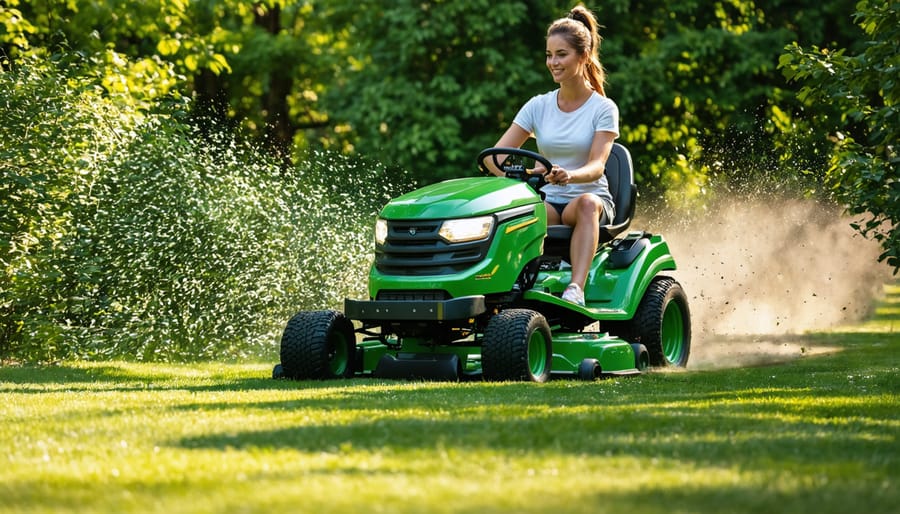
Before investing in a 4WD riding mower, let’s walk through some honest questions to help you determine if it’s the right choice for your property.
**Start with Your Terrain**
First, take a walk around your lawn. Do you have slopes steeper than 10-15 degrees? Are there consistently wet or muddy areas? Do you mow after rain because that’s the only time your schedule allows? If you answered yes to these questions, 4WD could be a game-changer for you. However, if your lawn is relatively flat and well-drained, you might want to lawn tractor vs zero-turn options that better suit easier terrain.
**Consider Your Budget and Long-Term Value**
4WD mowers typically cost $500-$1,500 more than their 2WD counterparts. Ask yourself: will the added traction save you time and frustration worth that premium? If you’re currently struggling with wheel spin or avoiding certain areas, that investment might pay dividends in efficiency and lawn health—fewer passes means less fuel consumption and soil compaction, aligning with sustainable practices.
**Be Realistic About Maintenance**
Remember, 4WD systems require additional upkeep—more parts mean potentially more maintenance. Are you comfortable with this, or would a simpler machine better fit your lifestyle?
**The Bottom Line**
Use this quick assessment: If challenging terrain regularly disrupts your mowing routine or limits when you can mow, 4WD is likely worth it. If you’re buying features “just in case,” you might be overspending. Take time to assess your specific property needs honestly—your wallet and lawn will thank you.
Choosing a 4WD riding mower is ultimately about matching the right tool to your unique landscape needs. If you’re dealing with slopes, uneven terrain, or challenging conditions, the added traction and stability can transform your mowing experience from frustrating to efficient. However, if your lawn is relatively flat and straightforward, a standard riding mower might serve you just as well while being gentler on your wallet and the environment.
Remember that more power doesn’t always mean better—it means higher fuel consumption and greater environmental impact. Whatever you decide, prioritize safety by understanding your mower’s capabilities and limitations. Take time to maintain your equipment properly, mow mindfully to protect soil health, and consider sustainable practices like mulching clippings. Your lawn care choices ripple outward, affecting not just your garden’s appearance but also your local ecosystem. Trust your assessment of your property’s needs, invest wisely, and enjoy the satisfaction of a well-maintained lawn achieved responsibly.